Young designer and recent Villioti Fashion Institute graduate, Mahlobisa Shiburi stands among a new wave of Gen Z voices reshaping fashion with urgency, care, and poetry. Grounded in the legacies of her predecessors, Mahlobisa’s work threads sustainability and storytelling into garments that feel alive with memory, resilience and renewal. Her graduate collection, Living in the fire, is a meditation on survival, and on beauty rising from the ashes. Twyg’s fashion editor, Tandekile Mkize sent a few questions to Mahlobisa to explore the vision, values, and voice for her brand, Carmen’s Parys.
First, why Carmen Parys?
Carmen was the first hair straightener my mother bought me when I was in Grade 8. Parys came a little later, after I noticed how often I wrote or spoke about Paris (Parys in Afrikaans) in almost all my Afrikaans essays, speeches, and poems. Eventually, I decided to bring together the two things I loved most, and that’s how the brand Carmen Parys was born.
What is the relationship between storytelling and fashion?
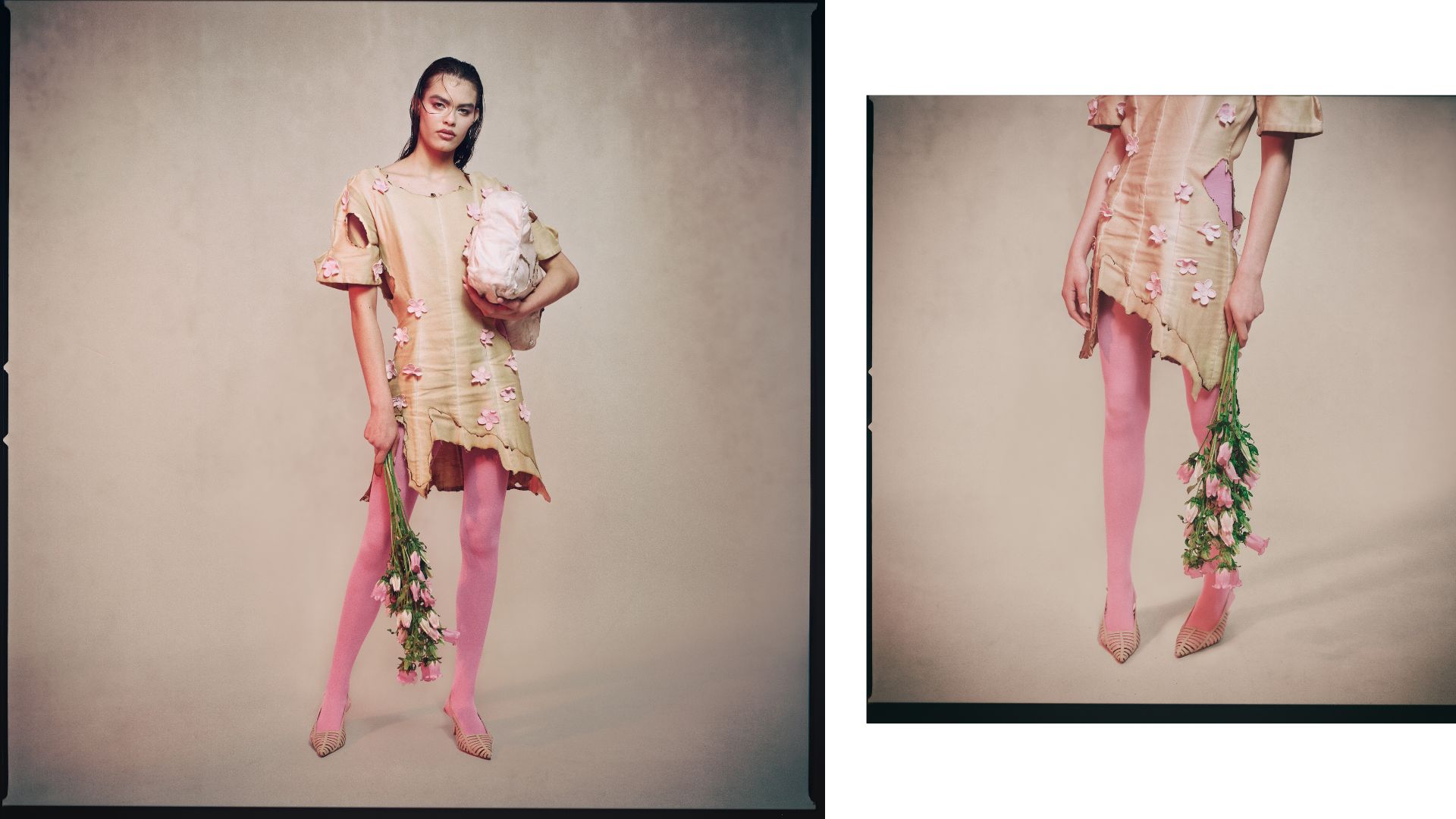
For me, fashion has always been a form of storytelling. Clothes carry memory, emotion and meaning far beyond fabric and thread. With Living in the fire, I wanted to explore what it means to find beauty in the most unlikely of places, to bloom where life has been burnt. Every delicate flower sewn onto the garments becomes a symbol of resilience, a reminder that even in the ashes, growth is still possible. Storytelling and fashion are inseparable in my work.
A garment on its own can be beautiful, but when it carries a narrative, it becomes something deeper, a vessel of human experience. Through my collections, I try to give voice to the struggles and triumphs we all encounter, translating them into pieces people can wear, feel and connect with. Fashion is the language, and storytelling is the heartbeat that brings it to life.

What drew you to using bull denim?
Living in fire was born from a paperscroll I made. I wanted the fabric to reflect that beginning. I searched for something that could resemble the paper of the scroll, something that could hold the same weight and carry the same presence. White bull denim spoke to me for that reason. It has a strength and honesty in its weave, like paper that refuses to be fragile.
When I burnt into it, the edges did not fall apart or unravel, just as the scroll itself held its scars without crumbling. That quality moved me, because it meant the fabric could carry the story of survival in a very physical way. Every burn mark became a memory written into the cloth, a reminder that even when touched by fire, what remains can still hold beauty and meaning.
What inspired you to explore natural dyeing methods?
I have always been drawn to creating fashion that feels alive and connected to the world around us. Using natural dyes like coffee and beetroot allowed me to do just that. I wanted the garments to carry not only a story of resilience but also a story of care: care for the materials, the process and the impact they have on the environment.
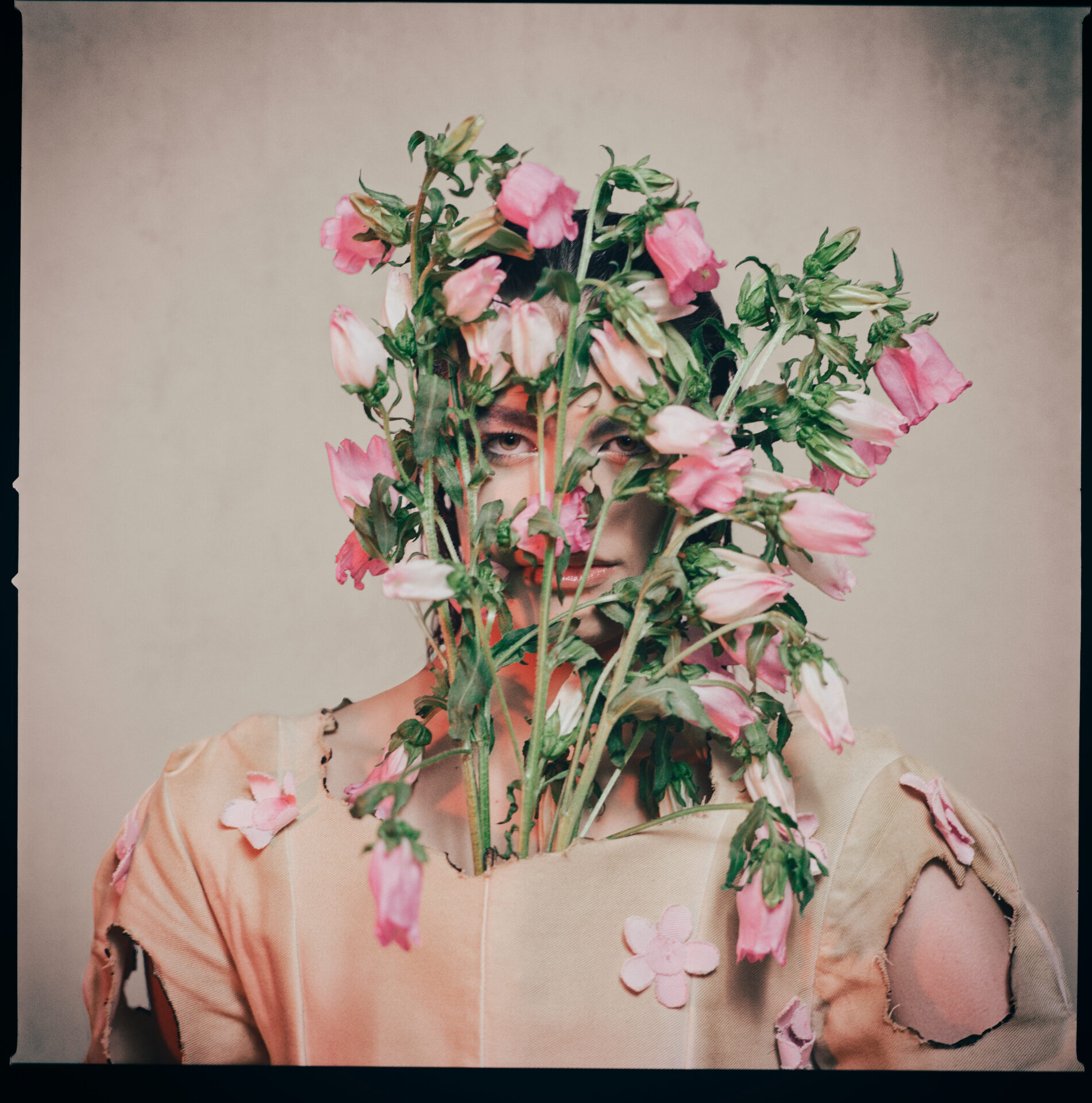
Coffee and beetroot have a raw, earthy quality that gives the fabric warmth and depth, almost like it remembers where it came from. For the pink flowers in the collection, I applied fabric stiffener so the beetroot colour would not wash off or dry into a different shade over time. These small acts of preservation were important to me because they allow the garments to age gracefully, holding the story and emotion they were made with.
Natural dyeing and thoughtful finishing are ways I stay true to my values as a designer. They honour sustainability, embrace imperfection and let the garments feel like they belong to a larger, living story that grows with the person wearing them.
How do you balance your creative vision with sustainability?
For me, creativity and sustainability are inseparable. I want my designs to tell stories, to feel alive, but I also want them to leave the world a little better than I found it. Balancing that comes from paying attention to every choice, even the smallest ones, the fabric I pick, the way I finish a seam, the way I dye a flower, so it keeps its colour over time.
For me, sustainability is not rules or limits. It is patience and respect. It is thinking about the life a garment will have long after I have made it and letting that guide me. It has taught me to accept imperfection, to see beauty in things that are not perfect, and to let each piece hold care, intention, and a little of myself. Fashion is not just what someone wears. It is what the clothes carry, what they mean, what they remember.
How have your studies shaped your craft?
Graduating from Villioti Fashion Institute in 2025 was a lesson in patience, intention, and respect for the work itself. I learned to slow down and notice detail: from how a seam sits to how a colour moves on fabric. Those small things taught me that the choices I make in my craft ripple outward, shaping not just the garment but the way it lives in the world.
I learned to work with materials thoughtfully, to accept imperfection as part of the story, and to create pieces that carry care and meaning. Those lessons stay with me in every design I make, reminding me that fashion is not just something we wear, but something that can hold intention, memory, and life.
What are your intentions for the future?
I want my work to start conversations about what it really means to create with care and intention. Sustainability for me is not a trend. It is about respect for the materials, for the people who help bring a design to life, and for the life a garment will have long after it is made. I want my designs to show that young African designers can tell stories that are bold, honest, and thoughtful.
Credits

Designer: Mahlobisa Shiburi (above)
Creative Director: Jordan Potgieter
Producer: Raine Froneman
Photographer: Aidan Murgatroyd
Stylist & Wardrobe: Richard Shikati
Hair & Makeup: Gio Jungle
Model: Hannah Dowie
Location: Studio C