After spending eight hours learning how to create seven distinct shades of blue at an indigo dyeing workshop, I understand it now. The point of it all.
Hosted on Saturday, 17 October, the workshop was led by renowned Malian artist Aboubakar Fofana at Victoria Yards in Johannesburg, where he is doing a residency organised by Occupying the Gallery.
Indigo dyeing is a process commanded by nature. Humans are but one of many living organisms who transform plants, ash and time into brilliant blue cloth. It’s not just an aesthetic or surface treatment; it’s a way of intersecting material and ideas, and how we find harmony between our internal and external worlds.
Book tickets for the Indigo, art and fashion with Aboubaka Fofana workshop on 25 October here
The entire dye process, from fermentation to reduction, to oxidising and dipping, is a continuous cycle of repetition and maintenance; nothing is ever truly complete, just worked and worked again. There isn’t a distinction or delineation between human and nature, between living and non-living, or between material and idea.
The first idea is the colour blue itself.
In nature, the Indigofera tinctoria, or true indigo, is green. The tropical shrub produces violet flowers. What we finally see as blue, or as indigo, has been lured from the plant through a weeks-to-months-long process of harvesting, soaking, fermenting and oxidising. And even then, the liquid ready for dyeing is yellow-green, and blue only appears after cloth has been dipped into the vat and then exposed to air.
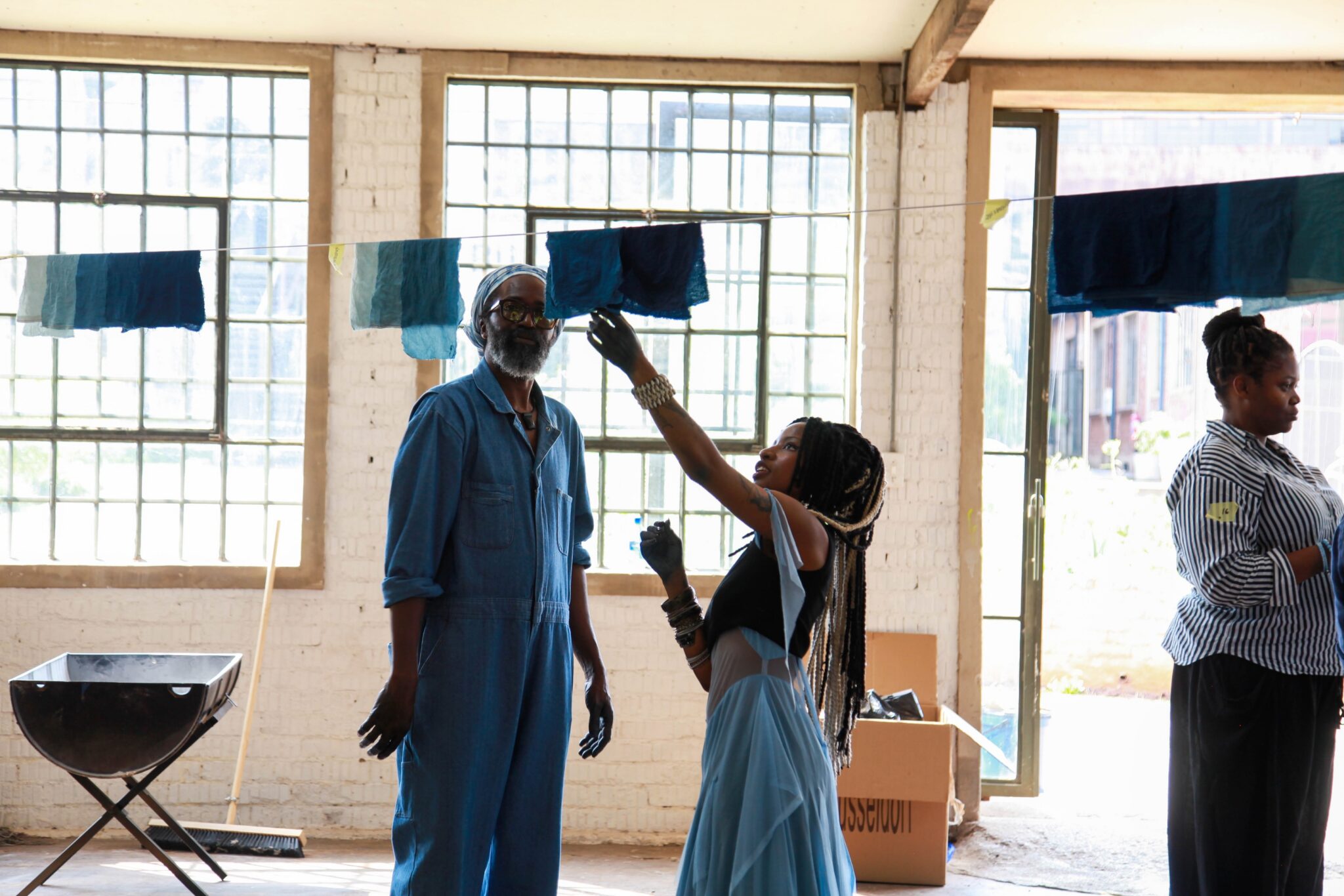
Aboubakar Fofana, left, is a multidisciplinary artist and designer known for his work in reinvigorating and redefining West African indigo dyeing techniques. Image: Occupying the Gallery
Before the development of synthetic dyes, places like India, Japan and West Africa were adept at synthesising and manufacturing indigo dyes and cloths. There are hundreds of Indigofera species across the world, but Indigofera tinctoria has one of the highest concentrations of indican, the blue-producing chemical. This made it a highly sought-after commodity, especially in regions like Europe where the cooler, temperate climate made cultivation almost impossible. Indigo has been used in West Africa for centuries, with the earliest written accounts dating to the 16th century. Eight hundred-year-old indigo thread fragments have been excavated from Aboubakar’s home country, Mali, indicating an even longer history.
The second idea is that life follows seasons and processes.
Indigo does not come easy. At the beginning of the workshop on Saturday, Aboubakar insisted on discipline and patience. To him, colour is musical, and there is a rhythm that must be followed and maintained. As excited as some of us were, we had to be considerate and careful with the process. Each step must be done slowly, pragmatically and with care.

Aboubakar Fofana begins the workshop with a lesson in patience and discipline. Image: Occupying the Gallery
We were walked through the procedure of fermentation and reduction, and told about the dye vat’s sensitivity to temperature and oxygen. There are three dye categories: additive, substantive and reductive. Some dyes easily attach to cloth without much interference, like black tea; these are substantive. Additives require additional help, a mordant, to better link to the fibres, like combining hibiscus flowers with salt and vinegar to achieve the transformation. Indigo is a reductive dye – also referred to as a vat dye, as it’s worked inside a large container. The pigment is made water-soluble in an alkaline bath so that it can penetrate the fabric and then be exposed to air, where the true colour appears, and the soluble process reverts so that the dye is locked into the cloth.
We worked across four large vats, at least 1.2m tall, each of different concentrations, which were opened gradually over time as we progressed from light to dark.
Before the dyeing, the fabric had to be scarred; submerged in hot water to remove any starch, dirt or oils. For protein fibres like silk, this would require even higher temperatures. It had to remain wet so that the fibres would be open for the pigment to spread evenly. As carefully as the vat itself was put together, Aboubakar says, “About 70% of your dye result depends on how the fabric has been prepared.”
The darkness of a blue isn’t determined by how long cloth sits in the dye vat but rather achieved through a repetitive process of dipping, aerating, rinsing and then dipping again.
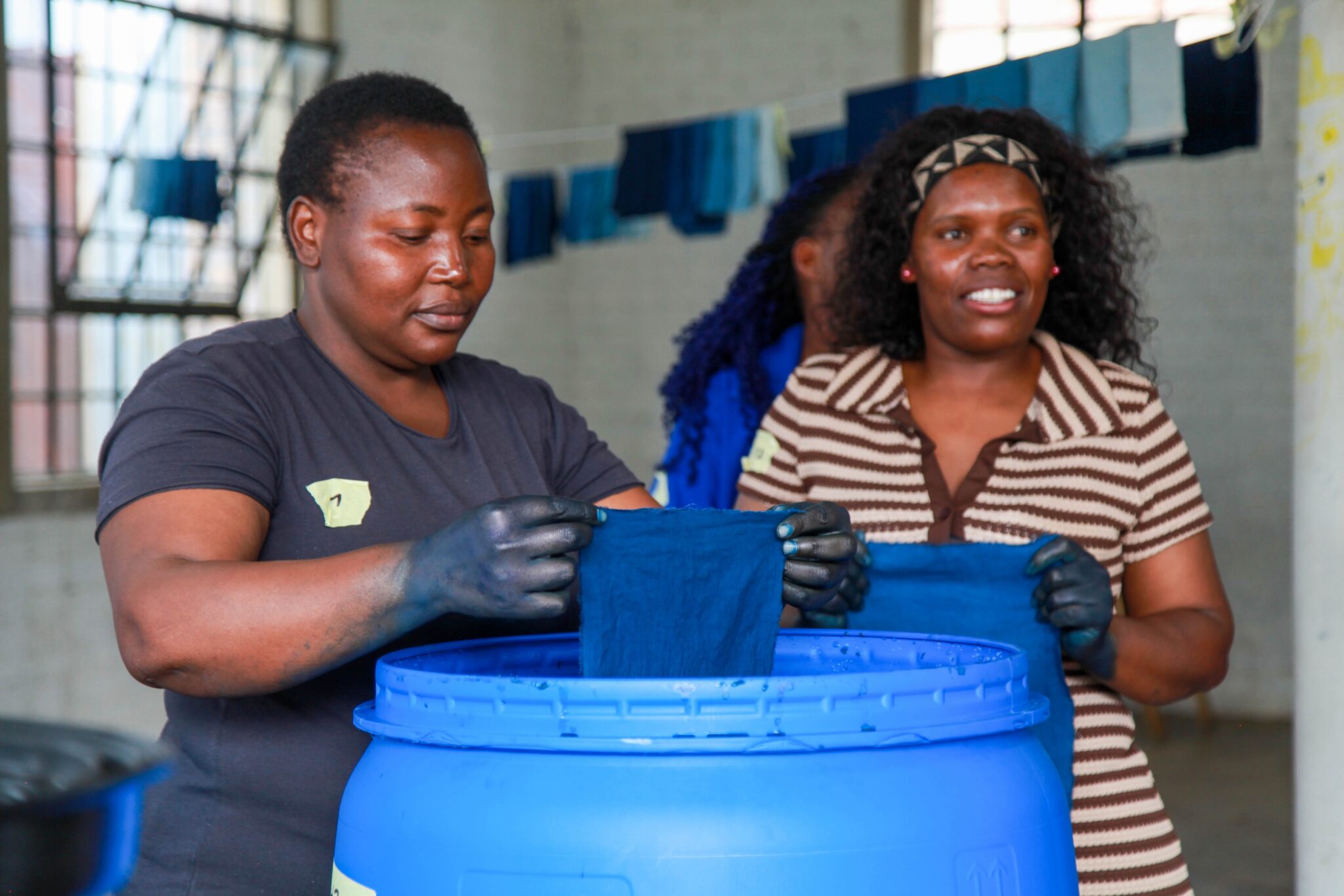
Participants learn the process of indigo dye at a workshop led by Aboubakar Fofana in Johannesburg. Image: Occupying the Gallery
To determine whether there was enough difference between any two swatches, we evaluated them both wet and, with Aboubakar’s keen eye, decided whether they needed another dip or if we could move on to the next sample.
There was no way to speed up the sequence. When submerging cloth into the vat, we had to use our hands to gently and evenly massage the cloth and keep it submerged for several minutes. We had to move carefully and slowly, as any sloshing and shaking would introduce oxygen to the vat and spoil the dye. Then the cloth had to rest, as we gently stretched it out in the air for the oxidation process. And only then could we go for another dip.
My highlight was looking at everyone’s blue-stained hands (somewhat avoidable if you wear gloves). Not only is it striking, but the stain prevents you from doing anything else like doomscrolling or catching up on a chore. You have to be present and focused.
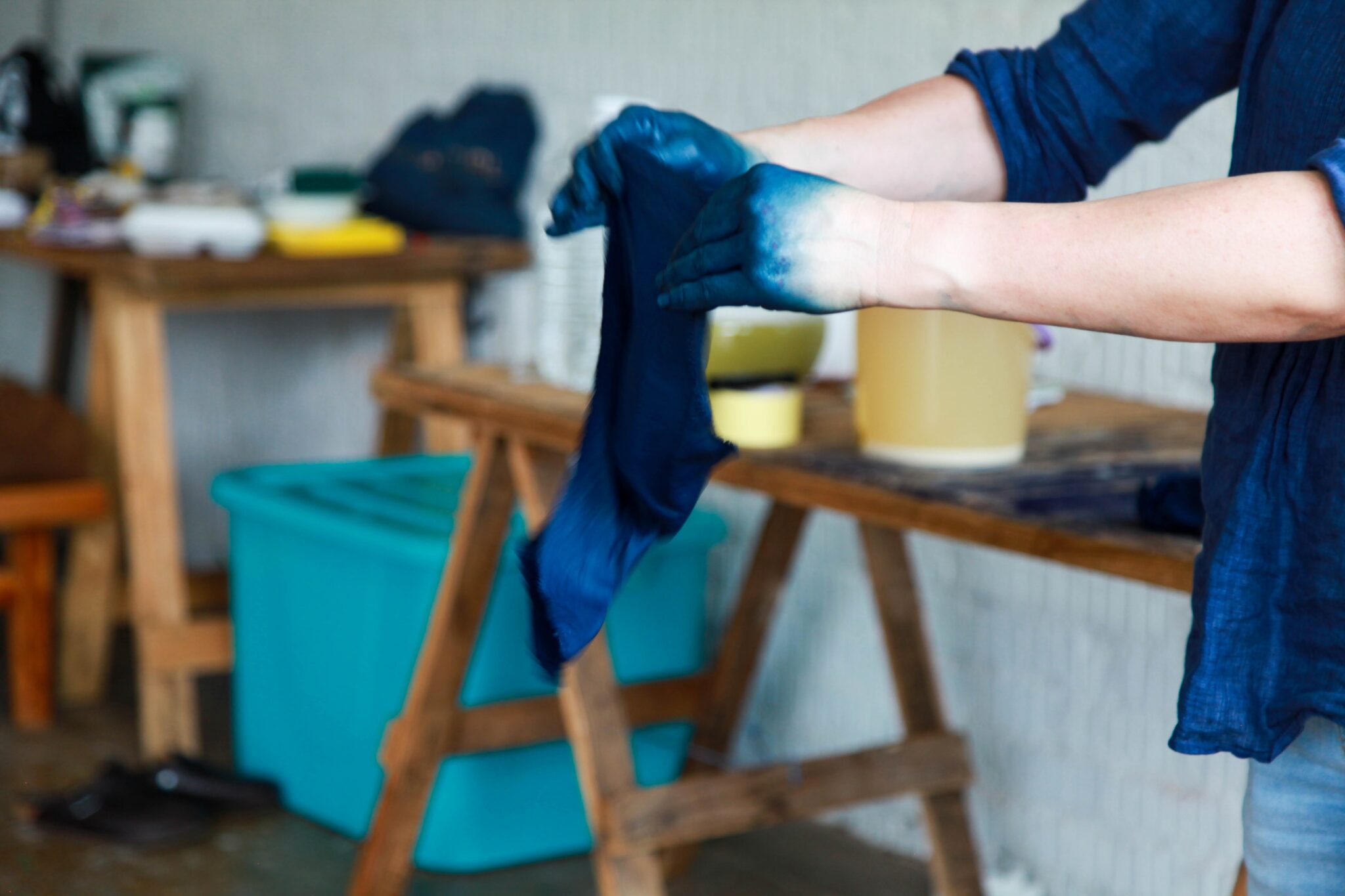
Blue-stained hands at the indigo dye workshop in Johannesburg. Image: Occupying the Gallery
As artistic and creative as dyeing is, Aboubakar demonstrates that it’s far more than just surface design. Having dedicated over 40 years to indigo, he takes his craft seriously. According to Aboubakar, apprentices spend anywhere from 10 to 20 years training under an artisan before they can be considered a master, by which time they’re expected to produce 12 distinct shades of blue.
The self-taught Aboubakar was, in part, motivated by the decline in indigo dyeing due to the onslaught of colonisation, industrialisation and environmental changes. These didn’t just damage an industry but disrupted forms of governance, coordination and infrastructure. Then, competition from synthetic dyes and industrialised production meant techniques and recipes were likely to get lost to time.
And perhaps this is the third idea: life is something we take care of.
Yaw Ofusu-Asare explains that African design is grounded in African traditions of relationality, temporality, repair, and collective life. In this article, he writes, “Design is better understood as the organisation of life than as the production of objects”.
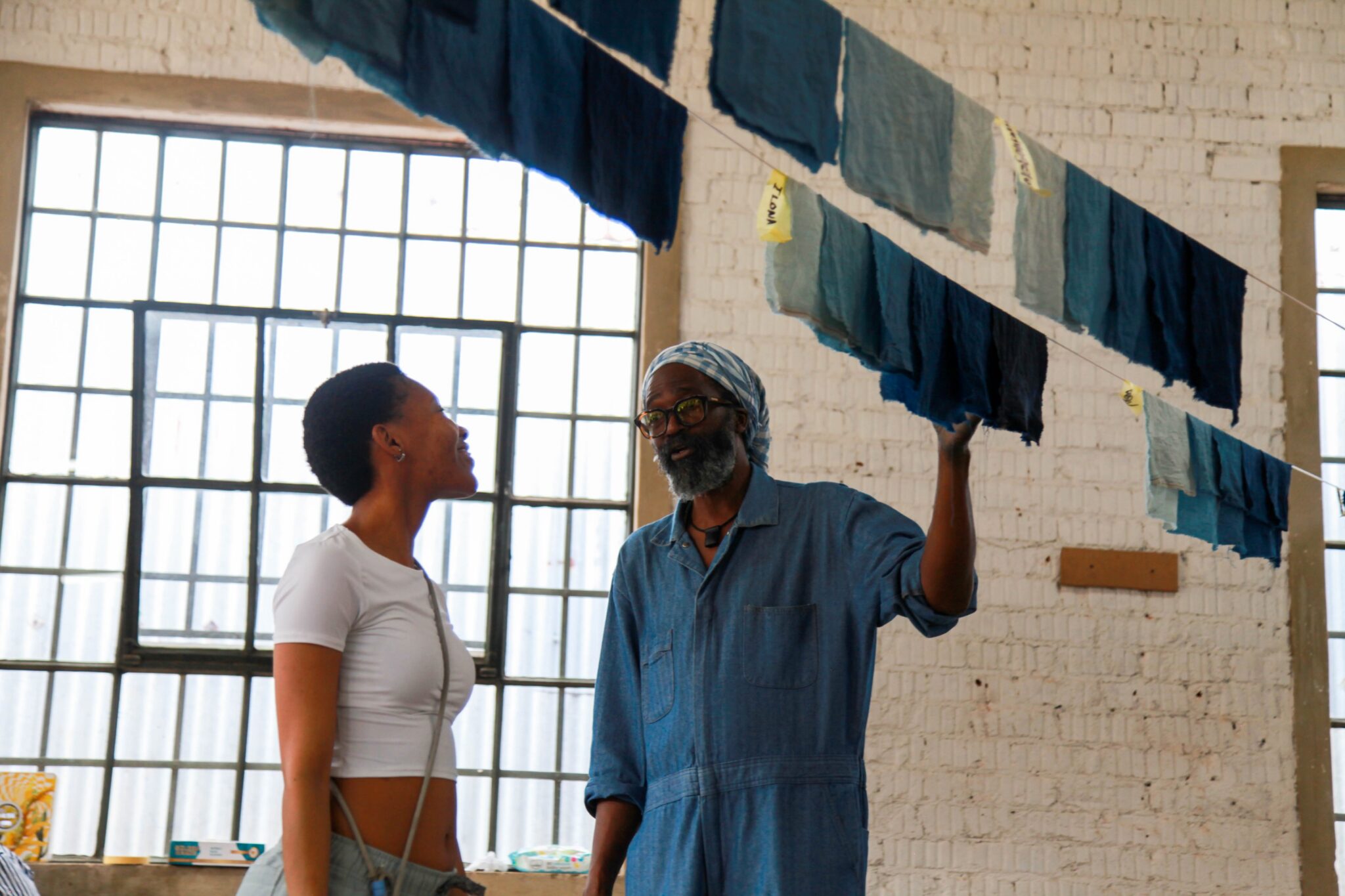
Aboubakar Fofana has dedicated over 40 years to indigo. Image: Occupying the Gallery
Typically, an artisan is only one part of an interconnected and sometimes overlapping system of farmers, fermentors, driers, fabric preparers, printmakers, finishers, and designers. These are communal, collective and socially embedded frameworks with knowledge often passed intergenerationally. They weren’t always tightly bound within communities, either; it is still typical that artisans travel across West Africa to share and acquire new skills and techniques.
There is often a tendency, when considering African textiles, to regard them as art. I imagine this is in part due to decades, if not centuries, of manipulating labels like “craft,” “informal” or “functional” into pejoratives. It might also be that the often ritual or spiritual aspects of African design become the whole story, romanticised and exoticised as purely sacred and otherworldly. But these practices, these techniques are also feats of engineering and chemistry. They deserve to be recognised as technologies too.
Of course there are faster and cheaper technologies. Modern synthetics could do in minutes what took us an entire day, and for some, whole lifetimes. But I’d argue that what made indigo so influential and significant in the past is what makes it just as important now. Blue is beautiful but by itself, it’s nothing special. What makes it valuable and memorable is what it requires: time, effort, the communion between us and nature.
Indigo is art and indigo is also music. Indigo is life in action. It’s one of many ways to participate in nature’s cycles of creation and destruction. It’s hundreds of unseen micro-organisms breaking down enzymes into glucose and indoxyl. It’s many hands and groups coming together over centuries. It connects histories and empires and communities. It’s a way to understand that endurance is just as much a part of life as joy.
- Edit: This article has been updated to reflected the change in workshop date. It will be on Sunday 25 October, only
- Khensani Mohlatlole was a guest of Occupying the Gallery
- This is a sponsored post
- Find out about the upcoming Aboubakar Fofana workshop at Victoria Yards on Sunday 25 October here
- Buy tickets here (note: the workshop is both Saturday and Sunday)