
A disproportionate quantity of Africa’s natural textile raw materials leave the continent in an unprocessed or semi-processed state: sub-Saharan countries export more than 81% of the raw cotton produced in the region, while the African clothing and textile industry’s total trade deficit has been calculated at around US$3.3 billion.
For Africa Textile Talks 2026 at the V&A Waterfront in Cape Town, 350 people gathered over two days in July to interrogate the gap in processing, manufacturing, design and markets. Not an easy task, but it was a challenge the room’s participants took on with stubborn hope, resilience, and impeccable style.
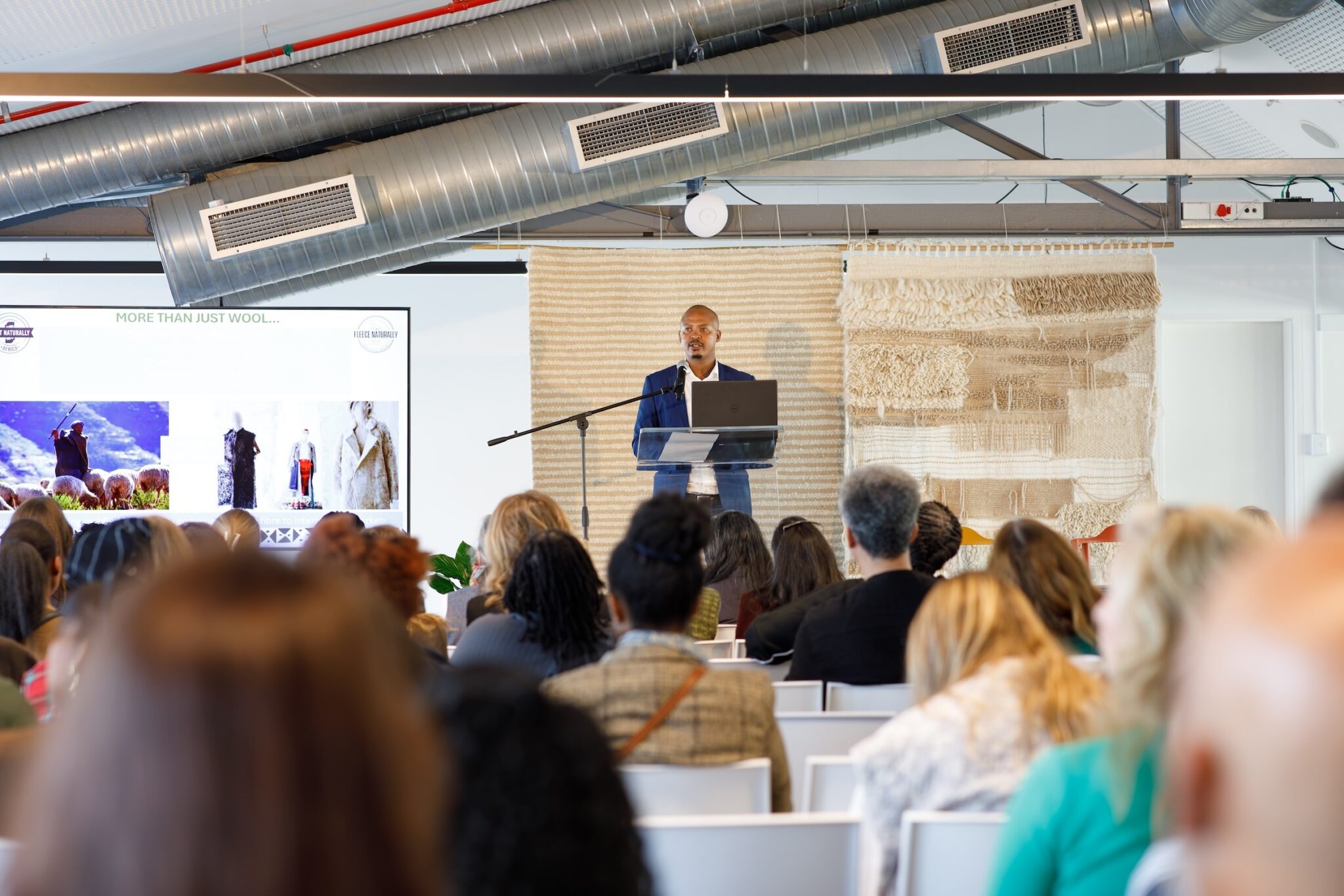
Keynote speaker and conservationist, Lumko Mboyi. Image: The Dollie House
Lumko Mboyi’s work as a conservation ecology professional involves improving grazing practices in communal rangelands. He demonstrated how the quality of wool fibre begins with the health of the landscape that produces it; linking ecological care, sheep farmers’ livelihoods and material value.
Textile processor, Lilitha Mahlati-Diatta spoke about the bottlenecks that can cause local value chains to break down, and the importance of strengthening each interconnected node. Farmers and factory workers need to succeed in their own right, says Mahlati-Diatta. This conviction extends her work beyond wool carding into strengthening her industry’s ecosystem and highlights a need for connecting “the right kind of funding to the right kind of enterprise”.
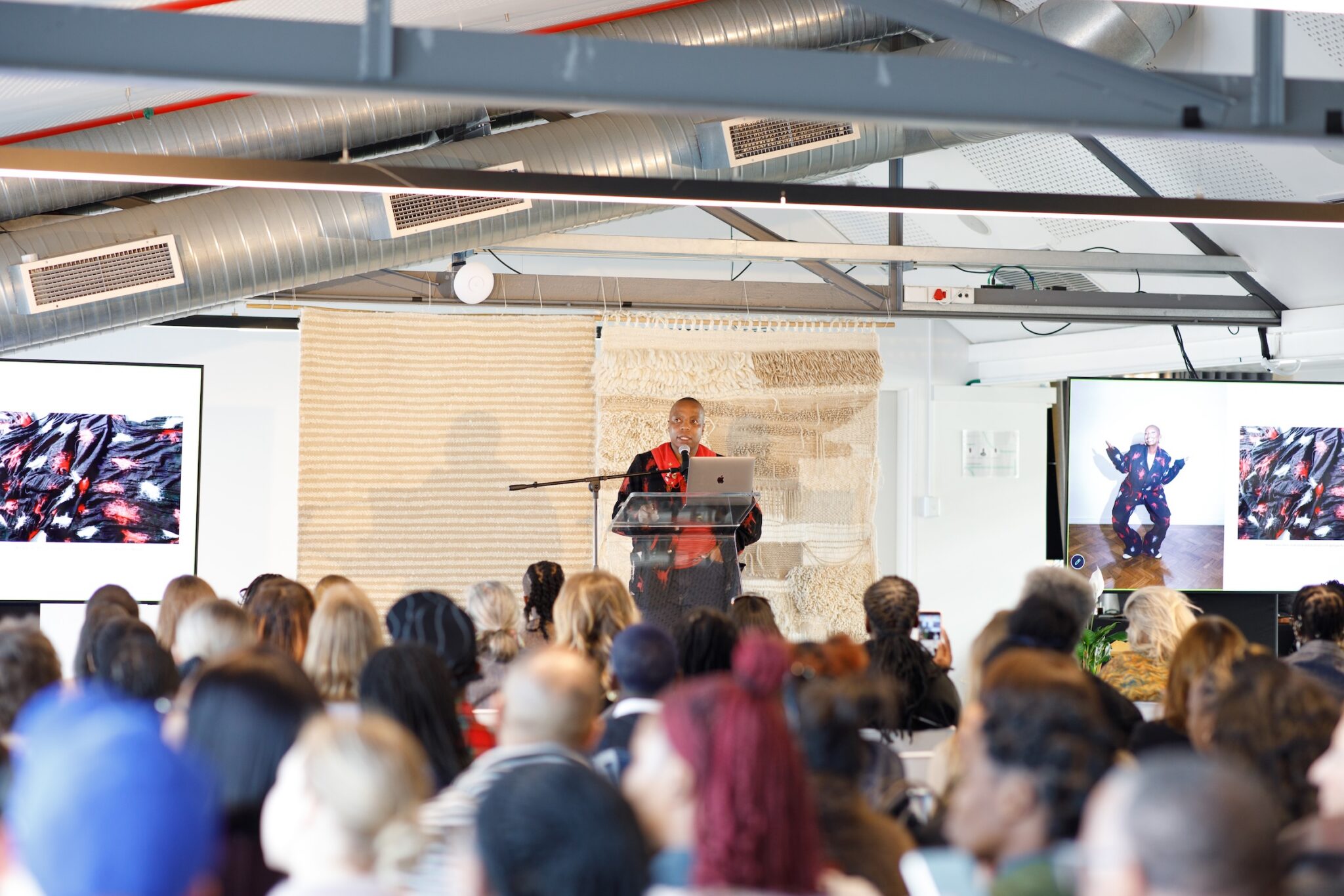
Designer Wanda Lephoto demonstrated how we can trust our own voice as Africans, and how African histories, philosophies and lived realities are valuable sources of cultural nourishment and pride.
Omoyemi Akerele’s African Fashion Coalition reminds us how taking action is a joint effort, inviting us all to participate in strengthening the African fashion and textile industries from within by signing the manifesto, The Blueprint for a Regenerative Fashion Future.

From left circular economy expert, Kiera Crowe Petterrson; bio-materials designer, Shaakira Jassat; and founder of Keltex, Laetus Buberwa. Image: The Dollie House
Farming, manufacturing, design, heritage and policy might sound like separate conversations, but they share a common principle: they shape value chains that rely on each other’s thriving. Farmers need healthy landscapes. Manufacturers need skilled employees. Designers need high-quality materials. None of these industries can survive on their own. It felt like a victory that so many people from different nodes of the textile ecosystem were in one room, present and participating. Yet a thriving ecosystem needs to work within planetary limits while pushing the boundaries of what’s possible. Building stronger local value chains therefore goes hand in hand with finding better approaches.
Read more: Africa Textile Talks 2026: Your post-conference learning companion and action Guide by Philippa Crooks
Speakers illustrated how this means changing the lens through which we look for new ways forward, and how sometimes the most useful ideas emerge in unexpected places close to home. For Shaakira Jassat, a textile designer and well-versed experimenter, innovation means looking beyond human collaborators and partnering with bacteria. Laetus Buberwa and Sam Elsom both use seaweed as a solution.
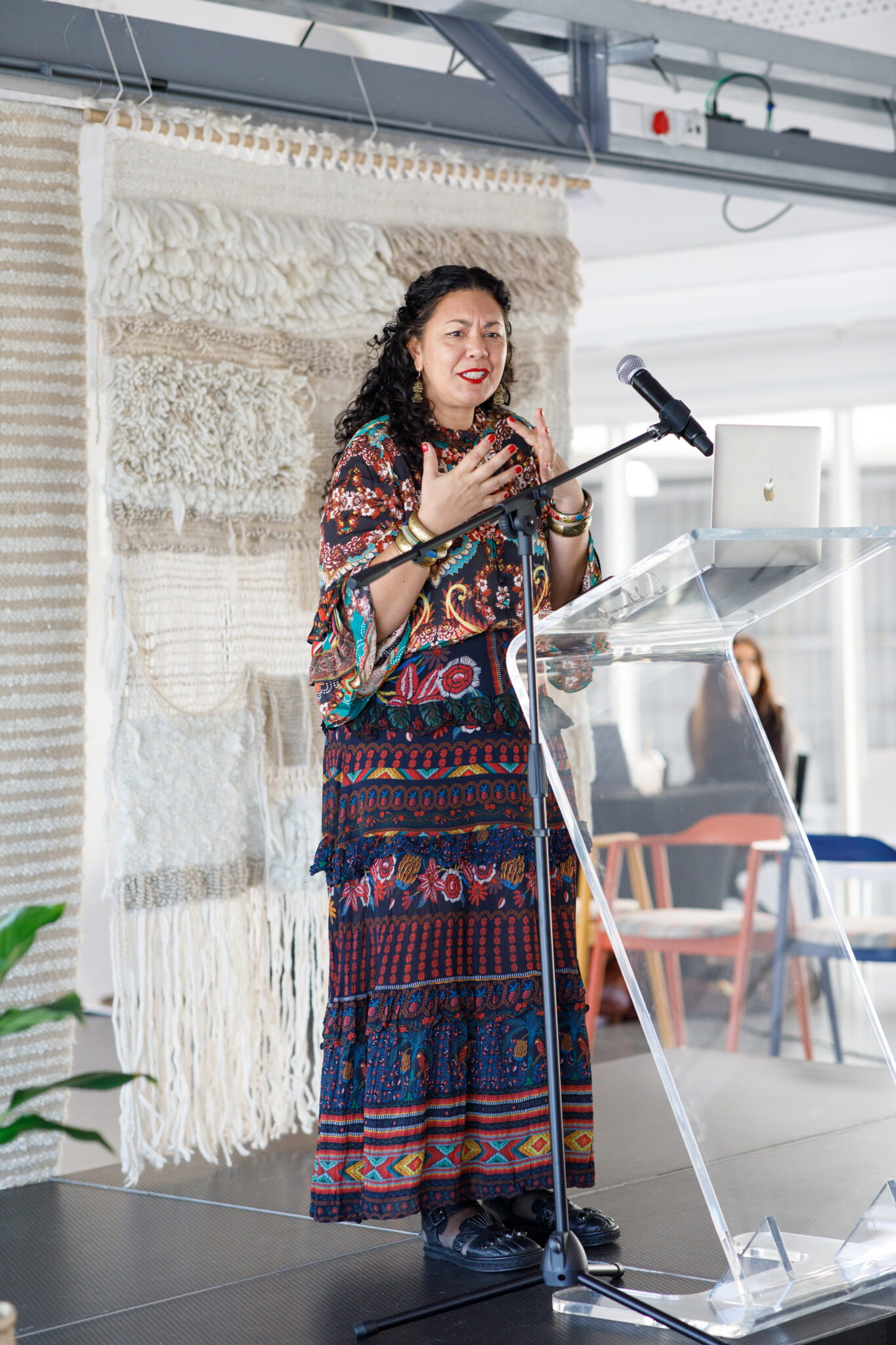
Nuraan Peterson. Image: The Dollie House

Siwa Mgoboza. Image: The Dollie House
Zara Odu and Ifebuche Madu challenge the assumption that innovation comes from elsewhere, demonstrating how traditional fabric-dyeing practices can be adapted for contemporary conditions. Their streamlined processes reduce environmental harm, improve efficiency, protect artisans, and produce a better-quality product; an example of innovation from within heritage craft and cultural practices that have long existed across Africa.
Lesley Hudson offered a fresh perspective on an indigenous silkworm, rethinking centralised farming systems with take-home kits, pairing her own access to high-end markets with empowering local communities. The spirit of experimentation also made room for play.
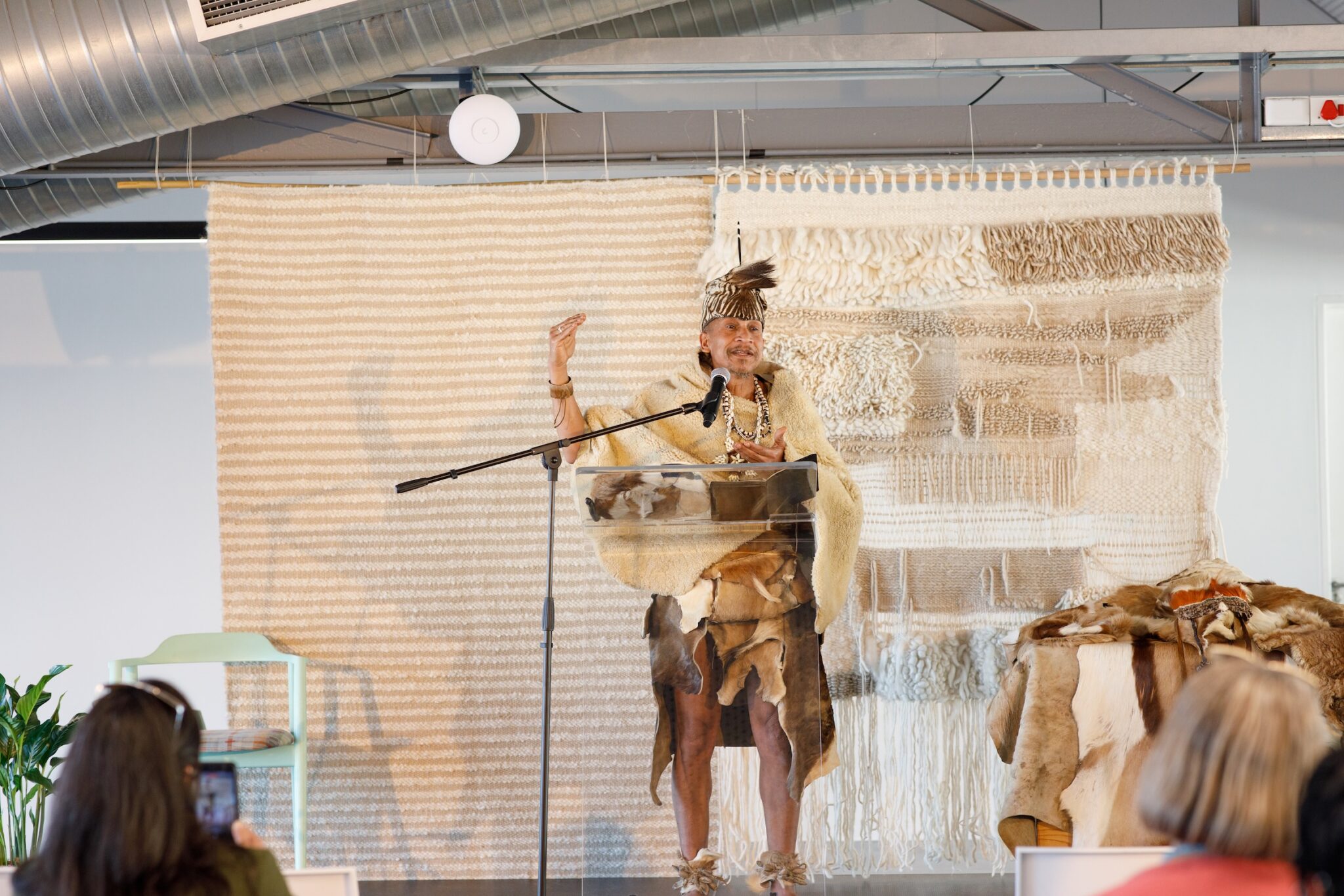
Cultural practitioner Siwa Mgoboza brought playfulness to his reimagining of Shweshwe, suggesting that heritage need not be a fixed visual language to be preserved intact, but something we can build on, question and make our own.
Cultural worker Thulile Gamedze’s experimental work approaches design as cumulative: a garment’s previous life is referenced when upcycled, while its meaning changes in a new context. Here archives are not stagnant or fixed, but fertile ground from which innovation can grow.
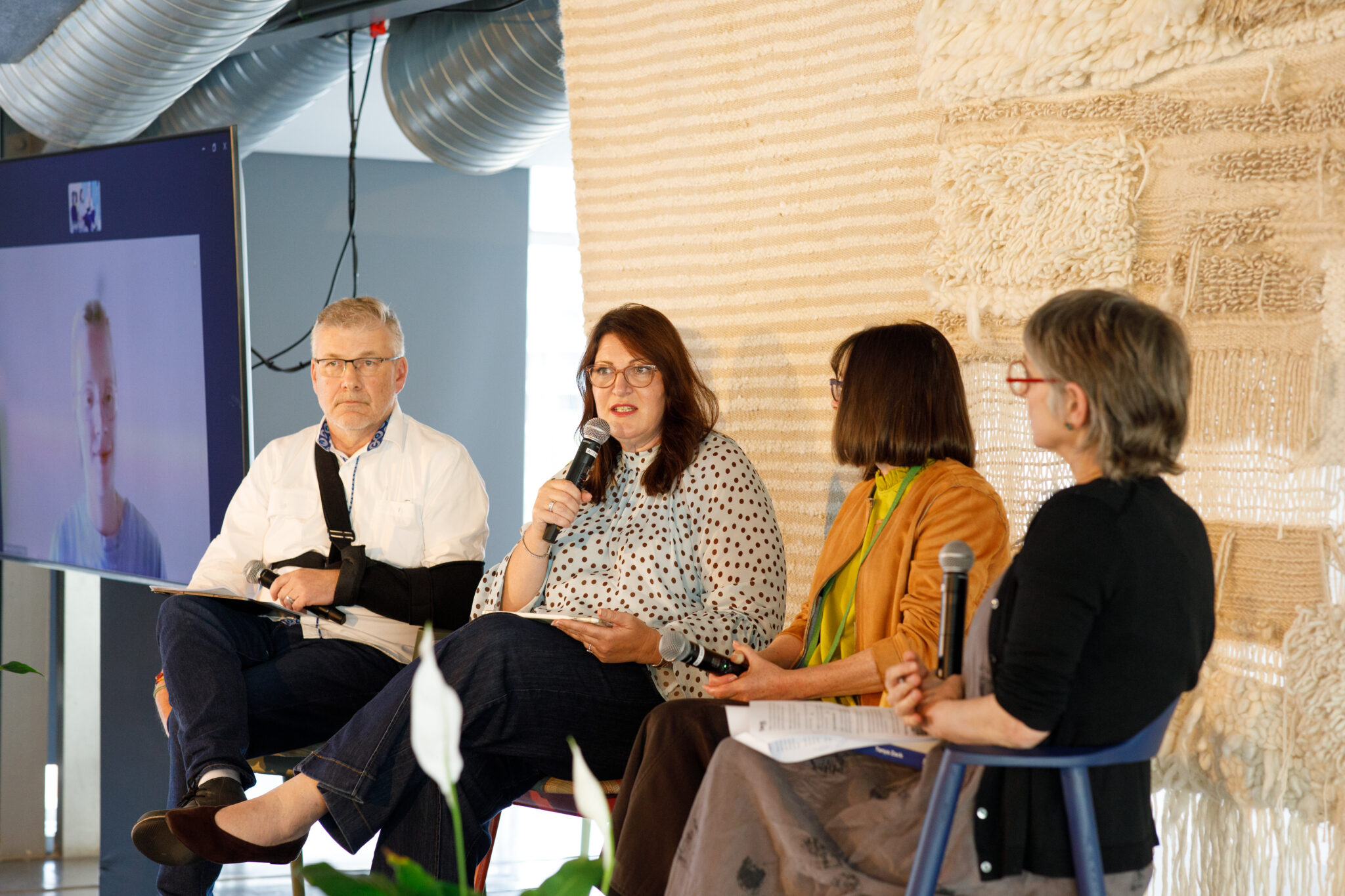
From left chairperson of the Localisation Support Fund, Harald Harvey; CEO of Pep Clothing, Marthie Raphael; author, Tanya Zack; and founder of Twyg, Jackie May. Image: The Dollie House
Other conversations brought in productive tension. Tanya Zack, author of The Chaos Precinct, and Johanna von Pezold in her Africa-China research, discussed how informal traders importing cheap goods from China have built remarkably successful businesses by knowing their customers and networks intimately and ‘making a plan’ against the odds. Fast fashion has become a dirty word in sustainability circles, yet for cash-strapped consumers it meets a very real need.
The panel, The price of cheap fashion, debated the environmental and economic consequences of this model but acknowledged that there is something to learn from its agility and resourcefulness. Perhaps we need to examine where our definitions of ‘sustainable’ come from, and whether they leave enough room for the realities of the economies we are trying to transform.
From here to where?
During the fireside chat, From here to where? moderator Agisanang Magooa raised the need for moving beyond Africa’s potential to competitive participation in building thriving textile ecosystems. Speakers across the Africa Textile Talks programme demonstrated how this is happening despite imperfect conditions, perhaps a tribute to the resilience of Africa’s people. Alongside this call for global competitiveness, regeneration kept surfacing as a theme with calls to look after what sustains us.
Moving beyond ‘doing less harm’, and towards care as an active practice: tending to landscapes, livelihoods, local industries and the relationships stitched between them so they can thrive. We were invited to think of sustainability less as a destination, and more as a verb by lifting our heads from individual challenges to tend collectively to the conditions that allow good work to happen.
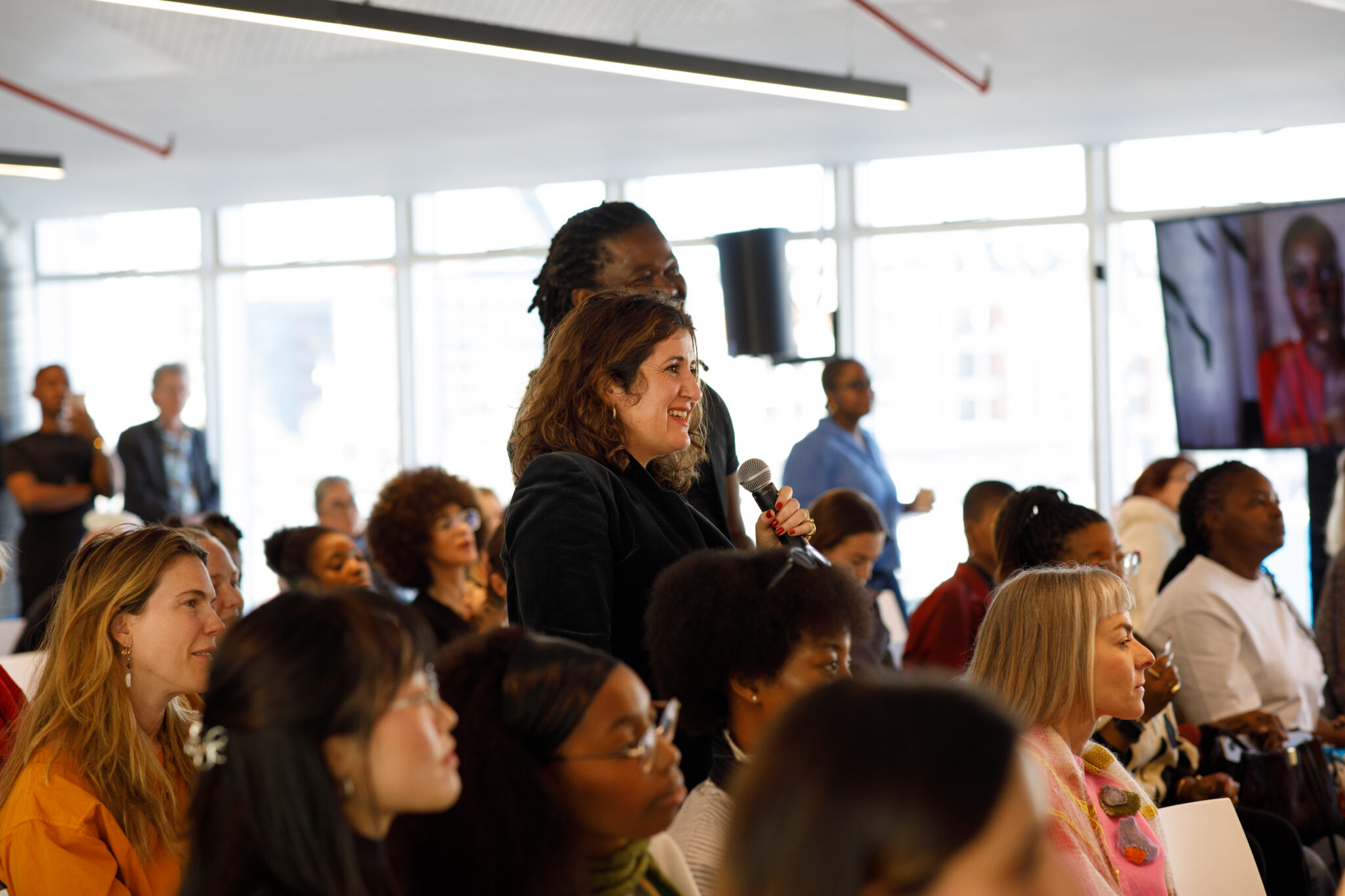
Katherine-Mary Pichulik at Africa Textile Talks 2026. Image: The Dollie House
The task is already underway; the manifesto, The Blueprint for a Regenerative Fashion Future, developed by the African Fashion Coalition, recognises the plurality of our contexts while offering a shared direction and framework for moving forward. Africa Textile Talks helped us formulate better questions, nurture stronger connections and renew our hope that many of the foundations for regenerative textile futures are already here. The work now is to recognise them, strengthen them and persist in weaving them together.
Read more
- Read and sign the The Blueprint for a Regenerative Fashion Future manifesto here
- The Chaos Precinct by Tanya Zack
- Lagos unleashed: Giving in creatively to the global desire for brandedness
- Counterfeits as Social Goods: The Ethics of Chinese Fashion in Mozambique
- Global China and everyday mediation in the Global South: Selling Chinese fashion in Mozambique via WhatsApp
- Africa Textile Talks 2026: Your post-conference learning companion and action Guide by Philippa Crooks
Credits and appreciation
Without our sponsors, we cannot bring our community together, nor grow our ecosystem. We are very grateful to everyone who made this happen: