

Every year on September 24, South Africans observe their heritage, traditions, and cultural backgrounds. In 1995, the post-apartheid government changed the day from Shaka Day to Heritage Day to acknowledge and celebrate all South African cultures. Shaka Day commemorates King Shaka, the Zulu King who united various Zulu clans. In celebration of Heritage Day, Nobanzi Sokhuthu asked six South Africans about their cultural tradition, how they observe heritage, and how they try to do so sustainably. This is what they had to say:
Nkosenathi Koela
Culture and ritual custodian
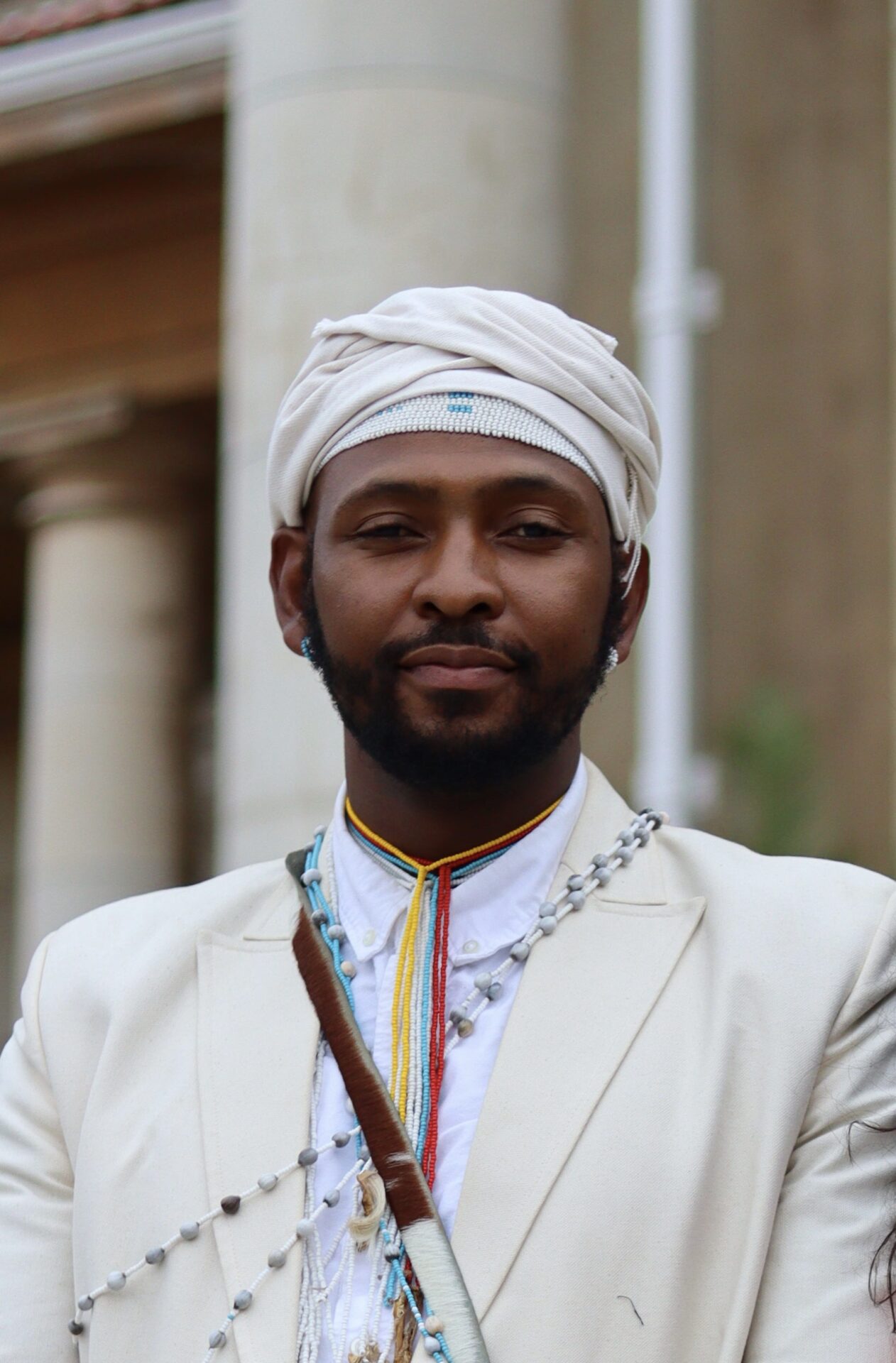
I am a South African Indigene, isiXhosa-speaking, of the abaThembu and amaMpondomise, a cultural and ritual custodian. My heritage spans multiple bloodlines and encompasses vast knowledge systems. As a cultural and ritual worker, sound therapist, and scholar, my work specialises in enriching the epistemologies and ecologies of healing practices. My research and practice focus on the power of African healing traditions and their unique metaphysical technologies of sound, vibration, and therapy as pathways for restoration, healing and knowledge.
Heritage Day, for me, is a reminder that we must listen more deeply to the wisdom left behind in our heritage: in architecture, design, textiles, microbiome knowledge through fermentation, national health systems and grazing and farming patterns. These indigenous knowledge systems demand introspection. They show us that South African heritage, in its plurality, is not simply symbolic; it is a foundation for innovation, development, and healing far beyond the limitations of mimicry or imported models.
Sustainability during Heritage Month should therefore probe our collective consciousness: do we, as individuals and as a society, truly conceive of how epistemically rich our local traditions are in building a healthier nation? This knowledge is not merely cultural practice – it is a living archive. By discerning what is heritage and what is knowledge, we may yet discover a uniquely South African approach to global challenges, one that neither leaves us vulnerable nor dependent, but instead rooted, resilient, and generative.
I use Heritage Day to pray, practice, and deepen my African identity. I encourage those who can, to ask their parents and grandparents about their heritage. I encourage Africans to make pilgrimages to their ancestral homes, villages, or sacred sites. I encourage Africans to sing, vibrate, dance, and somatically heal themselves with the technologies of sound and rhythmic manipulation – reintegrating memory into their DNA. In this way, Heritage Day becomes an embodied act rather than a single day, month, or fleeting moment. Instead, it becomes a continuum: a living practice from which we reap the fruits.
Follow Nkosenathi Koela here
Kyoko Kimura Morgan
Cape Town-based Japanese artist and founder of Origami for Africa

I was born and mostly raised in Japan. I studied in the UK for three years and then came to live in South Africa 33 years ago. My parents’ approach, especially my father’s, to Japanese tradition had a big impact on the way I see tradition. He was very rational and did not just follow things because it is traditional. He believed we can choose which traditional practices to follow and which to discard. For example, Japanese culture places great importance on presentation. If you buy a gift at a shop, it can be wrapped in different layers 4-5 times, which wastes lots of paper. At the same time, we have a culture of wrapping gifts with a piece of cloth called Furoshiki, which can be reused. So, I can decide what is best to do at this time, living in South Africa, what aspect of my culture I would like to promote and pass on to the next generation.
Follow Kyoko here
Zolani Mahola
Singer, actress, storyteller

As the children of this bountiful land, I find that nature is our greatest heritage. On Heritage Day, I like to be in nature, resting my system and replenishing.
Follow Zolani here
Mzukisi Mbane
Founder and creative director of Imprint ZA

Even though I was born and raised in a city, my Xhosa heritage has always been part of my life. I grew up with a strong belief in African spirituality, and my ancestors are a huge part of whatever occurs in my life. This has shaped the way I live, how I create fashion and the way I consume what is available in nature. My fashion brand is deeply rooted in African storytelling. I draw most of my inspiration from my heritage and from what makes us Africans.
African traditions, which are inherently sustainable, influence how I run my business and how I produce fashion. Imprint is committed to producing timeless pieces that can be passed down from generation to generation, rather than trend-focused fashion pieces.
My ancestors respected nature and respected animals. We never consumed meat just for the sake of it. Cows and other animals have strong spiritual significance to who we are and connect us to the spiritual world.
When I created the Imprint Inkomo YaBenguni (Nguni Cow) collection a few years ago, I made a lot of personal changes. This collection led me to consume meat responsibly. I only consume meat from the bird family and meat that has been slaughtered for traditional purposes (just as it used to be done). I’ve implemented other changes to honour my ancestors and live a cleaner life, which coincidentally align with the current conversation around sustainability.
Mzukisi recently won the award for Outstanding Fashion / Textile Designer at The National Arts and Culture Awards 2025. Follow him here and Imprint ZA here
Shamyra Moodley
Fashion designer and creative director of Laaniraani

Born in South Africa, I was shaped by vibrant music, bold clothing, and the resilience of people who inspire me daily. The heirloom sarees from my grandmothers taught me reverence for craftsmanship and the wisdom of zero-waste design. Guided by joy and resilience, my philosophy is to design with purpose – honouring people, planet, and possibility — and to spark hope for a more sustainable, beautiful South Africa.
My creations are a living expression of heritage, memory, and love. They carry the rhythm of Africa, the elegance of India, and the influence of Shamyra’s European journey.
Follow Laaniraani here
Lilitha Ntsundwani
Poet and performing artist

Africa is the land I’m rooted in, and my tradition is a series of actions based on being African. Isimilo Sam (my character) gives birth to my traditions – my values and habits. This is a principle I learnt from my late grandparents, with whom I grew up in my East London rural area, Tsholomnqa, eTwecu.
I observe Heritage Day in ways that amplify unity in our diversity as Africans. I believe in appreciating our differences, and I embrace my uniqueness and individuality.
Heritage motivates us to honour those who came before us for the benefit of the next generation, and motivates us to respect societal evolution, diversity and ideologies. It orchestrates a character for a community. Through this understanding, I believe my journey ensures a sustainable contribution towards our heritage.
My identity is the fundamental inspiration behind my image as a brand, a well from which my wisdom is sourced.
Follow Lilitha here


