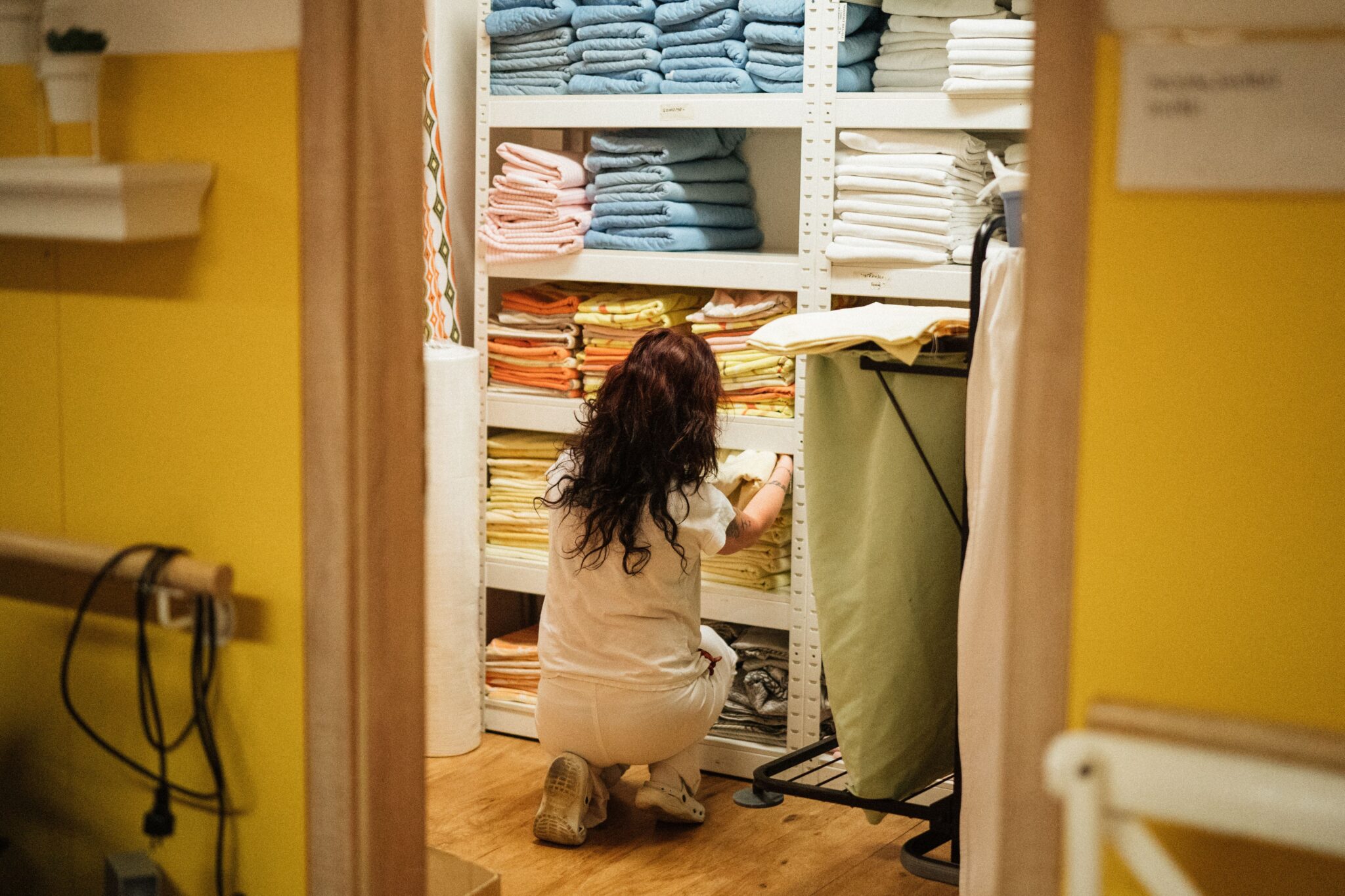
Debates are raging in South Africa about what constitutes as locally made clothing. The industry is under enormous pressure. It needs to compete with imports, with non-compliant factories, with non-competitive costs of manufacturing… There is also pressure from government to manufacture locally so that jobs can be created.
To better understand what these pressures are and what can be done to relieve them, we contacted chief executive officer of Proudly South African Eustace Mashimbye.
For 25 years Proudly South African has been promoting “buy local”. Its highly recognisable label has become a stamp of approval, encouraging us to put our money into the local economy. More than 2,000 brands and 10,000 products have been verified as local by Proudly SA.
Eustace explained via email that before giving products their stamp of approval, Proudly South African determines where the production takes place, whether substantial transformation of the raw material has taken place, and if at least 50% of the cost of producing the product has been incurred in South Africa.
“We vet our prospective members and verify whether they have manufacturing capabilities or infrastructure in South Africa,” says Eustace.
With government funding and additional revenue from membership fees and sponsorships, Proudly South African works to influence the private and public sectors to buy local. “Our mandate is in line with government’s plans to revive South Africa’s economy to create much-needed job opportunities and combat the scourge of poverty,” says Eustace.
Here are Eustace’s answers about Proudly South African, the textile and clothing industry’s challenges and how these can be overcome:
What does “Made in South Africa” actually mean?
We are acutely cognisant that in our definition of locally produced goods, we need to be pragmatic and bear in mind that it is not always possible to have the entire production chain and materials sourced and produced locally.
For purposes of vetting members, Proudly South African has a vetting process [as explained above]. We determines where the production take place and verify if there is substantial transformation of the raw material into the final product. For that purpose, the final product qualifies to have a made in South Africa accreditation. Most importantly, at least 50% of the cost of producing the products must be incurred within the borders of South Africa.
The textile industry, like many other sectors of the economy, is dependent on imports from other markets. However, the most important distinction we make is that in instances where imports of raw materials are required, there should be at least 50% of beneficiation and value added by the local producers. Therefore, the cut, make and trim industry qualifies as local producers because this is where a lot of value addition takes place, for example spinning the yarn, dying the yarn and cutting it into garments.
Do South Africans understand the difference between “designed locally”, “manufactured locally” and “assembled locally”?
We have seen a lot of products claiming South African origin. Some of these adjectives are used interchangeably and infer local production without verification of South African origin in some instances. On some occasions, the use of these words is vague and ambiguous, which may lead unsuspecting consumers to infer local production. However, in many instances, that may not necessarily be the case.
Consumers can take comfort in the fact that our Proudly South African accreditation explicitly means that the product has either been produced in South Africa or its beneficiation occurred within the borders of this country. The Proudly South African sticker is a surefire way for consumers to know that the country of origin is South Africa. As part of our member verification process, we vet our prospective members and verify whether they have manufacturing capabilities or infrastructure in South Africa.
How does Proudly South African support the Retail–Clothing Textile Footwear Leather Masterplan 2030?
Proudly South African advocated for the drafting of the R-CTFL industry masterplan and its contributions have been incorporated in the industry blueprint. But our support of the sector does not end there. We have also developed and successfully implemented various activations that support the sector, which have grown to become calendar events in the fashion industry. These include the opening of [South African] parliament’s red-carpet activation to encourage parliamentarians to dress up in local apparel. We have received and activated requests to roll out this campaign for the Gauteng’s State of the Province Address.
This year, we will be hosting the 6th edition of the Local Fashion Police, an event where we showcase local fashion design excellence. The Local Fashion Police is also complemented by a series of industry masterclasses where established fashion designers share practical industry insights with emerging fashion designers.
On the membership side, it has been heartening and gratifying to note how our support has enabled a growing number of our members to scale up and become household names through the market access opportunities we have created for them.
What challenges do South African manufacturers face?
The challenges are many and varied, depending on the sub-sector that our industries operate in. Having said that, the most common challenges include crippling competition from China and India, punitive tariffs of South African imports to the United States, growing cybersecurity threats, climate change, safety, funding and liquidity, among others.
Then, over the last 20 years the fashion value chain has shifted from vertically integrated, local systems to fragmented, global, outsourcing-led models. Skills such as local, make and trim at scale, local spinning, weaving and dyeing have been outsourced to cheaper suppliers in China. Artisan skills such as pattern making, embroidery, and tailoring have made way for fast fashion. We have high fuel, electricity and labour costs and low productivity. The industry is working on strategies to address these challenges, such as improving productivity, enhancing infrastructure, and promoting local production.
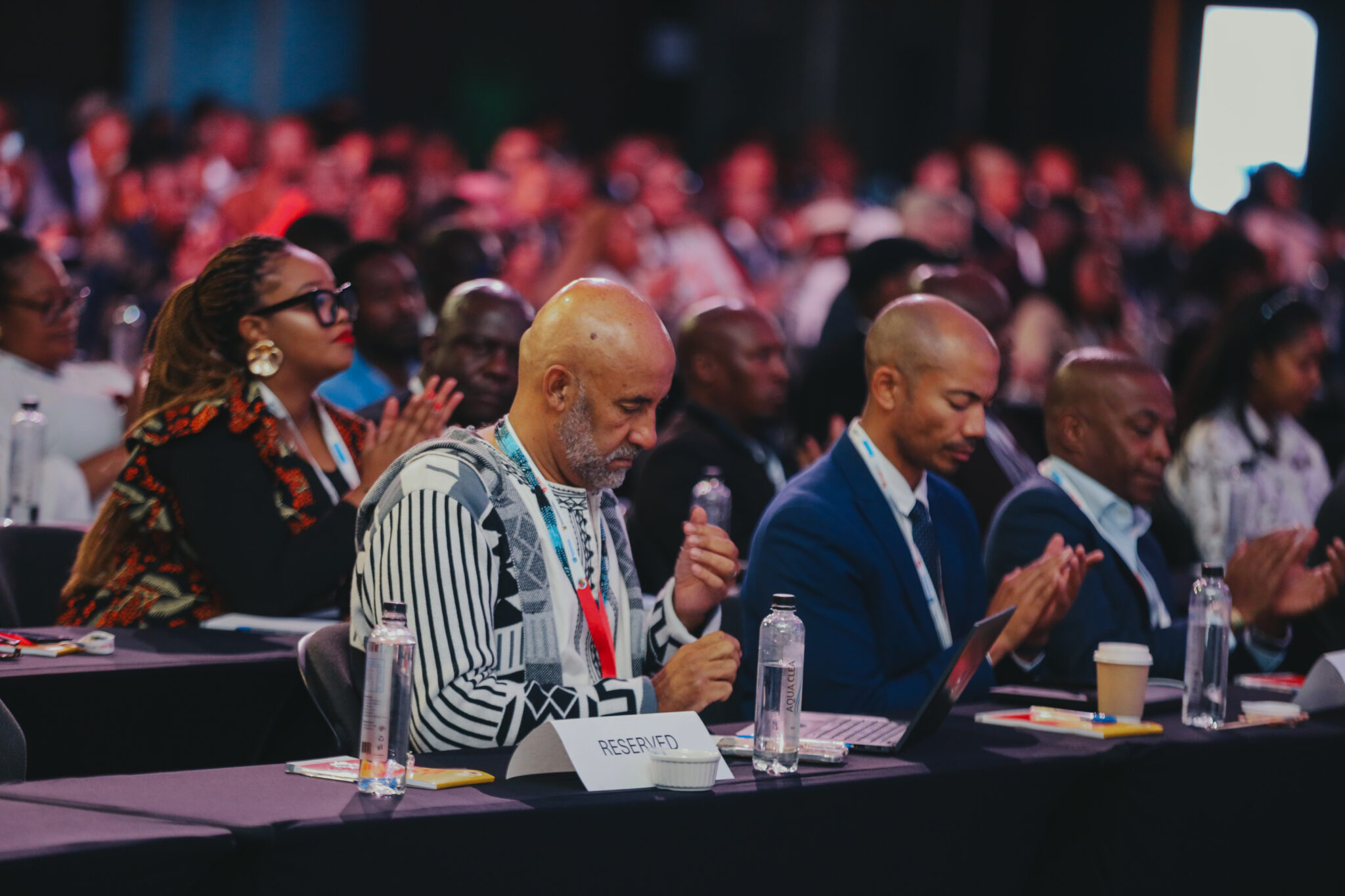
Proudly South African organises events and campaigns to influence the private and public sectors to buy local including the annual Buy Local Summit and Expo. Image: Supplied
Can we compete with ultra-fast fashion Shein and Temu imports?
We are acutely aware of the far-reaching impact of Shein and Temu. For this reason, we commissioned a study to quantify their impact on the local R-CFTL industry.
The study found that a substantial portion of South Africa’s e-commerce clothing sales has been captured, with a combined 37% market share in 2024. This rapid growth has displaced local manufacturing sales and jobs, with about R960 million in unmaterialised local manufacturing sales.
A Localisation Support Fund report noted that the Chinese e-commerce retailers raise consumer expectations. We believe that local retailers can learn important lessons and should build more agile value chains capable of competing globally and improving their offerings, prices and experiences. This, in turn, would increase job opportunities and economic activity.
How dependent is South Africa’s clothing industry on imported fabrics and trims?
The South African textile industry is still heavily dependent on Chinese imports for fabrics and trims. The trade imbalance is skewed towards cheap Chinese imports. For example, in 2024, South Africa exported R19.4 billion worth of textiles according to data from The Observatory of Economic Complexity. Of that, R4.07 billion went to China. Imports in this sector totalled R65.4 billion, and nearly half of that came from China. The result is a trade deficit.
According to the Institute for Security Studies, South Africa has sent a staggering R2 trillion more to China than it received in overall exports since 2000. In March 2025, the textile trade gap widened again: exports amounted to R2.22 billion while imports stood at R4.85 billion.
These figures indicate the enormity of the challenge that lies ahead for the textile industry.
Why is locally made fashion often more expensive?
The local textile industry has been subsidised in the past. When trade was liberalised, this protectionism was removed and ramped up the operating costs of the industry, unfairly pitting the local fashion industry against cheap and highly subsidised imports from China and India.
The South African textile and fashion industry has to contend with high operating costs. Our industry doesn’t enjoy the level of protection and subsidies that our counterparts in the East have. .
Nonetheless, we are encouraged by the efforts that our local retailers are putting in to make our pricing more competitive, and we believe that over time, with significantly enhanced production volumes, the South African fashion industry will be able to offer high-quality fashion at competitive prices.
What role should retailers play in rebuilding local textile and garment production?
Retailers play an enabling role in supporting local designers and giving them shelf space. We also encourage retailers to refrain from sourcing their products from non-compliant sweatshops that violate the country’s labour regulations and serve as hubs for exploitation.
Proudly SA has partnered with the Department of Labour & Employment, the National Bargaining Council, and the leading retailers to launch an operation called Zero Tolerance to clamp down on non-compliant clothing factories and sweatshops that have mushroomed around hubs such as Riversdale in Kwa-Zulu Natal. We believe in fashion that is not produced in slave-like conditions.
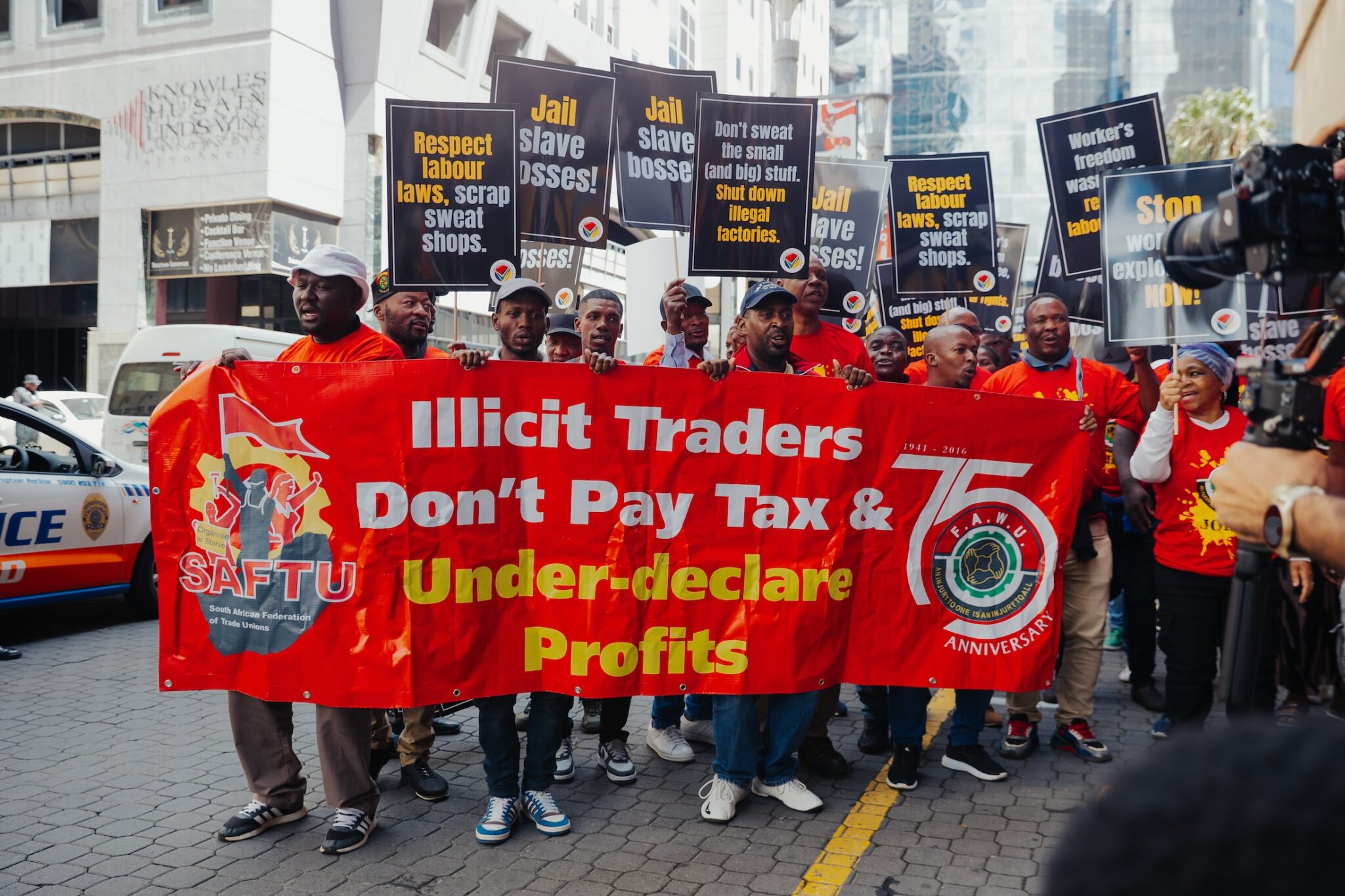
Proudly SA has partnered with the Department of Labour & Employment, the National Bargaining Council, and the leading retailers to launch an operation called Zero Tolerance to clamp down on non-compliant clothing factories and sweatshops. Image: Supplied
Is “buy local” enough, or does South Africa need stronger industrial protection policies?
Though the buy local campaign has achieved exceptional results, we believe that policy and legislative interventions are required to give a “bite” to the buy local campaign. For example, US government has legislation that makes local procurement a legal imperative and that are aimed at reviving the country’s labour-intensive sectors.
- This e-mail interview has been edited for clarity and brevity