
Government wants you to buy locally produced clothing and textiles to support the growth of the industry. A new report says that government itself could do a lot better.
The South African government spends an estimated R7,55billion on clothing and other textile goods, according to a new report commissioned by the Localisation Support Fund. This is almost R6billion more than is usually reported. But, says the LSF, only 32% of the R7,55billion is spent on items made in local, compliant manufacturers while 68% or R5,11billion is spent on what it calls “unconfirmed suppliers”. These, it says, may either be local suppliers who are not compliant and/or not registered with the national bargaining council or international suppliers.
Government departments, state-owned companies and local government buy large quantities of textiles every year. Health departments spend money on medical staff uniforms, patient clothing and hospital linen. The Eastern Cape Government spends on school uniforms. The South African National Defence Force and South African Police Service buy uniforms. Many departments and agencies buy workwear and overalls.
“If we can improve our procurement systems in South Africa, there’s a big opportunity to create a lot more jobs.”
A new report by Localisation Support Fund and BMA, “Lost Threads: The Case for Compliant CTFL Public Procurement” shows the impact if the South African government spends more of our tax money on buying clothing, textiles and footwear from local suppliers.
“If we can improve our procurement systems in South Africa, there’s a big opportunity to create a lot more jobs,” says the CEO of the LSF, Irshaad Kathrada.
Courtney Grant, who led the BMA research for the report, explained in an email that 68% of purchases classified as “unconfirmed suppliers” is not necessarily imported spend. “It may include illicit, small or informal local manufacturers, as well as South African-based businesses acting as intermediaries or importers, where we could not confirm that the underlying manufacturing took place locally or met the relevant compliance criteria.”
She says that the opportunity represented by the 68% is the maximum potential localisation opportunity. “To realise the full value of that opportunity, all of this spend would need to shift to verified South African manufacturing. In practice, some portion may already be locally manufactured (but not bargaining council compliant) but could not be confirmed through the datasets available to us.”
According to the report, each additional R1 billion redirected to compliant local government purchases could support about 2 450 direct manufacturing jobs and a further 5 050 indirect jobs across the value chain. If government were to spend R5,11billion on local, compliant manufacturing, it could support 51 684 direct and other related jobs.

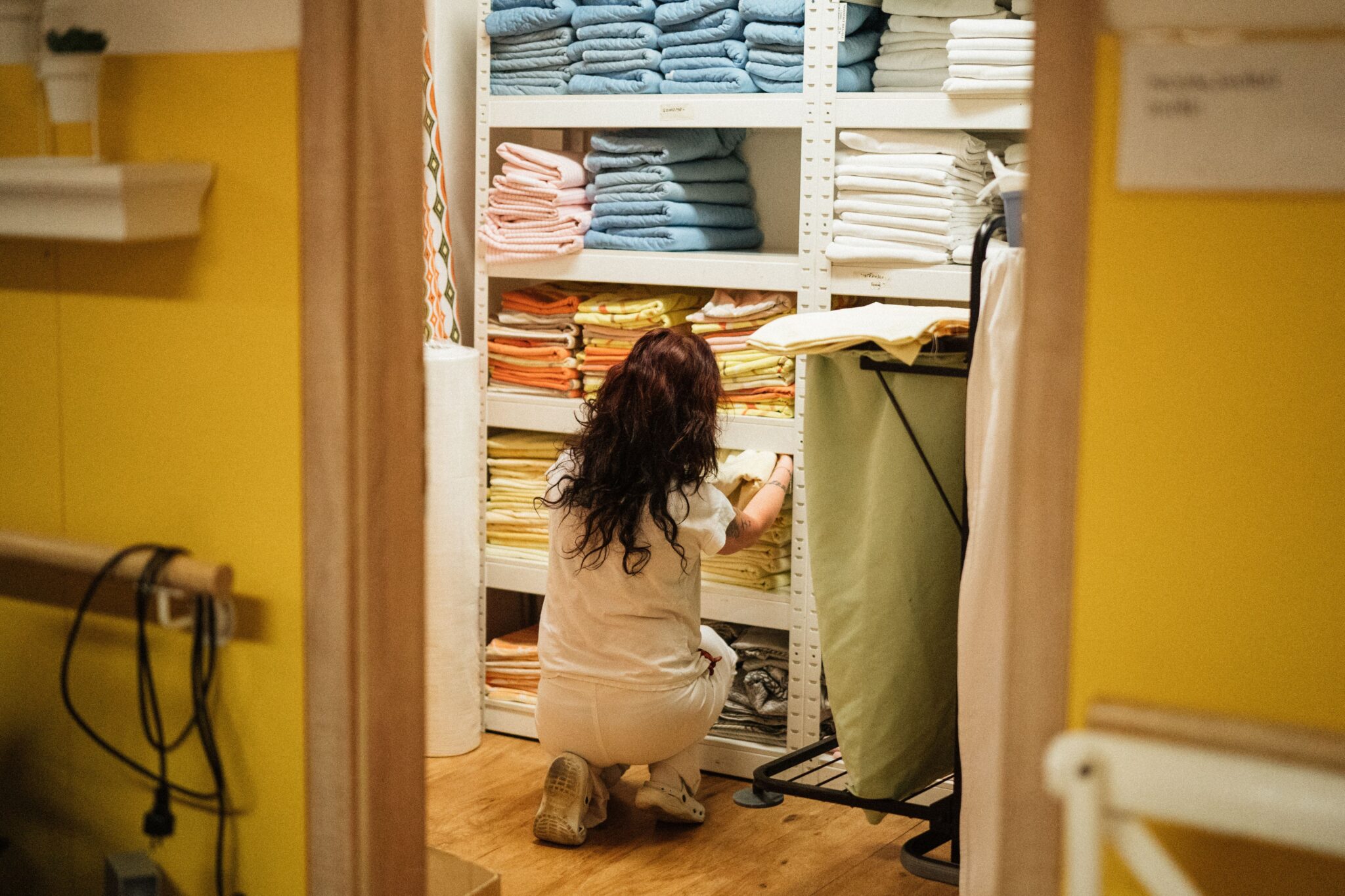
Government could put billions of rands into the local value chain if it bought more locally manufactured clothing and textiles. Image: Pexels
Instead, billions of rands are leaving the local value chain. This is largely because procurement processes are messy and tenders don’t include local-content requirements. Talking to CNBC Africa, Irshaad explained that there are gaps at different stages in the tender process that allow for procurement managers to take their own direction. “There’s no standardisation,” he said.
According the report further reasons for non-compliance with localisation include that importing can be cheaper than buying local; there is a lack of awareness and understanding of the benefits of buying local and suppliers can declare that they meet local-content rules without that claim being checked before the contract is awarded.
Even if suppliers declare that the goods are locally made, verification is complicated. The report found that checks can be slow, expensive and inconsistent. In many cases government departments rely heavily on supplier self-declarations. So something can be called “local” on paper without real evidence of where it was actually made.
The government is already spending the money. Now it must spend it locally.
If government redirected all tax money to local factories, are they able to deliver these quantities? Yes, says Irshaad. “We have a huge capacity in South Africa to produce garments at the scale necessary for government procurement.”
If it spends more than it currently does on locally manufactured clothing and textile, the government could support significant growth of the industry. The government is already spending the money. Now it must spend it locally.
“We can achieve this, if we work together and collaborate,” says Irshaad.
- The read the full report ‘Lost Threads: The Case for Compliant CTFL Public Procurement’ here
- The difference R6 billlion reflects the consultants estimate of spending by the South African Police Service, the South African National Defence Force, state-owned enterprises and municipalities, which is largely invisible in standard Treasury reporting and had to be modelled from employee headcounts, financial statements and other proxy data
- The Localisation Support Fund commissioned BMA to conduct the study and prepare the report. Read all the LSF reports here
- Compliant local manufacturers and suppliers can be verified through the National Bargaining Council, the National Textile Bargaining Council and DTIC
- Feature image credit: Jsme Mila / Pexels


