South African designer Sipho Mbuto has built his brand around timeless clothing, careful construction and the belief that garments should be worn every day, not saved for special occasions. Following his participation in The Foschini Group’s Sustainable Design Incubator, he has created two collections for the group’s omnichannel platform Bash. The first one sold out, and he has launched a second collection. Here he speaks about finding his own design identity, collaborating with TFG and why making clothes by hand remains central to his work.

What keeps you busy at the moment?
Right now, I work from a small studio where I do everything from start to finish; cutting, sewing, finishing. I’ve had to fit all the factory stations into a compact space and make it flow efficiently.
I work with Africa Ignite, a non-profit organisation working in disadvantageous communities, which has allowed me to give back to my community by teaching women how to sew and master this skill. Developing the talents of women from underprivileged backgrounds who provide for their families has been an exciting journey for me. Financially, it’s about keeping overheads low and selling directly to customers who value craft.
Creatively, what keeps me going is working with my hands – I’m an old soul, and I believe we’re losing that hands-on craft. I want to make clothes. Inspirationally, it’s the simple question: “What do I want to wear every single day, without fuss?” That never gets old.


Tell us about The Foschini Group's Sustainable Design Incubator
The SDI [a youth and enterprise development program launched by The Foschini Group in 2022 to support emerging South African fashion designers] pushed me to define who I am as a designer. Before the programme, I had worked for other brands and worn their samples: I never truly had my own style.
The incubator forced me to ask: “What do I actually like?” I had to figure out exactly what I wanted before I could design for anyone else. That was uncomfortable but essential. It also challenged me to make sustainability practical – not just a label, but real choices about materials, dyeing, and how I run my small production.
The journey taught me that simplicity is the hardest part: making a garment that is functional, architectural, classic, and beautifully finished inside and out.
What inspired your first collection for Bash?
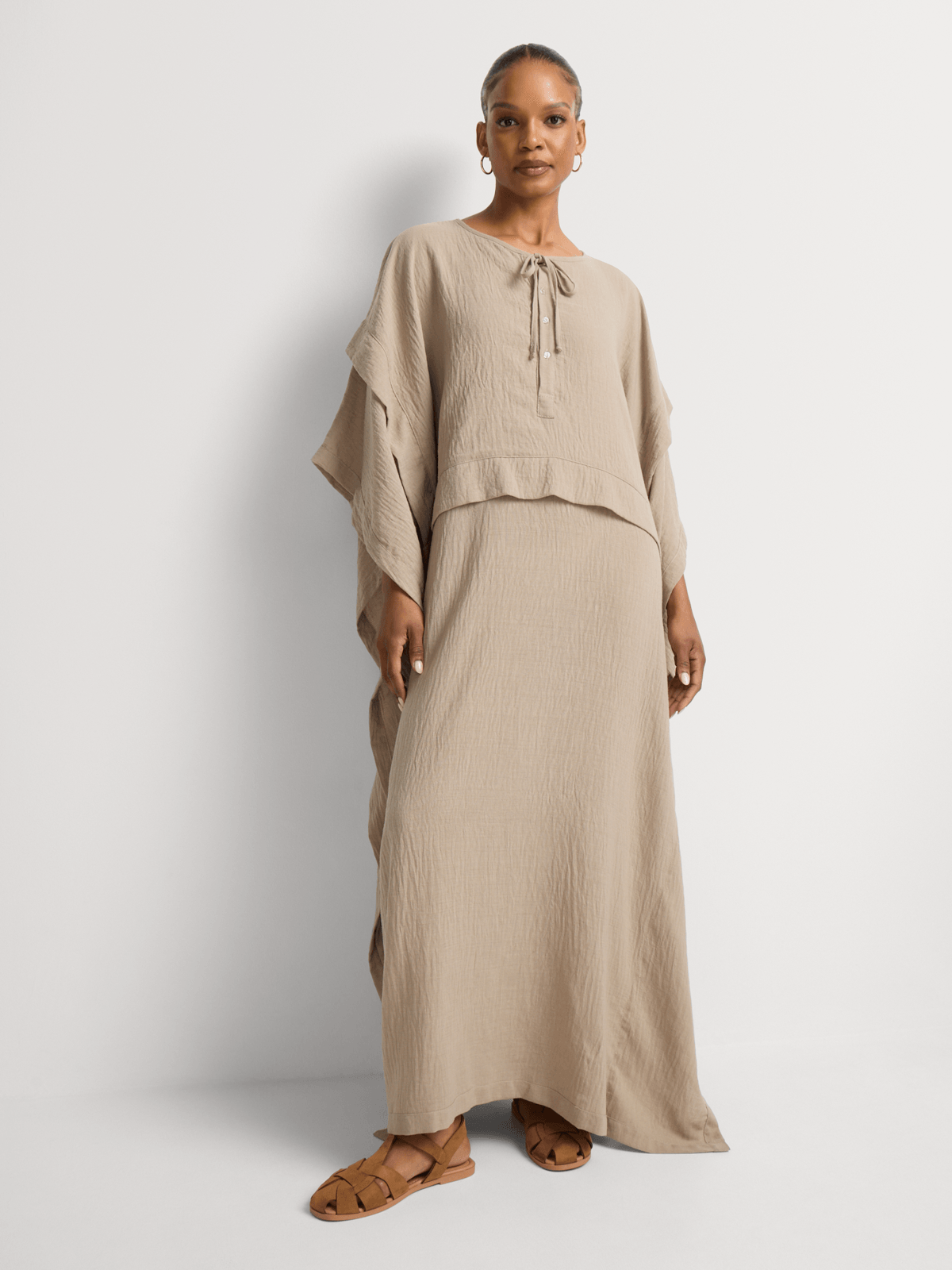
The first Bash collection started from the same place as everything I make. What garments do I want to wear every day, without thinking twice. I believe no matter how nice a piece is, you need to wear it – garden in it, get dirty in it.
So, the shapes are simple but have a little flair in the drape to elevate them. I’m a construction nerd, so I finish the insides in a clean, beautiful way – I love turning my clothes inside out to show people. That aligns with my whole journey, moving away from fast, dyed, disposable fashion toward timeless, undyed or naturally dyed pieces that stand the test of time.
The first collection sold out much faster than I expected. The response was amazing and showed me that people connected with my vision and the story behind the brand. It wasn’t just about the clothing—it was about creating something authentic.
The success came from staying true to my identity, focusing on quality, and listening to my customers. It was a proud moment, and it motivated me to keep growing.
Tell us about your second collection for Bash?
For our second Bash collection, we launched pieces from the first collection together with new items. Half of it is already sold out. We’re really grateful for the support.
Tell us about your choice of materials for these collections
As for the Bash collections, TFG provided me with the materials. Our selection was made from deadstock fabrics, of course, of differing compositions.
What are typical concerns when collaborating with large retailers?
From my experience and conversations with peers, the biggest concerns are losing control over quality and sustainability. Large retailers often push for volume, speed, and lower costs – which can conflict with using undyed linen, natural dyes, or hand-finished interiors. Designers also worry about their brand identity being diluted or their small-scale processes not being understood.
There’s always a tension between staying true to your craft and meeting a retailer’s commercial demands.


How could the industry better support independent fashion designers?
I wish there was more recognition that this is sculpture – using fabric as the medium. Support could come in many forms: funding for small-batch natural dye development, shared production spaces that respect handcraft, and retail partnerships that don’t force designers to compromise on their materials or ethics. The industry could help by making sustainable, local manufacturing more accessible and by celebrating the inside of a garment as much as the outside.
Also, we need a shift in consumer culture. We need an understanding that clothes should be worn, loved, and repaired rather than treated as disposable.
Tell us about your relationship with Bash?
Our relationship with Bash has deepened with the second collection. As a global giant in retail, it’s been an amazing experience for a small brand like ours to work with such a powerful retail group. We’re incredibly appreciative of the opportunity, the support, and the belief they’ve shown in our brand. This partnership has helped us grow and reach more customers than we could have imagined.

What are you reading, watching and listening to at the moment?
I spend more time with my hands than with screens. The rhythm of my Juki sewing machine keeps me company – it’s been with me for 10 years. Inspiration doesn’t need plane tickets to Greece or India. It’s in the small details, right here. Quiet time with God and family keeps me grounded.


Where do you find moments of wonder that make your life worth living?
In my studio, turning a garment inside out and seeing the perfect seams. In wearing my own pieces – gardening in a linen shirt, getting dirt in it, knowing it’s built to last. And in the simple act of making something with my hands, from sketch to finished garment.
That’s where I find wonder: in the craft itself, and in the belief that clothes should be lived in, not left on a shelf.
- Images supplied by Sipho Mbuto
- Collection available now on Bash
- Follow Sipho Mbuto on Instagram