

The most important collection at this year’s Lagos Fashion Week will not be on the runway. Omoyemi Akerele will use Africa’s largest and most influential fashion event to launch a continent-wide blueprint to encourage the industry to embrace regenerative fashion.
Lagos Fashion Week is a multi-day fashion week held in Lagos, Nigeria. Founded in 2011 by Omoyemi Akerele, Lagos Fashion Week is a leading transformative movement. By placing circularity, craft-driven innovation, and community development at its core, this fashion week is tackling fashion’s biggest issue of overproduction and overconsumption.
“When Lagos Fashion Week launched in 2011, it started as a vision to show the capability, or the capacity, of what fashion can do when we’re looking at it through the lens of socioeconomic development, preservation of skills or cultural heritage that’s been passed down from generation to generation, and the wider impact that that can obviously have on the environment, culture and creative economies,” says Omoyemi.
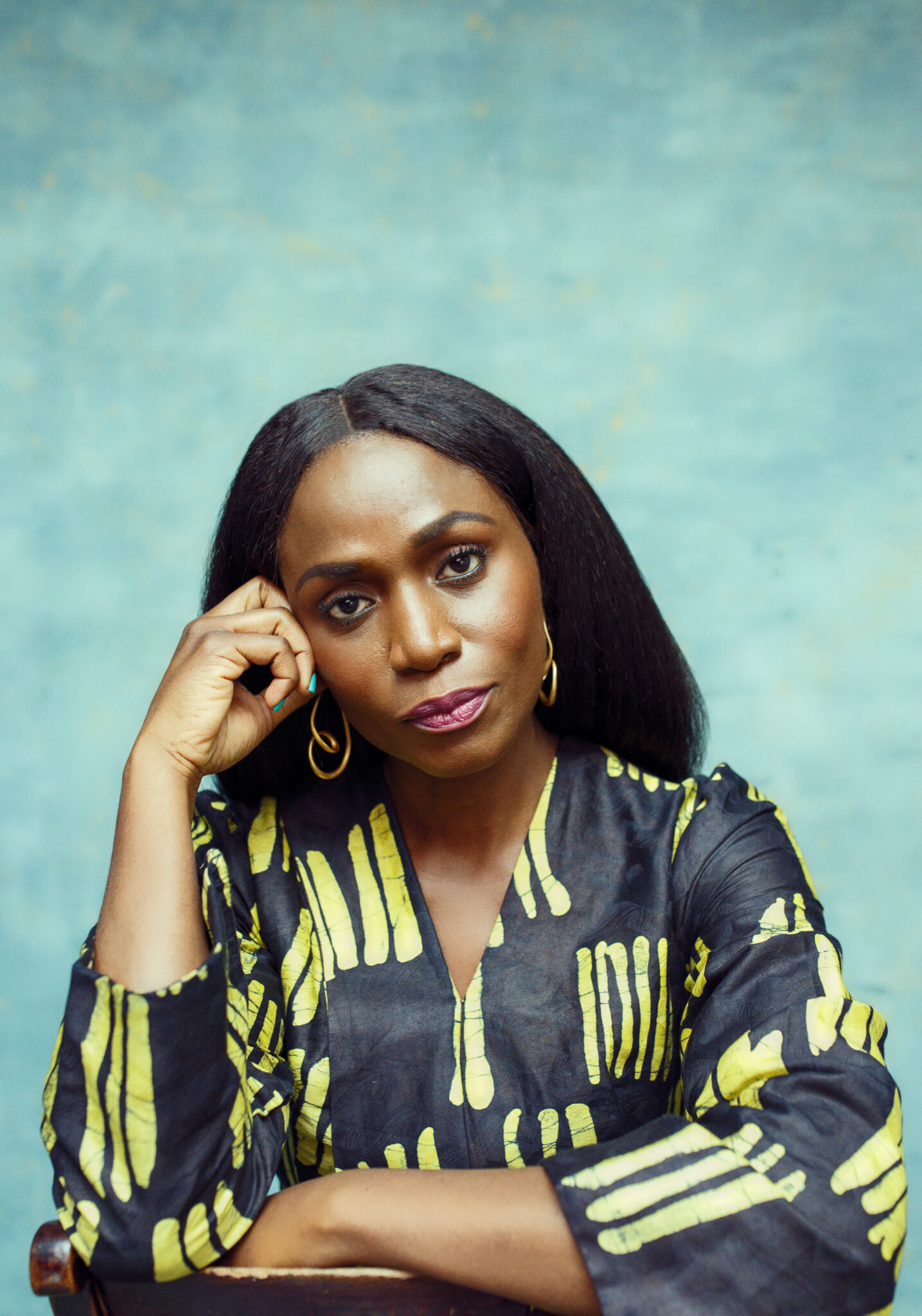
Omoyemi Akerele launched Lagos Fashion Week in 2011. Image: Chidinma Chukwu
That vision was shaped by what Omoyemi had observed in Nigeria’s fashion industry, where she had worked as a fashion editor.
“Prior to that, at least in Nigeria, where I’m based, fashion was perceived as entertainment. It was more geared towards people coming together, dressing up really nicely, to just go and watch this performance, also described as a fashion show. And so, coming into all of that with a background and looking around and understanding that if we could perhaps put a bit more structure to this. If we could galvanise the industry to come together, I naively thought that a fashion week could solve some of the problems I’d seen working as a fashion editor in the industry.”
In 2025, Lagos Fashion Week received the Earthshot Prize under the “Build a Waste-Free World” category for its transformative work in building a sustainable and ethical African fashion industry. The Blueprint for a Regenerative Fashion Future, a manifesto designed by the newly formed Fashion Coalition, was launched at the Mills Fabrica during London Climate Week on 22 June 2026.
What is regenerative fashion?
Regenerative fashion is a holistic approach to clothing that aims to restore and revitalise ecosystems and communities throughout the entire life cycle of a garment.
“Regenerative fashion is asking, how do we create good? How do we create a version of fashion that is less extractive, one that restores landscapes, and one that strengthens communities? It revitalises indigenous knowledge, creates secular economies naturally, and recognises all of these competing priorities to be mutually reinforcing and balanced,” says Omoyemi.
In practice, regenerative fashion can mean working with locally grown natural fibres, reviving traditional weaving and dyeing techniques, supporting small artisan communities, designing products for repair and reuse, reducing dependence on imported materials and building supply chains that benefit both people and ecosystems.
“Fashion begins with what comes from the land, from your cotton, to natural dyes, to natural fibres, that you have a lot of across the African continent. That’s dependent on biodiversity, natural biodiversity across the continent, and what happens is this is brought to life by people. This is when you introduce people into the equation, from your artisans. Designers who work with the artisans within an ecosystem that brings this into designs and collections that you see on catwalks around the world,” Omoyemi says.
“However, what makes it truly special is that a lot of livelihoods depend upon this process, and therefore, it’s very, very important that there is a balanced understanding that if either the land is depleted, or the people are not well compensated, the whole system ultimately fails. So it’s looking at it through the lens of that wider understanding, that advocates for a system that’s more regenerative as opposed to just sustainable.”
The Blueprint for a Regenerative Fashion Future
The manifesto exists as a roadmap for governments, businesses, investors, and everyday people, emphasising Africa’s historical practices of sustainability and circularity.
The manifesto was workshopped by a group of African fashion founders who formulated 10 pillars, the DNA of what makes African fashion truly special.
“If we all come together to define that DNA and share it with the world, we can reveal more of who we are and show that the African approach to designing, creating and producing fashion is inherently regenerative because it begins with culture,” says Omoyemi.
The coalition calls for fashion to protect cultural heritage, embed circularity into production, strengthen community-led businesses, safeguard intellectual property, demand accountability for textile waste, expand local manufacturing, support climate-responsive innovation, improve market access, invest in infrastructure and encourage more conscious consumption.
The principles are grounded in African realities rather than imported sustainability models.
Instead of measuring success only by recycled fibres or lower carbon emissions, the Blueprint asks whether fashion strengthens indigenous craftsmanship, keeps value within African economies and gives communities greater control over production.
On 28 October to 1 November 2026, the lasting legacy of Lagos Fashion Week may not be remembered for a single collection but for a manifesto that challenged the industry to rethink what success looks like.
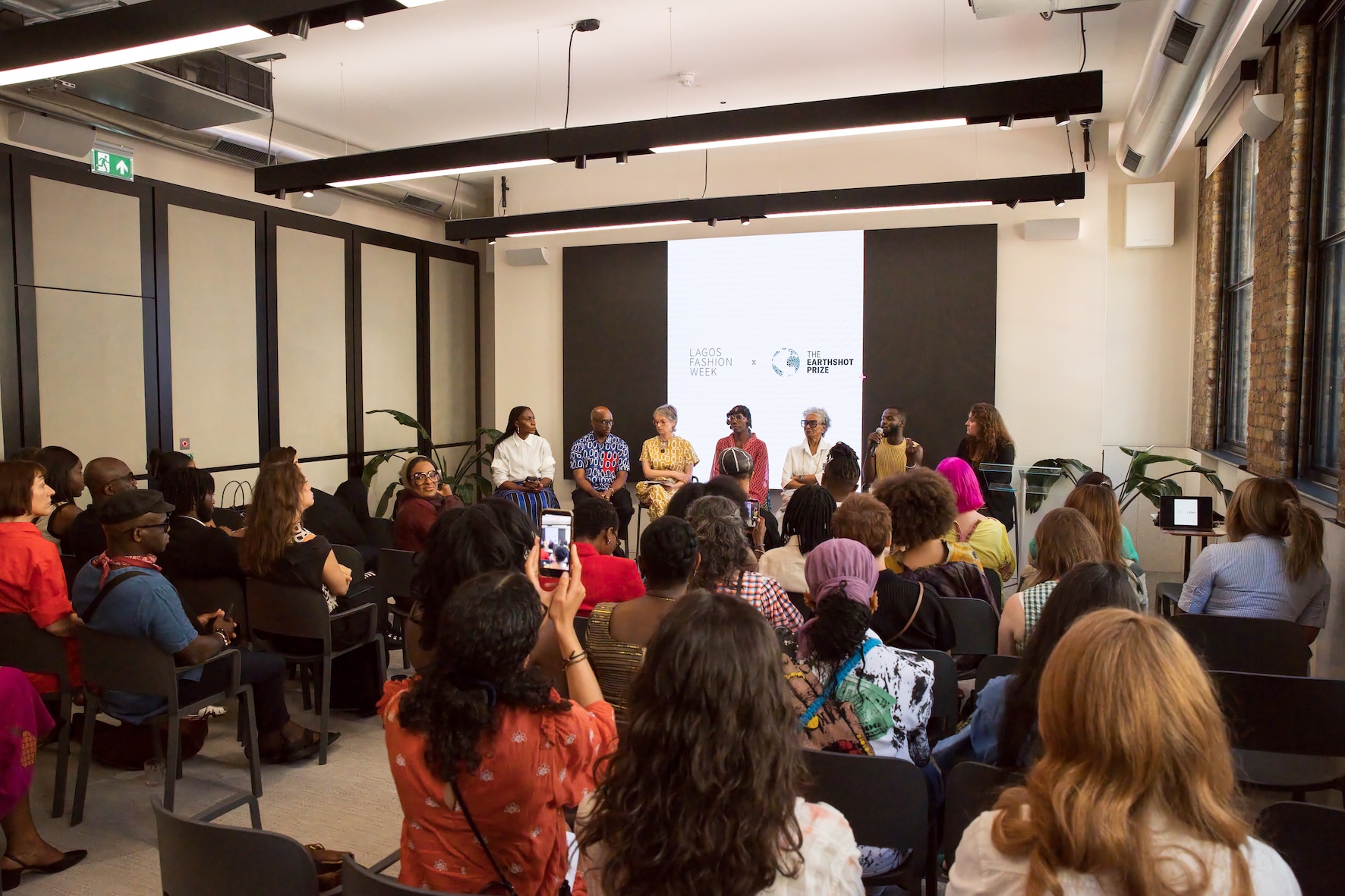
The Fashion Coalition launch the manifesto in London in June 2026. From left, Omoyemi Akerele, Sunny Dolat, Jackie May, Renée Neblett, Sammy Oteng and Simone Smit. Image: Lagos Fashion Week
If the Blueprint for a Regenerative Fashion Future gains traction, Africa could move beyond supplying raw materials to leading a global movement that values restoration as much as innovation.
Omoyemi says the work is ultimately about driving change rather than building a legacy.
“We don’t do the work we do because we’re focused on trying to leave a legacy. We’re working because there’s so much to be done, and if in the process we make an impact, absolutely fantastic. But can we just drive change? Can we just see the change in our lifetime? That would just be magnificent.”
- This article was produced by bird story agency and edited for Twyg by Jackie May
- Feature image: Ajanéé at Lagos Fashion Week
- Lagos Fashion Week is from 28 October – 1 November in Lagos
- You can read the manifesto here
- Visit Lagos Fashion Week website for more information


