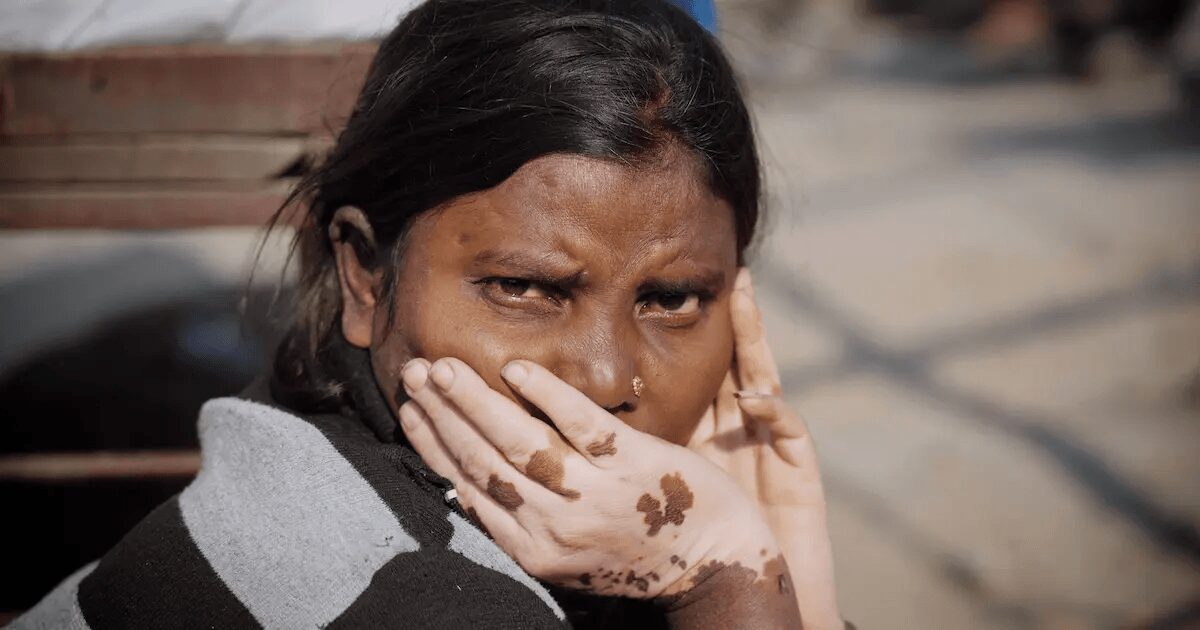

The creative process of designing, making and selling fashion is fun and beautiful. But on International Workers’ Day we need to remember the industry offers easy availability of cheap, mass-produced clothes made by people who are generally underpaid and who work under dubious conditions. It’s also a good day to remember why we need government policies and why we should support locally made fashion.
According to the international ethical fashion app Good On You’s chief operating officer Gordon Renouf, “Not only are factory and agricultural conditions poor for most of the 80 million people working in the fashion supply chain, but for many, wages fall short of the amount needed to support a family at a very basic level.”
While there have been strides in recent years towards greater accountability, fashion’s supply chain has harm built into every phase.
There are people suffering respiratory issues from sandblasting denim, tanners work with carcinogenic chemicals every day, and herders whose mental health has degraded from performing violence to keep up with demand
The majority of fast fashion items sold globally (and in South Africa) are still made in factories in countries including China, Bangladesh, and India, where a predominantly female workforce is pushed to meet the insatiable demands of the Western world. There are people suffering respiratory issues from sandblasting denim, tanners work with carcinogenic chemicals every day, and herders whose mental health has degraded from performing violence to keep up with demand.
 A worker at a tannery in Morocco. 2021. Credit: Johannes Pokorn / Unsplash
In South Africa, despite conditions of work being regulated, many garment workers continue to work in unsafe conditions from sitting in poorly designed chairs and being exposed to risks such as cutting machines in compliant factories to being locked up overnight and working 18-hour days and seven days a week in illegal sweatshops.
“Last year four workers died when a fire spread through two illegal factories in Newcastle in Kwa-Zulu Natal,” says Simon Eppel, a researcher for the South African Clothing and Textile Workers Union (SACTWU).
It is not a lot of money, particularly when you consider that workers must support on average about five dependents
Like elsewhere, workers in the local garment industry are low paid workers. Simon says, “An experienced machinist will earn about R1 600 a week if she is paid the legal wage. The legal minimum wage is lower in the smaller towns (non-metro areas). It is not a lot of money, particularly when you consider that workers must support on average about five dependents.”
But South African wages are higher than some competitor countries, which means retailers are constantly seeking cheaper sources of production. This causes instability and job losses in the industry.
These are world class sweatshops that can compete successfully with any abuser anywhere in the world
Worryingly, says Simon, “There is also a large cohort of (local) companies that break wage laws and choose to compete in the market by underpaying workers, often very significantly. There are factories which have recently been raided by the Department of Employment and Labour at which the wages are sometimes as low as R350 a week. These are world class sweatshops that can compete successfully with any abuser anywhere in the world.”
While South Africa’s industry has its problems, it is far better regulated than many other developing countries that produce cheap fashion. We have more progressive labour laws and better labour relations infrastructure, such as the National Bargaining Council.
“We have an unusually high rate of unionisation in our industry compared to many other countries in the world,” says Simon. “This adds to the ability of workers to collectively advance and defend their interests.”
What is needed is a massive shift in approach
But with fast fashion giants Shein and Temu currently sitting at the top of our country’s list of most popular sales apps, how can we encourage responsible production and consumption? According to Gordon Renouf, Good On You’s CEO, what is needed is a massive shift in approach.
The onus should not fall solely on the consumer to change the industry. “The key is creating incentives for brands to do better generally, including creating clothes that both last a long time and stay in style,” Gordon says, pointing to voluntary and mandatory schemes launched by governments in the UK, Australia and France where brands pay a fee per garment that goes to waste.
“Brands need to be fully transparent about all the issues that matter–likely, this requires regulation,” he says. “Government policy should also ensure that it creates the right environment for more sustainable brands to thrive, especially smaller ones.” Many of these smaller brands are “focused solely on creating timeless items”.
For consumers, Gordon says it’s crucial we educate ourselves about the practices of the brands we support and critically evaluate our purchasing decisions. There is great value in making it easy for consumers to make the right choice. Tools like the Good On You app which is a directory where consumers can check brands’ sustainable and ethical ratings, or Twyg which platforms African designers producing clothing consciously, play a significant role in this.
It is best to buy locally produced goods
SACTWU’s Simon advises that for South African consumers wanting to make more moral choices, it is best to buy locally produced goods. “There is a deep positive logic in a country leveraging its domestic base of consumers to support local industrialisation and job creation.”
It makes a lot of sense to use our purchasing power in ways that allow us to retain and maximise the impact of our money—to cycle and recycle it through our economy, stretching its ability to create jobs
“Ultimately it calls on South Africans to consider whether they will spend their limited Rands in ways that support and produce jobs for fellow citizens and improve our overall socio-economic performance, or whether they will channel their Rands out of South Africa to benefit the growth and jobs of foreign countries. It makes a lot of sense to use our purchasing power in ways that allow us to retain and maximise the impact of our money—to cycle and recycle it through our economy, stretching its ability to create jobs.”
The concept that ‘local is lekker’ has long been a part of South African culture and could prove to be the solution—not perfect, but certainly best—to addressing some of the fashion industry’s problems.
Durban-based designer, Fikile Sokhulu presented her spring summer 2024 collection at SA Fashion Week, a showcase of South African fashion talent
- Feature (first) image: a still from Slay, a documentary that provides an in-depth and eye-opening look into the realities of today’s fashion industry while pointing the way towards viable and sustainable alternatives. You can watch it on Waterbear
- Second image: A worker at a tannery in Morocco. A visit to a Moroccan tannery is not only a visual impression that stays, also the smell is unforgettable. The procedure of making leather has not changed much over the last decades and even centuries, neither have the working conditions, we were told. Johannes Pokorn / Unsplash


