The morning after Onesimo Bam’s Progression V, I returned to sit quietly in gratitude in St George’s Cathedral, Cape Town. A few hours before, the space had been filled with people, voices and garments moving through its grand interior for a curated encounter between fashion, sound and architecture. The performance formed part of the Twyg Fashion Festival supported by V&A Waterfront and Merchants during the Investec Cape Town Art Fair in February 2026. For months as producer and director of Progression V, I had been deeply involved in imagining this fashion performance into being and in shaping how it would unfold in the cathedral.
In the stillness the next morning, the experience felt unexpectedly personal.
I have come to know Onesimo Bam not only as a designer, but as a friend and collaborator whose work moves between form and memory. Our relationship has been shaped through a shared curiosity around how garments can hold meaning, and how fashion might extend beyond the body and into something experienced.
At the centre of his practice is a sensitivity to cultural layering, where multiple references are brought into play. His work often takes on sculptural qualities, creating garments that do not constrain the body but instead hold it – offering the wearer a sense of safety and empowerment.
It’s an ongoing meditation on body, movement, and belonging, where the boundaries between fashion, performance, and everyday life begin to soften and dissolve
It is within his evolving practice that the Progression series takes form. It’s an ongoing meditation on body, movement, and belonging, where the boundaries between fashion, performance, and everyday life begin to soften and dissolve. The presentations emerge as fashion-led interventions across public space – from Bree Street to Langa, and most recently St George’s Cathedral – each site leaving its own imprint on the work.
From an early age, I understood the significance of church as being more than a place of worship. It is where community gathers, voices rise in a soul stirring resonance and people arrive wearing their Sunday best. In the actualisation of Progression V, it became apparent that the performance spoke to something else that has long existed: the relationship between faith, fashion and the ways Black communities insist that church is a space where dignity is uncompromised.

Thato Human walks for Onesimo Bam’s Progression V in St George’s Cathedral on 19 February 2026. Image: Ben Mall
Listening to Images by Tina Campt offers a way of thinking with this. Tina writes about “listening” to images rather than only looking at them – attending to their quieter frequencies of feeling, endurance and refusal. She shows how, even within histories that try to constrain Black life, there are always small gestures that hold presence and insistence.
This feels closely tied to how church spaces are experienced and sustained by Black communities. The church is not only a site of worship, but a space where dignity is made visible. It lives in the cadence of hymns, in the act of gathering, the care of dressing up and in the shared presence of being together. In this sense, the church can be understood as something we “listen” to as an ongoing chorus of faith, memory, and quiet insistence that holds people in their fullness.
Read: Onesimo Bam shows Progression IV in Langa
St George’s Cathedral carries a monumental presence in Cape Town, its scale matched only by the depth of its 160-year history, etched in stone and cemented by the memories of those who have passed through. Beyond its architecture and age, it is closely associated with Nobel Peace prize winner, the late Archbishop Desmond Tutu whose leadership helped shape the cathedral’s role as a site of moral witness during and after Apartheid.
When I returned the day after the show to share feedback, the verger Gregory Coetzee mentioned that the last time the seating had been arranged in a similar orientation – the pews had been reworked away from their usual forward-facing arrangement into long, parallel rows, turned inward so that they faced one another across a central aisle – was for a Truth and Reconciliation Commission-related gathering in the 1990s. It is a small but meaningful connection, linking the performance to the cathedral’s long history as a place of testimony and reflection.

Multi-discplinary creative Mziyanda Malgas for Onesimo Bam’s Progression V. Image: Ben Mall
My relationship with church is shaped by matriarchal memory. My maternal grandmother was a devoted member of St Cyprian’s Anglican Church, a congregation established by Anglican missionaries first as a school in Langa township in 1927. The foundation stone of the church was laid in 1934, the year recognised as the church’s official beginning.
My grandmother came to Cape Town in the 1940s from Lusikisiki, a small town in the Ingquza Hill Municipality in the Eastern Cape, following the passing of her mother. She lived in Langa with her eldest sister and her husband. Shortly after arriving, she was courted by my grandfather, who had been living in the city centre and working for Cape Milliners in the 1930s before being affected by forced removals, subsequently relocating to Langa where he met my grandmother. They married in 1945, after which she joined his congregation, St Cyprian’s. She would later become a member of the church’s Mothers’ Union and attended special services at St George’s Cathedral.
There is an image of her, still hanging in her home in Langa, that has always stayed with me – standing in her Mothers’ Union uniform, her prayer book and Eucharist held close to her chest. It is a portrait of devotion, but also of presence; one that seems to hold more than it shows. When I return to it, I don’t only see her – I feel the quiet insistence in how she stands, the care in how she carries herself, as if the image itself is asking to be listened to.
When Progression V opened, it felt as if history was folding in on itself. The Langa St Cyprian’s Church Choir – from my grandparent’s church – rose in song, voices carrying memory and devotion across space and time. Simultaneously, Onesimo’s structured and poetic garments spoke of his matriarchal inheritance, most poignantly in the closing look created in homage to his late mother.
It was in the cathedral where our histories met: my grandmother’s faith and care, his mother’s memory, our shared work as collaborators, all enmeshed in a single luminous moment, one in which memory felt illuminated – as if the past had found a way to speak through the present.
This was part of what made the performance feel so deeply personal. It wasn’t something we had planned for, nor something we could have designed – and I don’t believe in coincidence. There was a sense that something larger was at work – that these threads of memory, loss and love had found their way to each other, meeting in that space and held together in a way that felt both intentional and beyond us.
It marked something deeply significant in both our personal and professional relationship – a unifying testament to love and legacy, held in tenderness and carried forward through the work.
Clothes are chosen with intention: a well-pressed suit, a beautifully styled dress and polished shoes
For many Black families, getting dressed for church is about more than simply attending a service. The ritual of putting on one’s Sunday best carries a sense of care, for oneself, for the occasion and the community one is stepping into. Clothes are chosen with intention: a well-pressed suit, a beautifully styled dress and polished shoes. In the Black church everyone is a star and style is an expression of pride and dignity. It is a tradition that sits between ritual and everyday life that contains elements of performance, not in the theatrical sense but in how people come together to shape how we are seen.
The Progression series moves in this same sensibility, collapsing the boundary between performance and everyday life. By casting artists, collaborators, and members of Onesimo’s community, the work extends this presence into the realm of fashion. In this way, casting becomes less about selection and more about recognition: a continuation of the ways people arrive, assembled and self-fashion, into spaces of gathering.

A cast of cultural workers and creatives walk Progression V. Images: Ben Mall
The casting of artists became particularly resonant in this context. Just days before the performance, Athi-Patra Ruga had opened Cameos from the Frontier, a solo exhibition engaging the medium of stained glass. Having Athi walk through the cathedral – surrounded by its storied stained glass – opened a subtle but powerful inquiry: a dialogue between past and present, between inherited iconographies and those still be imagined, prompting questions around what we inherit, what we are taught to revere, and what new visions might still be built.
Across the performance, some of the garments worn by the cast were inspired by the vestments of the Anglican Church and reimagined through Onesimo’s sculptural language. In this context, these structured forms read as an imagining of heavenly bodies: figures suspended between the earthly and the divine, where fabric and form suggested something celestial. Within this, sculptor Dada Khanyisa appeared in an elevated workwear ensemble – a cream jacket and trouser set with softly frayed edges – where the language of labour was gently reworked into something ceremonial and sculptural. Alongside another standout look worn by artist Manyaku Mashilo who moved through the space in a pleated linen dress, voluminous in its construction, forming an almost cocoon-like structure around the body.

Sculptor Dada Khanyisa wears an Onesimo Bam cream jacket and trouser set. Image: Ben Mall
Building Progression V was a process of carefully composing relationships between bodies, space and sound. In this process, I came to understand my role as director less as one of control and more as one of attunement – a modulating of synergies between all these elements. It became a practice of listening to the moment: sensing when to hold, when to release, and how to gently tune the pace of performance. In many ways this reflects Listening to Images and Tina Campt’s proposal of listening to attend to what not be immediately visible. Here, listening extended beyond sound – it became a way of working with presence itself, tuning into the subtle shifts in energy through which the performance found its form.
Donate: Support our independent journalism
Overall, the choir was a central force that shaped the rhythm of the performance and grounded it in a spiritual register. Their singing moved through the cathedral like a current carrying with it traces of memory and devotion. Sung in isiXhosa, the hymns were not always immediately understood by everyone present, yet they asked to be felt as much as heard. Meaning travelled differently in that space, carried through tone, breath, and resonance rather than direct translation. It was as if the cathedral itself was being tuned through their voices. Their collective voices held the performance in a frequency where presence gathered and deepened.

Ntando Ngcume performs his original composition ‘Umbulelo’. Image: Ben Mall
As attendees made their way to their seats, vocal performer and pianist, Ntando Ngcume set the tone with his original composition Umbulelo, an isiXhosa word meaning gratitude or thanksgiving. What began as a piano piece became operatic song. The piece reflected a deeply personal artistic language drawing from both Western classical technique and Ntando’s mother tongue. The audience settled into stillness; breath held in anticipation as each note drew people deeper into contemplation. His music became the lure, inviting everyone to lean in, hearts attuned, waiting to witness Progression V come alive.
The performance formally opened with the choir’s rendition of Omthandazo WeNkosi (The Lord’s Prayer), a reminder of a lesson passed down through my family, that every ritual begins with prayer. The spiritual resonance of the music felt essential as it brought about a sense of solace, especially in these trying times.

Uno July offers a spoken word piece. The St Cyprian’s choir from Langa opened with the choir’s rendition of ‘Omthandazo WeNkosi’. Image: Ben Mall
Midway through the performance, Cape Town-based rapper Uno July offered a spoken word piece, an intimate reflection on overcoming personal struggle that he describes as his conversation with God. There was a rawness to his delivery, a sense of him speaking from a place of vulnerability. He later reflected that he found himself saying things he hadn’t said out loud before as he stood on the edge of tears. He took the audience through his journey, some quietly crying alongside him, holding onto every word.
The penultimate appearance was by multi-disciplinary artist Desire Marea, who delivered a soft crescendo in the form of a prayer calling for everyone to align with their highest expression: “Wonke umntu xhumana nokukhanya kwakhe.” Guided by a spiritual disposition and their work as a healer, Desire offered a moment that not only tended to the present but also opened a portal toward Black futurity – imagining worlds yet to be created. From this invocation, the performance transitioned into a living tableau as renowned ceramist Zizipho Poswa emerged through smoke in a voluminous, cloud-like dress. She appeared both grounded and otherworldly moving deliberately slowly as the choir softly sang hymn 279, U-Ngcwele Yengcwele Zonke.

Multi-disciplinary artist Desire Marea performs “Wonke umntu xhumana nokukhanya kwakhe”. Langa St Cyprian Church Choir stand behind him. Photo: Ben Mall
Together, these elements formed a layered choreography, where each offering guided the pacing and emotional arc of the show. Drawing inspiration from the experience of the Black Sunday church service, art imitated life as ritual and reverence met fashion and performance in a moment of collective witnessing.
Staging the performance in St George’s Cathedral draws on a history of freely gathering and asserting presence with dignity in moments when many other public spaces were restricted. More than a venue, the cathedral sits within a longer tradition of the church as cultural expression and collective reflection. A pervading theme through the Progression series is locating fashion in culturally charged space – our form of resistance in the face of the city’s cultural memory and its ongoing threat of erasure.
Leaving St George’s Cathedral that morning, I found myself thinking of the generations before me who arrived at church in their Sunday best as unwavering declarations of dignity. I returned, once more, to the image of my grandmother – standing in her Mothers’ Union uniform, prayer book and Eucharist held close – and to the memory of Onesimo’s mother, held within the closing look of the show. Two women held in devotion and the soft insistence of how they are remembered.
Perhaps this is what progression truly suggests for fashion: not only movement forward, but a turning back, a returning. A remembering that fashion, like faith, can hold memory, care and desire in its seams – and when bodies gather, dressed and witnessed in community, they not only occupy space, they continue something larger than themselves, carrying forward those who came before them, into what comes next.
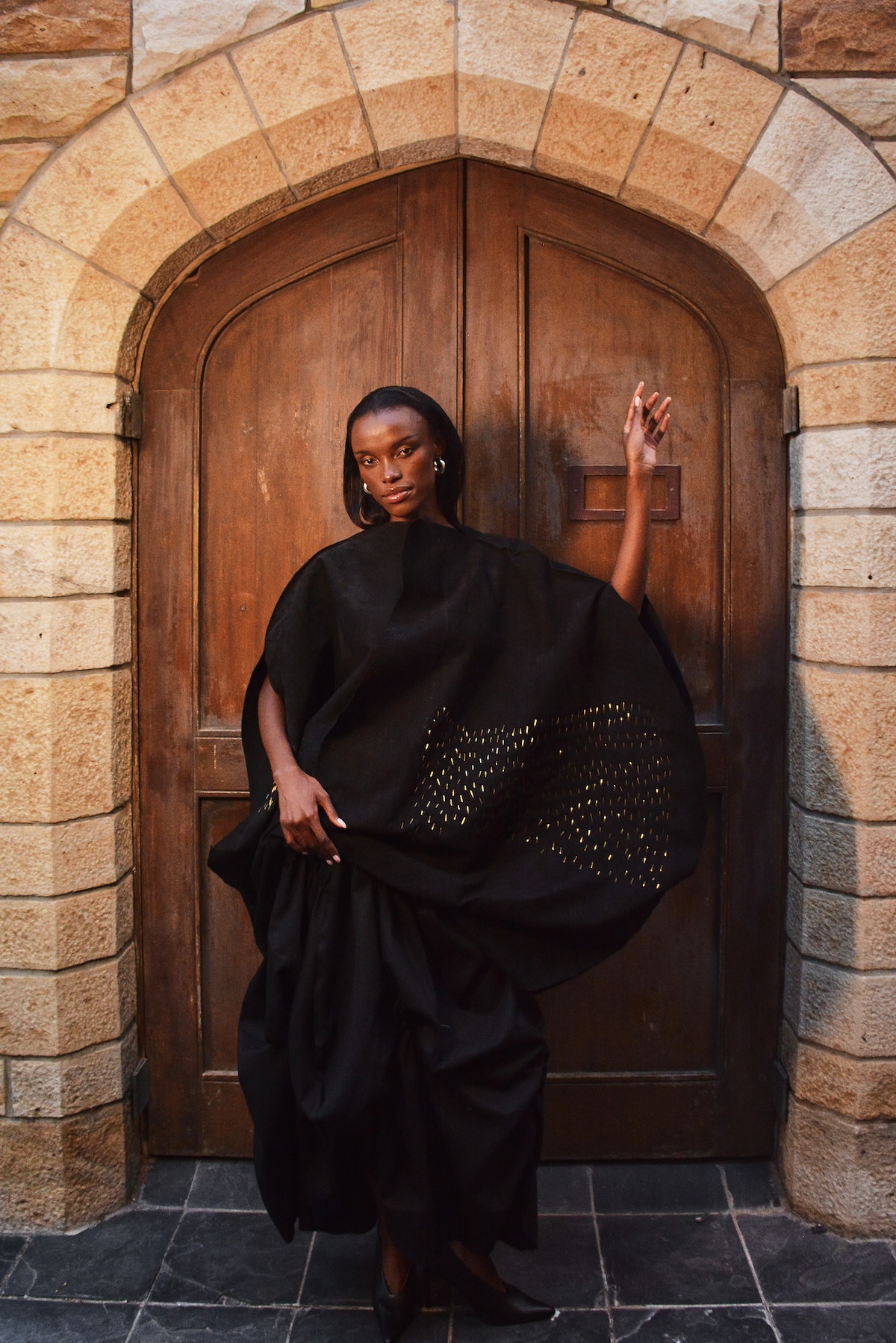
Nondi Beattie. Image: Ben Mall
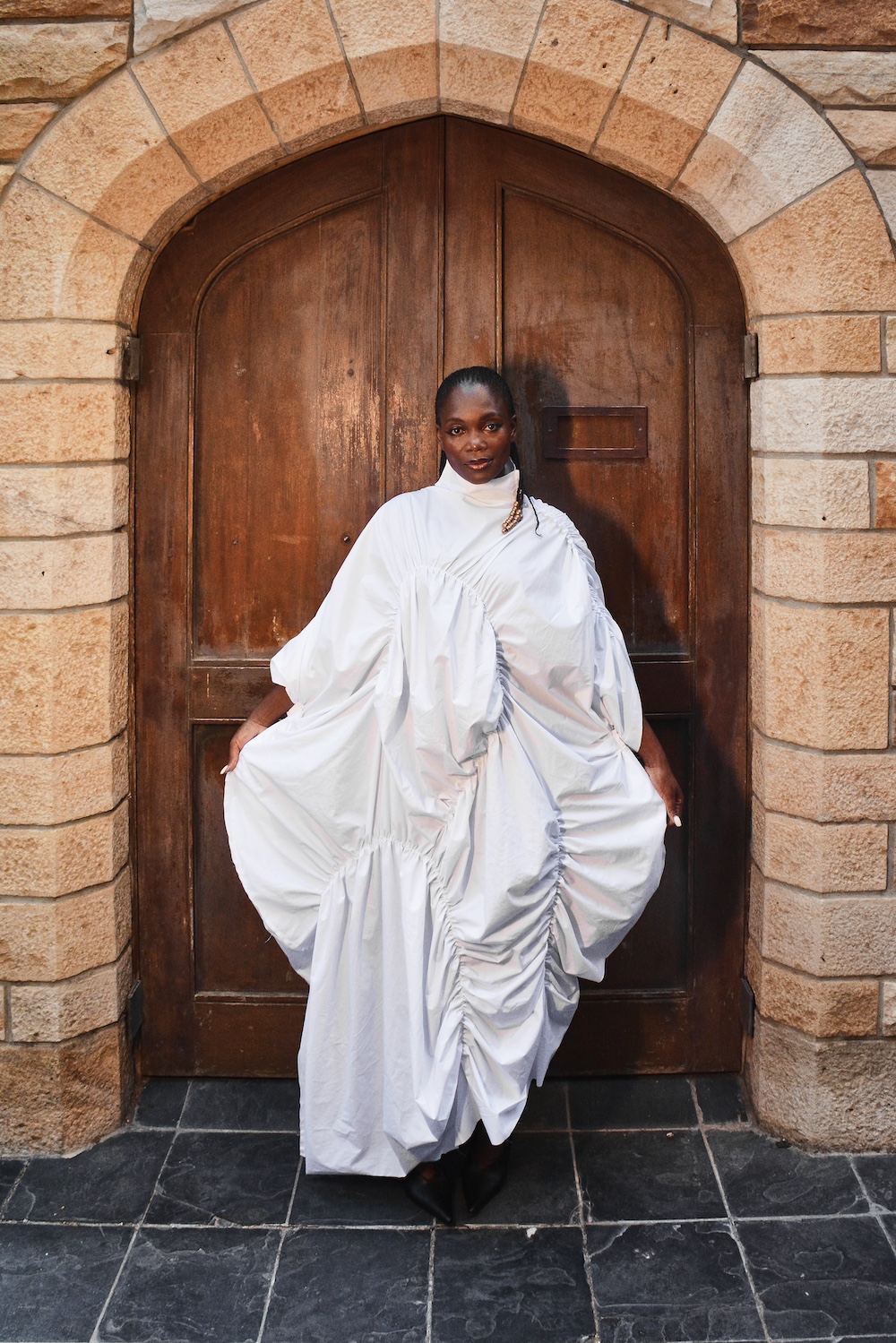
Zizipho Poswa. Image: Ben Mall
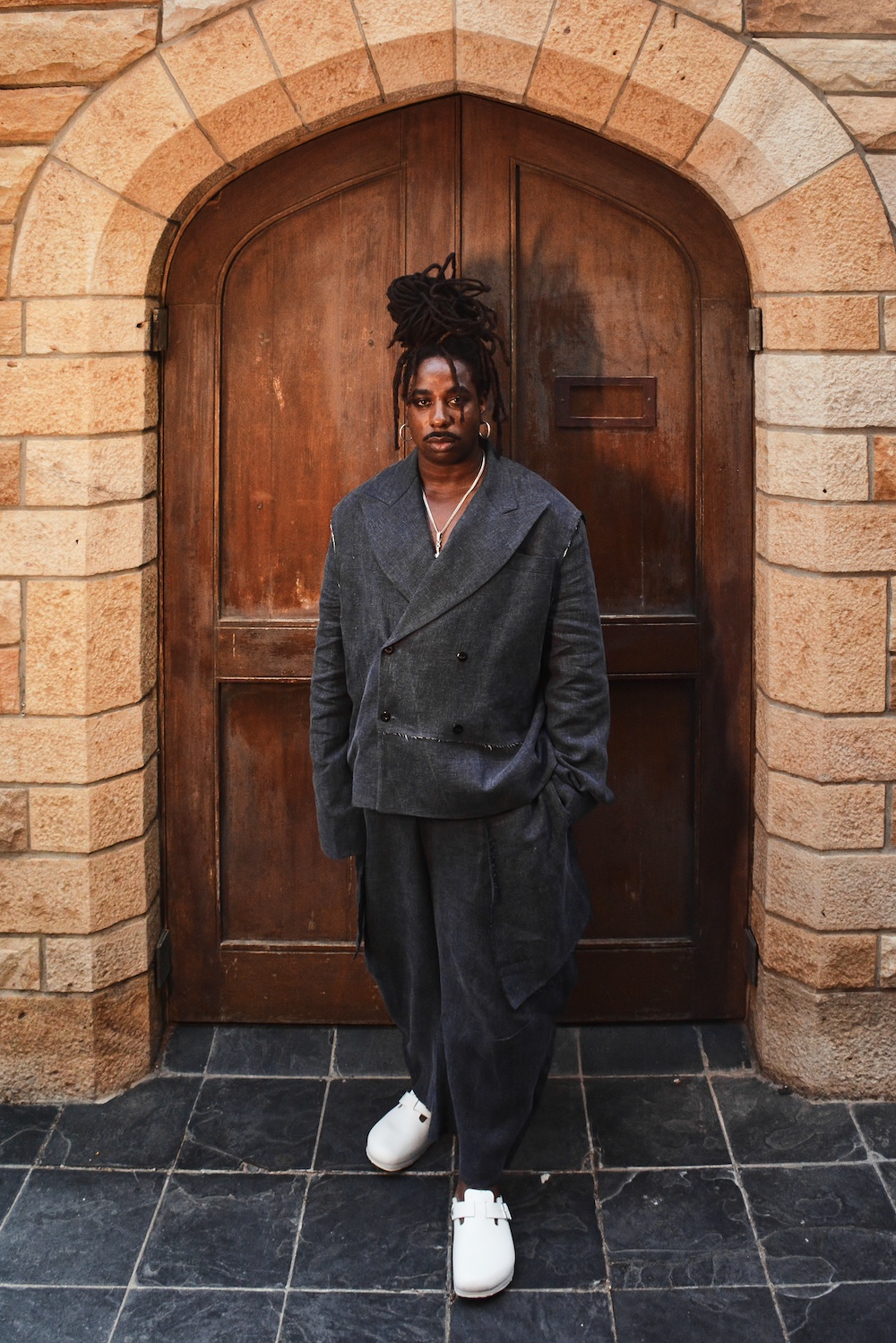
Shaquille-Aaron Keith. Image: Ben Mall

Lindokuhle Nkosi. Image: Ben Mall

Thato Human. Image: Ben Mall

Yonela Makoba. Image: Ben Mall
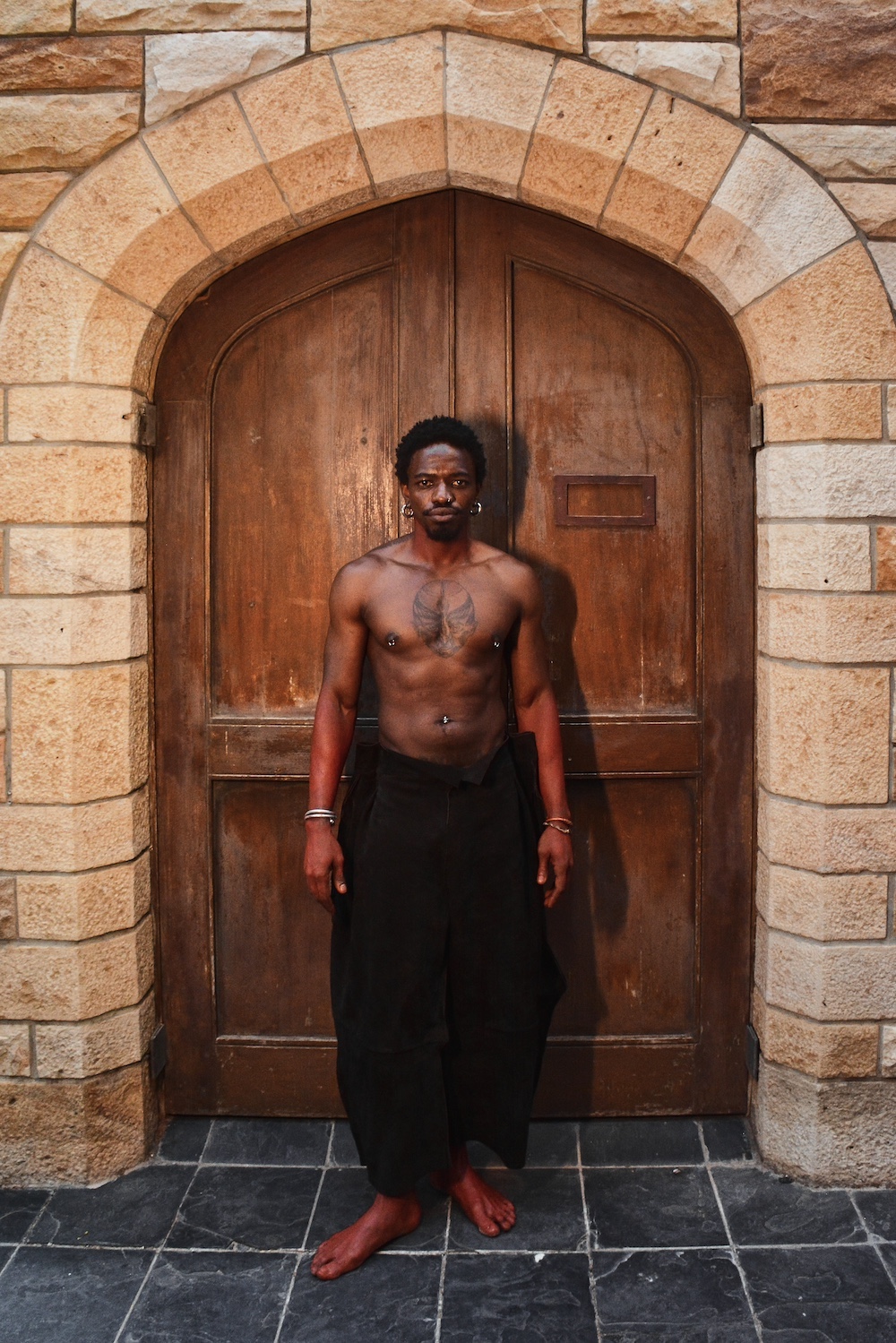
Desire Marea. Image: Ben Mall

Justine Mahoney. Image: Ben Mall
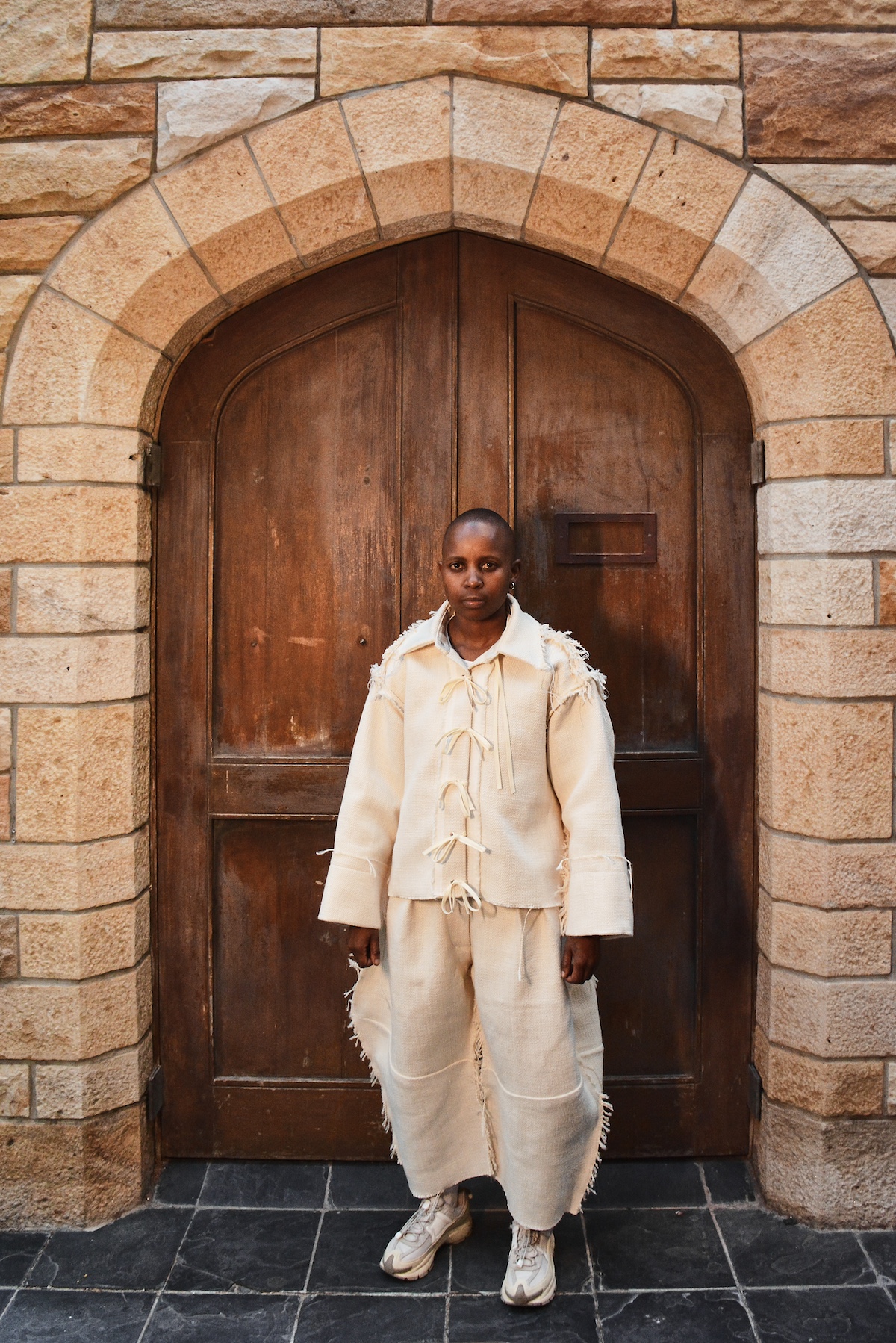
Dada Khanyisa. Image: Ben Mall

Manyaku Mashilo. Image: Ben Mall

Mziyanda Malgas. Image: Ben Mall

Uno July. Image: Ben Mall

Daniel Sher. Image: Ben Mall
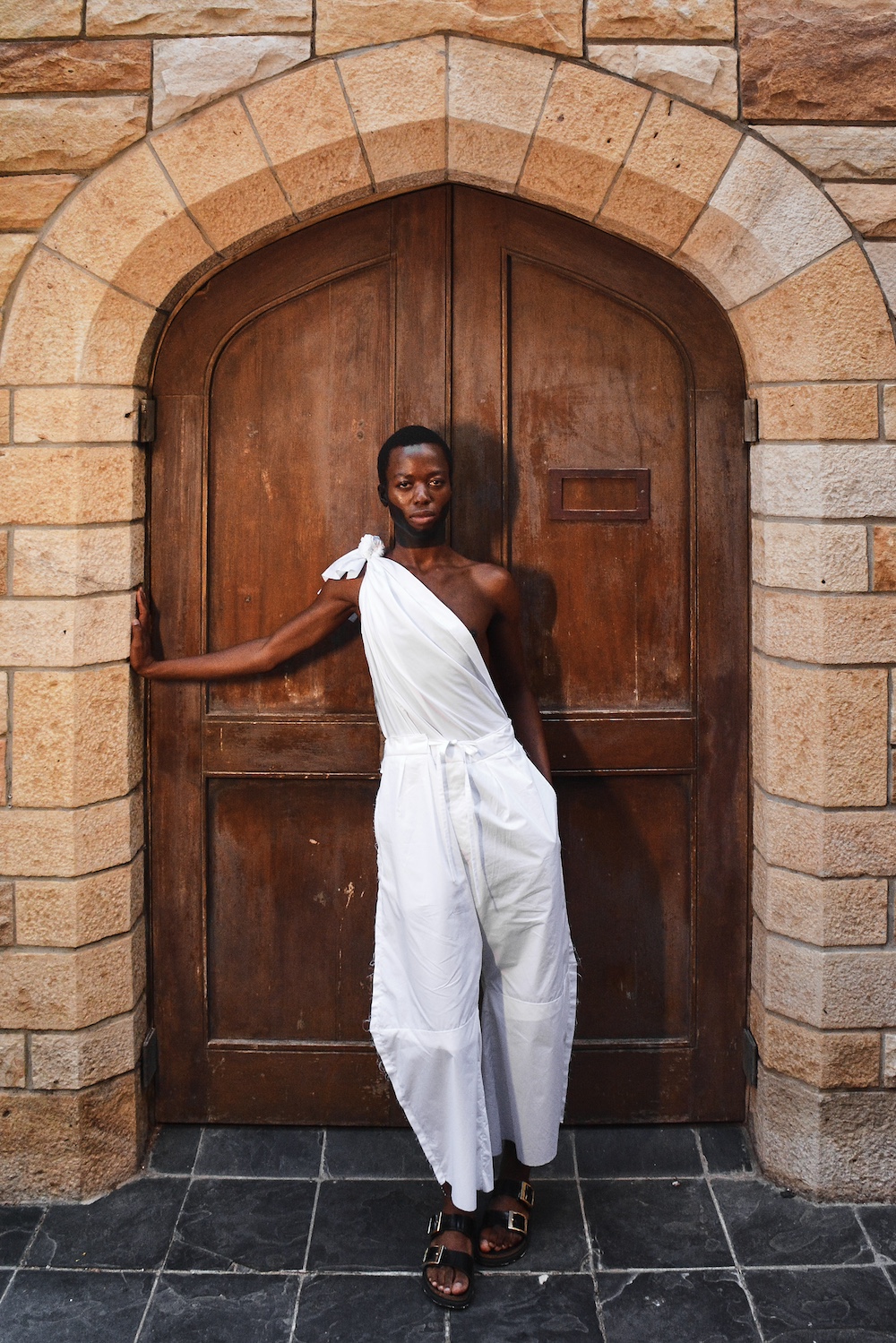
Yibanathi Nkweba. Image: Ben Mall
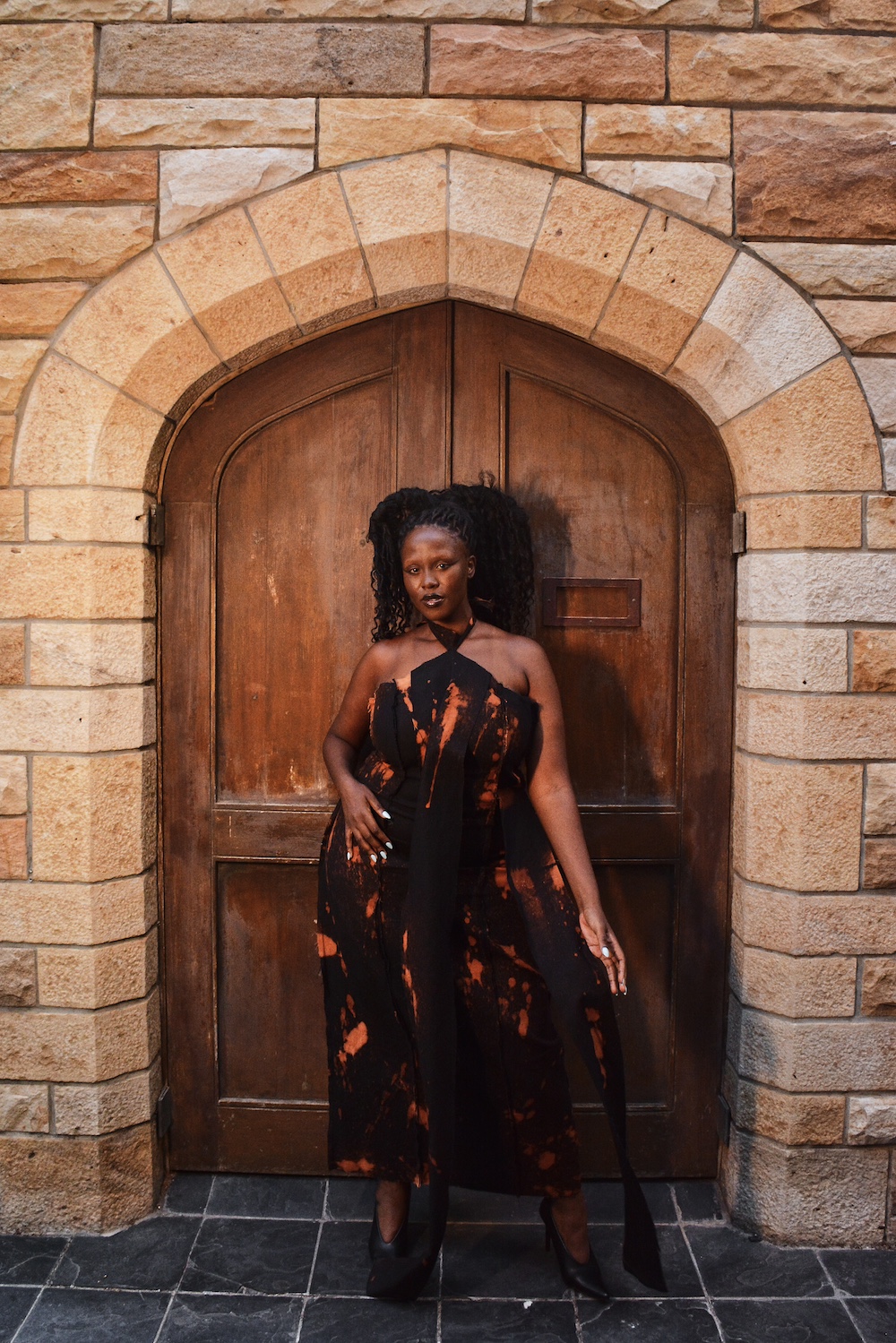
Tracey Dingashe. Image: Ben Mall
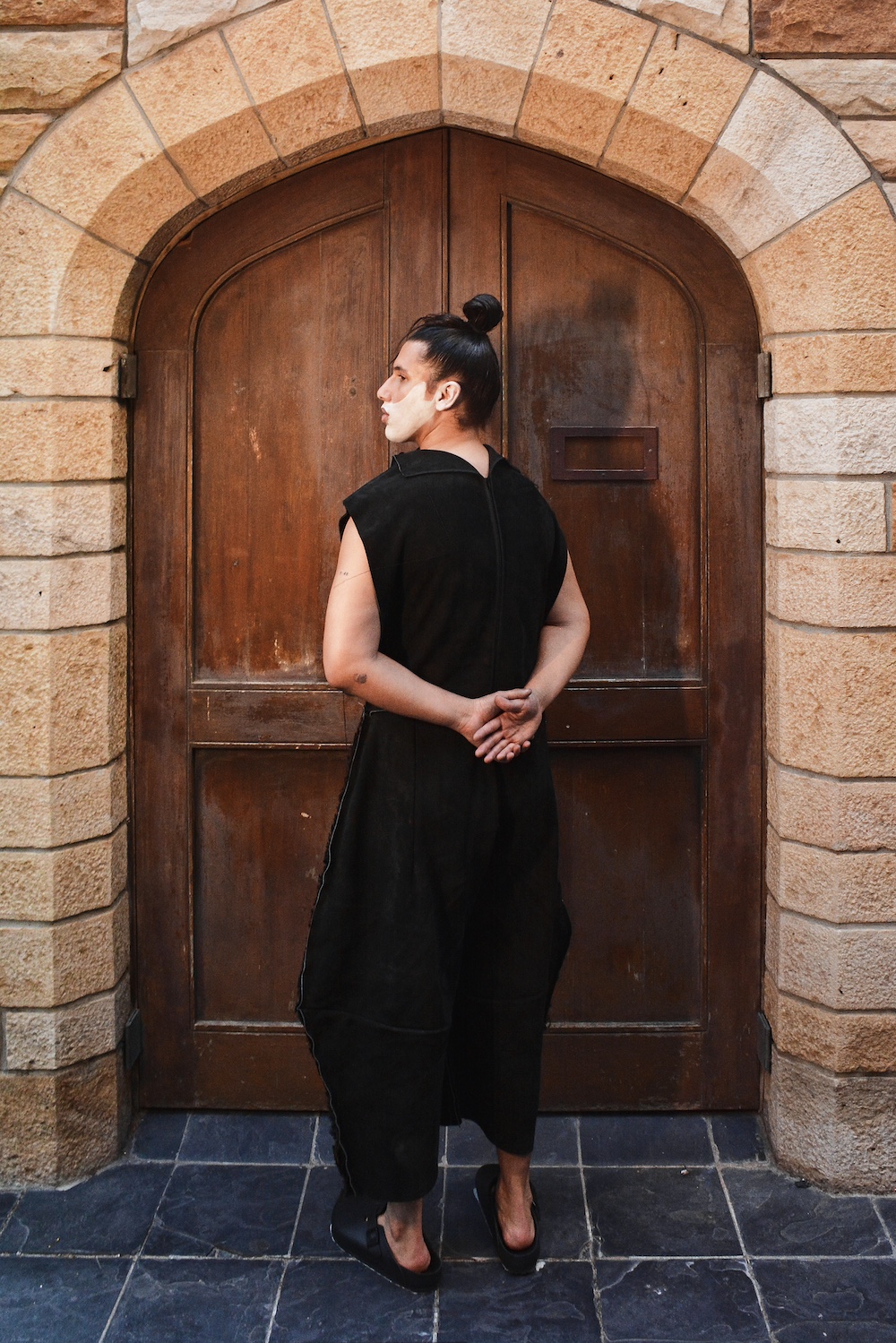
Buck Whaley. Image: Ben Mall

Uno July. Image: Ben Mall

Cast and crew. Image: Ben Mall
Cast
Thato Human, Yibanathi Nkweba, Mziyanda Malgas, Manyaku Mashilo, Tracey Dingashe, Shaquille-Aaron Keith, Buck Whaley, Dada Khanyisa, Daniel Sher, Athi-Patra Ruga, Lindokuhle Nkosi, Zizipho Poswa, Uno July, Ntando Ngcume, Desire Marea, Yonela Makoba and Justine Mahoney
Langa St Cyprian Church Choir
Nobandile Xwayi, Nosiphiwo Marephula, Babalwa Mangisa, Simpiwe Tena, Luvuyo Dlwati, Ziko Njokweni, Lumka Njani, Sinoxolo Mase, Sindiswa Phakathi, Luntu Mcutshenge, Vuyelwa Ngcongca, Siya Matshanda, Sane Mayekiso, Thandanani Mcutshenge, Phumela Mazula, Zizile Kondile, Bongiwe Mhlaluka, Karabo Moletsane, Thandeka Soxoshake, Linda Khunjuzwa, Asanda Ntlale, Yanga Dubase and Esona Dubase
Crew
Hair and Make up
Justine Alexander @justine_nomz
Assisted by Amber Alexander @amberleealexander
Backstage team
Kealyn Morris @kealynmorris
YunYoung Ahn @afrasia
Mbali Cobotwana
Ayathembisa Asiphesona Mama
Kelly Zekia
Ayabulela Dlaku
Mia Altbeker @mia_altbeker
Ziko Petse @ziko_pt
Videographer
Phindulo Rigby Tshidzumba @rigbyranks
Shoes by @birkenstockza
Special thanks to
Merchants @merchantsonlong
V&A Waterfront @vandawatershed @vandawaterfront
Twyg @twygmag
- Donate: Support our independent journalism
- Onesimo Bam’s Progression V is the winner of an African International Design Award: the 2026 FASHION DESIGN / Avant-Garde category
- Images by Ben Mall