For Mzukisi Mbane, founder and creative director of Imprint, fashion is more than a career. It is a calling from his ancestors. “I have a duty. I can choose another path but spiritually I cannot escape this.”
That conviction has travelled with him this year. In June, the South African designer was named Best Fashion Designer 2026 at Africa Fashion Up in Paris. In August, he showed a decade of Imprint’s designs at Nairobi’s Noir Kenya Fashion Week and headlined the Luju Food and Lifestyle Festival in Eswatini. As his work reaches new audiences, he is thinking about what it means to build an international fashion brand without leaving the people and stories behind it.
A sense of rootedness is central to Imprint. The brand is often described through its celebration of African stories, but Mzukisi is wary of making “Africa” a catch-all. His interest is more intimate: his experiences as a Xhosa man from the Eastern Cape, and how those stories might resonate elsewhere on the continent.

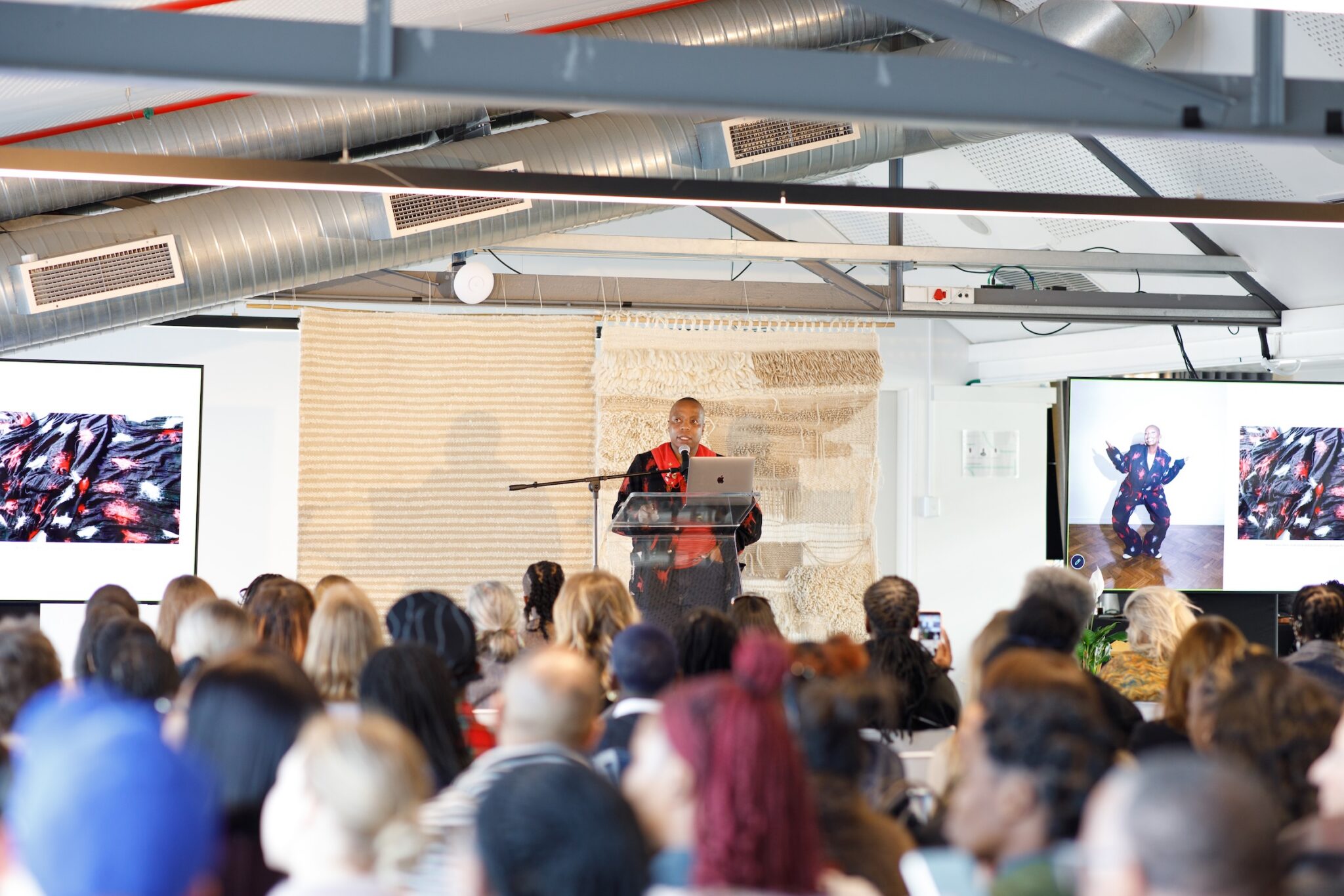
Fresh off winning Africa Fashion Up 2026 and South Africa’s Best Heritage & Cultural Designer Award, Mzukisi arrives at the Luju Food and Lifestyle Festival in Eswatini in August. Image: Supplied
One example is Inkomo yabeNguni, or “The Nguni cow”, a recurring Imprint icon. For amaXhosa, cattle carry profound cultural and spiritual significance. Inkomo remains central to traditional ceremonies; marking celebration, transition and loss, and can be used to acknowledge ancestors. In marriage, cattle represent ilobola, the wealth exchanged in bringing two families together. In difficult times they can form part of an offering asking for change.
The cow became more than a graphic for Imprint. Mzukisi researched its significance and found similar meanings across East, West and Southern Africa. Something rooted in his Xhosa heritage could therefore belong to a much larger African story.
“That’s an African story I can tell,” he says.
That instinct to investigate meaning also sits behind the brand name. Imprint, he explains, came from the idea that the career had imprinted itself on him.
Mzukisi studied accounting in Cape Town, where he found the freedom to develop Imprint away from the scrutiny and expectations he now experiences in Johannesburg. “When you’re in Cape Town, you can be in a silo, do your own thing and know no one cares, because no one is intensely watching what you’re doing,” he says.
His mother’s phrase, “It does not hurt to try”, became a personal philosophy he swears by. In 2015, he entered a television competition with concepts and sketches and won R50,000, the first funding that allowed him to launch Imprint.
Years later, that same willingness to try has taken him to Paris.
Africa Fashion Up operates as a gateway between African designers and the European luxury market, helping emerging brands understand how to package and position themselves internationally. Mzukisi was one of two South African designers selected for the 2026 programme, alongside Mpumelelo Dhlamini of Ezokhetho.
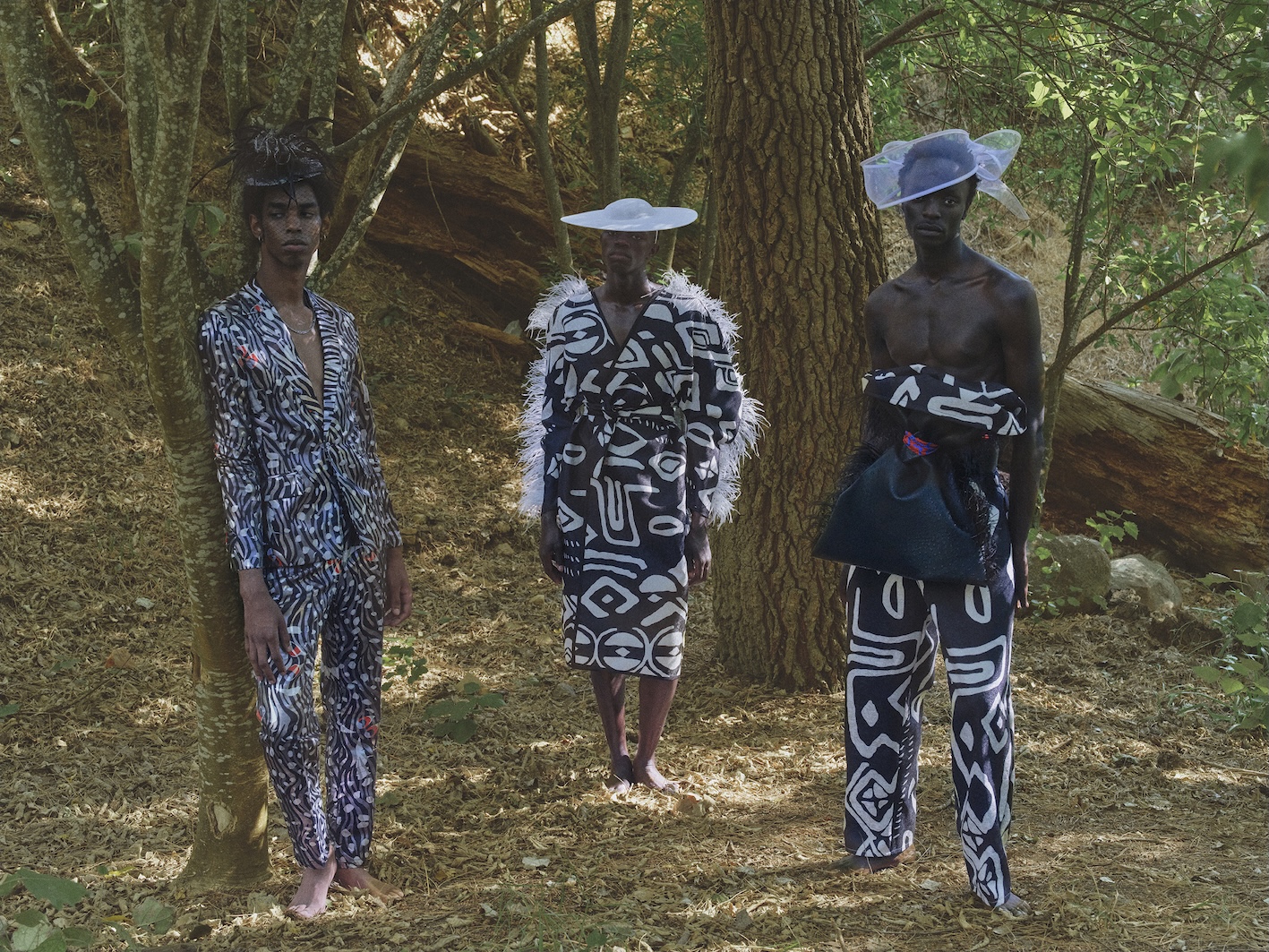
For his submission, the designer distilled Imprint into a single look book, shot in Cape Town by photographer Jacques Weyers and presented in black and white. Imprint is usually known for colour, print and self-expression, but a previous trip to Paris influenced him to consider how the work might communicate to a more conservative European market. Mzukisi says. “The most adventurous they allow themselves to be is in black and white.”
The gender fluid collection was a negotiation rather than a compromise: strong standalone pieces, touches of print and silhouettes that did not rely solely on pattern with pieces that move between menswear and womenswear. He wanted to show that print is not the entirety of Imprint’s design language.

For his Fashion Up Paris submission, Mzukisi Mbane wanted to distill Imprint into a single look book which was shot in Cape Town. Photographer: Jacques Weyers
Mzukisi is being mentored by Giacomo Di Francesca, Balenciaga’s global director of visual merchandising: Photographer: Jacques Weyers
The recognition in France carries weight beyond the title. Balenciaga has publicly recognised Imprint and Mzukisi across its digital platforms, putting the South African brand in front of an audience far beyond its home market. More significantly, Mzukisi is being mentored by Giacomo Di Francesca, Balenciaga’s global director of visual merchandising, whose career has included working for Prada, Marc Jacobs and Valentino.
For Mzukisi, the mentorship is both uncomfortable and transformative. He is accustomed to doing things his way; building an independent label in South Africa has required instinct, adaptability and survival. Now, he is being challenged to interrogate decisions he once made instinctively.
“Giacomo asks questions that make me uncomfortable sometimes,” Mzukisi says. “But that’s the beauty of it. Discomfort forces me to unlearn certain ways of working that I have adopted because I have had to survive.”
The distinction between survival and strategy is becoming central to his understanding of what Imprint can become. “South African fashion and African fashion is rooted in survival,” he says. “It’s not rooted in the luxury of experimenting.” In global luxury, he says, a fashion week show is a strategic business decision. Having a reason other than the excitement of taking part in a runway show is a new perspective.
“I do your Paris, New York. Those are great fancy places but it is incredibly important that Imprint becomes a luxury brand that gets celebrated everywhere including Nairobi, Kenya,” he says. “I will not leave Africa behind.”
Paris offers access and knowledge; Nairobi is one of Africa’s fashion capitals; Eswatini places the work in a broader continental landscape. The ambition is international recognition that generates value by traveling back home. That philosophy informs his thinking about sustainability, too.
Mzukisi is cautious about adopting international sustainability standards simply because the European luxury fashion market demands it. He has always experimented with off-cuts and recycled materials. His mother kept boxes of leftover fabric at home, which became earrings, bags, quilted pieces and new textiles. For Mzukisi, sustainability extends beyond materials.
“Sometimes that is the mistake we make,” he says. That belief shapes production, too. Imprint deliberately limits quantities and tiers its ranges; once a collection is consumed, those exact units will not return.

A Nairobi, Kenya, street editorial during Noir Fashion Week. Make up by @lulu_waruhiu @maccosmeticsafrica. Photographer: Roger Souuma
It is a luxury strategy with ethical practice that is environmentally sustainable too: it reduces waste. His accounting background informs his discomfort with the economics of mass production and the human cost of producing enormous quantities cheaply. Consumer demand, he argues, is only one part of a wider system involving governments, corporate structures and consumers.
Mzukisi’s next project is Imprint Ekhaya, a community home in Willowvale, Eastern Cape that will help preserve indigenous skills while creating opportunities in his mother’s home village.
“If I am this Xhosa person from the Eastern Cape prevailing in the global view of what Africa is then it only makes sense that those clothes are made by the people who are a part of these stories,” he says.

Imprint limits quantities and tiers its ranges to avoid waste. Make up by @lulu_waruhiu @maccosmeticsafrica. Photographer: Roger Souuma
The solution cannot simply be to make less and charge more. It is about building systems in which people are valued, skills are preserved and communities participate in the prosperity created by their culture. That is the imprint Mzukisi seems most interested in leaving.
The designer may continue to travel to Paris, New York, Nairobi and wherever else the next opportunity takes him, but his destination appears remarkably clear. The world is a classroom, not an escape route.
- Feature image:
- Photography @jacquesweyersstudio @creativecowboys.africa
- Models: @Muhammedmullins and @sh3lovescampbell and Christopher_musambidzi
- Styling: @mzukisimbane Styling assistants: Siyanda Tyemela @siyanda_tyemela and Azure Tshwaro @lentle.ntlhaile
- Follow Imprint on Instagram
- Visit the website