For Mozambican designer, healer, and storyteller Wacy Zacarias, textiles are more than materials: they’re tools for healing, remembering, and regenerating. “I don’t just design with aesthetics in mind,” she says. “I design with purpose, ritual, and relationship.”
Sustainability is woven into every element of her practice, whether she’s working with natural dyes and banana fibres or collaborating with refugee artisans. Ahead of her talk at Africa Textile Talks, Wacy shares what informs her work, the sacredness of making, and what to expect from her talk.
 Wacy Zacarias will be speaking at Africa Textile Talks on 31 July 2025 in Cape Town
Who are you as a textile maker?
My identity as a textile maker is deeply rooted in my ancestry, land, and the spiritual relationships we hold with materials. I was born in Mozambique, raised in Maputo, and I carry the stories, textures, and wisdom of both the Bitonga people from Inhambane and the broader Bantu cosmologies that see matter as alive, imbued with memory, meaning, and spirit. My practice is informed by indigenous knowledge systems, traditional healing, and a commitment to honouring the hands and lands behind every fibre.
Tell us about sustainability in your practice?
I like to be honest about the journey because it’s complex. We’re making significant progress in how we source materials locally and respectfully, working more with regenerative plants, repurposed textiles, and strengthening relationships with rural and displaced communities to shorten supply chains and ensure fair compensation. At Karingana, we’ve begun documenting indigenous dye plants through a ‘Material Atlas‘ to preserve and share that knowledge. We’ve also introduced product lifecycle thinking into our process, designing for repair, reuse, and return to the earth. It’s not perfect, but it’s intentional, and we’re learning as we go.
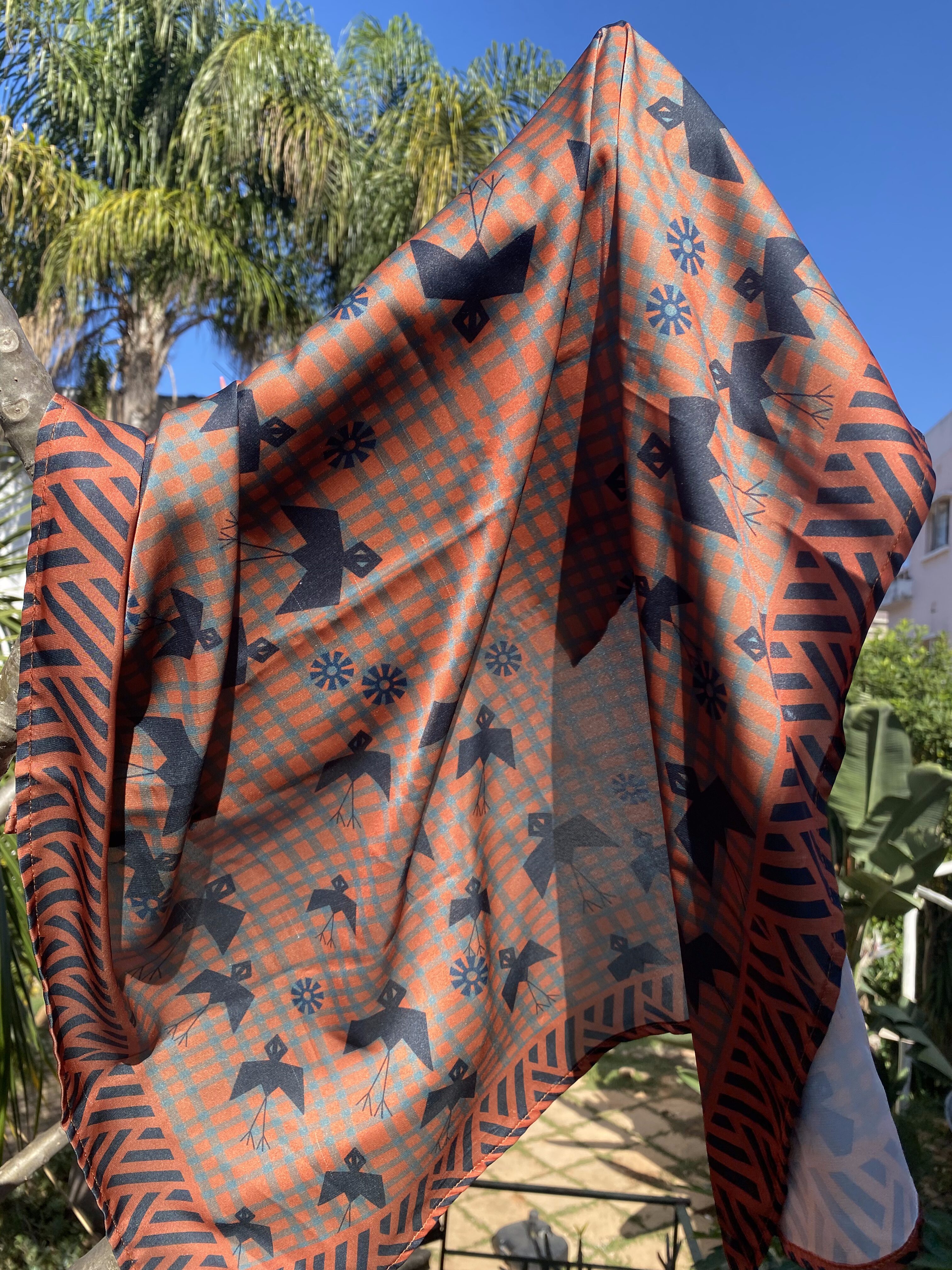 A scarf inspired by the Mozambican traditional craft of Psikhelekedana, made by Wacy’s textile company Karingana
In what ways can we decolonise textiles?
Decolonising textiles means dismantling systems that have extracted from our land, labour, and knowledge without reciprocity. It’s about reclaiming authorship. Telling our stories in our own languages, through our own motifs, rituals, and ancestral techniques. It’s also about unlearning the supremacy of Western design values and re-valuing our indigenous aesthetics, which often centre interdependence, ceremony, and regeneration. Decolonisation is not just about content, but also about process: how we relate, how we source, how we name, and who benefits. It’s slow, communal, and spiritual work.
What do you hope your work will leave behind for future generations?
I hope to leave behind a legacy of remembrance, where textiles are not just commodities but living archives of who we are, where we come from, and how we heal. I want my work to open up space for others, especially African women, to reconnect with the sacredness of making, with the intelligence of their bodies, and with the wisdom of their ancestors. I hope it inspires future generations to create systems and objects that are in right relationship with the earth, with community, and with spirit. I want to normalise care, slowness, and depth in creative practice.
What can attendees expect to learn or take away from your talk at the upcoming Africa Textile Talks?
Expect to be invited into a different kind of conversation, one that centres cosmology, material healing, and the spirit of the land. I’ll be speaking about our work with healing textiles, indigenous technology, and our installation Cosmology of Materials, which explores the intelligence and memory of matter. You’ll hear about banana fibre, medicinal dyes, and textiles as ritual. But more than that, I hope to offer a framework – a way of thinking and feeling – that repositions textiles as tools for personal, cultural, and ecological regeneration.
- You can listen to Wacy and other expert speakers talk about the future of African textile ecosystems at this year’s Africa Textile Talks. Book your tickets here