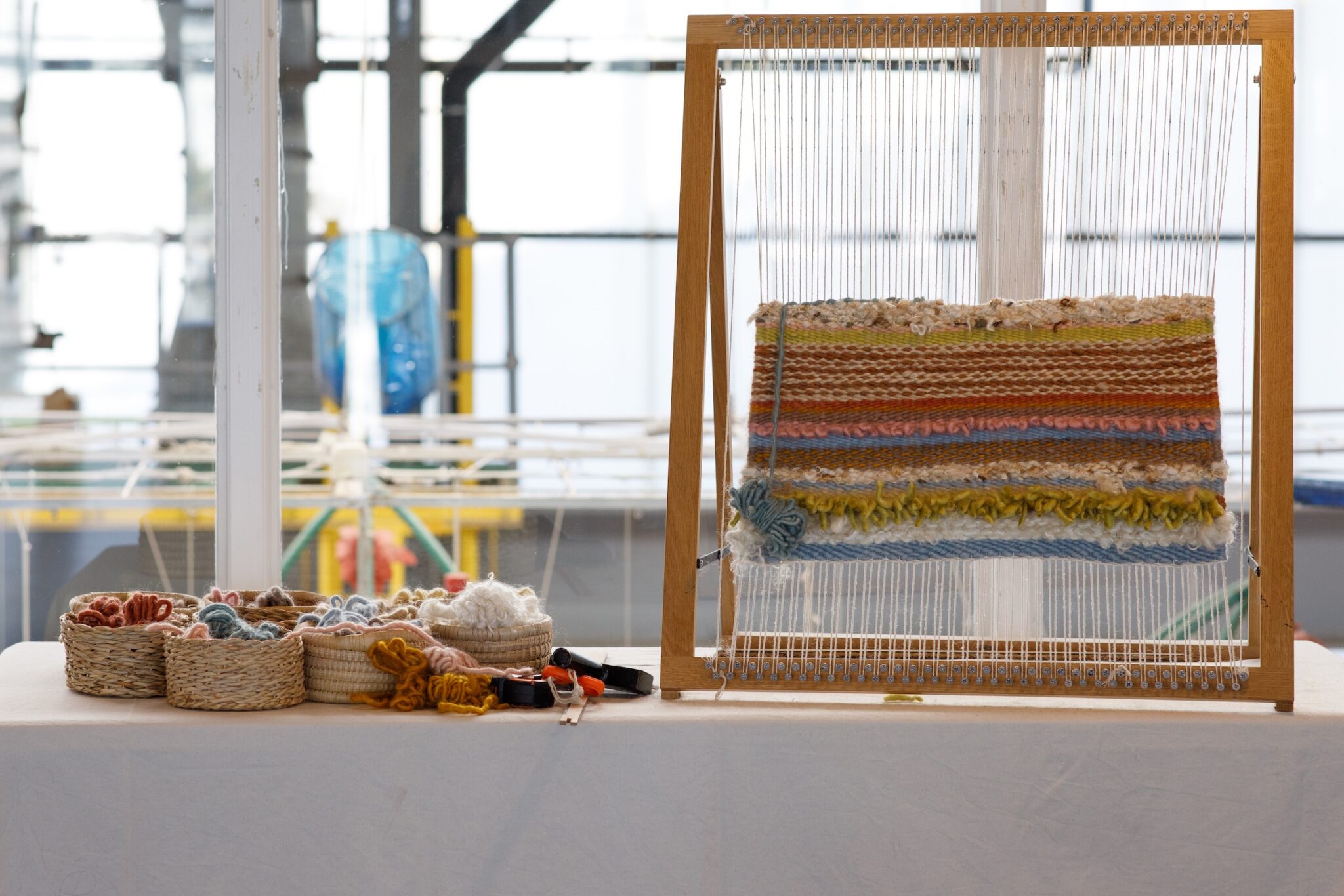
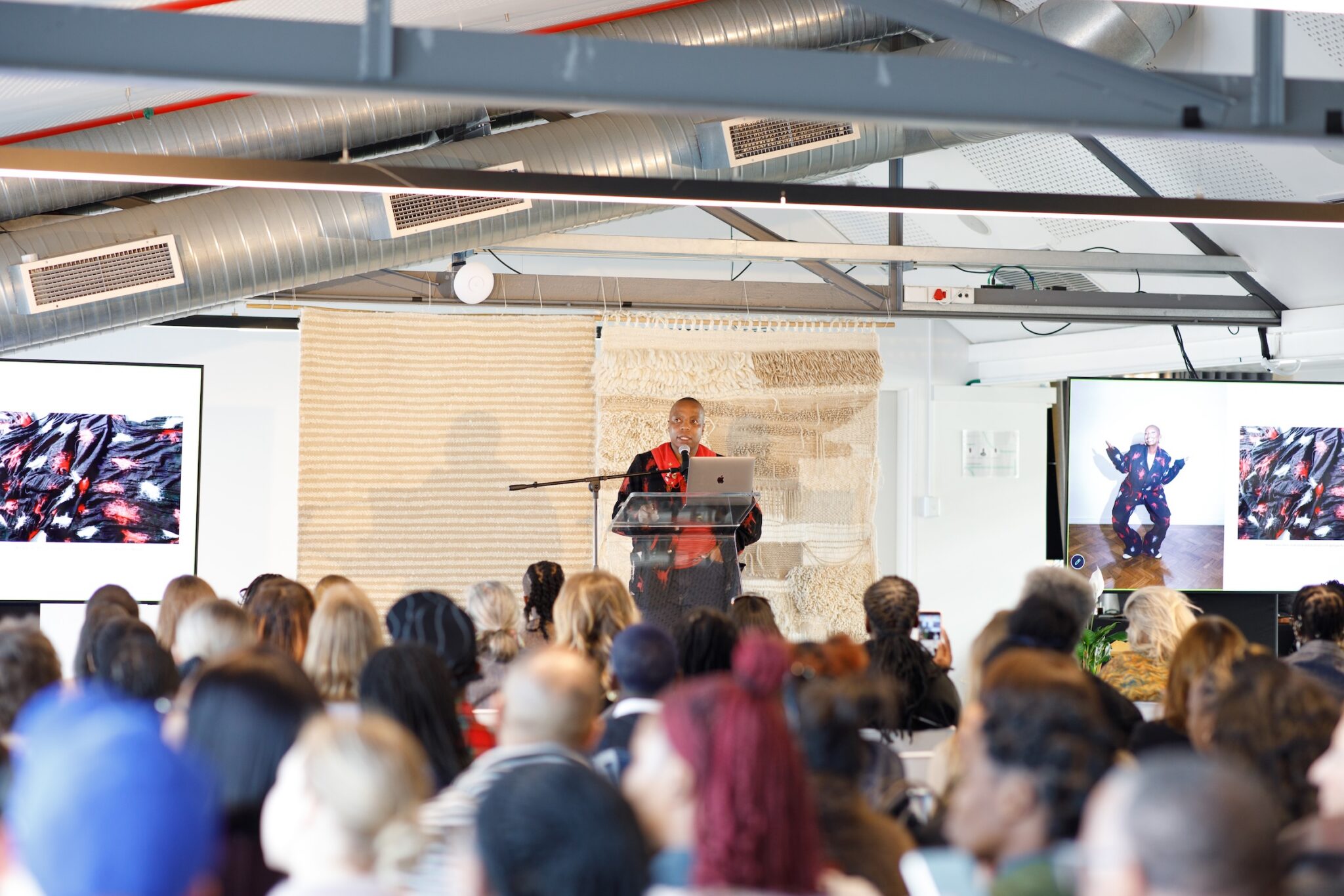
Up-Fuse is a social enterprise founded in 2015 by Yara Yassin, Rania Rafie and Lama El Khawanky. The organisation operates from Cairo’s Garbage City, an informal settlement on the Egyptian capital’s outskirts, which has no effective official garbage system. The area is serviced by informal waste collectors, known as Zabbaleen, who collect, sort, and recycle the city’s waste. Up-Fuse takes plastic collected by them, recycling and upcycling it into products and clothing. The group also provides education on the impact of plastic waste through workshops, site visits and events.
We emailed the enterprise a few questions to learn more. Yara sent us answers:
What does Up-Fuse do?
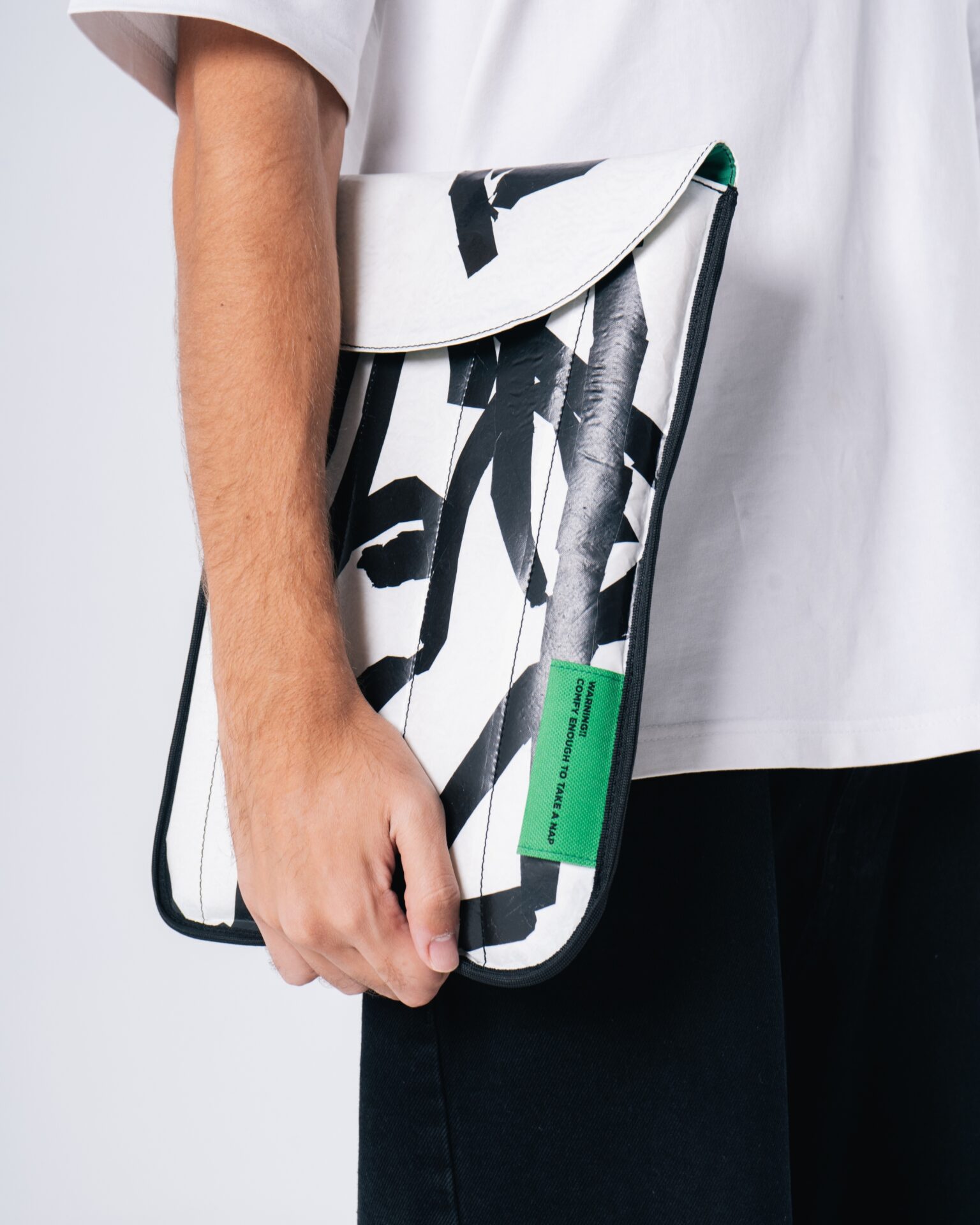
Garbage City in Egypt is full of plastic that generates extra CO2 emissions. It will take up to 500 years to decompose, without reaching full decomposition, hurting people and the planet. Up-Fuse provides a safe option for garbage collectors to sort and deliver plastic to our team of women. These women carry out the full sanitisation process, then turn the plastic bags into durable plastic sheets to be used as a sustainable replacement for conventional materials.
Up-Fuse also upcycles discarded denim waste in factories to create various products such as clothing items, bags, footwear, stationery and accessories, as well as discarded car tires that go into the brand’s footwear line. Our motto is ‘Nothing is ever wasted’, and this is what we live by. Since Up-Fuse started, it has recycled and upcycled 3 million plastic bags, 2 million plastic bottles, 100 kilos of plastic lids, and 2 tons of denim.
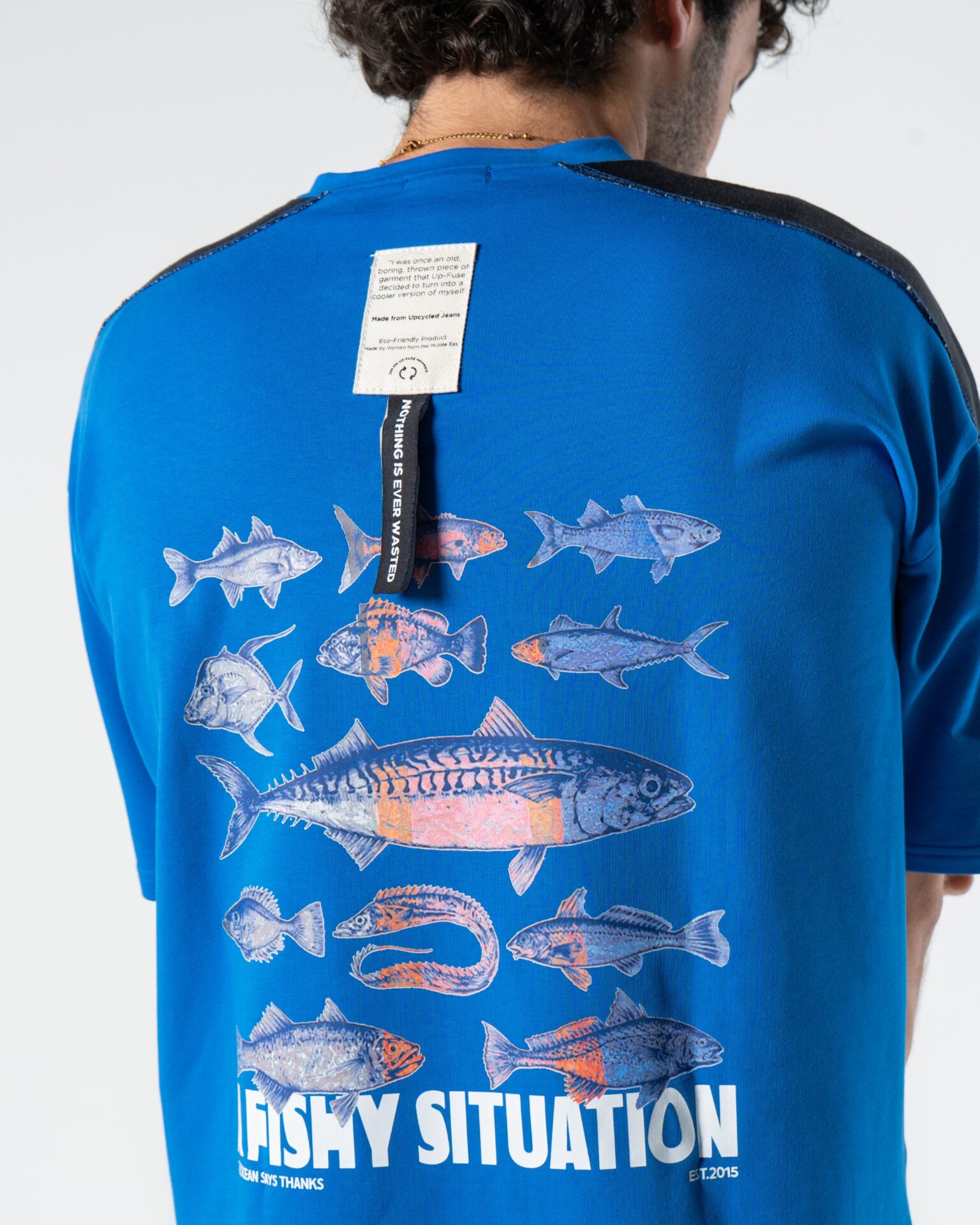
Where do you source the 20% of virgin fabric that you use?
We source cotton from Egypt to ensure the quality is up to standard and complements the upcycled fabrics used. We source everything else locally to ensure the ethics and sustainability of the supply chain, quality, and people.
What challenges have you encountered as a women-led business?
Being taken seriously was a bit challenging as women starting a business in spaces where women didn’t have a lot of privileges. This only pushed us to go further and empower more women in the process. When Up-Fuse started 10 years ago, it was the first in the field of fashion that took this waste transformation approach in Egypt. It was a challenge in itself to ease individuals into the concept while educating them on the impact of their consumption. Coming up with an unconventional product was a long path but a rewarding one. Now Up-Fuse is trusted by customers and individuals, and is a leader in the sustainability market in Egypt, a top player in the fashion market, and a reference for sustainable businesses.

Tell us about the women of Up-Fuse.
Women and refugees are the soul of Up-Fuse, making up 90% of the company’s employees. They are the ones behind the brand, breaking boundaries on a daily basis. They not only handcraft the products but sort and sanitise the plastic, design the collections, and manage most of the operations of Up-Fuse. Also, the community of Up-Fuse is super diverse with no social class barriers, from the management to the workers.
Up-Fuse empowers all women, especially women from underprivileged communities, by providing them with the necessary vocational training to be the skilled hands behind the brand’s products and with fair wages that support their families. Since Up-Fuse started, it has supported more than 120 families.
What implications does Egypt’s new single-use plastic fee have for informal waste collectors?
Egypt’s move to charge producers for single-use plastic bags is a strong push toward accountability, and it could set the stage for similar action on other single-use plastics like packaging and containers. For the Zaballeen, Cairo’s informal waste collectors, this change is a double-edged sword. While a drop in plastic waste could impact their income, plastic’s replacement could be their new source of income. It could also create an opportunity to formally recognise and include them in national recycling efforts. With the right support, this shift can both reduce pollution and empower the people already doing the hard work of keeping waste out of landfills.
What are the challenges associated with embracing circularity in fashion?
One of the biggest hurdles is redesigning garments from the start to ensure they’re recyclable, repairable, or biodegradable without compromising on quality or style. We also face infrastructure limitations, especially when it comes to textile recycling and end-of-life garment collection. Educating consumers and encouraging a shift away from fast fashion habits is another ongoing effort.
“Circular systems often involve higher costs and more complex supply chains, which can be tough to balance as a growing brand”
Circular systems often involve higher costs and more complex supply chains, which can be tough to balance as a growing brand. That said, we believe the long-term benefits for the planet and our community make it all worth it, and we’re committed to pushing innovation and transparency every step of the way.
What barriers prevent circularity in the textile and garment industry?
Several systemic barriers are holding back circularity in our industry. For starters, many textiles aren’t designed with recyclability in mind. Blended fibres, chemical finishes, and lack of traceability make it hard to close the loop. On a broader level, we’re also up against a supply chain that was built for speed and scale, not sustainability. The infrastructure for collecting, sorting, and recycling garments is still underdeveloped in many parts of the world, which adds another layer of complexity.
Inside the supply chain, we need stronger collaboration and transparency. Brands, mills, and manufacturers must align on materials, certifications, and end-of-life strategies. Outside the supply chain, policy support is essential. Incentives for circular design, better waste management systems, and consumer education can make a real difference. And of course, consumers play a vital role in embracing resale, repair, rental, and mindful consumption, which helps create demand for circular solutions. It’s going to take a collective shift, but we’re optimistic about what’s possible when the whole ecosystem works together.

Does recycled plastic clothing shrink?
Clothing made from recycled plastic, like rPET made from plastic bottles, tends to be more resistant to shrinking compared to natural fibres like cotton or wool. However, like any fabric, it still needs a bit of care. If recycled polyester is blended with natural fibres, which we sometimes do for added softness or breathability, there’s a slightly higher chance of shrinkage, especially if it’s exposed to high heat during washing or drying. That’s why we always recommend washing on a cold cycle and either air drying or using low heat. It helps preserve the shape, extend the life of the garment, and reduces energy use, too. Ultimately, our goal is to design pieces that are not only better for the planet but also easy to care for and made to last.
“Circularity is about designing with intention and creating systems that make it easy for people to participate in a more regenerative fashion cycle”
What determines a garment’s circularity?
A garment’s circularity really comes down to how thoughtfully it’s designed, produced, used, and ultimately reintroduced into the system. From the beginning, we look at the materials: are they renewable, recycled, or easily recyclable? Then we consider design for longevity: can it be worn season after season, repaired easily, or even disassembled at end-of-life? We also think about end-of-use pathways: can the garment be resold, rented, upcycled, or recycled without losing quality?
Transparency in the supply chain and responsible production methods play a big role, too. But circularity doesn’t end with us; it includes the customer. When people care for, reuse, and return their garments, that’s what really closes the loop. So, for us, circularity is about designing with intention and creating systems that make it easy for people to participate in a more regenerative fashion cycle while educating the customers on the importance of shopping with intention and giving away what is not in use before going for more purchases.

How can we reduce shedding in recycled clothing?
Shedding is a concern, especially with recycled synthetics like rPET, so we design our garments with tighter weaves and durable finishes to help minimise it. At home, we recommend:
- Wash clothes less often
- Use a cold, gentle cycle
- Avoid high-speed spins
- Air dry rather than use a dryer
- Use tools like microfibre-catching wash bags or filters to help stop fibres from entering waterways
These small habits go a long way in caring for your clothes and the planet.