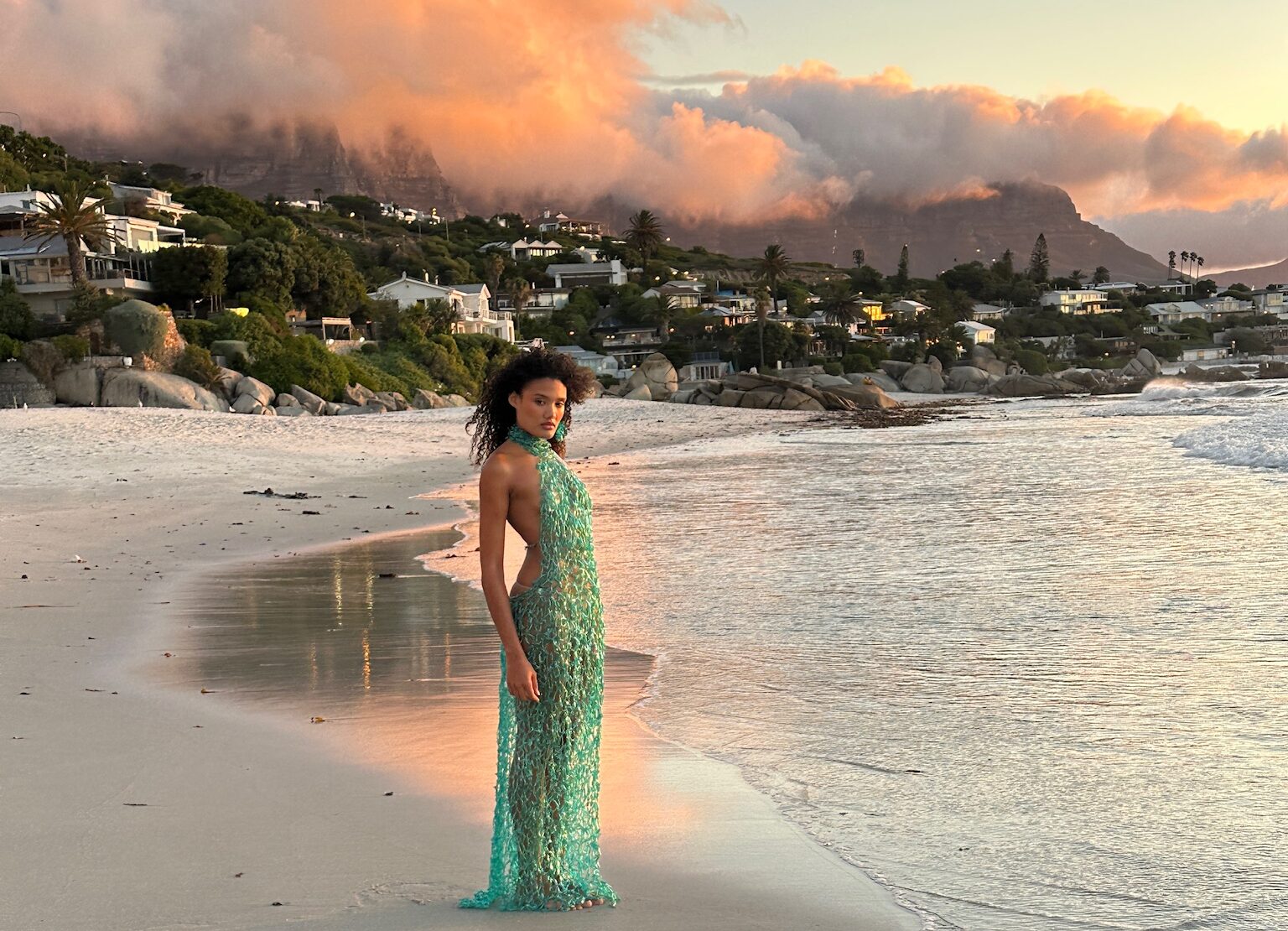

When designer Kenan Van Kooij introduced the Sashimi dress on Instagram earlier this year, it went viral. The dress took six months to make using upcycled plastic bottles collected from local restaurants.
Born in Rotterdam, and now based in Cape Town, Kenan has been drawn to beauty, texture and self-expression for as long as he can remember. Raised on a farm and deeply inspired by the natural world, his creative language developed early and instinctively.
“When it came to deciding what to study, fashion design was the only option for me,” says the 23-year-old Kenan.
Kenan launched his brand, Swanbooij, a loud, avant-garde and unapologetically queer exploration of identity and expression after graduating from the Cape Town fashion school, Design Academy of Fashion, in 2024. Playing with the idea that masculinity and femininity can coexist freely, the brand creates space for people to embrace both sides of themselves with confidence and ease. We asked Kenan a few questions about the inspiration and making of the Sashimi dress.
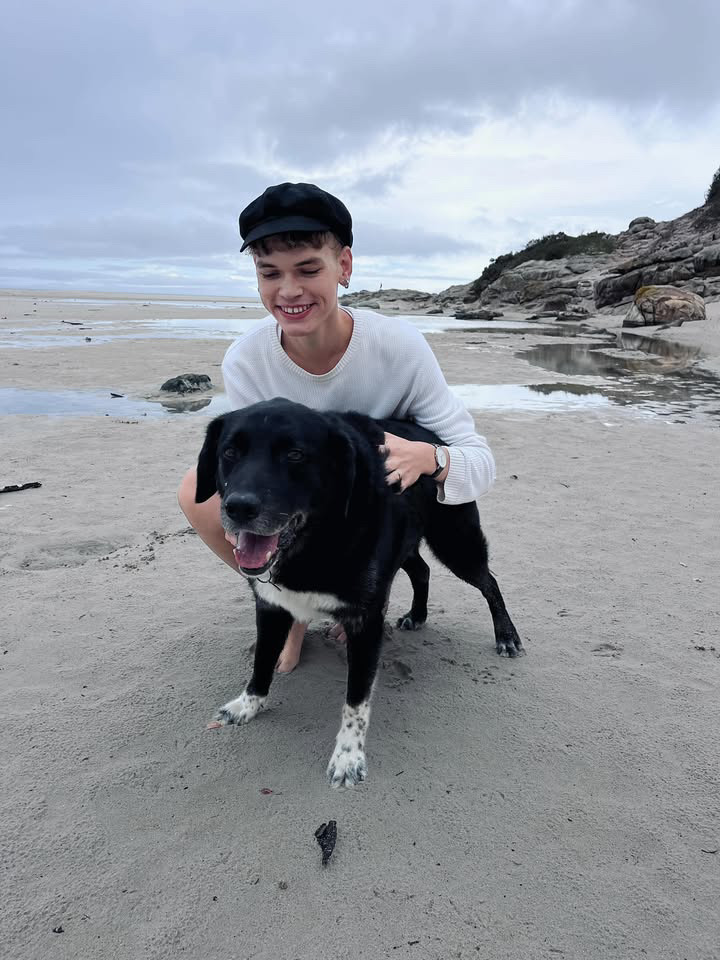
Fashion designer Kenan Van Kooij is deeply inspired by nature. Image: Supplied
Why did you make the dress?
In May of 2025, I started exploring sustainability and revisiting womenswear. Creatively, I felt stuck and wasn’t feeling inspired. Comparison was killing my passion, and it felt like my dreams were slipping away. I would look at the greats, like Iris Van Herpen, and think “How can I ever get to this level.” I’ve always been a huge advocate for slow fashion and see it as an art form.
My creative process starts with me staring at a white wall with my headphones on. Most of my work has been inspired by the sea and the supernatural. This time, I pictured a dark gloomy underwater campaign with mussel dresses, fishnets and blue bottles. I imagined beautiful sirens luring the fisherman to the ocean with their enchanting voices.
After a brainstorming session with my mother, I started to explore trash as a textile and was drawn to the transparency and glimmer in plastic bottles. I felt a responsibility as a designer not just to make clothes but to make an impact. And at the time when my life felt unclear, I decided to change the narrative and make a clear dress.
How long did it take you to make?
I started developing the concept in May 2025. Once I was confident about the textile, I created a mock-up. I left the city for a month, deleted social media and focussed on researching and creating. While I built the piece, I listened to podcasts and learnt about waste and micro plastics. I finished the dress on time for the Twyg Sustainability Fashion Awards in November 2025. I customised the dress for Lisa Philander (my muse and model) in January of 2026.
Creating the aquamarine Sashimi dress felt like a smooth sailing two-month project.

Model Lisa Philander wearing the Sashimi dress. Image: Annemarie Sterian
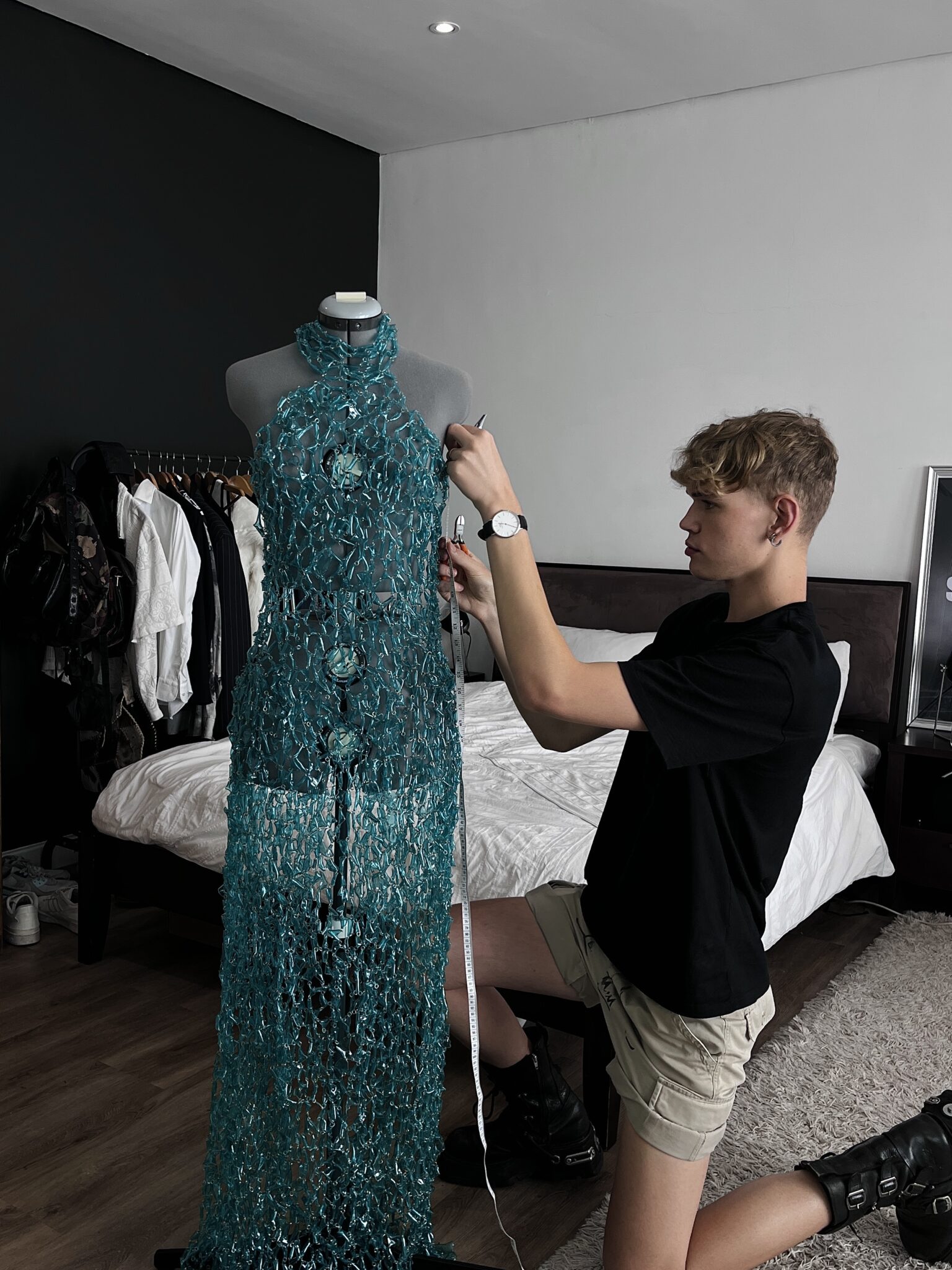
Kenan Van Kooij doing the final touchups. Image: Supplied
Why did you choose plastic?
I wanted to explore trash as a luxury item. With this project, I am not attacking anyone or pointing fingers at large fashion corporations. We have a long way to go to reverse the damage we have done, but not enough people seem to care.
I’m hoping this dress spreads more awareness in a calm, gentle and even intriguing way. I want people to think about plastic, why it’s bad and how it can be repurposed.
Last year, I also spent time working at a corporate company where I got to see first-hand the waste in the fashion industry. Sequence fabric was the most frightening.
How did you make the dress?
First I cleaned the bottles. Then I cut them into random shapes and lightly brushed them with a flame which created their unique shape and smoothed out the edges. I then individually punched holes into each piece with a heat-generated tool. This allowed me to attach all the pieces together with the jump rings. Once I had all the pieces, I worked on a mannequin to create the gown. Each piece that makes up the dress is treated as a unique, individual piece and treated with care.

Design sketch. Image: Supplied
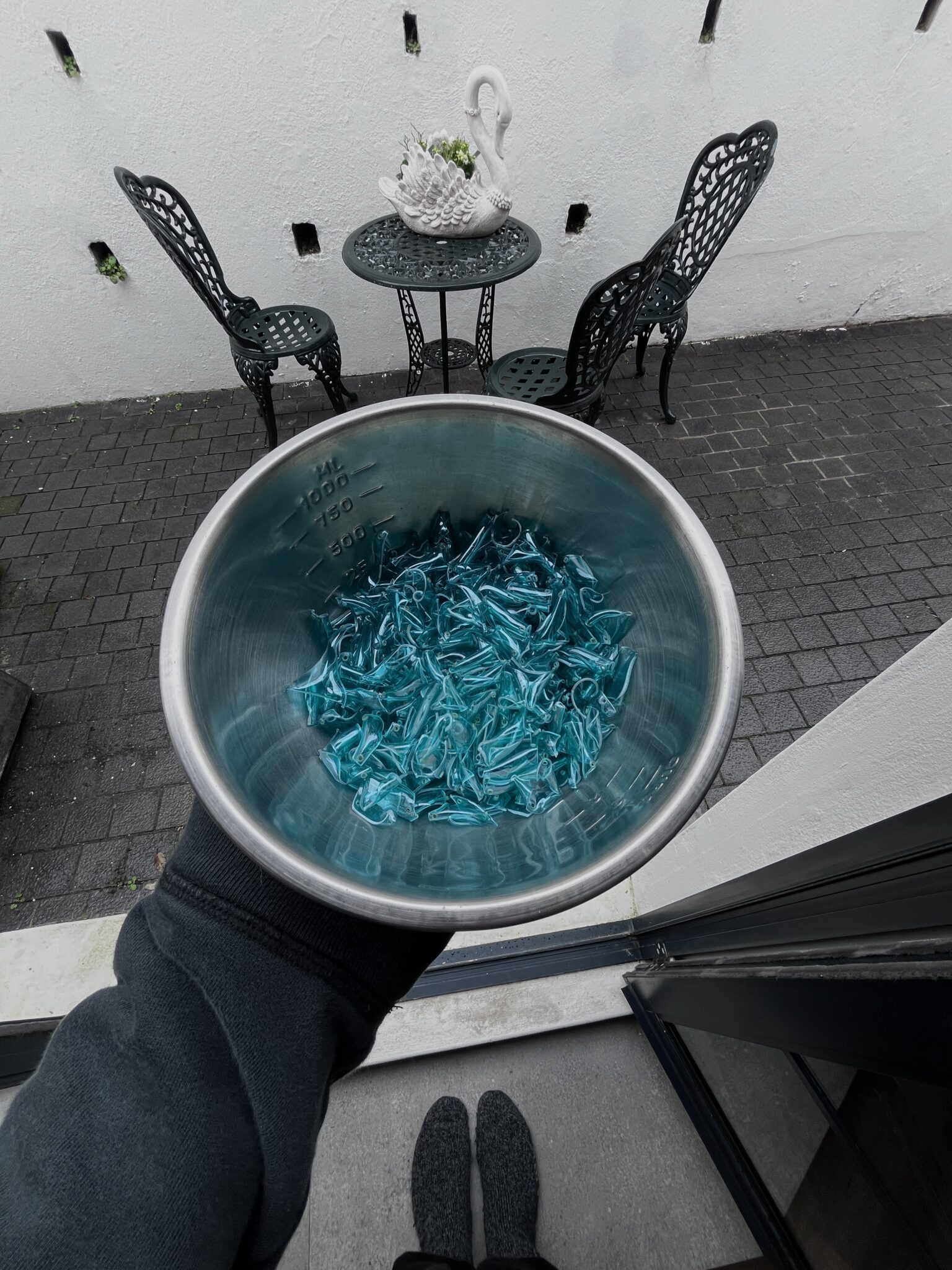
Melted and moulded plastic bottles. Image: Supplied
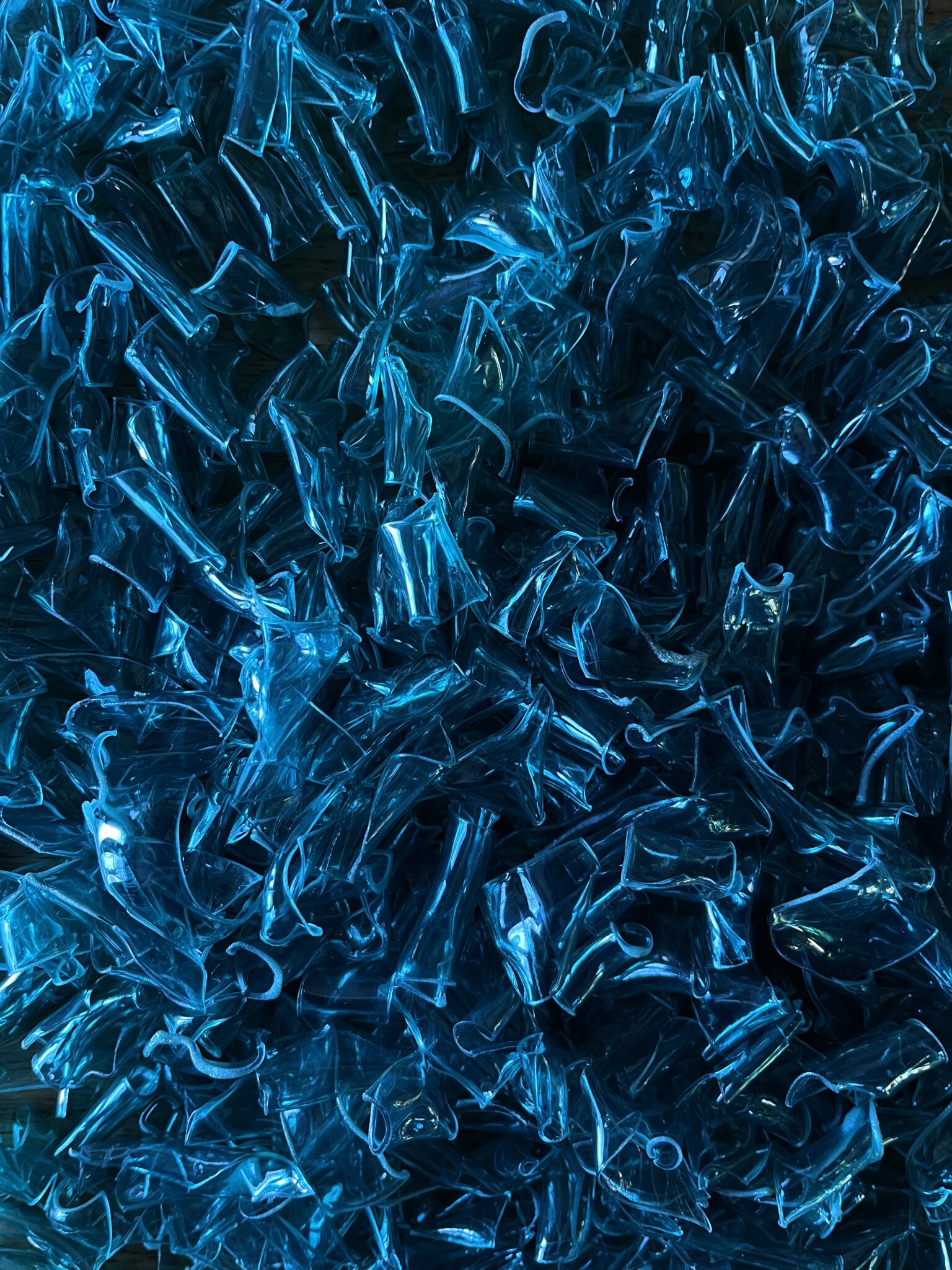
Pellets. Image: Supplied
What did you learn from process?
I learnt the value of my art. I learnt patience. Slow fashion now feels natural to me.
What are you working on now?
I’d love to create a full collection using recycled materials as a base. Or even bags and jewellery. With the success it’s had from the public – I’d love to get some funding and mentorship to create more statement and sellable pieces from waste – employing women to help me with the handwork considering the slowness of the project.
Right now, it’s just me.
- Images supplied by Kenan Van Kooij
- Follow Kenan Van Kooij on Instagram