There was a bright spotlight on Morocco over the recent holidays as people from around the continent gathered to celebrate the beautiful work done by some of Africa’s brightest stars. There was also a soccer tournament.
While millions of soccer fans focused their attention on the Africa Cup of Nations’ final matches, artisans and designers met in Casablanca, the country’s commercial centre, for the launch of the inaugural Heirs of Greatness Day: a celebration of creative talent and craftsmanship.
Heirs of Greatness Day, an initiative created by Orun, a pan-African organisation and led by African Currency Network, is dedicated to supporting cultural and creative industries in shaping the future of the continent. Habyba Thiero founded Orun to create the structures and networks to support the creative industry.
Unlike the craft, fashion and design, African soccer has strong structures in place. There is AFCON. There are football federations, academies and clubs on national and local levels. Institutions turn soccer players into international stars. Money is made.
Fashion, design and crafts – creative industries – have not had similar continent-wide organisations, and very few countries have good national infrastructures.


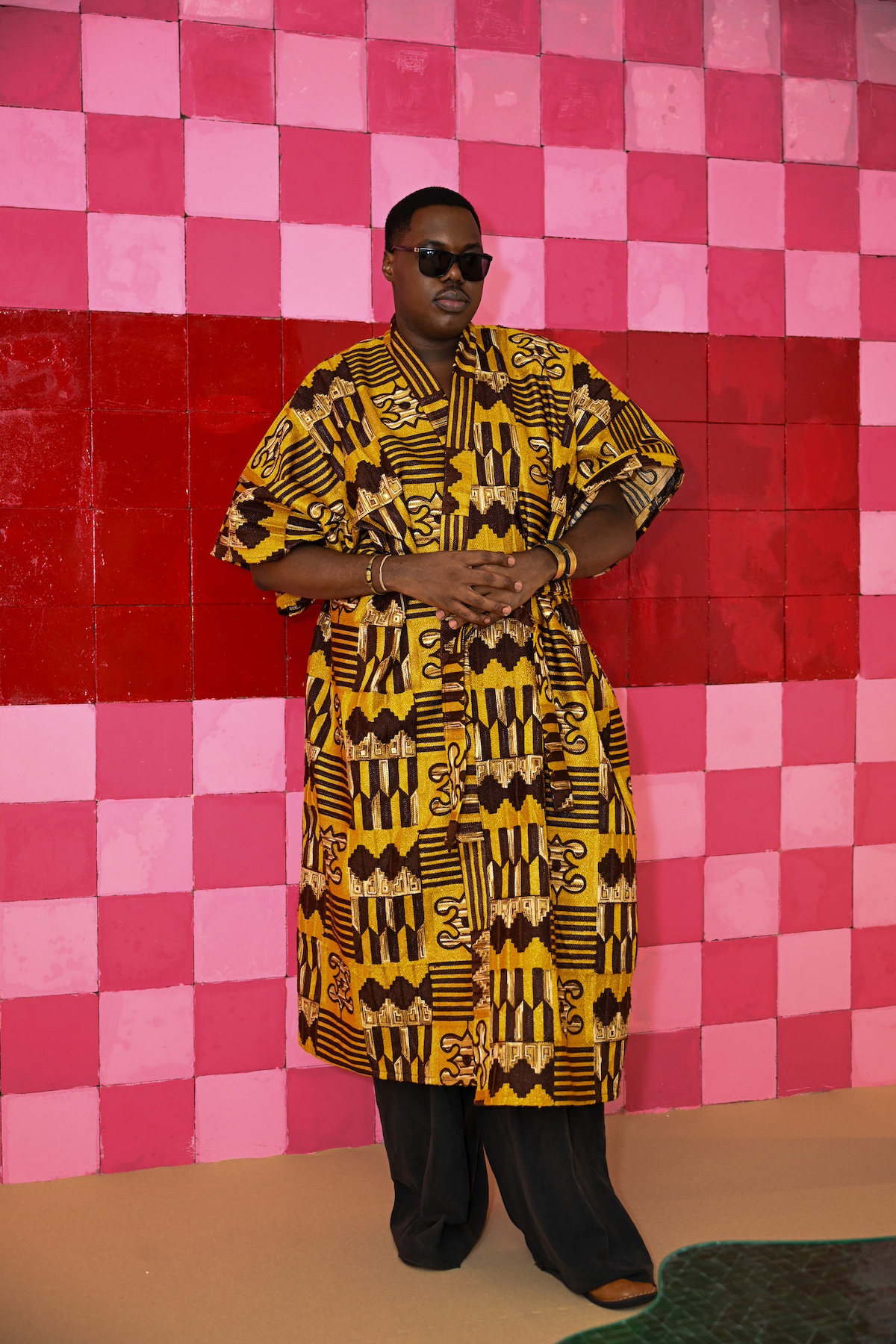

Guests arrive at Sacré-Cœur Cathedral in Casablanca for an evening gala and show to celebrate the launch of Orun’s Heirs of Greatness Day. Images: Orun Studio
Take fashion for instance. For years now, Africa has been promising to be a global fashion leader. Habyba says, “We are present on global stages, fashion weeks, exhibitions, platforms, but too often absent from ownership, value chains, standards, and transmission mechanisms.” The result is that African fashion is not meeting its potential. It currently accounts for only about 1.2% of the global fashion market, according to African Business.
In a 2023 report, UNESCO argued that the industry needs support from decision makers, and role players. With her background in banking and in developing systems, Haybya says Orun will help consolidate the industry and move it from momentary success to long-term foundations.
“If we don’t do that now, a lot of what is emerging today will disappear without leaving anything behind. Africa creates enormous value, human, cultural, intellectual, but why does so little of it remain structurally protected, owned, and transmitted by those who create it?”
The idea is that we are heirs to an ancient greatness, and that our responsibility is not to celebrate it nostalgically, but to make it productive and transmissible for the future
Orun’s mission is to transform African culture from inspiration into infrastructure, from something that is admired to something that is built, governed, protected, and transmitted over time.
The Heirs of Greatness Day is the public expression of this vision.
At the inaugural launch event held at the former Sacré-Cœur Cathedral in Casablanca, there were seven exhibitions or “houses” representing seven crafts. Walking through these spaces, guests had a sensory experience of a wide selection of craft, textile and fashion produced on the continent. The exhibitions were both a celebration of these pieces and a call to action. Habyba says, “We are heirs to an ancient greatness, and our responsibility is not to celebrate it nostalgically, but to make it productive and transmissible for the future.”
House of Weaving
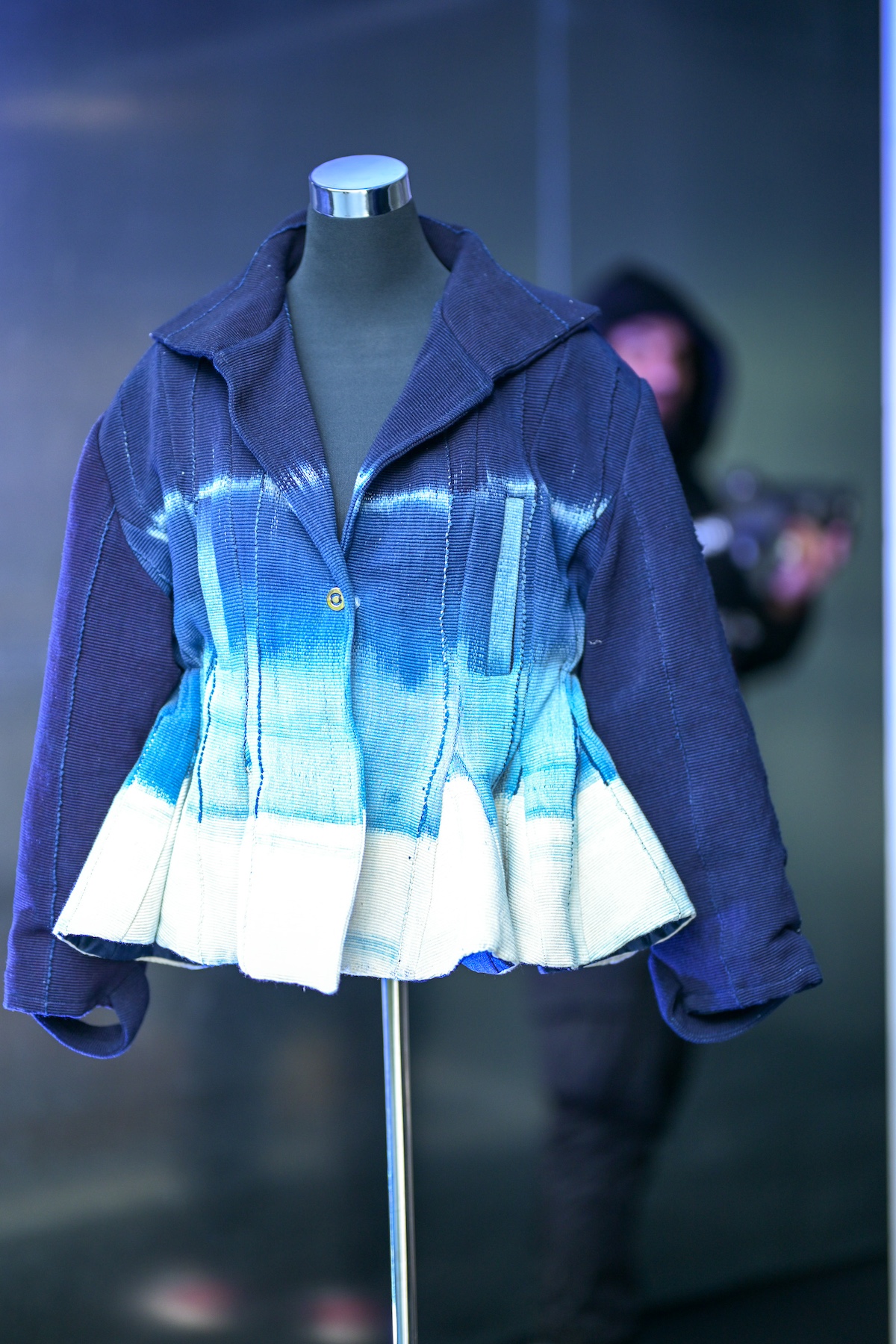

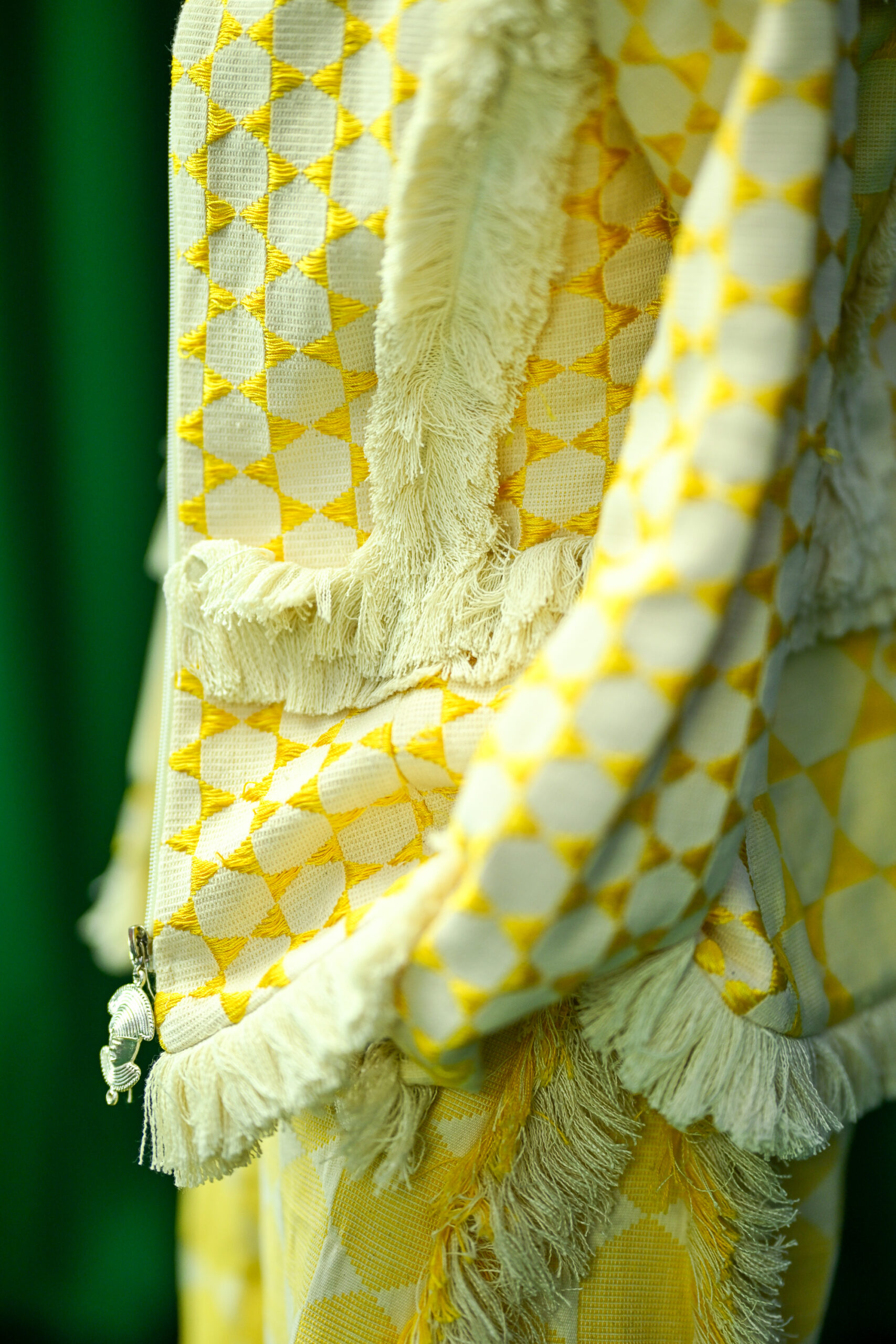

Weaving is practiced across Africa, using a multiplicity of techniques, a wide variety of tools and both vertical and horizontal looms. As the global fashion market seeks more distinct textiles, Orun sees opportunities for community development as well as for modern design. The House of Weaving exhibit featured a loom and two designs by Ivorian designer and founder of Olooh, Kader Diaby. On the bottom left is a garment created by Romzy Studio from cloth woven by master weaver, Johanna Bramble.
House of Dyeing

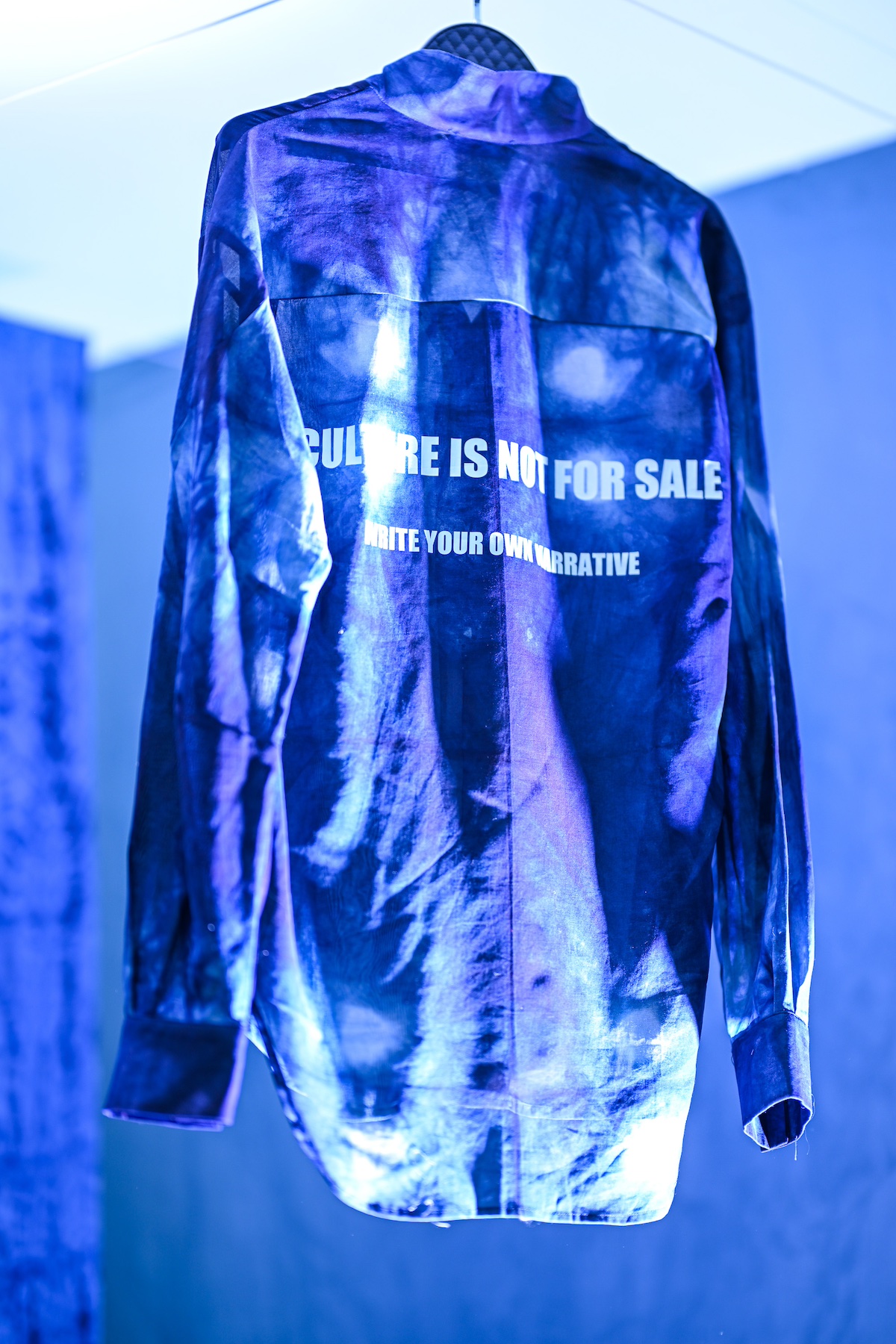

Africa is a great dye continent, and depending on where you are on the continent, you could be wearing clothes dyed with indigo, clay, barks, leaves or roots. This exhibition drew attention to indigo. The fibre of the plant looks green in a dye vat, but turns blue through oxidation. Practised for centuries, indigo dyeing is not only a living heritage, but an economic activity and a site of innovation. The exhibition featured examples of dyed cloth by Beninese designer Nadia Adanlé, who “cultivates and domesticates dye plants, oversees fields, selects and harvests leaves, then builds indigo vats through fermentation, controlling with precision the pH balance, oxidation, temperature and the longevity of the vat.” Garments by IMI & KIMI were also on exhibit.
House of Crochet


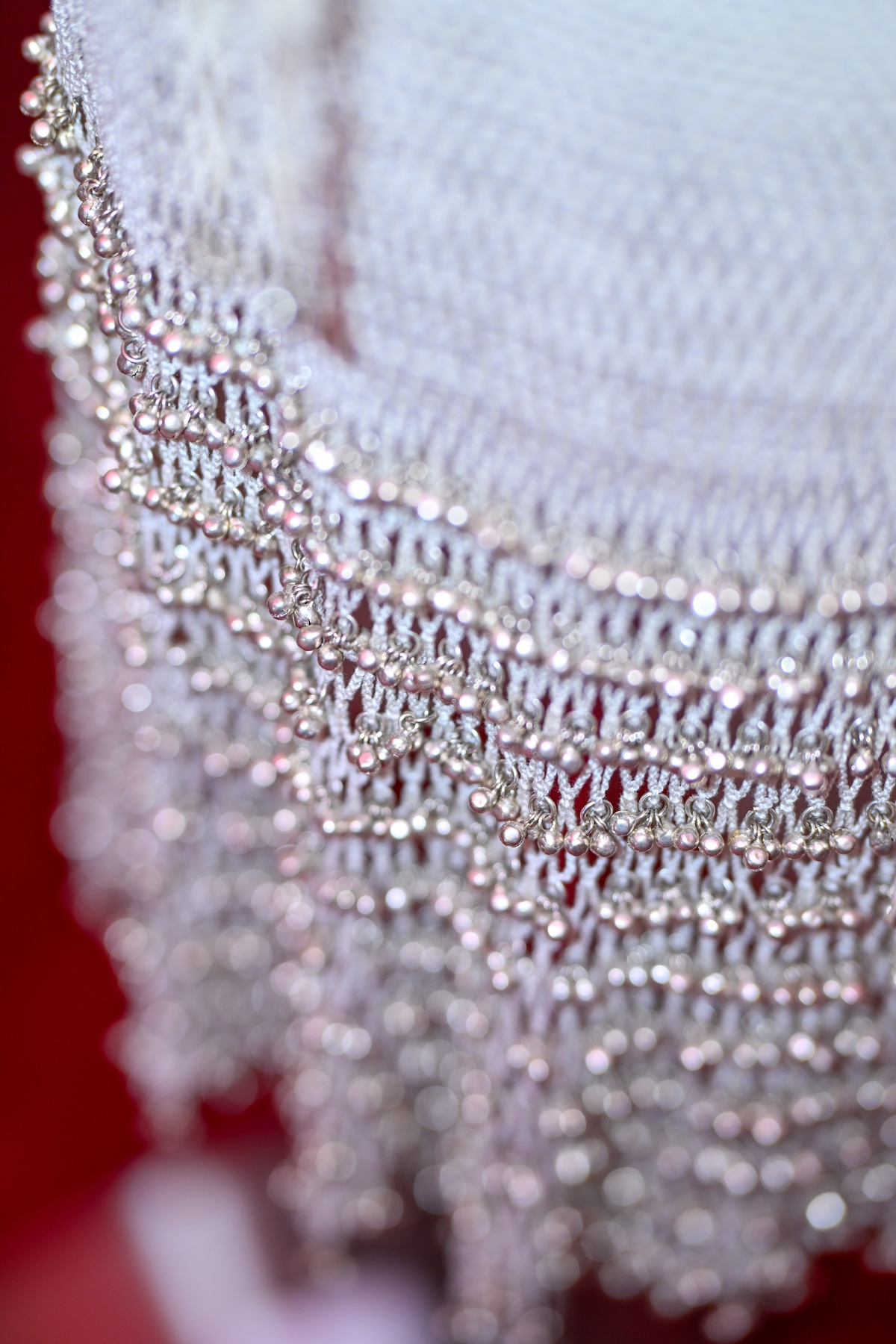
With a global appeal, crochet belongs to no culture. According to Orun, “Its interlocked stitches echo older practices of interlacing, netting, and hand weaving across Latin America, Asia, the Middle East, and Africa”. Exemplified by Yoshita 1967 design, crochet is seeing a resurgence across Africa. Crochet is accessible, adaptable to local and recycled yarns, and offers a way to support co-operative work and women’s economic autonomy.
House of Couture



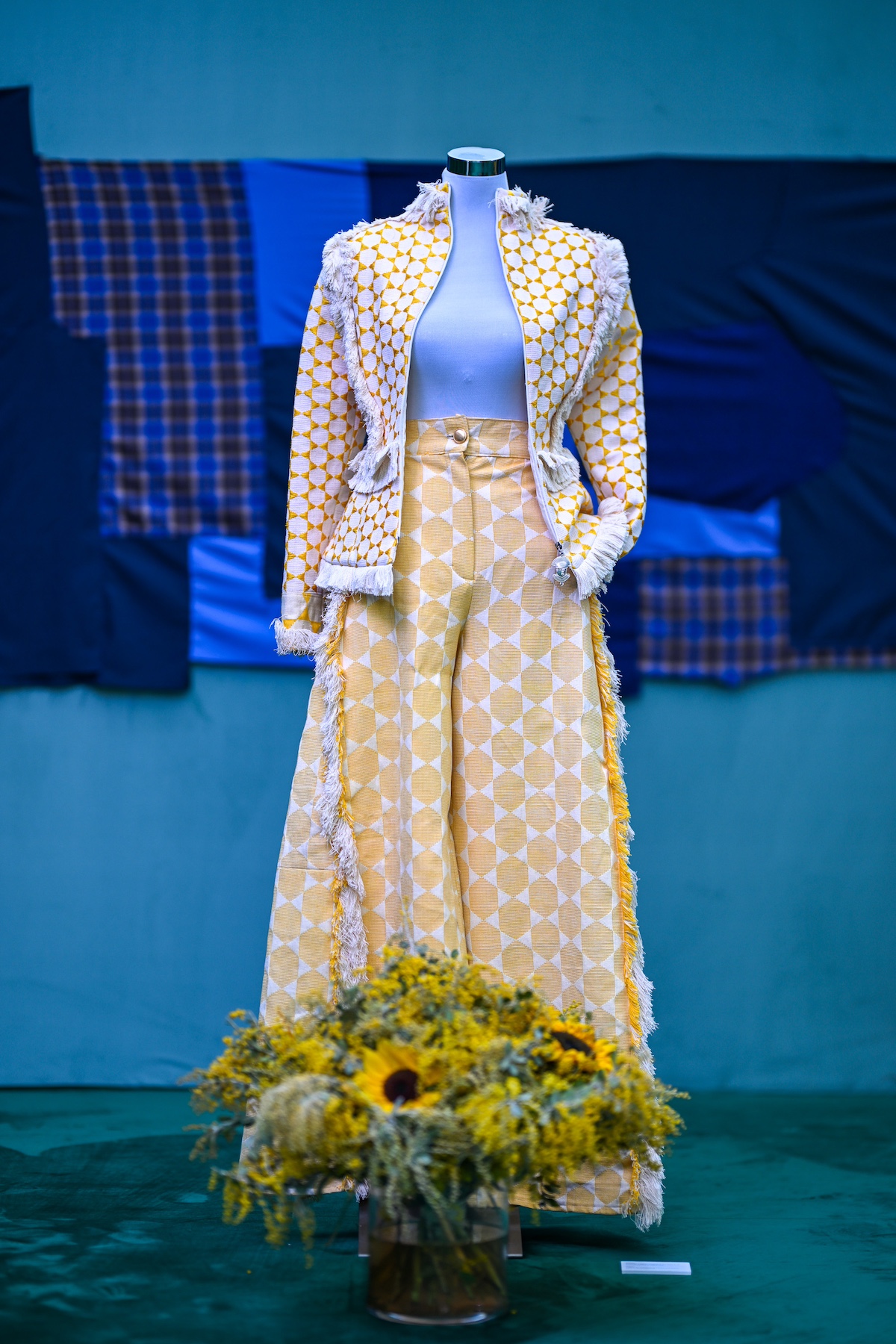
Couture is the design and manufacture of fashionable clothes to a client’s specific requirements and measurements. Africa has a long and consistent history of making clothes to order, a sustainable, decentralised fashion business model. This house aims to protect technical mastery – pattern drafting, cut and fit, garment construction, embroidery and other surface work – from being erased by industry. The exhibition featured IMI & KIMI and ROMZY (with fabric by Johanna Bramble Creations).
House of Ceramics

Clay is one of the first materials used to serve daily life. For millennia, earthen vessels have been used to carry water and protect food. Mosaic tiling continues to be used for decoration and for waterproofing. By shaping clay, ceramic art connects craft to domestic life, architecture and landscape, “showing how form, function and beauty emerge from an ongoing conversation with place”. The exhibition included works by master potter Edwige Gada from Côte d’Ivoire and Moroccan ceramist Kamil Hajji.
House of Tannery


Communities across the world have utilised animal hides – and animal skins – in harmony with their local environments, writes Khensani Mohlatlole. Yet, today, leather is considered one of fashion’s most harmful materials. If not done with care, tanning raw hide releases toxic chemicals into nature and pollutes water. The African continent has long had a symbiotic relationship with animals and holds the know-how for herding and responsible tanning. Orun presents leathers “as a material of responsibility and longevity: a practice in which the origin of hides, the use of water, the quality of the hand, and the beauty of the durable objects are inseparable.” Representing this house were Franco-Moroccan designer and craftswoman and founder of Aswad, Sonia Ahmimou, and Lucette Holland, whose Senegelese-based leather shoe brand, CeeCee, makes upcycled, designer footwear.
House of Foundry

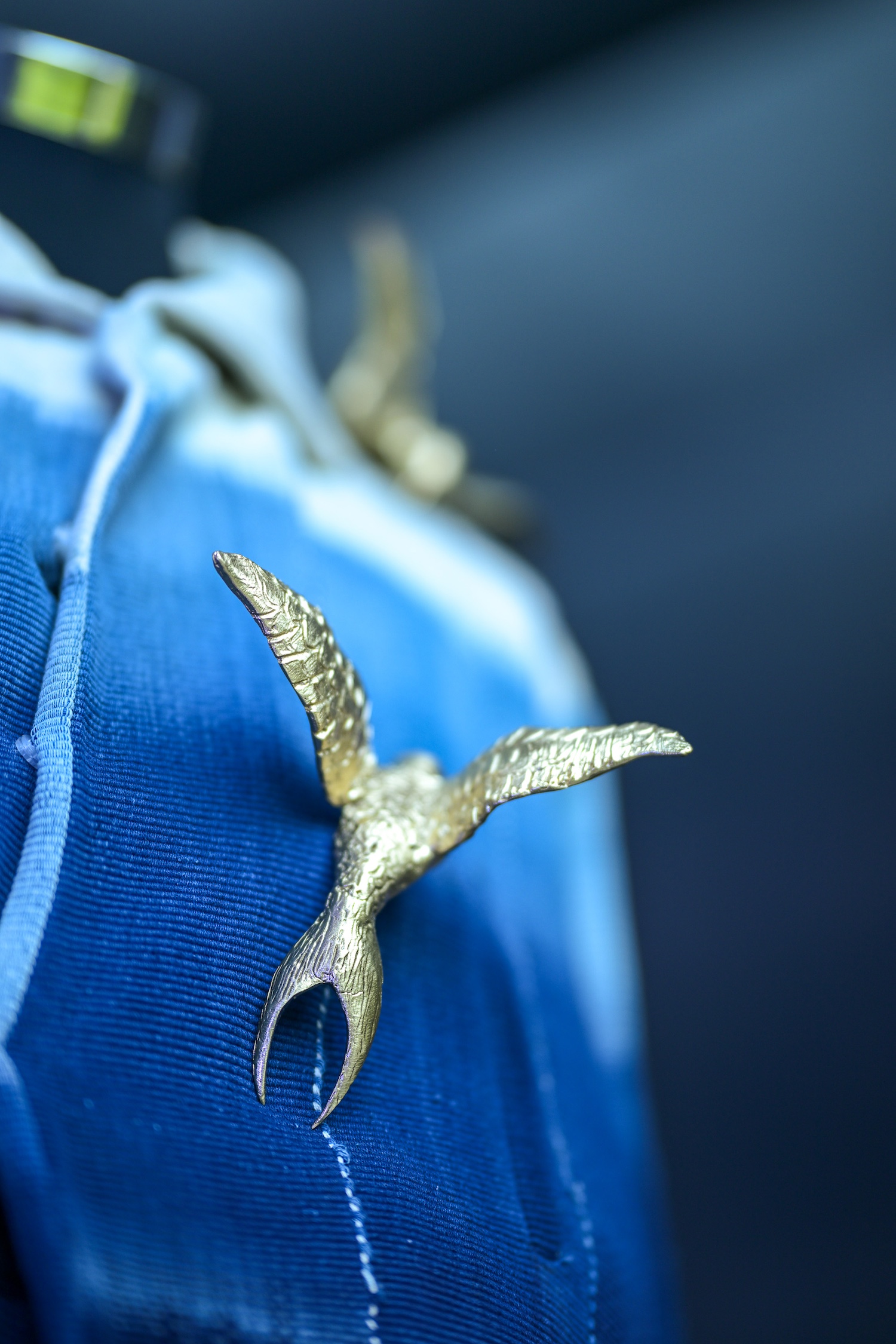
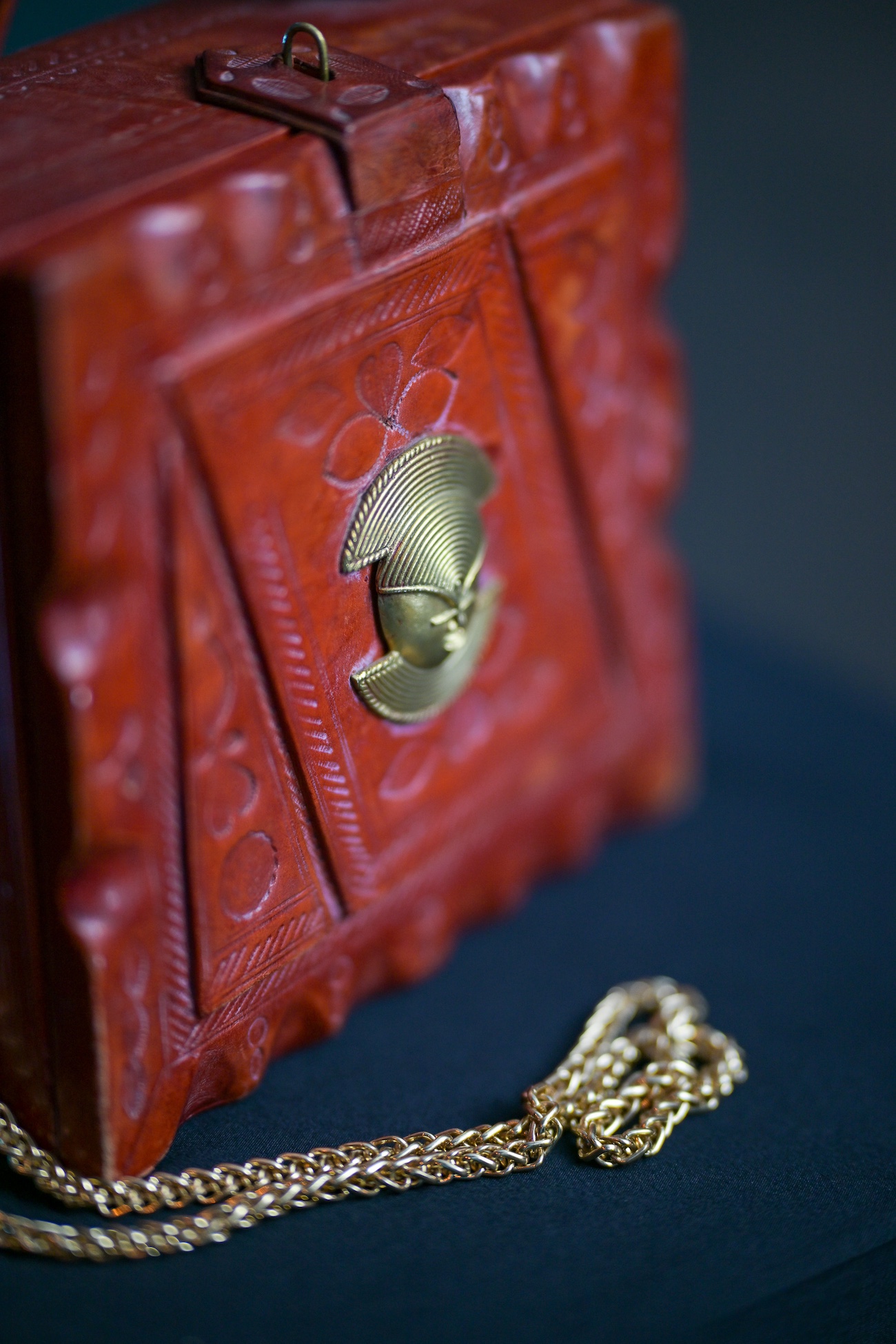
Artisanal foundry is the practice of pouring metals – such as brass and bronze – in moulds to create sculptures, statues, jewellery or ritual objects. A raw material is heated to liquid and poured into a wax or sand mould.
The future
Orun is not about romanticising creation. It’s about creating systems that can generate lasting economic, social, and symbolic value. Guided by principles of memory, structure and transmission, value is created locally, owned locally, and projected globally without being diluted or extracted.
What has excited Haybyba most about Orun? “Seeing people shift their mindset. When a designer stops thinking only in collections and starts thinking in systems. When an artisan realises that his knowledge is not informal, but technical and valuable. When a young person sees craft and design as a viable, dignified future, those moments tell me we are doing something right. Orun excites me because it creates continuity. It reconnects people to the idea that what they build today can matter tomorrow, and even long after they are gone.”
In practice, this means generating value through several channels: strategic partnerships with institutions and brands, curated programmes like Orun × Designers, production and content via Orun Studios, experiences and events such as Heirs of Greatness Day, and, over time, training, certification, and infrastructure projects.
By 2030, Orun aims to position 50 brands in local and international value chains. It will generate 5 – 10 international collaborations and support the rollout of 10 Orun hubs in 10 countries. It aims to train 50 master artisans per year and then create 5000 jobs.
Haybaya says, “The business model is designed to align revenue with impact. We do not grow by extracting value from creators or artisans, but by structuring ecosystems where everyone grows together. That makes growth slower, but much more resilient.”
Heirs of Greatness Day is a recurring celebration. The next editions will build on what was established in Casablanca, with more programmes, more transmission, and stronger international linkages. It takes a village to raise a child, and a continent to support our creatives.
- Images: Supplied by Orun Studios
- Jackie May travelled to Casablanca as a guest of Orun