

Karabo Poppy has spent her career deciding what deserves to be remembered. Commissioned across South Africa and by some of the world’s biggest brands, her murals set out to preserve and celebrate the roots, history and visual aesthetic of the continent, painted at street level where heritage lives in public.
The sustainable skincare brand has to make a similar decision when it chooses ingredients and packaging materials: what’s worth keeping, and what should be eliminated? This shared mission is the heart of episode two of shelf-made, a docu-series produced by South African skincare brand Lelive.
Founder of Lelive, Amanda du-Pont says, “The series shelf-made is our humble way to highlight African trailblazers, to show the world who we are — our way to show gratitude as South Africa’s fastest growing brand.”
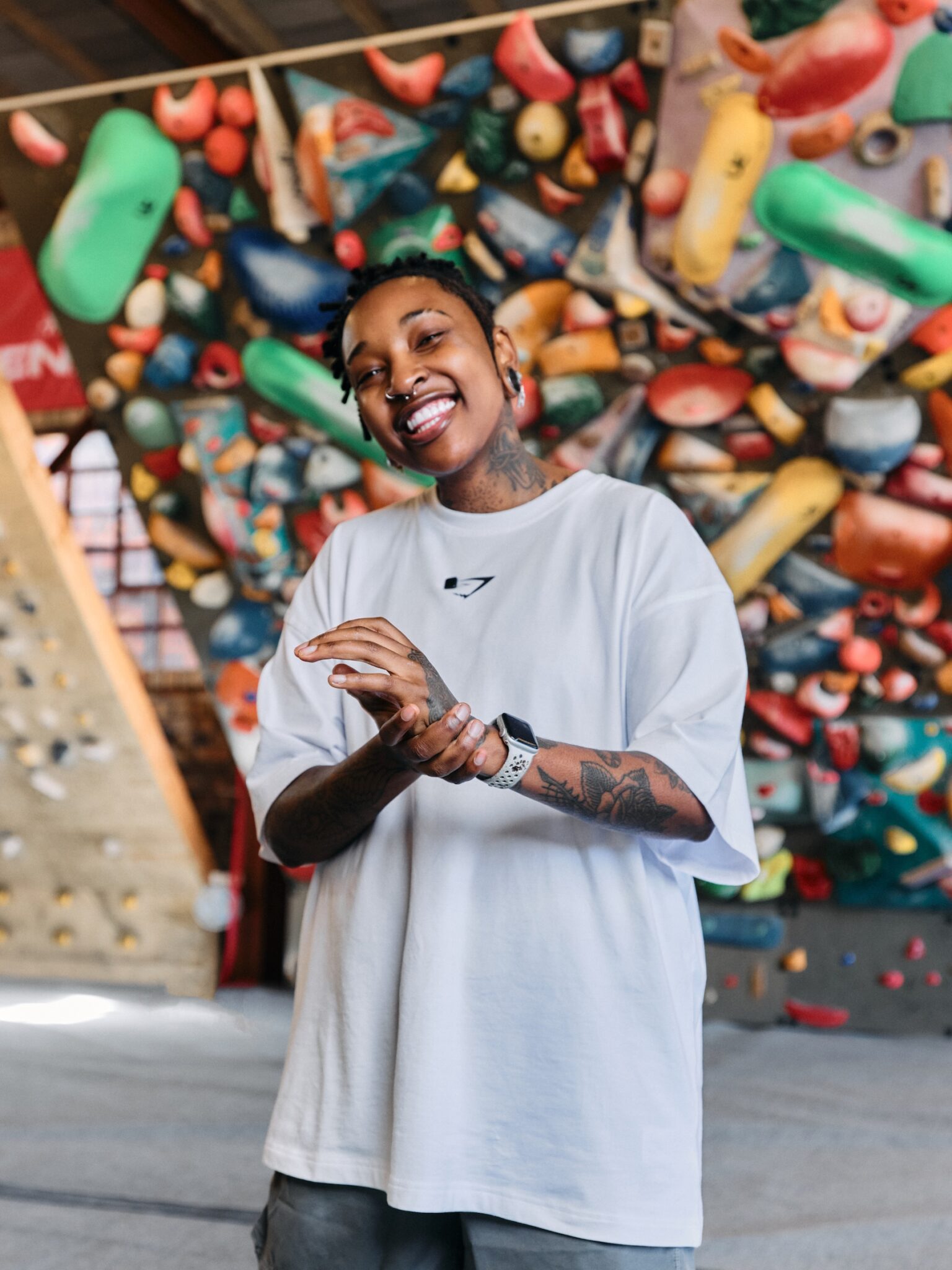
Image: Nkateko Mondhlana
The series of short films, shelf-made, follows self-made creatives for a day – one creative per episode – from their quiet morning rituals and daily work to spending an evening with a room full of people.
For Karabo, the day ended at Beijing Opera at 44 Stanley Avenue in Johannesburg with an immersive creative dinner built around her artistic universe: a moment designed to give her her flowers.
“Lelive was built with our community, and Karabo is that community at its absolute best — taking our heritage, our stories, what’s ours, and putting it up where the whole world can see it,” says Amanda du-Pont, founder of Lelive.
Wearable art
For the evening event, Karabo created original visuals inspired by Lelive’s African botanicals and heritage rendered in her signature language of bold line-work and continental iconography, which guests heat-pressed onto Lelive tote bags during a live activation. These aren’t disposable brand moments or single-use, landfill-bound gift bags. Each guest left with a one-of-a-kind piece of reusable and wearable art. The tote is a functional, reusable canvas that carries the artist’s work and the brand’s values.
“Seeing my artwork become part of an everyday object that people will use again and again felt really special because it’s another way of carrying those stories forward. To me, that’s what creating with intention and love is all about,” says Karabo.
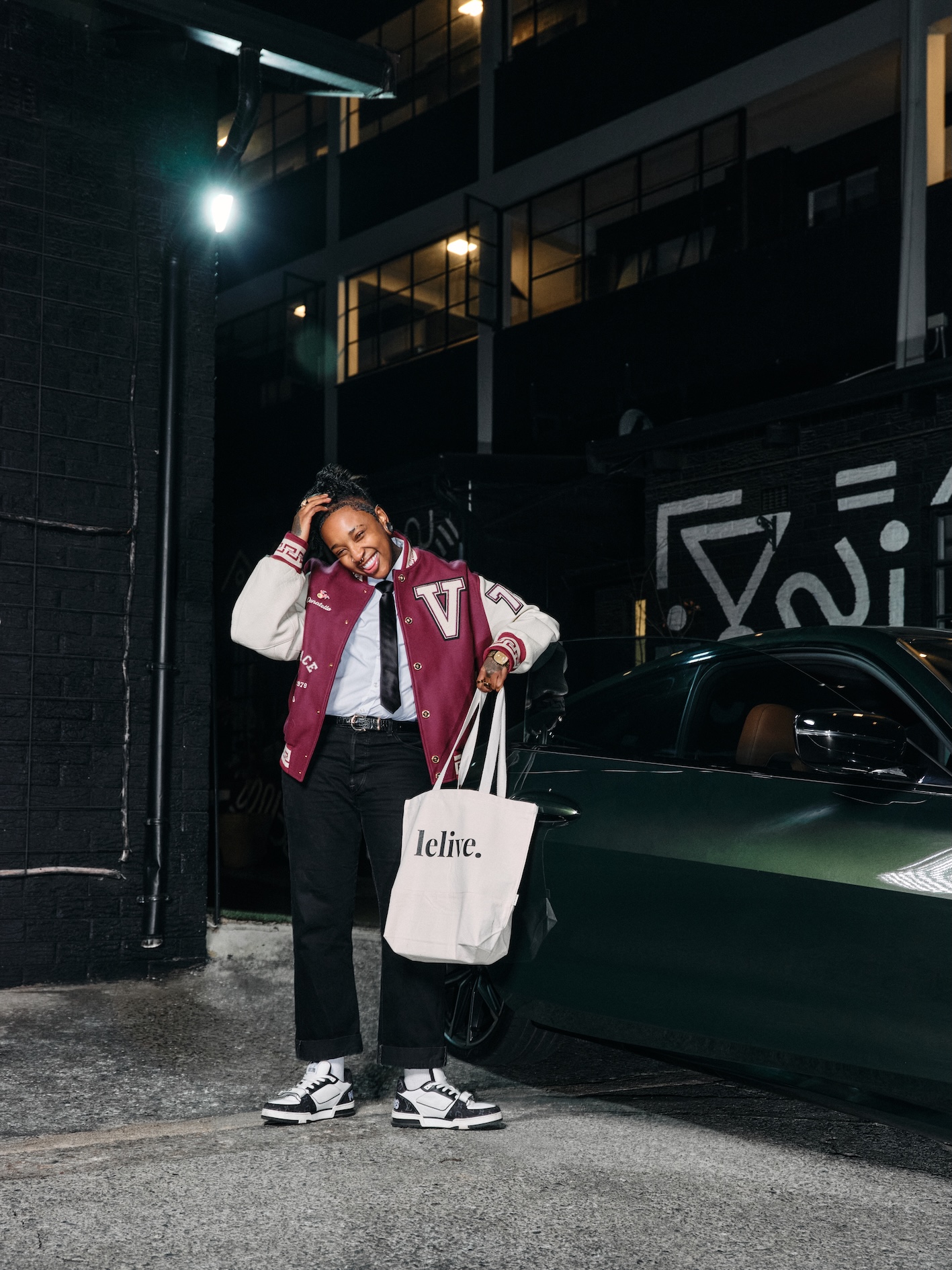
Image: Nkateko Mondhlana
In the docu-series, Karabo speaks about being an artist not just by profession but by identity; about following her heart and passion every day; and about grabbing opportunities as they come. Because, as she puts it, ‘one day’ doesn’t start someday. It starts now.
Shared values
Karabo is not interested in making work that is disposable or driven by trends. “I want to create pieces that preserve our stories, celebrate our culture and stay with people long after they’ve first experienced them,” says Karabo.
Beauty brand Lelive is plastic-negative. It has recovered twice as much plastic as it produces through its partnership with rePurpose Global. For example, just one of the initiatives, Project Sanguisé, removed 7,397 kgs plastic during a river clean-up in Douala, Cameroon employing 44 local people.
The beauty brand uses aluminium, glass and FSC-certified paper packaging. It’s actively exploring further switches to non-plastic materials and to post-consumer recycled plastic. Wherever possible, products are manufactured locally in South Africa, keeping the supply chain short and the value inside the local economy.
The brand holds Bioprospecting Permit BP 201738, issued under South African biodiversity law. Rooibos, baobab, aloe ferox and resurrection plants are each sourced under signed Benefit Sharing Agreements, meaning the communities who first found use for these plants are contracted partners.
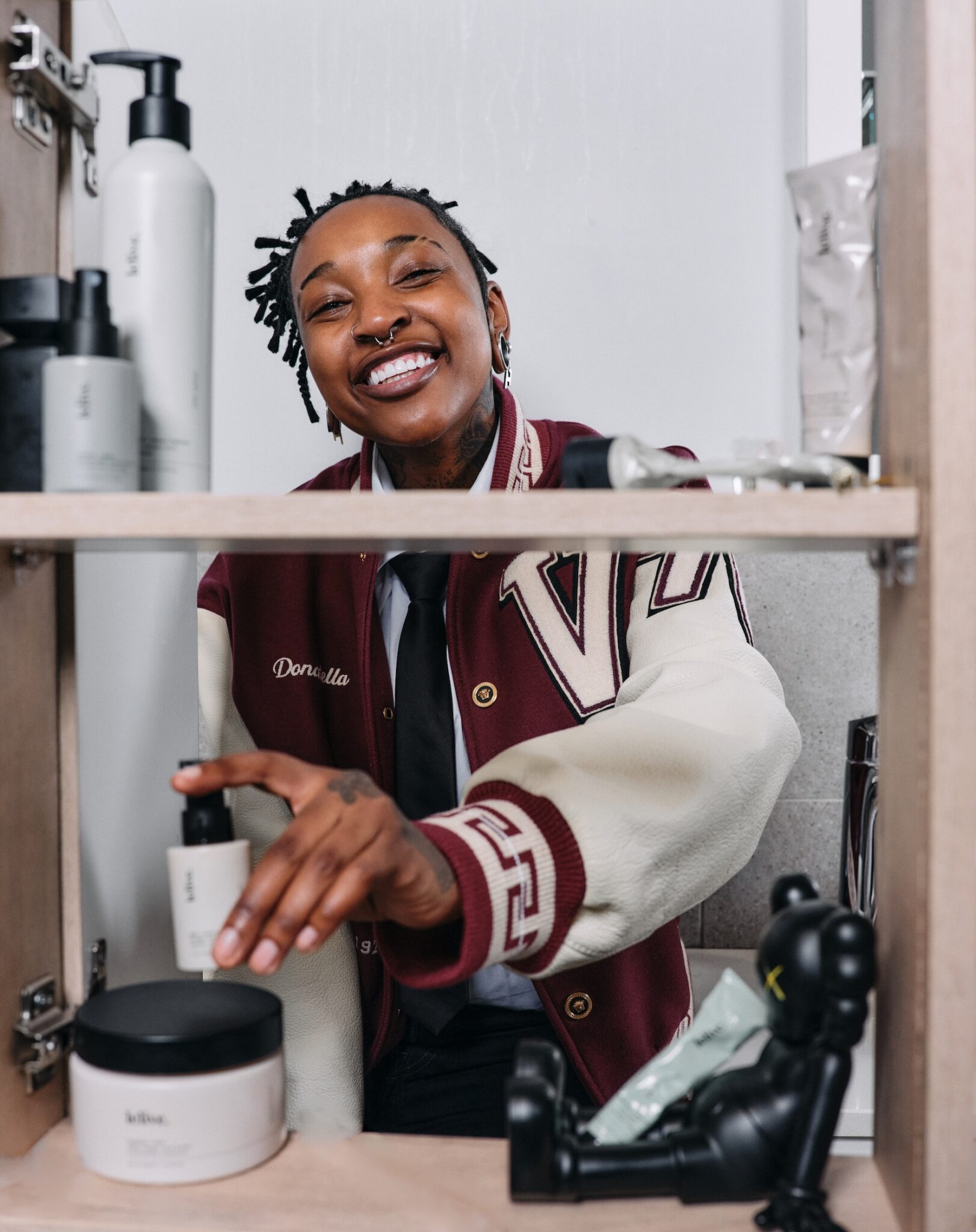
Image: Nkateko Mondhlana
The loop closes at the checkout counter. At participating Wellness Warehouse stores in Cape Town, Lelive recycling bins invite customers to drop off their empty beauty containers — from any brand, not just Lelive’s — and earn 15% off a Lelive or Wellness Warehouse own-brand beauty purchase that same day.
Lelive believes in beauty that is intentional, inclusive, sustainable, and deeply connected to African identity. It treats sustainability the way Karabo treats heritage: not as a campaign, but as a discipline.
“Watching her artwork being pressed onto our totes, in a room full of people giving her her flowers — honestly, I was so proud. And building a brand that’s kind to the planet has always been a non-negotiable for me: we’re plastic-negative, and the communities our botanicals come from share in what we build. That’s African beauty to me — celebrating what’s ours, in a way that gives back to where it comes from,” says Amanda.


