

Abigail Nyirenda recently shared her graduate collection with the world. Now she is ready to nurture her sustainable fashion brand, Zali Grai and apply her fashion education to the budding Zambian fashion industry. Through her brand, Abigail will share her deep commitment to challenging the status quo when it comes to how we dress and how we relate to our world.
Zali Grai draws inspiration from stories of diversity, culture, creativity, and heritage, while prioritising sustainability and care at each step of the production process. We caught up with Abigail, who was a finalist in the Twyg Sustainable Fashion Awards 2021, to find out more about her journey as a fashion student and the inspiration behind her brand.
Tell us about your sustainable fashion student journey.
Before I became a student I watched fashion content when I stumbled upon the ‘True Cost’ documentary. It changed my perception of fashion and when I became a fashion student, I knew that I wanted to express my creativity sustainably. At the time sustainability felt overwhelming – it was unknown territory. The journey of studying fashion gave me the tools to understand what sustainable fashion is, and could be, and allowed me to to research and develop ideas.
When and why did you decide to launch your brand, Zali Grai?
I started Zali Grai in 2021, my final year. The purpose behind the brand is to create, minimalist, elevated basics and staples inspired by the African continent. I want to create pieces that women can style in different ways – dress up or dress down – while being responsible in how I make them and how I take responsibility for life after the pieces are purchased and used.
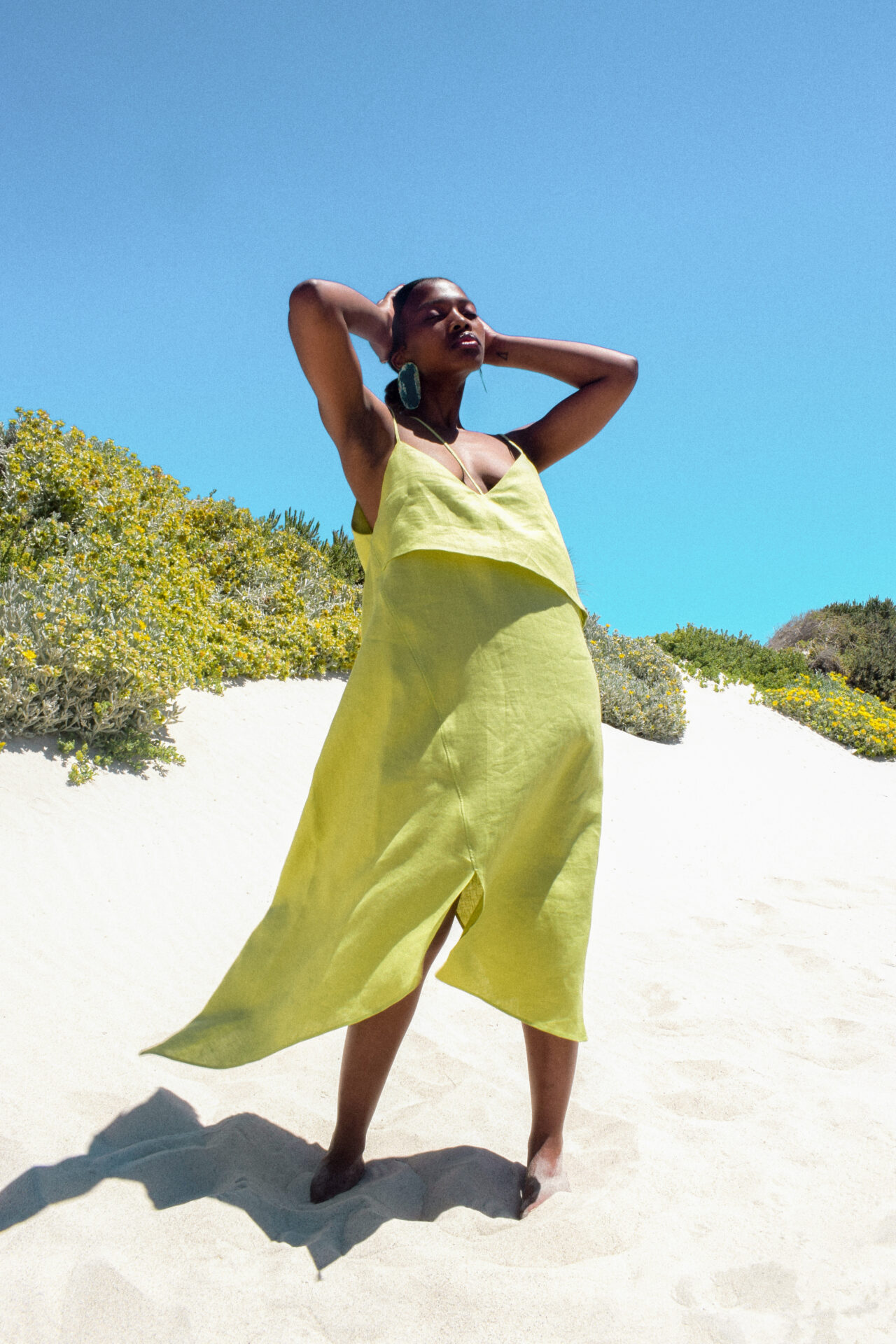
Tell us about your graduate collection.
This collection is a statement against the extreme littering in Africa, especially of discarded and unrecyclable plastic. The collection acts as encouragement to keep our continent clean, not only through design, but as a mindset and as a society.
The silhouettes were inspired by litter that I found. For the colours, I used both earthy tones and the vibrant version of some earthy tones inspired by my use of plant-based fibres in the collection. Fabric are natural, plant-based fibres which include pure cotton knit, pure linen, ramie linen, and rayon linen. I avoided synthetic fibres because they are part of the problem I was trying to address.
How do you define sustainability in design?
To me, it means considering each step of the design and lifecycle and to avoid negatively impacting earth.
Can you tell us about the earrings you made for your final show?
The garments I created for my collection spoke more to future practices, but I also wanted to address what happens to existing trash. I decided to work with plastic shopping bags (from Checkers, Pick ‘n Pay, and Spar), because they are more readily available and are often carelessly discarded in our environment. I applied a melting technique to the plastic bags which give the earrings an organic effect similar to the design pattern found in some stones.

What would you like to change in the Zambian fashion industry?
The fashion industry in Zambia is extremely small and many sectors are still not yet developed. The country does not have fashion schools… yet. I would like to be able to guide students in sustainable fashion practices.
How did Covid-19 shape you as a student?
Studying during the pandemic was a challenge, but with the help of my loved ones I was able to adapt. I’ve always known what I want to do, but I was always waiting to start. The pandemic taught me take a leap even when I didn’t feel ready, because there is never be a perfect time.
How can sustainable brands address hyper-consumption?
I believe that you have to address society’s view of consumption, because hyper-consumption is a strain on the earth and its resources. Even if all brands were sustainable, consumers’ demand might remain excessively high and our global population continue to grow. If this is so, we would still have a problem. That’s why creating designs for longevity while simultaneously encouraging proper care, repair, and re-use of a design (whether by the original buyer or someone its been shared with) have to go hand-in-hand.
Tell us about being a Twyg Sustainable Fashion Awards finalists?
When I found out I was a finalist it was hectic. I had deadlines for assessments and only found out from a fellow finalist that I was a finalist too. I honestly felt honoured to be selected. I do believe that being a finalist has been good for my brand’s image.
What are your plans for the near future?
I plan to focus on growing Zali Grai as well as potentially helping develop parts of the fashion industry in Zambia using what I’ve learnt and been exposed to.
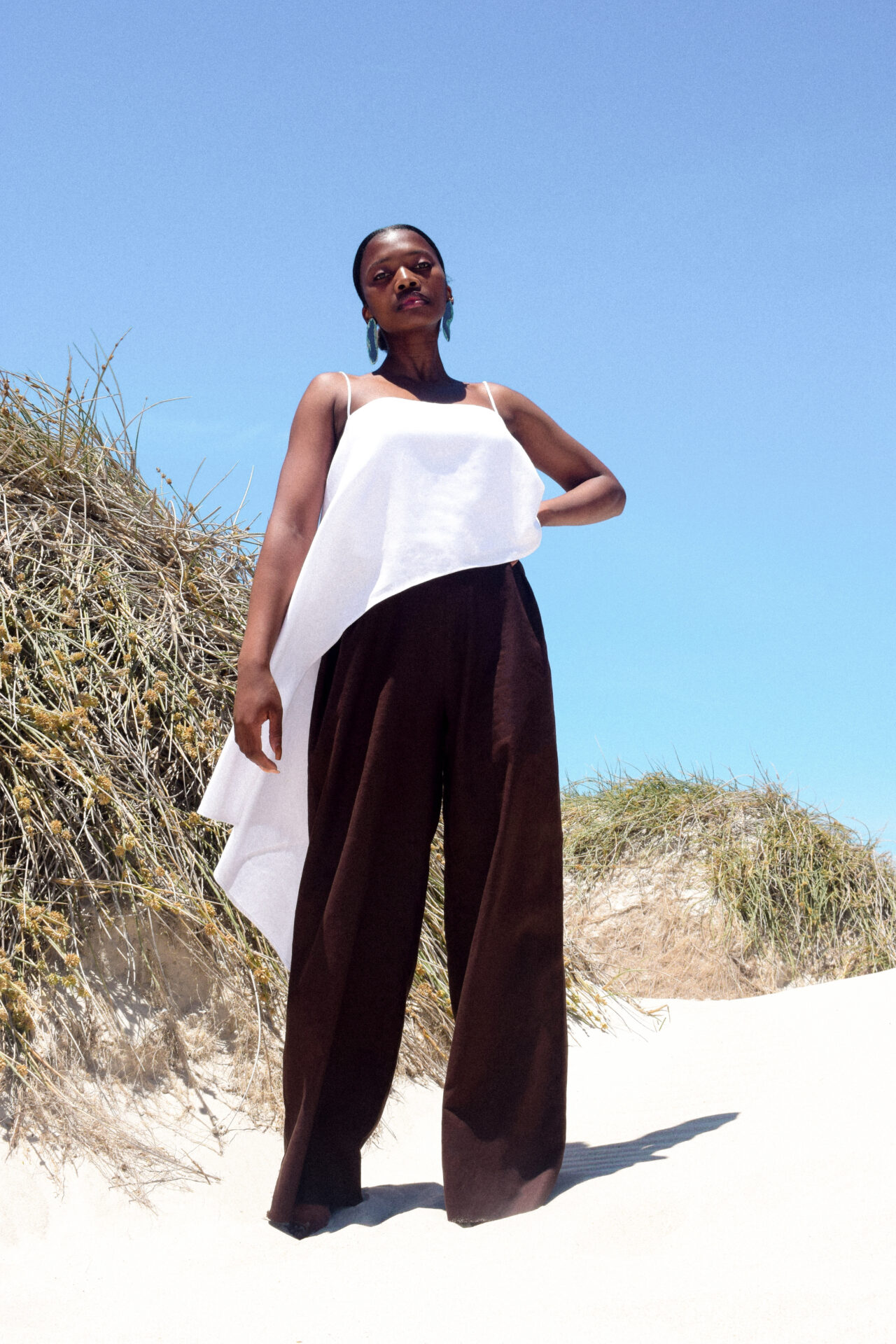
- Images supplied
- Zali Grai was a Twyg Sustainable Fashion Awards 2021 finalist in the Student Award category presented by Levi’s. She also won the Sustainable award for her final student collection at the Cape Town College of Fashion Design where she graduated last year


