Off the coast of Zanzibar, rows of cultivated seaweed sit tethered to wooden stakes in the shallows, farmed in neat lines by local growers who check on them each morning.
In six weeks, the crop will be harvested by seaweed farmers and carried inland to KelTex, an H&M Global Change Award winning biomaterials Tanzanian company, where this sustainably cultivated seaweed is transformed from a marine biomass into high grade and sought after bioleather.
“We blend the seaweed with other plant-based materials like sisal and banana fibres to make this material which has the same feel and strength as traditional leather,” KelTex co-founder Laetus Felix Buberwa said at Africa Textile Talks in Cape Town in August. The seaweed leather is engineered for end-of-life biodegradability.
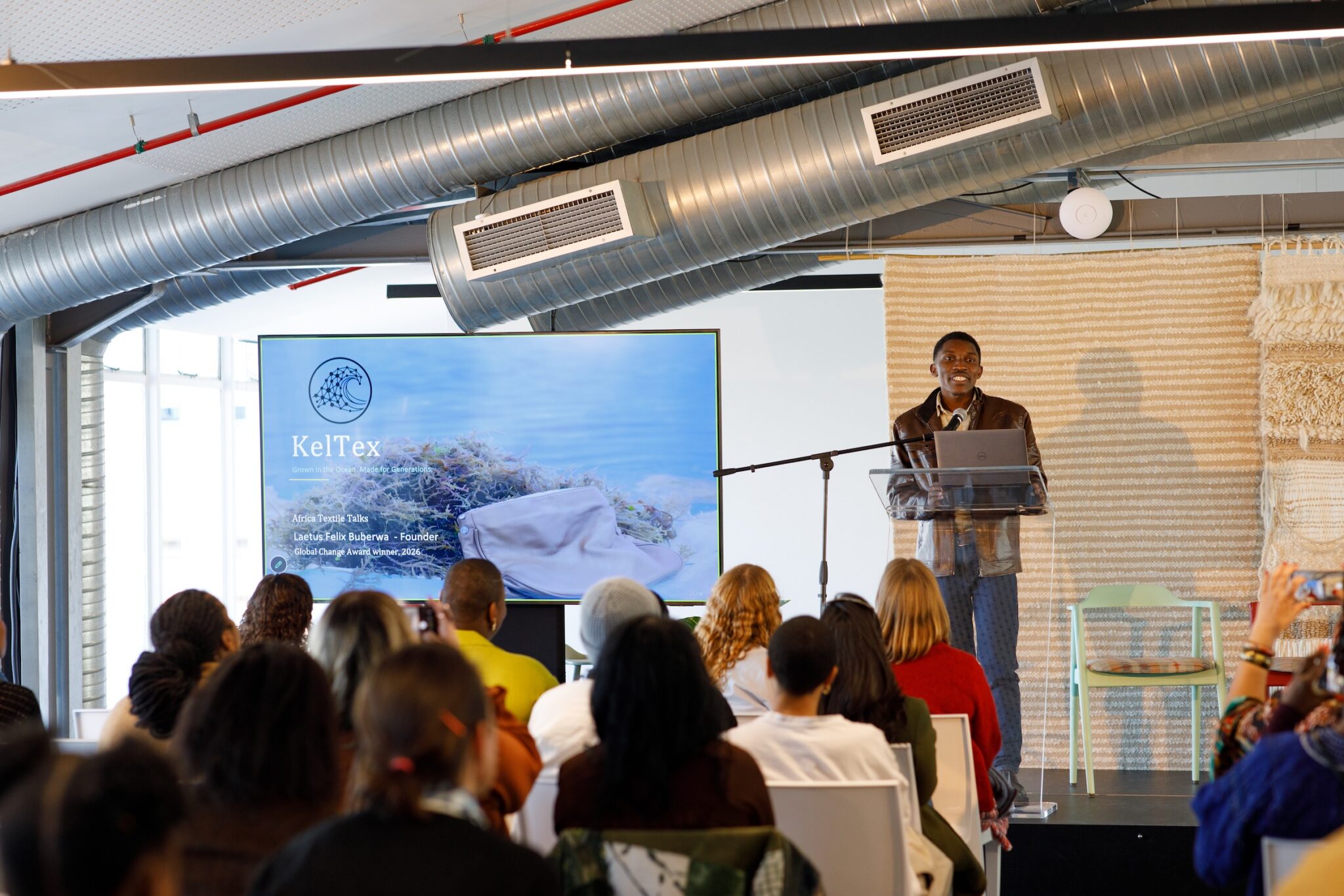
KelTex co-founder Laetus Felix Buberwa spoke at Africa Textile Talks in Cape Town in August 2026. Image: The Dollie House
The fashion industry is under intense pressure to reduce its carbon missions and to cut back its reliance on fossil-based fibres. To do this it needs alternatives to synthetic “pleather” and conventional animal leather. Conventional leather production is water-intensive, driven by carbon-intensive cattle rearing and industrial tanning processes. Synthetic leather alternatives, usually PU and PVC, are fossil-based and contribute to long-term microplastic pollution.
By contrast, seaweed is abundant and regenerative and one of the most efficient carbon sequestering organisms on the planet. “Seaweed gives us a distinct scaling advantage… To grow it, there is no need for arable land, fertiliser or fresh water, and it takes only 60 days to harvest seaweed,” said Laetus.

Seaweed is harvested, dried, cleaned and blended with other plant fibres. Image: Supplied
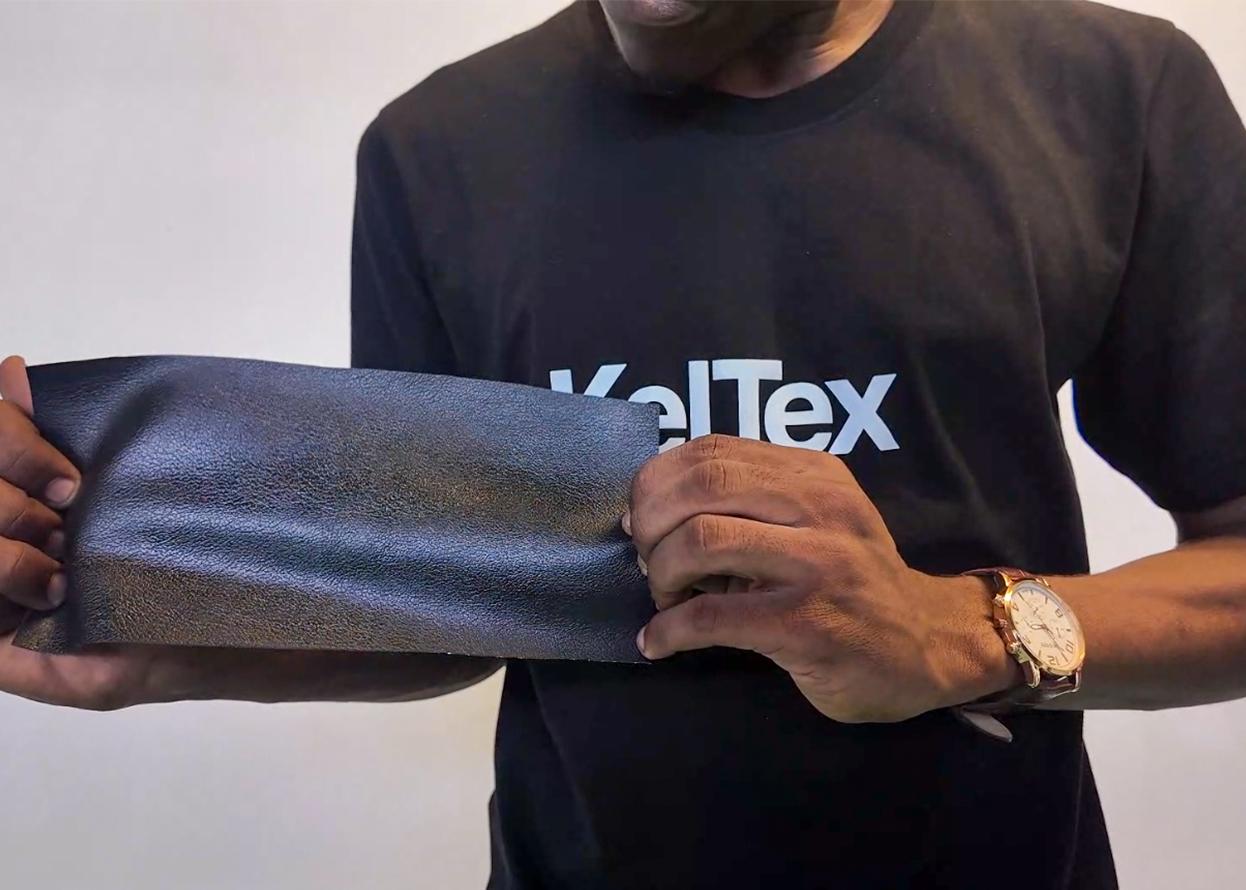
Demand for sustainable leather alternatives is growing. Image: Supplied
Having moved past the early stages of innovation to commercialising seaweed leather for global fashion brands, KelTex needs much more seaweed than has been previously cultivated. “We had to find a way for farmers to increase the yield of the seaweed,” Laetus said. To do this, Keltex “has developed an AI and technology system to help farmers predict the weather, the temperature, the pH and when to harvest.”
“I grew up watching my family tend, dry and sort seaweed. It’s honest work that never paid enough. We are building on our lived experience by using AI to help farmers increase their yield,” Laetus said. By layering technologies onto an existing seaweed economy to increase yield and quality, is creating a multiplier effect on farmers’ incomes.
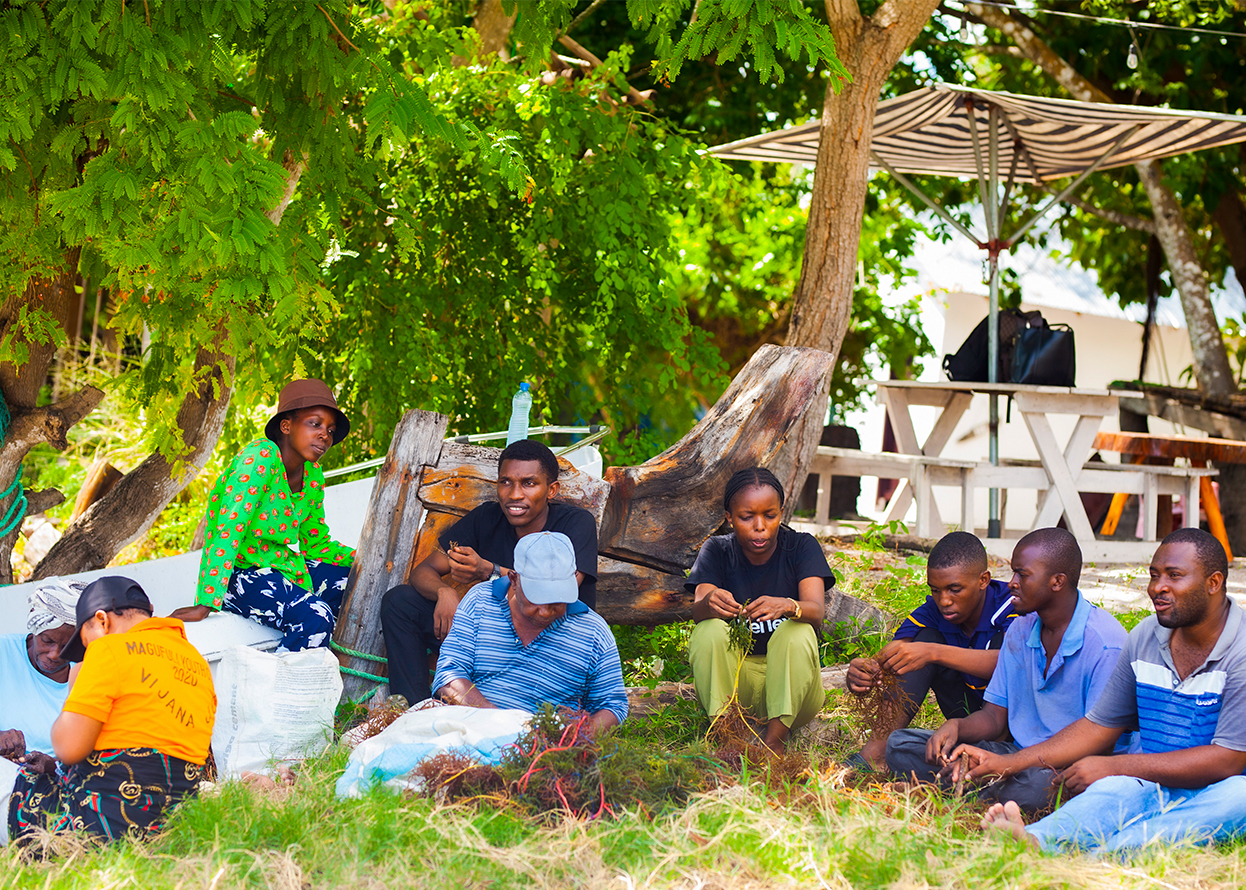
KelTex uses AI to help farmers – who are mostly women – increase their yield. Image: Supplied
Tanzania produces about 92% of Africa’s seaweed, with Zanzibar home to roughly 25,000 farmers, about 90% of them women. Seaweed is already the archipelago’s third largest export after tourism and spices. With Laetus and his team supplying a growing demand for seaweed leather, this is unlikely to change.
- This story was produced by bird story agency. Editing and additional reporting by Jackie May
- Besides the image at Africa Textile Talks, all images were supplied by KelTex
- Laetus Buberwa was a speaker at Africa Textile Talks in Cape Town in August 2026