Travelling to remote mountainous regions in Morocco, photographer Pierre Girardin captured the systems behind the country’s world-famous rugs. The photographs shift our gaze from product to the land, to the animals and the many hands at work.
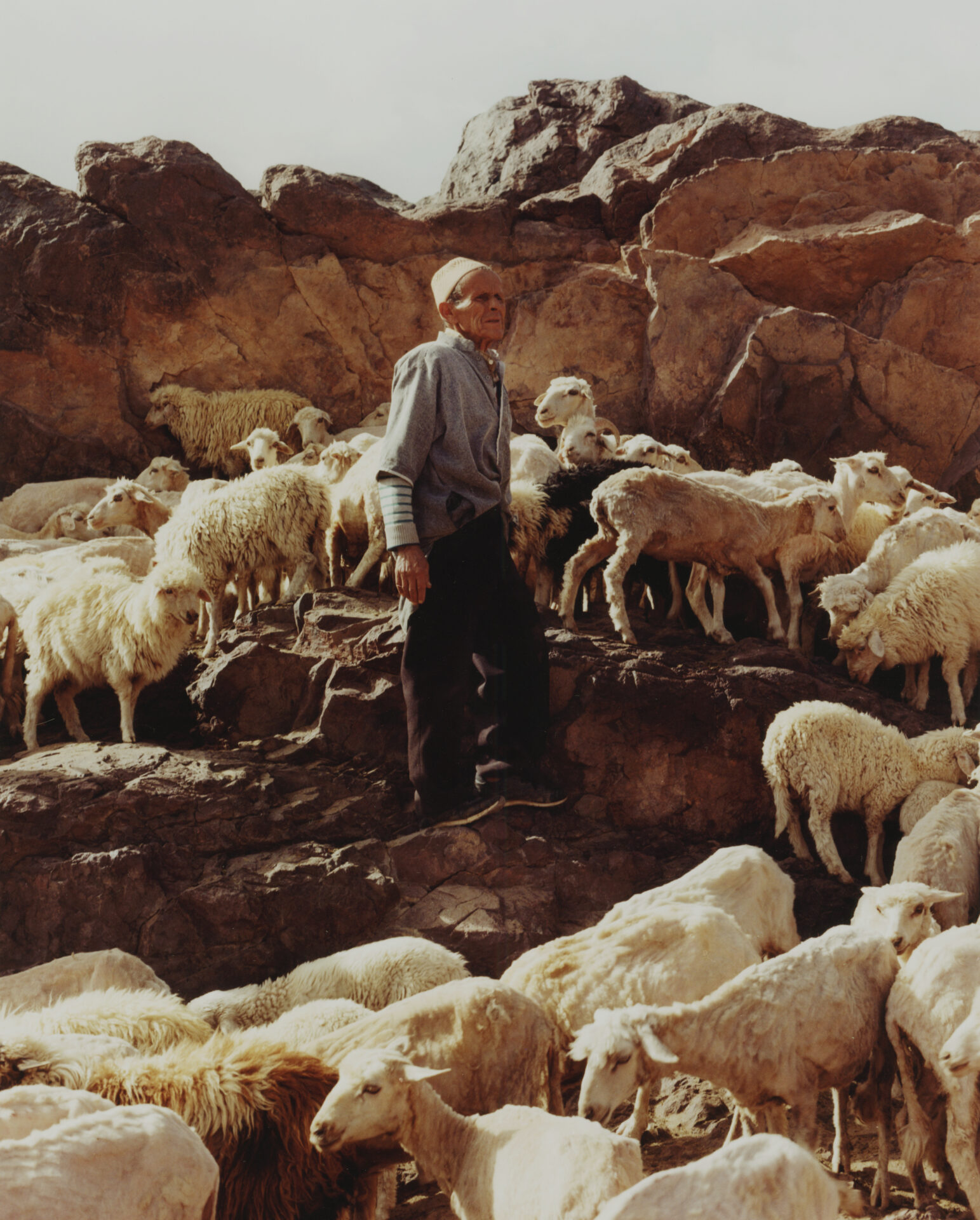 Portrait of a shepherd in high-altitude sheepfold
He shows that craft, climate, and community are inseparable. For this work, the French photographer is the overall winner of the Textile Exchange’s 2025 competition with Magnum Photos.
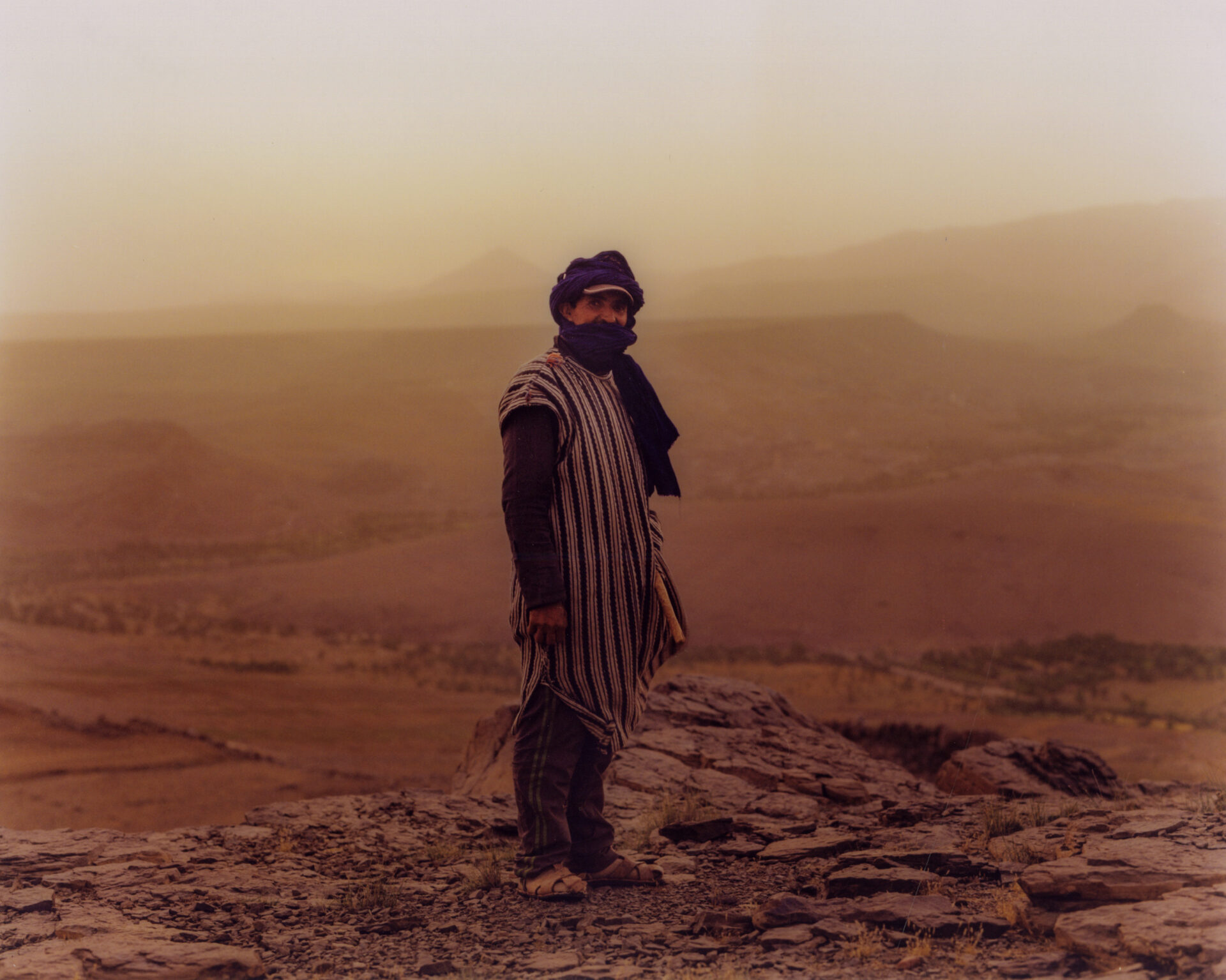 Portrait of a shepherd in Siroua mountains
The focus of Pierre’s photographs falls on the shepherds, artisans and breeders, and on the natural environment of Morocco’s Dry Mountains and Anti-Atlas. In doing so, the land emerges not as a backdrop but as a character in its own right—shaping, sustaining, and co-creating life and craft.
 Shepherd taking a break with his scissors
The Textile Exchange competition encourages storytellers to reveal what lies behind the materials we often take for granted. Participants are invited “to explore the narratives that unfold when fibres and materials are cultivated, created, spun, woven, sewn, loved, and cherished – gaining cultural and emotional significance through the journey.” The winning photographs are intended to inspire deeper conversations about sustainability, culture, and climate change.
 Breeders in a high-altitude sheepfold
Pierre’s first series, Shepherds in the Dry Mountains, follows shepherds and livestock breeders in the Siroua region, where climate change and globalisation threaten centuries-old livelihoods. Facing water shortages, shrinking pastures, and the outmigration of rural youth, these herders also contend with the precarious future of the endemic Siroua sheep, a breed on the verge of extinction. The situation is further complicated by an influx of imported wool, particularly from New Zealand, which competes with the demand for locally sourced fleece.
 The weaver village
The second series transports you to the Anti-Atlas region, into the homes and weaving spaces of the Feija Tribe’s artisans. Here, Pierre Girardin documents the rhythmic labour of the women as they transform raw fleece into distinctive Moroccan textiles. From carding and spinning to dyeing with local plants and roots, and finally weaving, the series highlights communal knowledge.
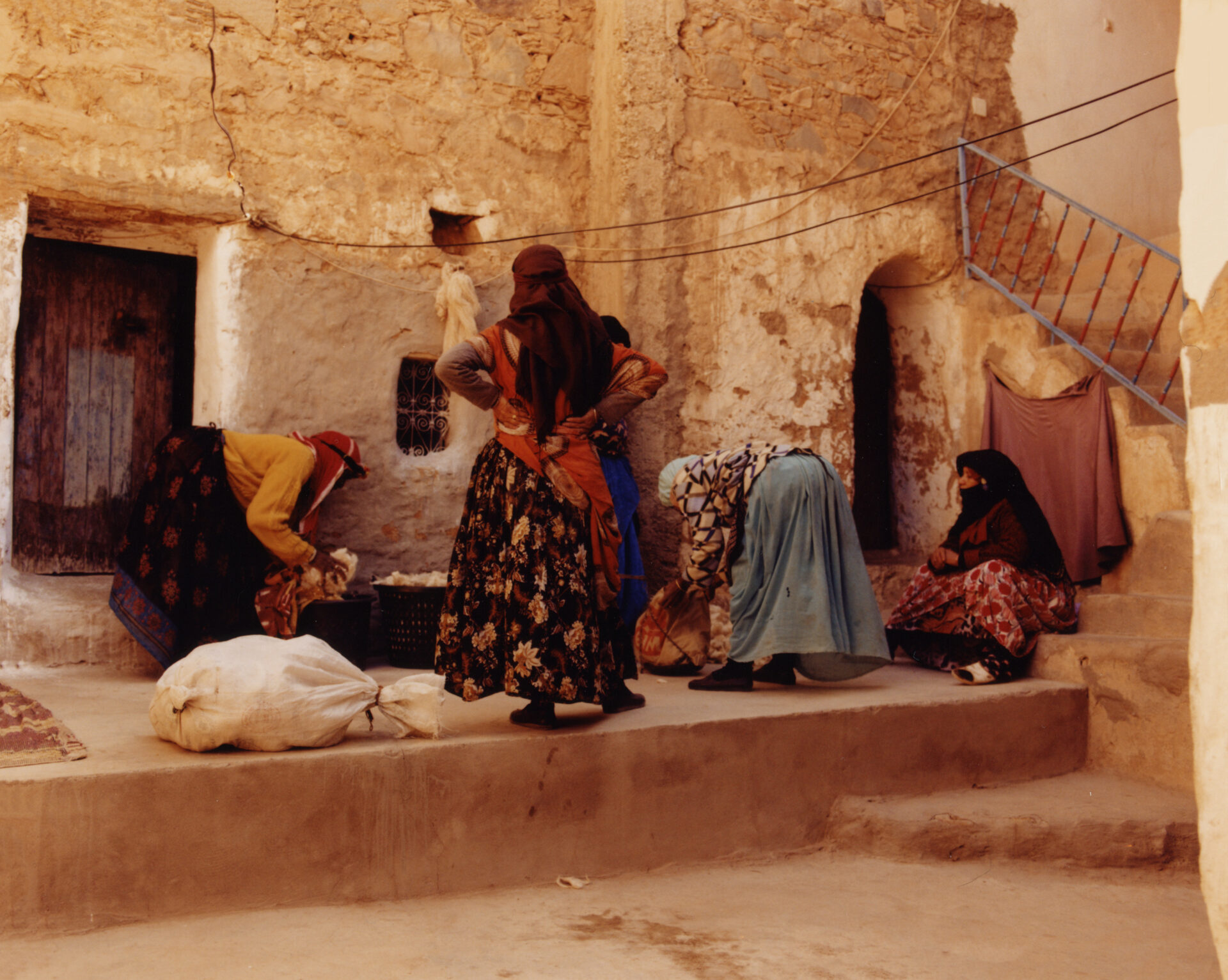 A group of women sort wool before carding
According to Textile Exchange’s 2024 Materials Benchmark, between 75–88% of all materials sourced by reporting brands came from an unknown country of origin. Pierre’s photographs act as a counterpoint to that opacity, providing a specific geography and cultural context. Instead of abstract supply chains, you encounter real people, landscapes, and traditions.
 Women card and spin wool, a long and entirely manual process
Moroccan rugs have long held a place in the global imagination. From mid-century modern interiors in the West to today’s social media aesthetics, these rugs are admired for their bold geometric patterns, vibrant colours, and handwoven tactility. In recent years, the industry has undergone a revival, partly thanks to artisans, cooperatives and brands who now sell directly to consumers. As Business of Home reports, bypassing middlemen has dramatically improved the share of profit going back to artisans, where previously, a weaver might earn just 4% of a rug’s final price.
 A woman sets up a loom in the street, The length of wool is so important that the weavers need to go in the street to set up the loom
Yet this revival exists alongside existential threats. Due to increased demand and diminishing local materials, the Moroccan rug trade has, at times, turned to synthetic fibres like nylon and lurex or imported wool, as well as synthetic dyes that replace traditional plant-based ones. The New York Times notes how these pressures once pushed weavers to adapt to market demands at the cost of tradition. Pierre’s images suggest a different direction: a renewal rooted not only in revival but in cultural preservation, storytelling, and ecological awareness.
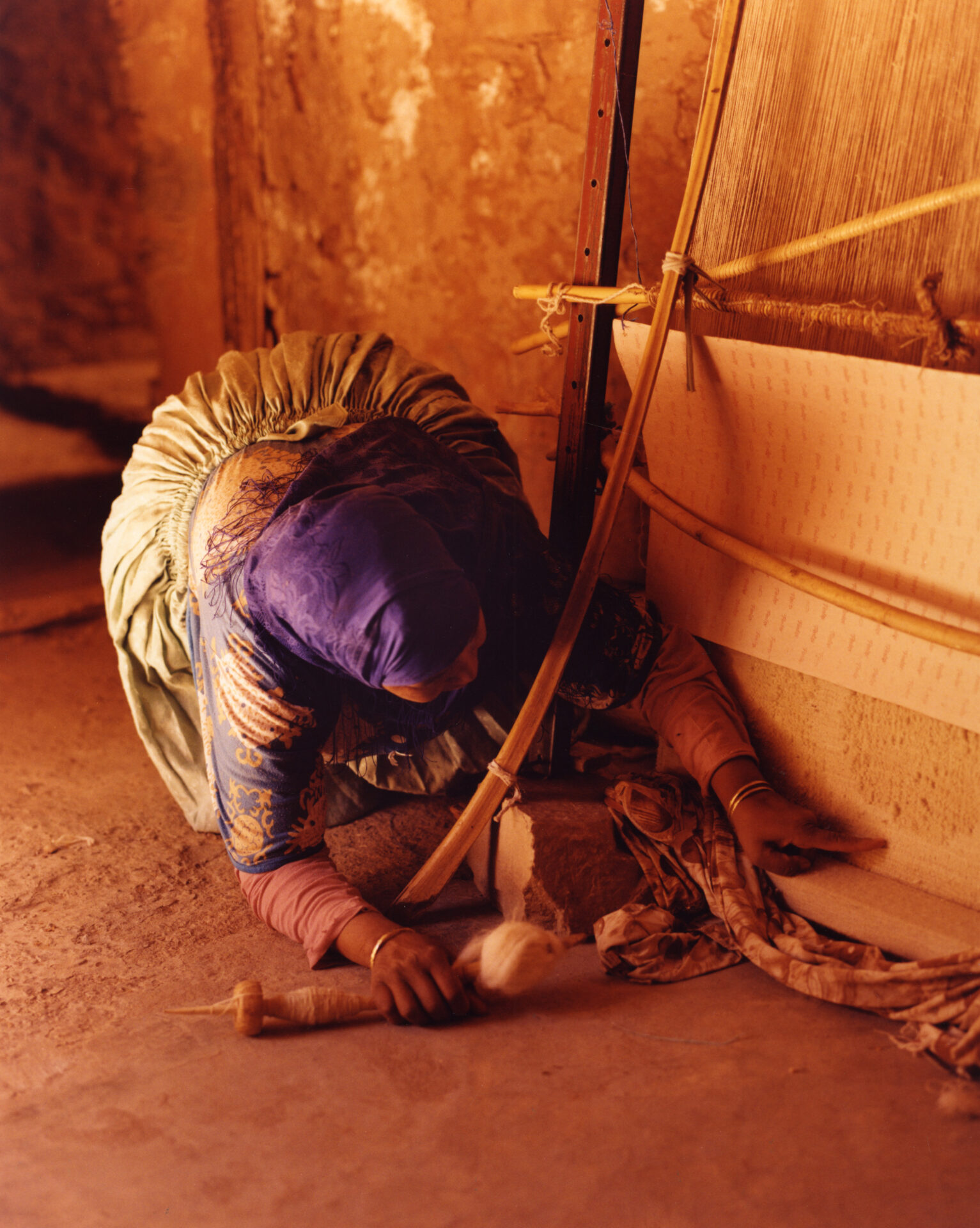 Weaver selects wool, and removes herbs and impurities.
Pierre’s photographs were produced in collaboration with Memori Studio, an organisation on a mission to preserve the “collective memory of unique savoir-faire practices rooted in the heart of the Mediterranean basin.” Pierre met the team in Marseille by chance, and soon joined their efforts after learning about the threats facing the Siroua sheep and the communities dependent on them.
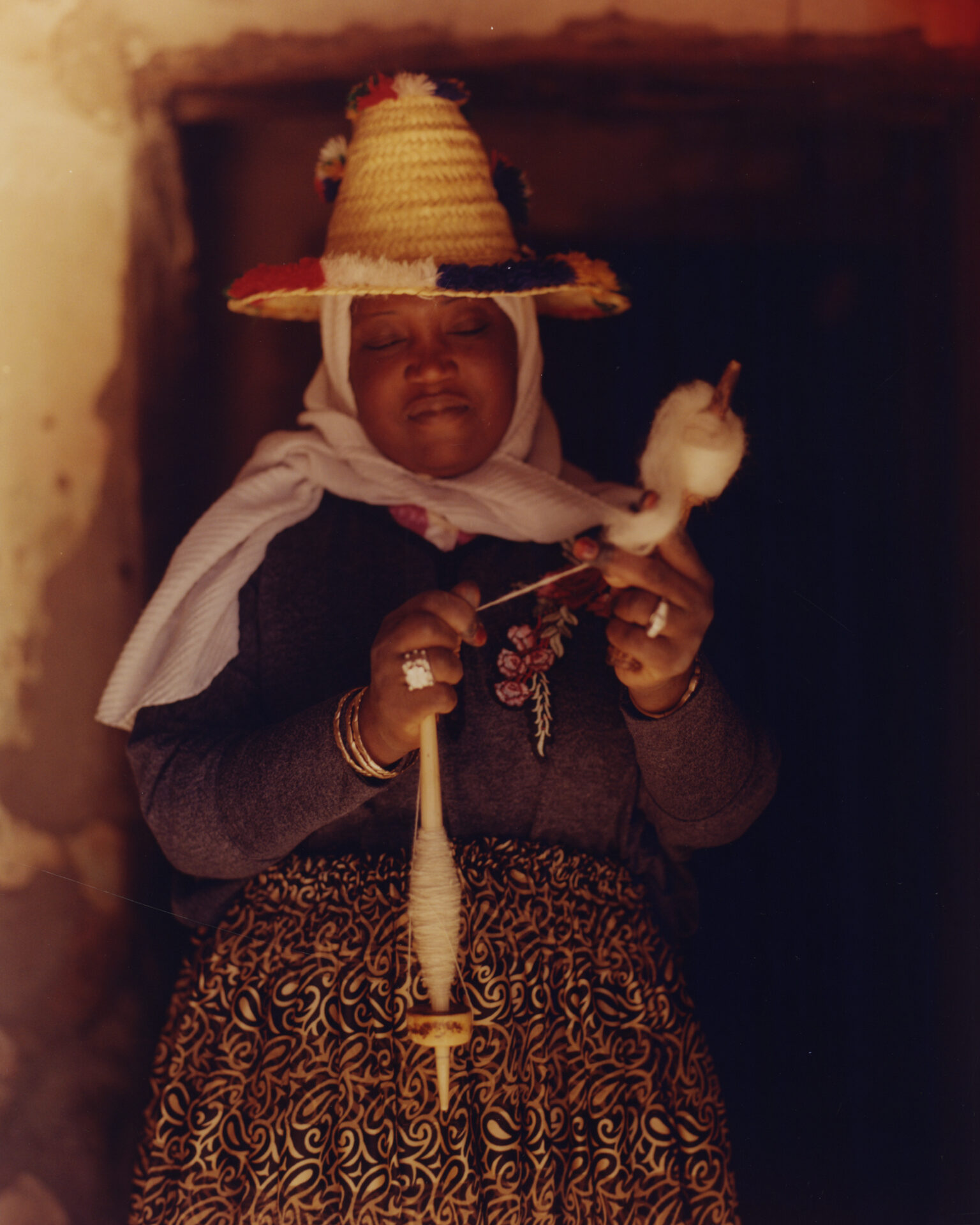 Weaver spins wool from raw wool to thread
Three years ago, he was invited to Morocco to witness the sheep shearing process, and later spent time in villages with local weavers.
In an interview with Twyg, Pierre says women-led cooperatives are increasingly taking charge of production and sales, disrupting the exploitative middlemen-dominated model of the past. This shift has enabled many artisans not only to preserve their craft but to pass it on more sustainably.
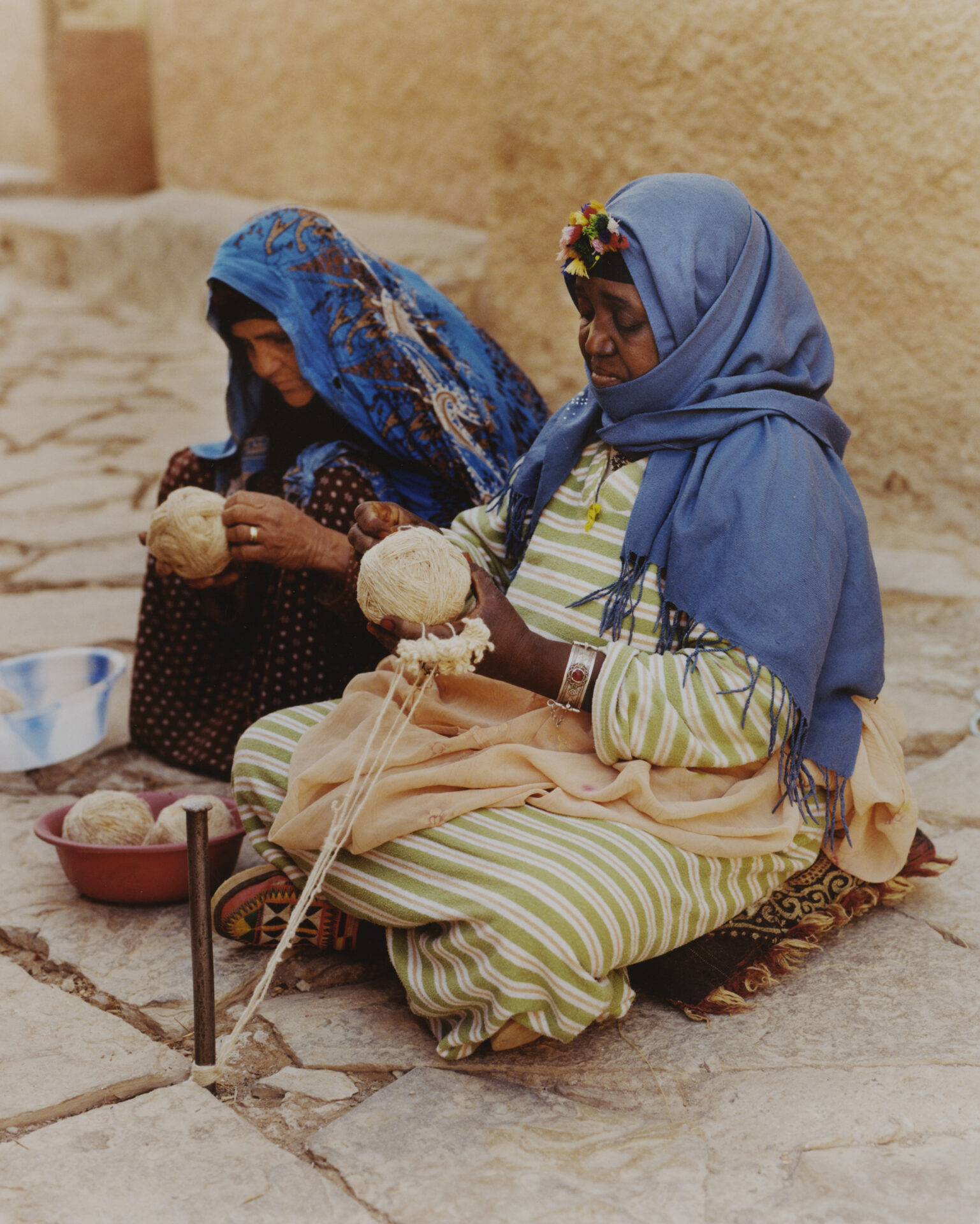 Two women weaving outside
Pierre has also observed a shift in younger generations. While many young people leave rural areas for education or city life, some return to farming, shepherding, or weaving. Their choices reflect a growing disillusionment with globalised work structures and a renewed interest in sustainable, nature-rooted living. But, this is not about abandoning modernity. Pierre says the shepherds remain connected to global news and use social media while practising centuries-old traditions.
He recalls asking shepherds how they know when it is time to shear their sheep. Their answer, says Pierre, is: “We watch the bees. When the honey is ready, it’s time to shave the sheep. The bees tell us.”
“The system is so simple because they’ve have knowledge from their environment,” says Pierre.
- Images: Pierre Girardin
- Feature image: Women setting up a loom in the street, The lenght of wool is so important that the weavers need to go in the street to set up the loom