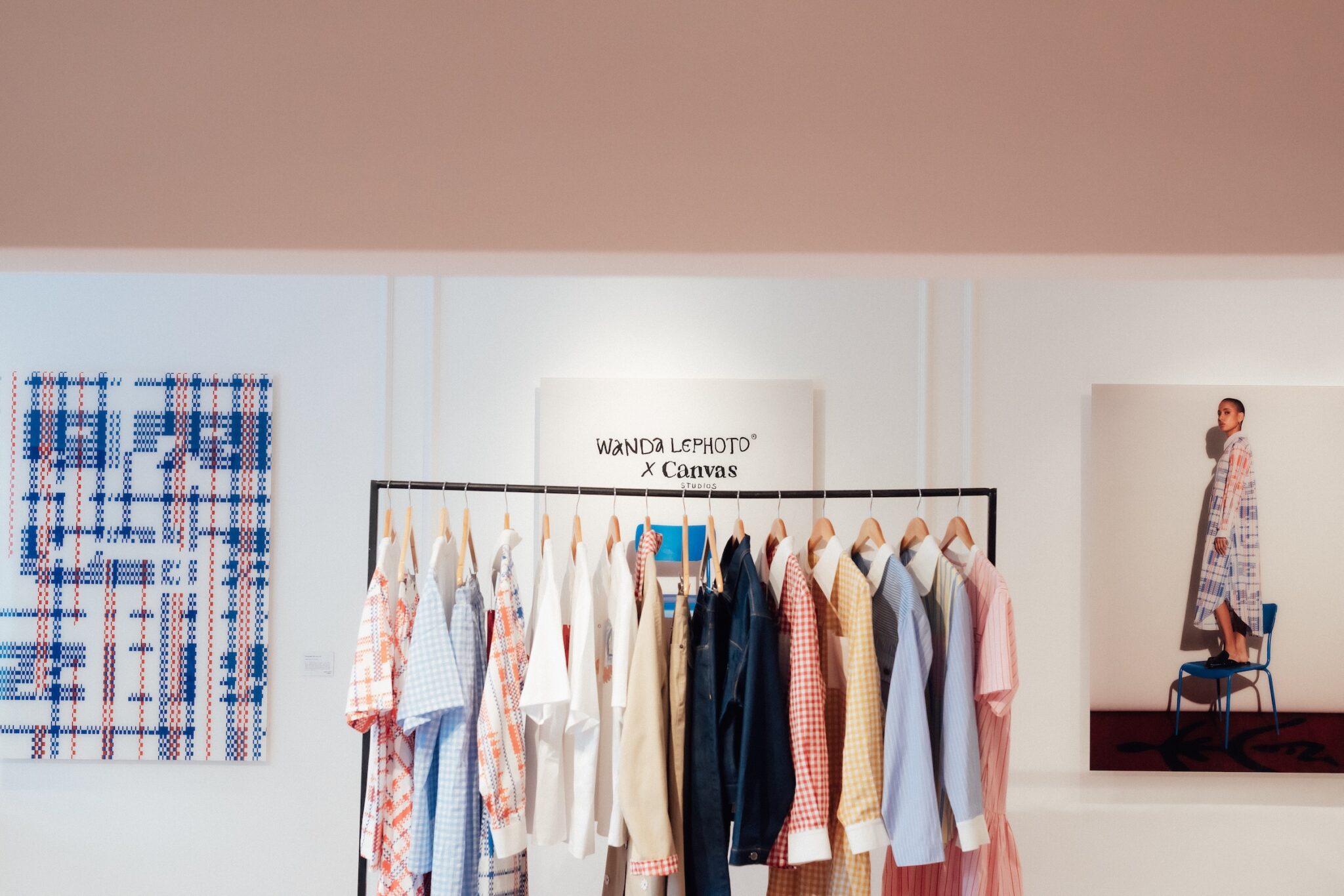
Titled Thread with Care, the final day of the Africa Textile Talks 2025, took a deep dive into the culture of cloth, innovation, indigenous knowledge, industrialisation and decentralisation. Speakers from Namibia, Zimbabwe, Uganda, Nigeria, South Africa and Mozambique shared stories about their textile practices, manufacturing and innovations.
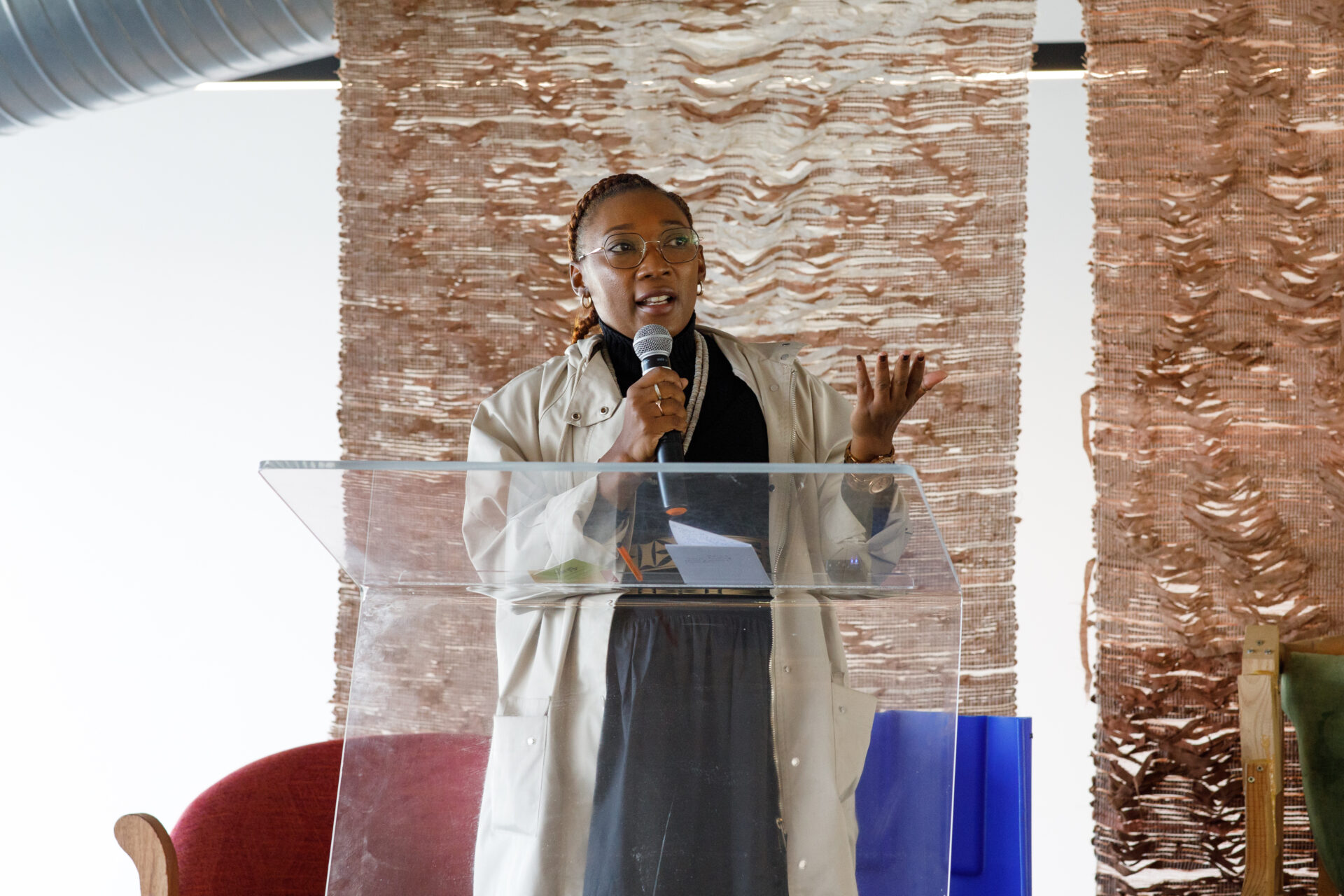 University of Namibia lecturer Maria Caley delivered her keynote titled ‘From leather to trade cloth: Namibian indigenous aesthetic politics in textiles’. Image: The Dollie House
Maria Caley, fashion designer and University of Namibia lecturer, opened the day with a keynote about the cultural history and politics of leather and trade cloth in Namibia. Leather has long been more than clothing – it’s a storytelling medium and status symbol. Maria’s research focuses on the Kavango’s Vakwangali people, whose language uses leather as a cultural signifier. Take for example idioms such as ogo mukadi galimanga ndjareko, meaning a woman who ties her leather apron with a certain flair, indicating she’s strong-willed; and ogo kwa muvhika mo hunyu za simbungu, meaning a person was carried in a rare hyena-skin baby carrier as a child – a Namibian spin on being born with a silver spoon in one’s mouth. Through her research and work, Maria keeps the country’s rich textile history alive.
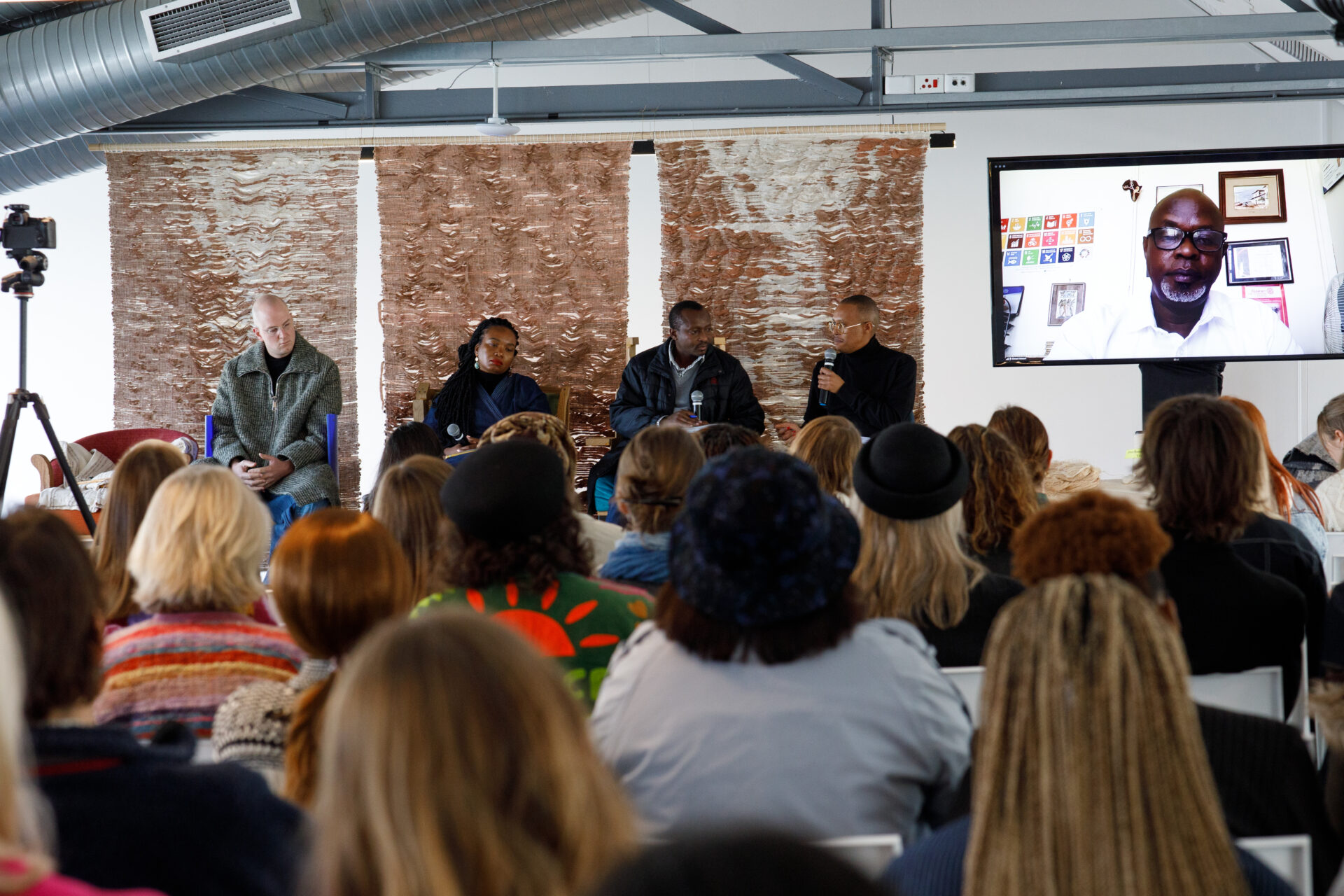 From left, Daniel Sher, Lilitha Mahlati, Dr Edwin Kamalha, Ayanda Bam and on the screen Muturi Kimani unpack how indigenous knowledge drives current research and innovation. Image: The Dollie House
Textile expert Ayanda Bam led a panel discussion with researcher, Dr Edwin Kamalha, Ivili Group CEO, Lilitha Mahlati and Good Good Good creative director, Daniel Sher along with founder of Texfad, Muturi Kimani who joined online from Uganda. Edwin and Muturi shared how their textile and fibre innovation and research in Uganda is underpinned by indigenous knowledge. In the east African country bananas are a staple food. About 70% of households grow banana plants in their yards and 90% of home-cooked meals include the fruit. This wide use of bananas leads to waste which is versatile and valuable, and is being used for textiles and fuel. Texfad is an innovator in banana research and exemplifies the circular use of an abundant Ugandan resource. Lilitha added to the conversation with her experience of research into cashmere farming in the Eastern Cape.
Daniel spoke about his collaboration with Mekeka Designs who he met at Africa Textile Talks 2024. Josephine Mukasa in her keynote last year spoke about indigenous Ugandan barkcloth, its sustainability and various applications. Daniel and his team used barkcloth in a garment for their Paris fashion showroom.
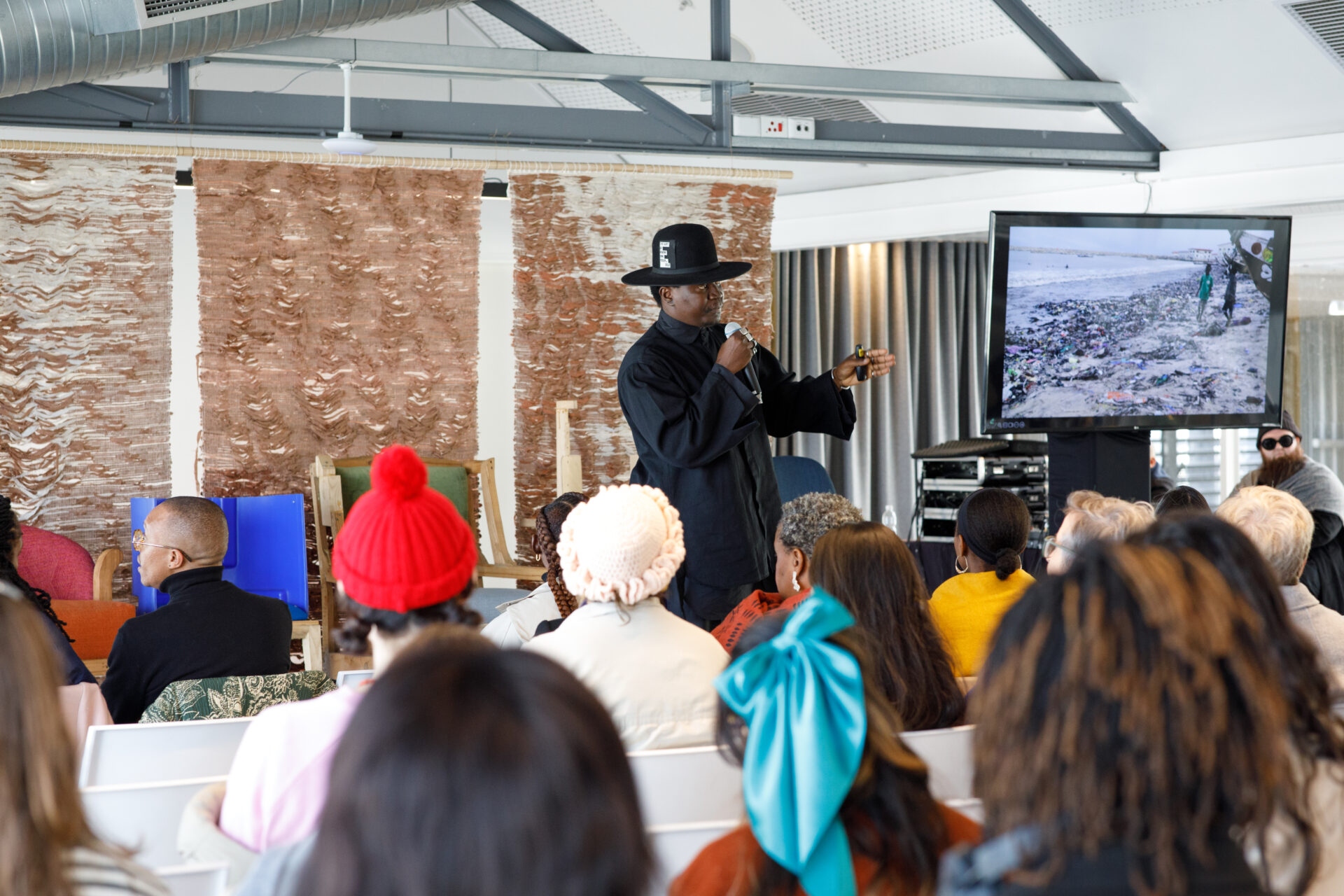 Yayra Agbofah, founder of The Revival in Ghana, challenged the dumping of clothing waste in Ghana. Image: The Dollie House
H&M Foundation’s Sasha Thomas presented the Global Change Award and the nomination process for 2026. She then introduced Yayra Agbofah, founder of The Revival in Ghana, who is one of the 10 winners of the Global Change Award 2025. Yayra won a €200,000 grant and a place in the year-long GCA Changemaker Programme. The Revival is based in one of the largest second-hand clothing hubs in the world, Kantamanto Market, and upcycles, redesigns and repairs unsellable garments that dumped in Ghana.
Growing up, Yayra Agbofah would play on the beaches in Accra with his father. Now, he wishes he could make the same memories with his son. This is impossible because Accra’s beaches are covered in textile waste. “Why should a place like Ghana be seen as a dumping ground for the global north’s waste?” Yayra said. “It’s unimaginable to have to live like this, but then we have no choice.”
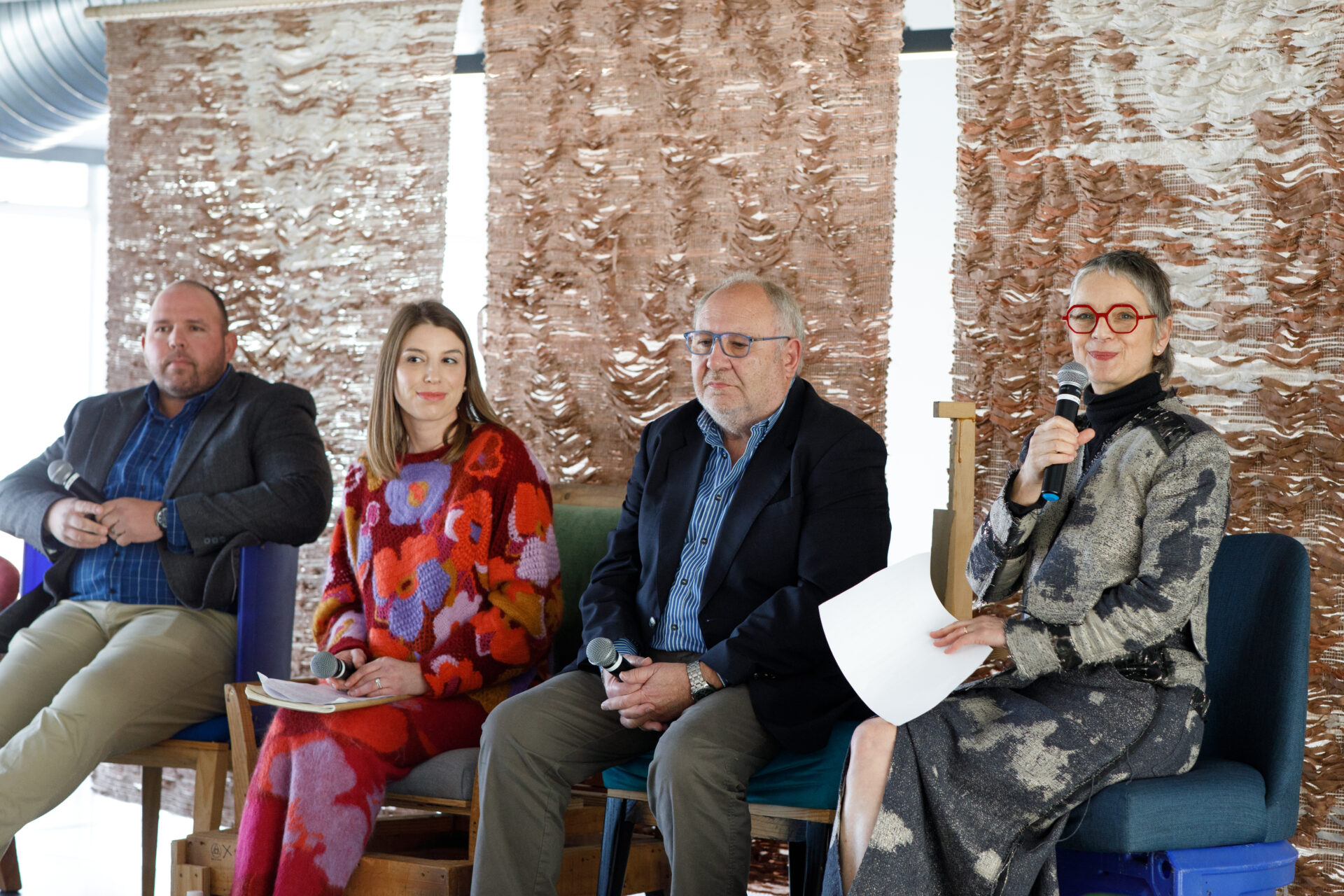 Jonker Venter, Lauren Moore, Pierre van der Vyver and Jackie May discuss responsible fibre management, ethical standards, and global excellence of mohair value chain in South Africa. Image: The Dollie House
Twyg editor Jackie May led a conversation powered by Mohair South Africa about South Africa’s diamond fibre with House of Fibre’s Pierre van der Vyver, Mohair South Africa’s Lauren Moore, and OVK’s Jonker Venter. South Africa and Lesotho together produce nearly 75% of the world’s mohair, a fibre celebrated for its lustre, versatility, and strength. Mohair is inseparably connected to the land, with everything from droughts to moon cycles having an impact on the fibres. “We need to deepen our stories of provenance,” said Lauren. “To support science with the soul of what makes South African mohair so special.”
Following the mohair-focussed panel was a talk by Stephens Tapestry Studio director Leila Sangari. Coral Stephens and Sylvia Mantanga started weaving curtains and carpets, using mohair from the Angora goats in Eswatini in the 1940s. The Gauteng-based studio has since woven several iconic artworks by artists including Athi Patra-Ruga and William Kentridge. Today, the studio employs 30 women, who carry out every step of the process by hand, contributing to “the textile and the fine art world”.
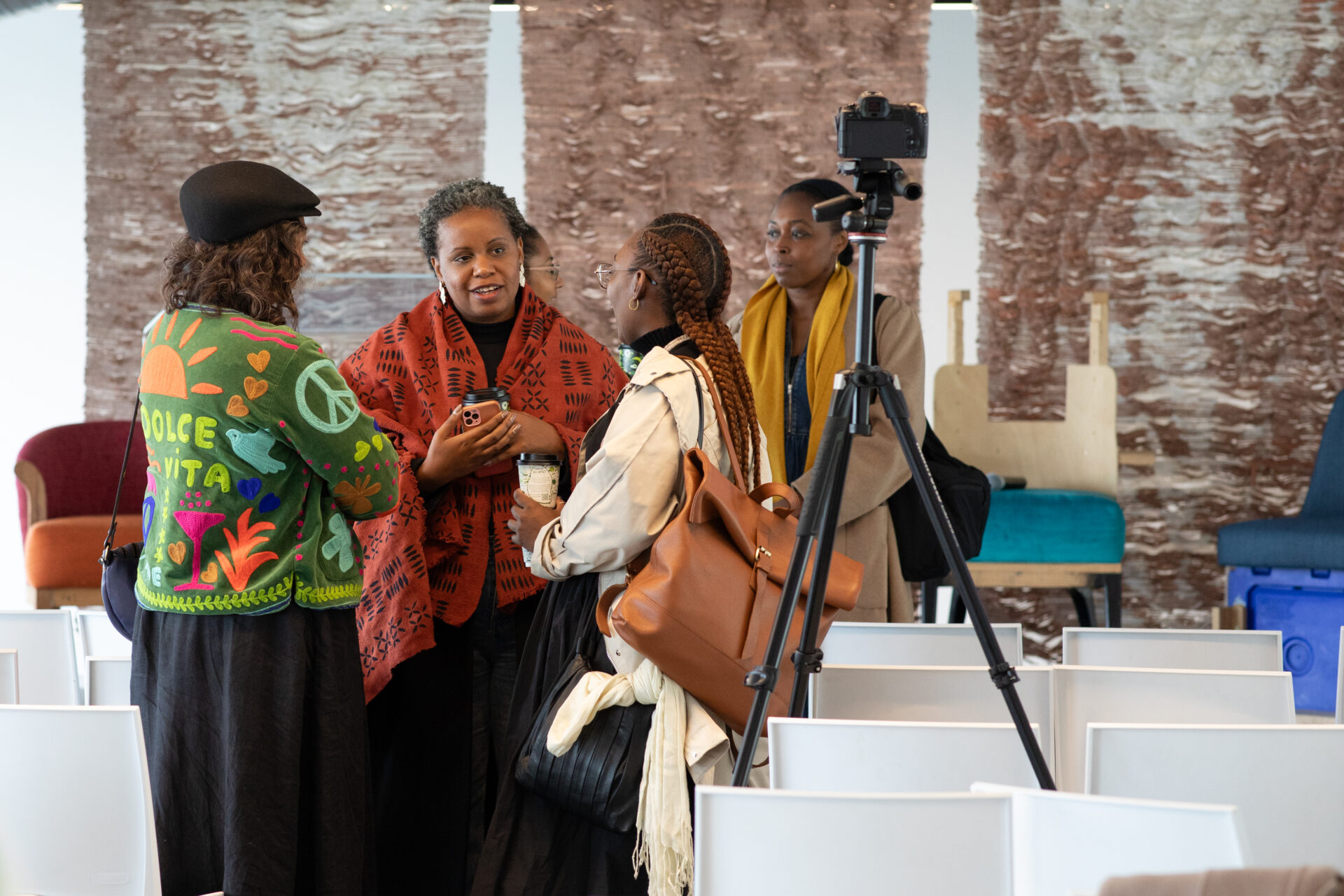 From left, Dr Aaniyah Martin, Wacy Zacarias, Maria Caley and textile artist Yemi Awosile during a break at Africa Textile Talks. Image: The Dollie House
Wacy Zacarias of Karingana Textiles discussed the Material Atlas, a ‘living map’ that explores the connection between materials and land, starting in Sub-Saharan Africa. Wacy, who is based in Mozambique, views cloth as a portal of communication. More than simply used for garments, they’re tools for spiritual work and healing. Using indigenous dyes from plants that are used for medicine or protection, for example, she weaves this intention into cloth.
The challenges and opportunities for cotton farming in Nigeria and South Africa were discussed in another session led by Ayanda Bam. What would it look like to produce a T-shirt 100% in Nigeria? This question inspired the creation of Nigerian brand THIS IS US, co-founded by Osione Itegboje. The label follows a hyperlocal approach, with every step, from cotton growing to indigo dyeing, taking place on Nigerian soil. One of the major challenges for cotton production in Africa is electricity, with both Nigeria experiencing regular power outages that negatively impact processing and manufacturing. These challenges were illustrated in a short film Nigeria’s Textile & Manufacturing Industry by Sessi K screened at the event. (Sessi participated online in the conversation.)
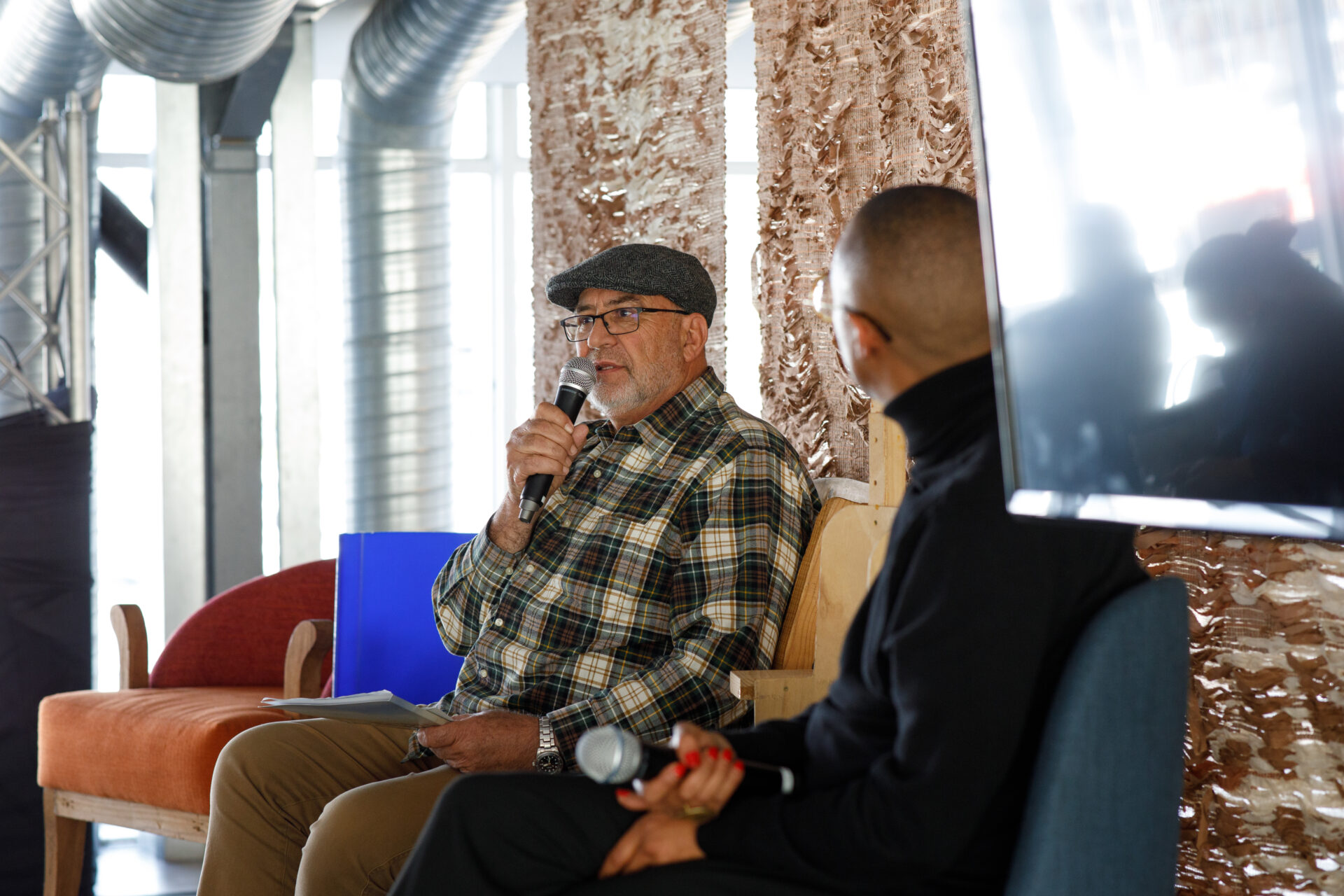 Tertius Schoeman, left, and Ayanda Bam during a cotton discussion. Image: The Dollie House
South African expert Tertius Schoeman from Cotton SA noted that while the crop is often criticised as water thirsty, its water usage is relatively moderate compared to crops like sugarcane and maize. Thus, he argued, water usage should not be a reason to shy away from cotton production in South Africa.
From discussions about fibre production (cotton, mohair and banana etc), the programme moved to manufacturing. Moderated by Irshaad Kathrada, CEO of the Localisation Support Fund, a panel focussed on local and sustainable textile manufacturing. Lilitha Mahlati stressed that now is the best time to accelerate efforts for the continent and that we should focus on applying new technologies to ancient practices. Cape Clothing Cluster’s Courtney Barnes said we need to go back to basics – addressing electricity costs and water wastage, for example.
 From left, Dax Holding, Courtney Barnes, Lilitha Mahlati, Imraan Bux and Irshaad Kathrada discuss the opportunities for a greener future for textile manufacturing in Africa. Image: The Dollie House
Imraan Bux, CEO of Imraan Textile Mills, noted that one of the biggest hurdles in local manufacturing is funding, and that competing with high-tech countries like Turkey and China is near-impossible. Ideally, leaders in the retail sector could help set standards, provide guidance, and collaborate to share challenges and costs. Mungo’s Dax Holding discussed his commitment to sustainable and quality production at his Plettenberg Bay mill.
 Fashion designer Danayi Madondo described how she manufactures clothing in her home country, Zimbabwe. Image: The Dollie House
Operating in Zimbabwe, fashion designer Danayi Madondo spoke about the importance of decentralising fashion, a mindset and practice that is second nature to her. “Zimbabweans are the ones who do the most with the least,” she said. Decentralising means moving from industrial manufacturing to embracing distributed production, having proximity to target markets, operating on a small-scale, and focussing on regional resources and preferences. “I believe the future is going to be decentralised,” she said.
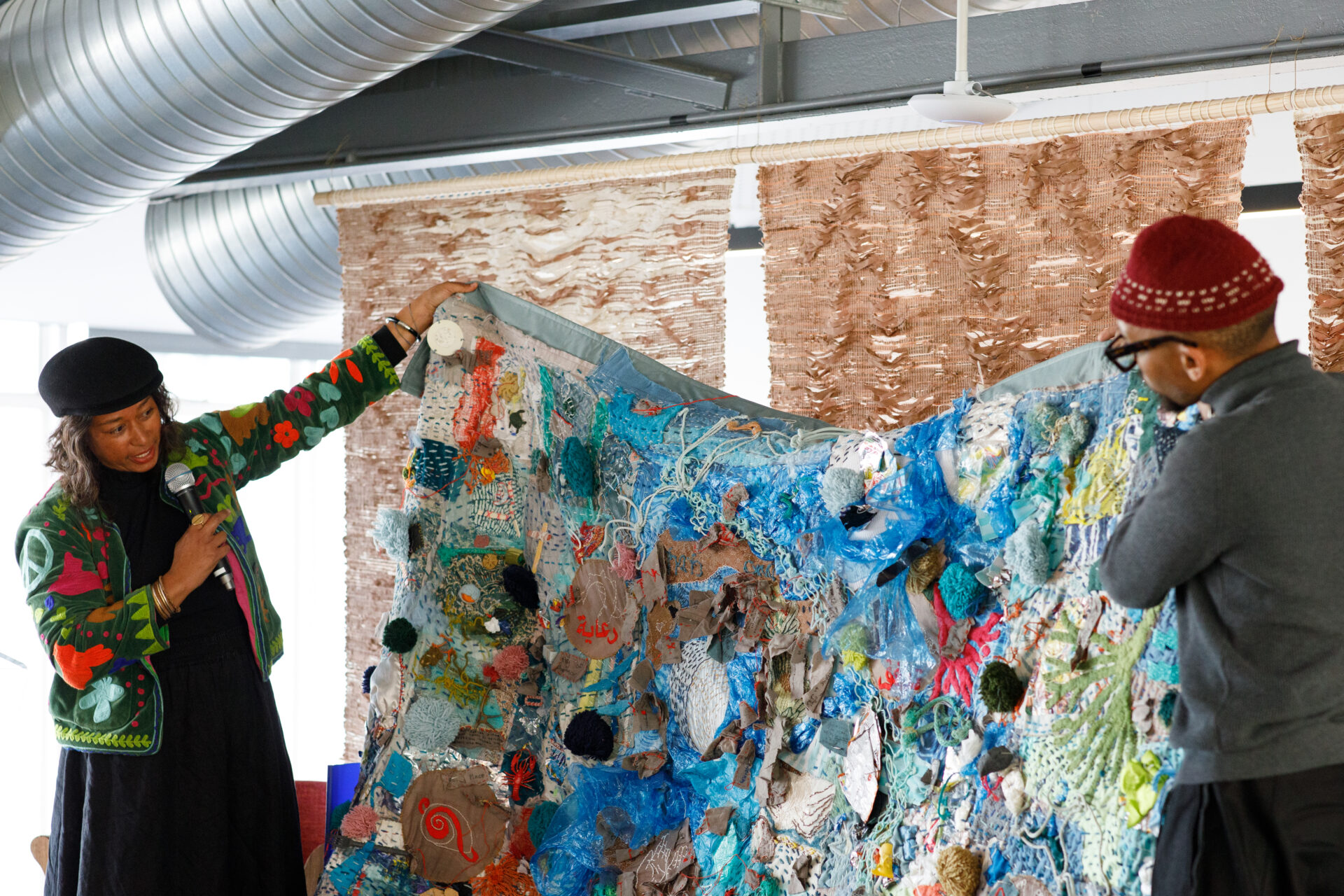 During her keynote titled Weaving in the liminal: Textiles, care, and the politics of place, Dr Aaniyah Martin showed her Mother Hydro Rug. Image: The Dollie House
Thread with Care and this year’s talks were wrapped up with a presentation by Aaniyah Martin, founder of The Beach Co-Op. The organisation’s beach clean-ups go far beyond caring for our natural and public spaces – Aaniyah has created space for conversation about social and economic inequalities. Bringing three days of talks to a close, Aaniyah presented the Mother Hydro Rug created during her PhD research. The rug is the product of the practice and process for Black and Brown people to stitch (and share) their stories of the sea and of water using plastic beach litter and waste fabric. Aaniyah left us with a provocation: How do we include care in our daily practices?
- Feature image: Dr Aaniyah Martin
- All images: The Dollie House
- Note from the editor: We will be publishing a story and podcast for each of the 28 Africa Textile Talks sessions