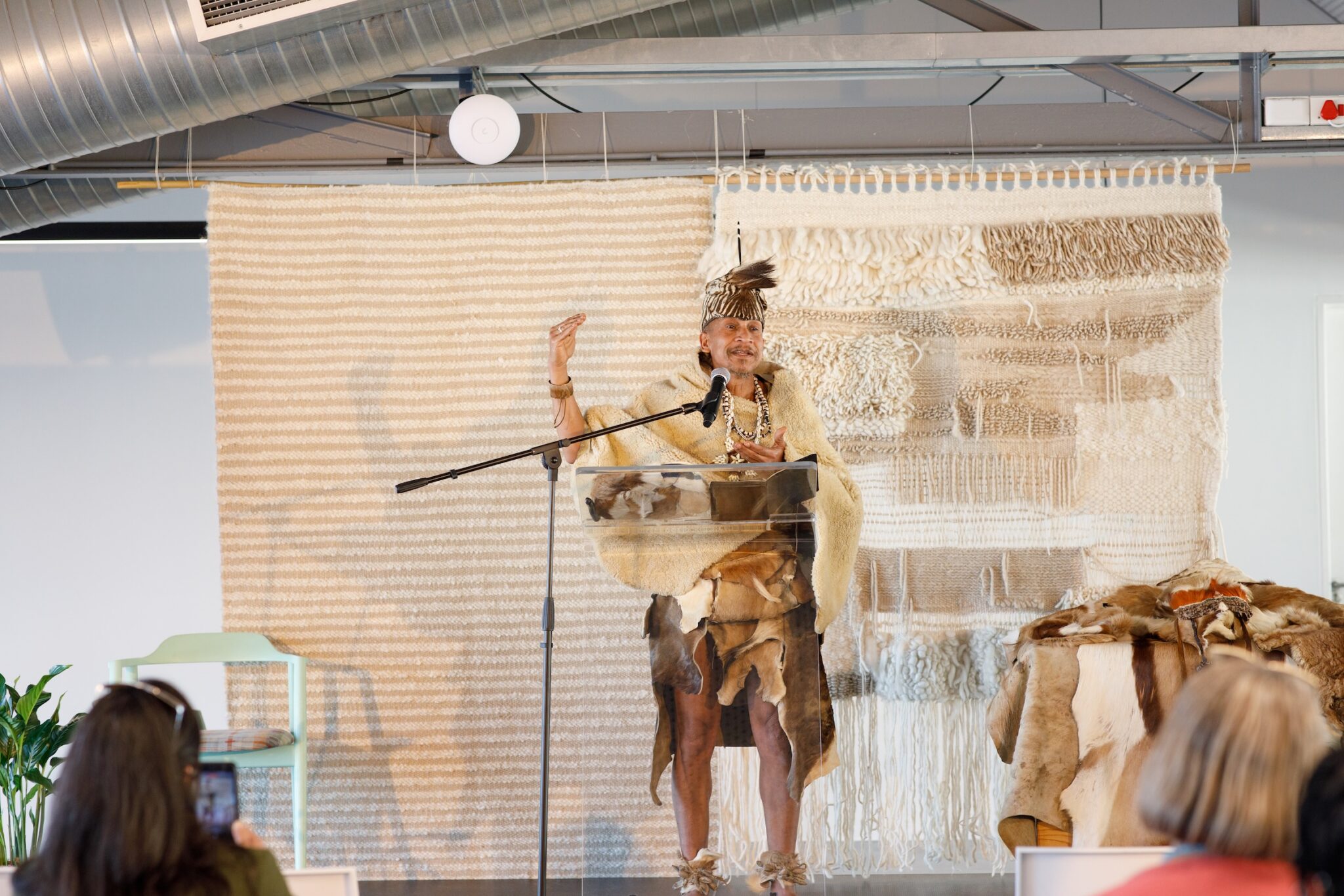
For more than three decades, Renée Neblett has been creating a template for the future based on environmental literacy, cultural reclamation and sustainable design at the Kokrobitey Institute in Ghana. Her recognition as the inaugural recipient of the Merchants Pan-African Twyg Award does not simply honour her K.I. Wote fashion collection, but a life’s work dedicated to reimagining fashion’s relationship with community, craft and the environment.
“In the Ga language, the word for body is Nipa Dwiya ‘human tree’. I see myself as a tree. I create from the earth, I take only enough for my wellbeing, and I understand that I am connected to others as part of a larger landscape. I hope my work reminds people that we have a responsibility to our environment,” says Renée during an online interview. Ga is a widely spoken Ghanaian language from the Ga people who are the original inhabitants of the greater Accra area.
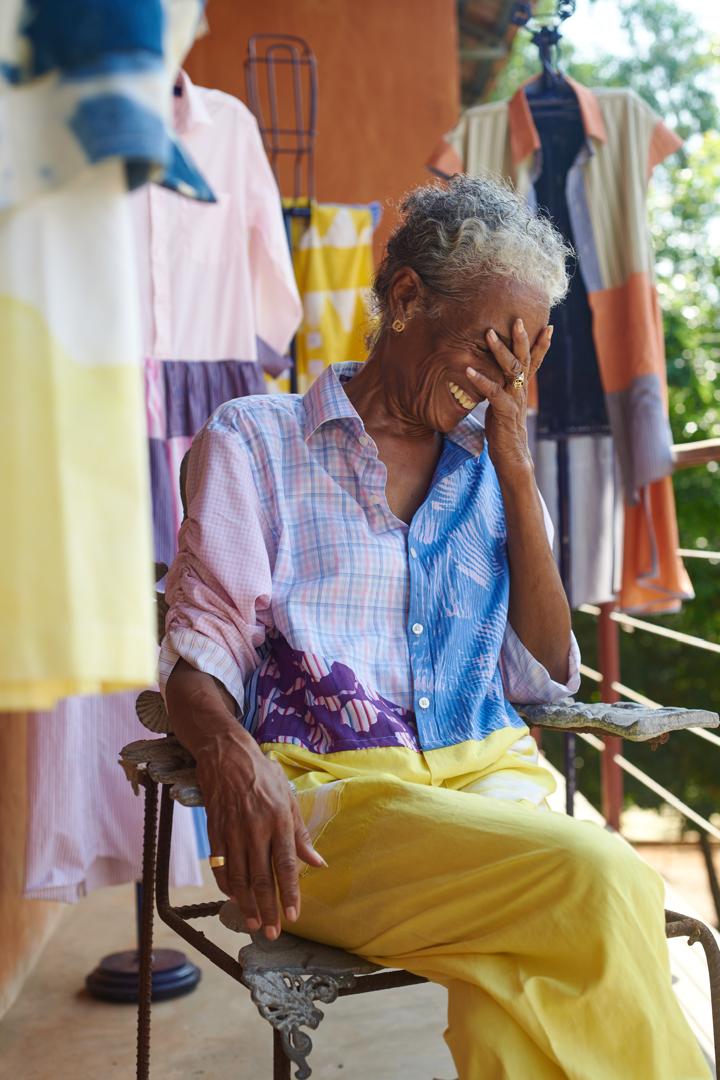
Renée Neblett’s fashion is an expression of a responsibility to her environment
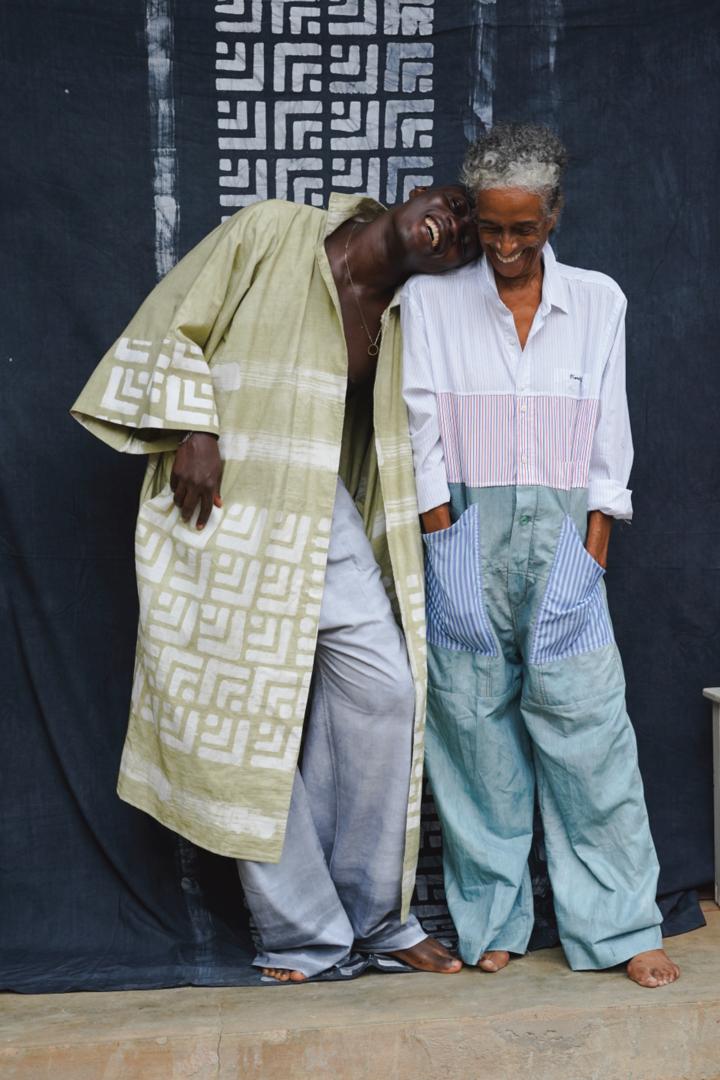
She looks to the skills that exist in her community and what resources are available
Renée’s relationship with fashion did not begin with textiles or seasonal calendars, but through observation of landscapes, waste streams and the quiet intelligence embedded in community knowledge systems. Arriving in the coastal village of Kokrobitey more than thirty years ago, she encountered not scarcity, but resourcefulness.

Renée Neblett founded this sustainability institute three decades ago near Accra, Ghana
What followed was a gradual shift from educational exchange to material experimentation, embedded in what she describes as environmental literacy: the ability to engage meaningfully with one’s surroundings and with systems that have long existed but are now being rediscovered.
If Renée speaks of environmental stewardship, then Merchants speaks of fashion stewardship.
Merchants prepares for the future
Merchants has long been considered a must-visit destination for contemporary African fashion. Since 2010, it has housed award-winning brands including Maxhosa Africa, Sindiso Khumalo, Lukhanyo Mdingi, Lezanne Viviers, Rich Mnisi and MmusoMaxwell.
During an online conversation with chief operating officer Jeanine Benjamin and newly appointed creative director Tiaan, we discuss the future of the brand. Tiaan says, “We have existed as a destination and connector for African fashion, but the question is: how do we remain culturally relevant?”
Until recently the brand was known as Merchants on Long, named after its original location on Long Street, Cape Town. As the business expands, the physical location has become less central to its identity. Tiaan explains that the shorter, more modern name still respects the brand’s long-standing ethos as a platform to nurture and support African design talent.
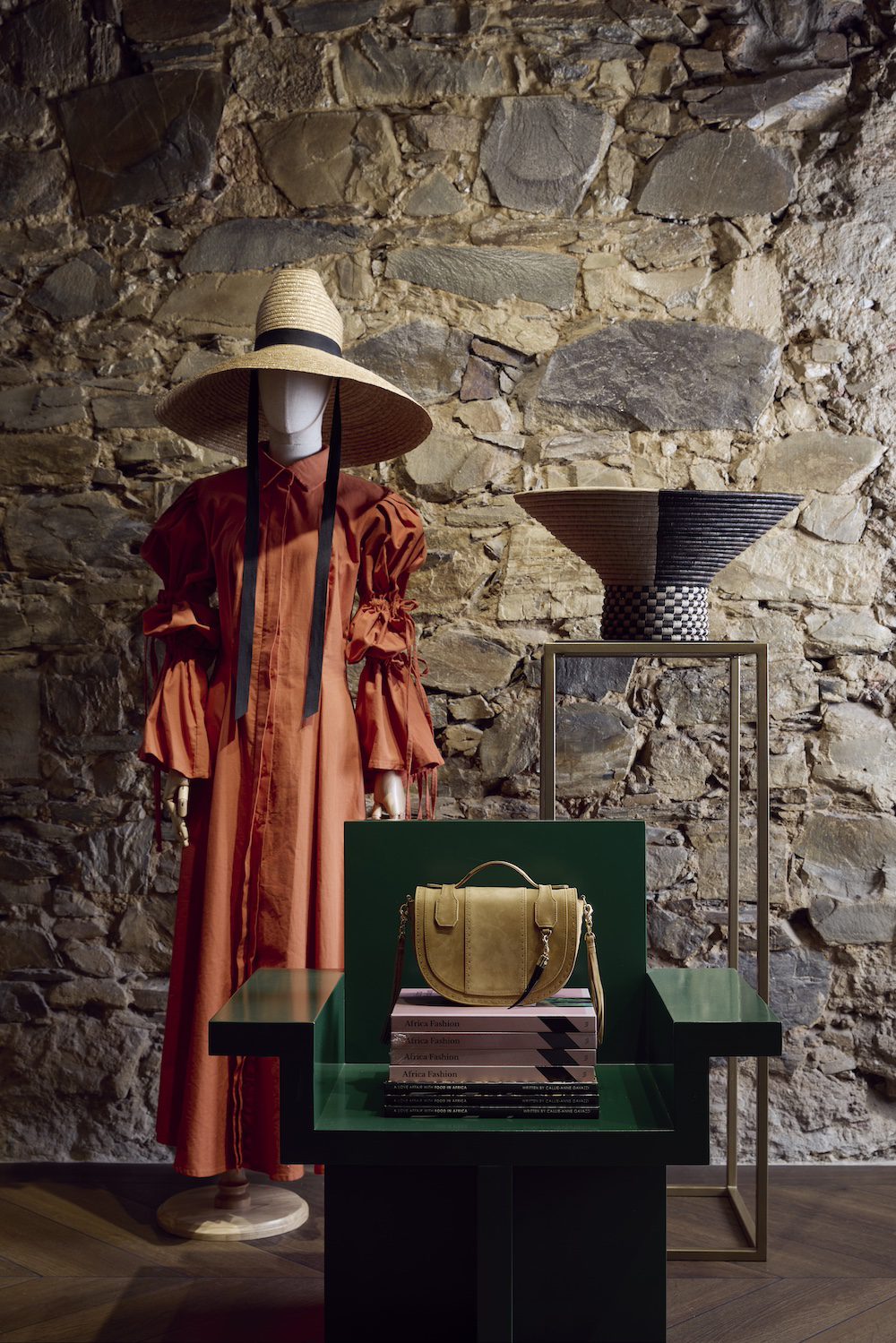
Merchants first opened on 34 Long Street, Cape Town

It is committed to careful curation and a mindful approach to consumption
And, how does Merchants approach African design in 2026? “With a mindful and thoughtful gaze,” says Tiaan. It’s not about chasing trends.
“We need to be selective in our decision-making; and with the designers with whom we associate and choose to showcase. We look for those who interrogate, who explore, who have an authentic voice. Long gone are the days of producing product simply to fill shelves. It’s our responsibility to edit carefully and to be mindful of what we put into the world and what we consume.”
It is here that Renée Neblett’s work resonates.
A shared language of craft and sustainability
Over three decades, Renée has woven together design, textile literacy, geography and sustainability at the Kokrobitey Institute. Her practice is in constant dialogue with her surroundings making her responsive rather than reactive.
Tiaan says, “In order to keep the selection objective, we were not part of the judging. We were not privy to the shortlist. The criteria we gave Twyg when partnering on this award was simple: the recipient had to be deeply aligned with our ethos. Not sustainability as a PR exercise, but as a business practice. In community. In product. In the way staff are treated. In operational decisions.”
“That filtering,” he says, “led to K.I. WOTE.”
What Tiaan most admires is Renée’s structural approach. “Fashion, in her case, is the by-product of thinking. Many designers begin with seasonality; a colour, a silhouette, a narrative and then build from there. Auntie Renée began with people and with materials. She looked at what skills existed in her community and what resources were available. Whether it becomes a shirt or a dress is almost secondary. What inspires us is the supporting structure around product development. That’s something we want to be part of.”

Renée works in community with makers, designers and learners
For Jeanine, Renée’s significance extends beyond longevity. “Having someone like Auntie Renée, whose grandeur lies not only in years of experience but in globally impactful work, matters. Her institute embodies legacy and cultural stewardship. Her receiving this award creates a mirror effect: what we strive to build internally at Merchants is reflected in the people we choose to support. Auntie Renée is a powerful example, both through the Kokrobitey Institute and commercially.”
“She aligns with our core pillars: sustainability, craft and community. More importantly, this is who she is, her business is made up of her own personal values. It may sound sentimental, but she becomes a natural ambassador for us because she mirrors our thinking,” says Jeannine.
READ Renée Neblett on why we need an African renaissance in fashion
Renée’s approach operates across multiple dimensions. “Environmentally, we use waste to relieve the earth of the harm of landfills. Culturally, I see it as an opportunity to reimagine, revisit the core of your aesthetic sensibility and to transform waste into something that reflects who you are.”
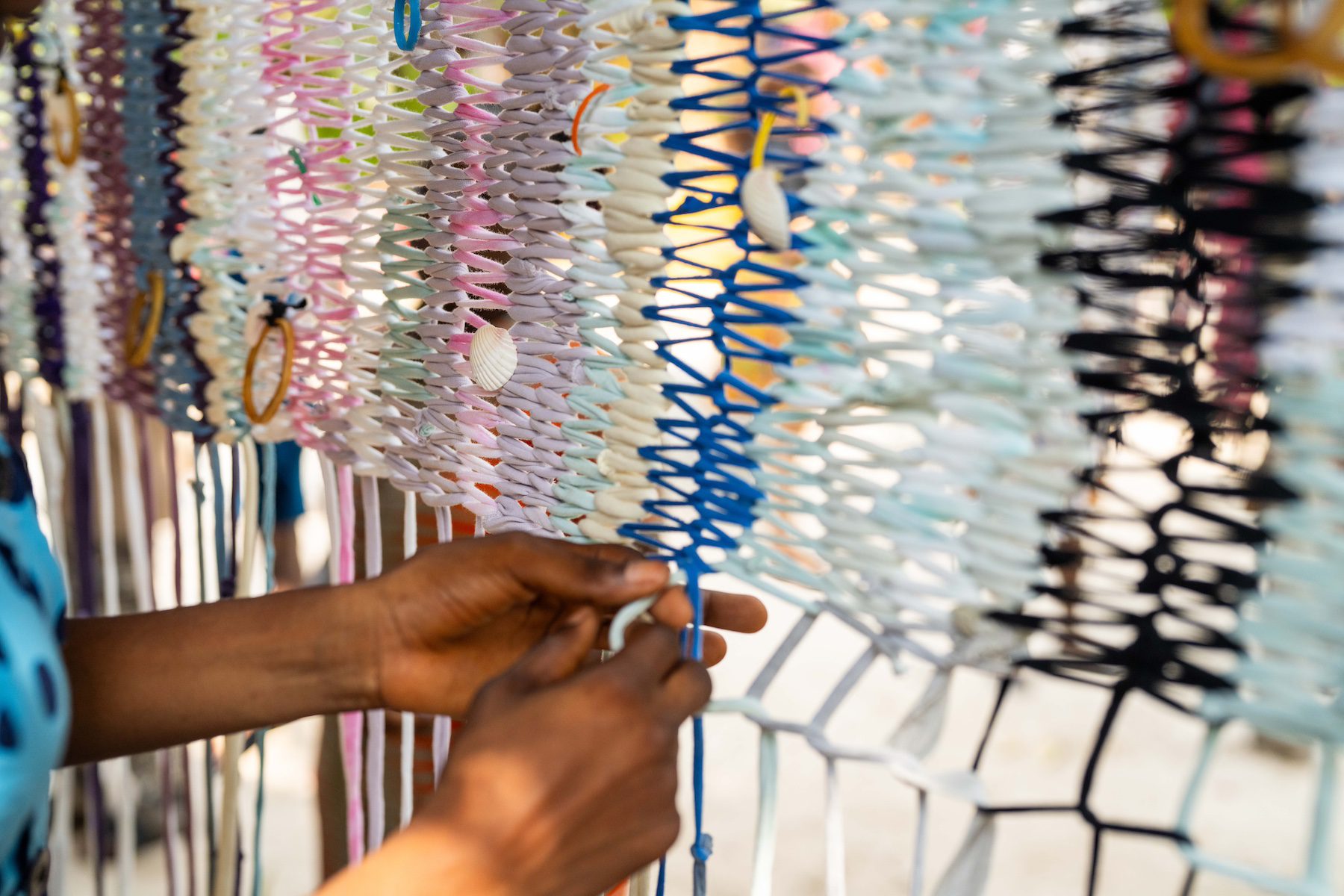
Kokrobitey Institute weaves waste materials to create new textiles
Reclaiming materials in bold and intentional ways, she adds, carries psychological resonance. “There is a sense of triumph, of taking agency over our lives. It opens the possibility for other levels of innovation.”
“Don’t get me wrong,” Renée says with a smile, “we want people to feel glamorous and beautiful in K.I. WOTE. We work with natural dyes, introduce colour and monogrammed symbols onto the garments. Just because we are reusing Obruni W’ehru (second-hand clothing, literally ‘dead white man’s clothes’) does not mean there is no fashion or form.”
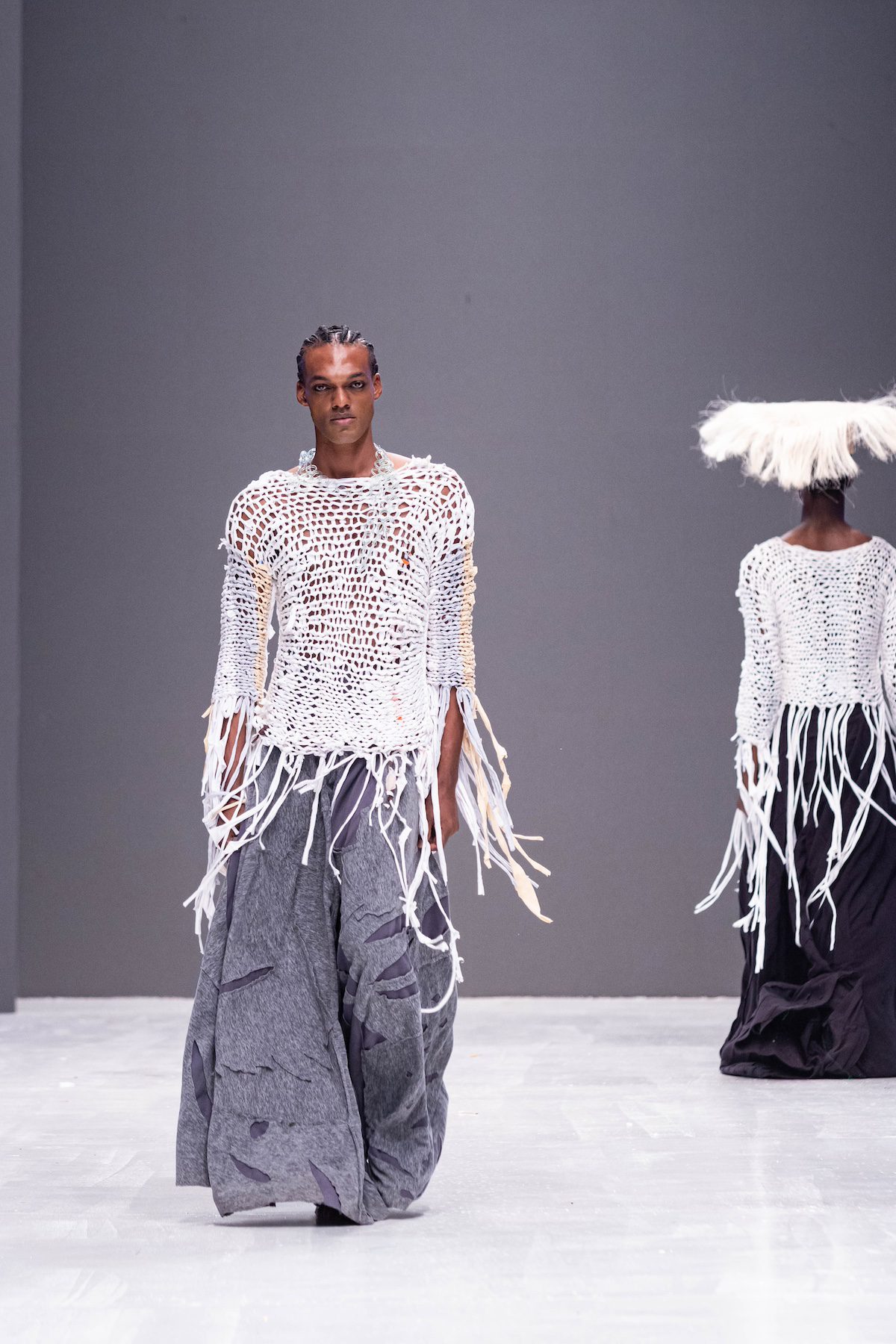
Kokrobitey Institute’s K.I. WOTE 2025 collection
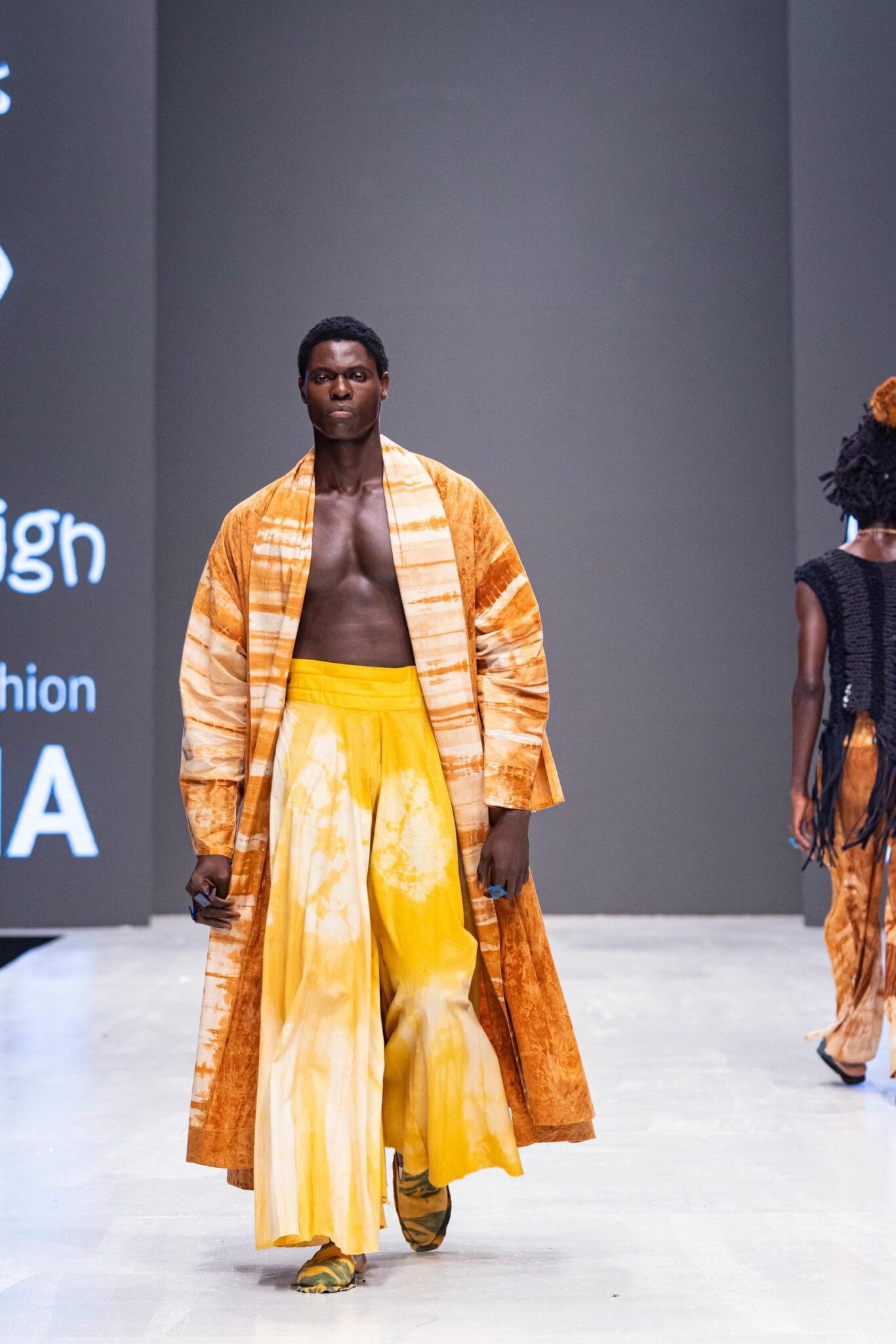
K.I. WOTE at Lagos Fashion Week
For Renée, each challenge is an invitation to experiment. “What are the possibilities?” she asks. “What happens when these materials are shredded or pulped? What industrial opportunities exist within that framework? Could they be used for upholstery? Blended with traditional or natural fibres to create something entirely new?”
Her tone remains pragmatic rather than sentimental. “There is no ‘woe is me’. This is our reality. The question is how we manage it while working towards a better one. We use these materials to celebrate traditional knowledge systems, to visualise those skills and social ideas and represent them in new garments. Clothing becomes a vehicle for communication, expression, aesthetic pleasure and function.”
The work, she says, is sustained by collective momentum. “It excites me to know that what we are doing through the Institute is part of a larger conversation. There are people around the world thinking this way. The dialogue we are having across the continent is evidence of that. Great things are the accumulation of many small things and that emboldens me.”

Renée Neblett and her team at Kokrobitey Institute in Ghana
Receiving the Merchants Pan-African Twyg Award, she admits, was deeply gratifying. Even after decades of practice, the recognition felt unexpectedly tender. “Like a child being rewarded with a toy,” she says. Yet the moment was never hers alone. Celebrated alongside her team at the Kokrobitey Institute, the award became less a culmination than a catalyst, an affirmation of shared labour and a renewed incentive to continue.