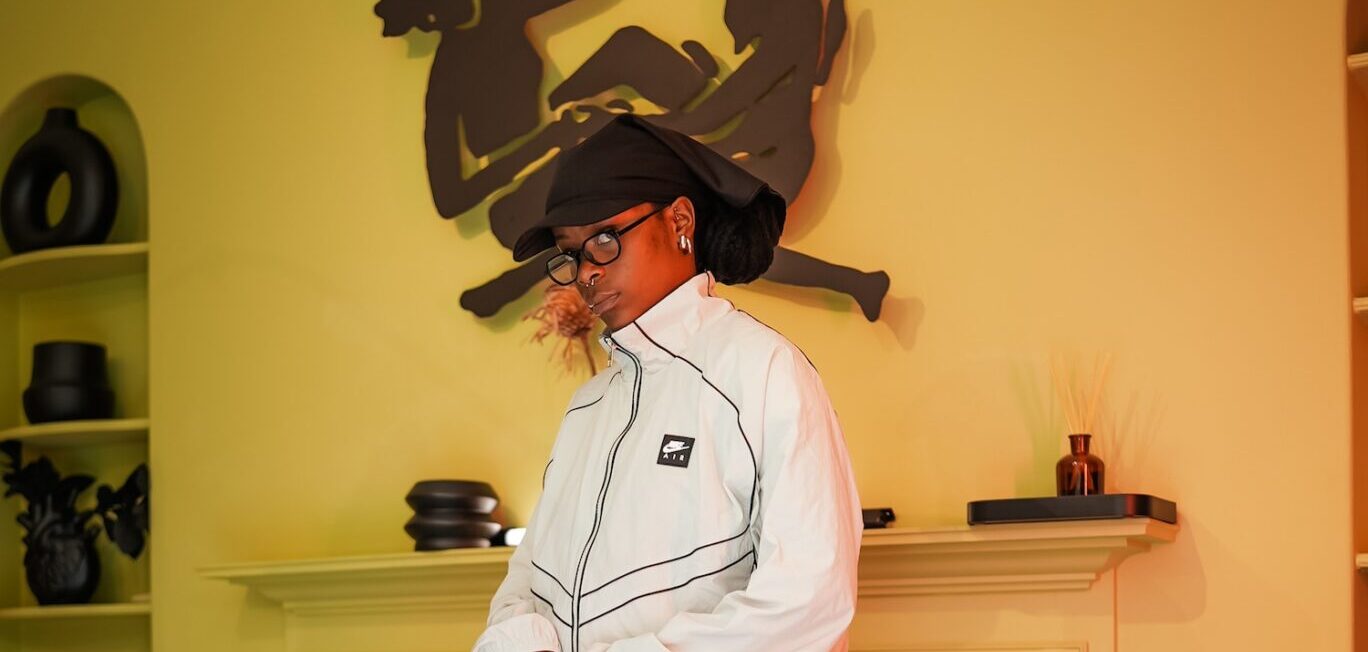

Siphesihle Mkhabela, a fashion designer from Palm Springs, in the Vaal region approaches couture as both structure and story. At home, she grew up around fabric, sewing, and understood that garments carry dignity. She studied fashion at the South West Gauteng College. After completing her studies in 2024, she launched her brand, M.S – Mkhabela S. “I design high-end couture silhouettes because I want to build clothes that hold both weight and emotion,” says Siphesihle.
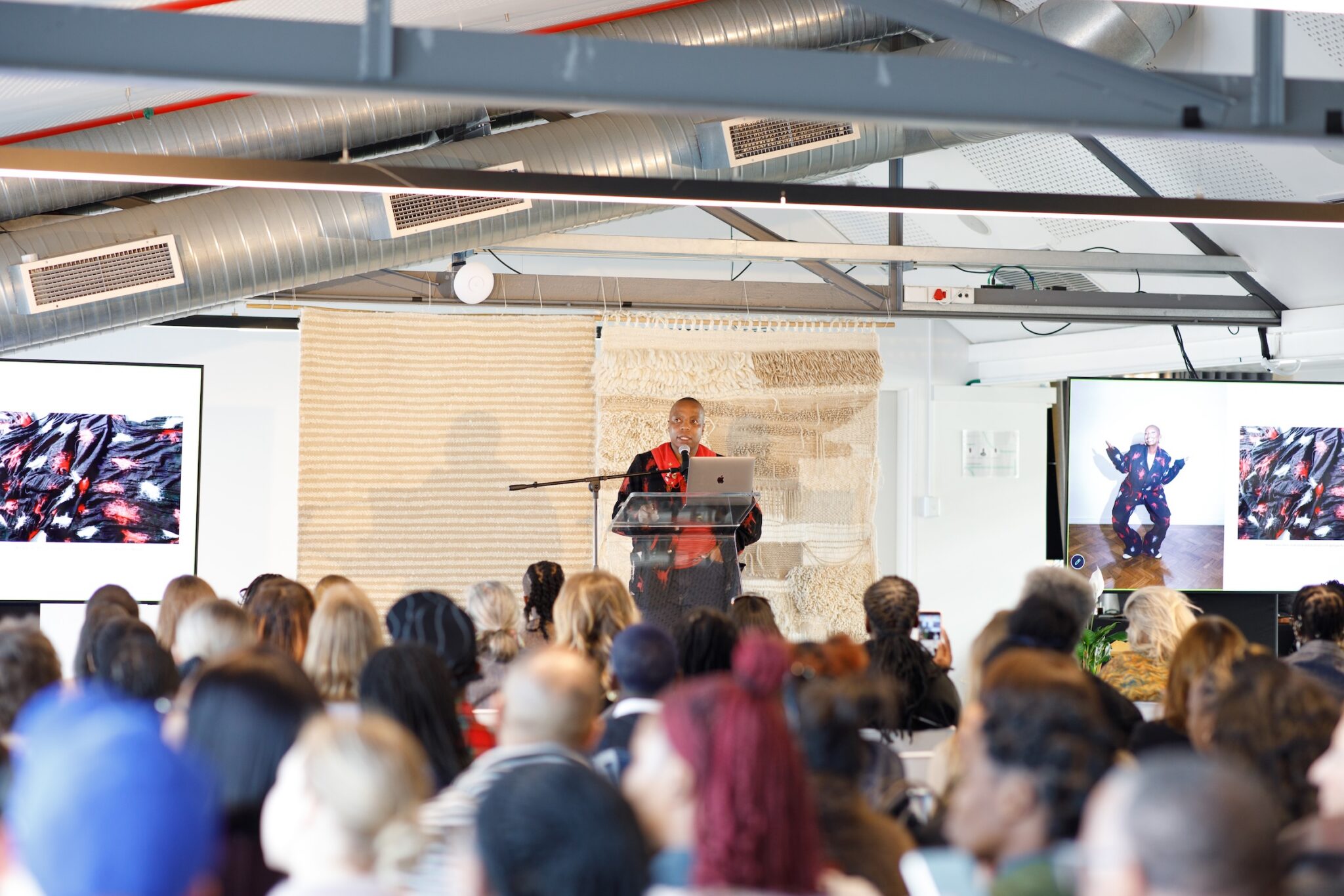
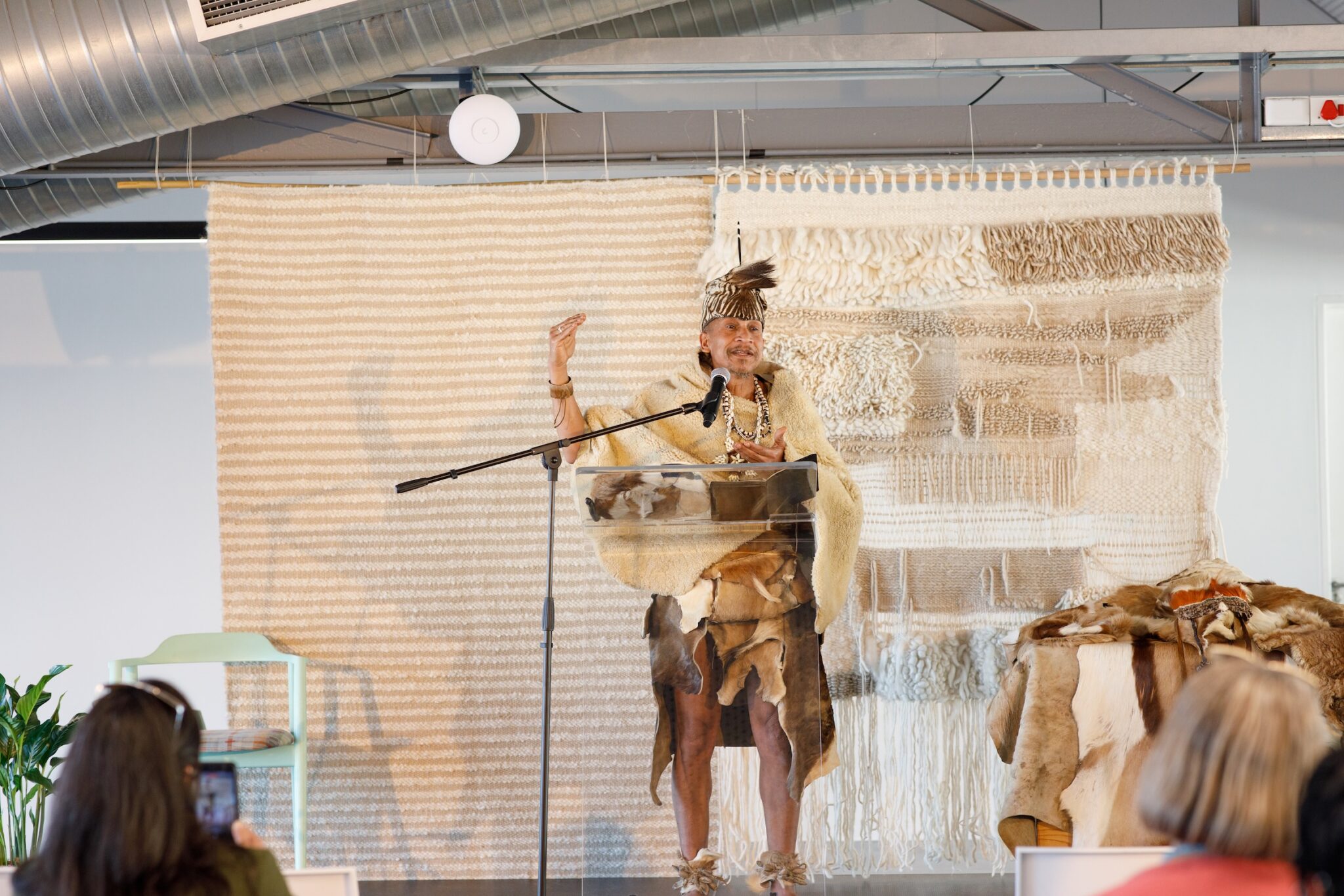
Siphesihle was one of four young fashion design residents at the recent Nike Air Max Residency in March 2026. She was mentored by acclaimed South African fashion designer Thebe Magugu at Magugu House in Johannesburg for two weeks. At the end of the residency, the designers exhibited their final garments at Keyes Avenue in Rosebank, Johannesburg, on 28 March.
During the residency, she developed the Eclipse Cape Dress, a sculptural, single-form garment. Twyg asked her to reflect on her work and the residency.
What dreams do you have for your brand?
In five years, I want M.S to be recognised as a high-end couture house in South Africa. A Vaal-based atelier with made-to-order clients, stocked in two to three key concept stores in Johannesburg and Cape Town. And I want to debut at SA Fashion Week. In 10 years, I want to have international stockists in Paris, Japan and London. I want to train a team of artisans who become known for creating sculptural couture that merges technical skill with personal narrative. In 15 years, M.S becomes a global luxury house based in South Africa. It will have a flagship store that houses retail, production, and a pattern making school.
How do you approach design?
For every piece, I step out of my comfort zone and challenge myself. I don’t repeat what I already know. I lead with discomfort and research before I touch fabric. I design high-end couture silhouettes that hold contrast: protection and exposure, shadow and light. Most couture is about perfection. Mine is about tension. I refuse to separate concepts from construction.
What did the residency mean to you
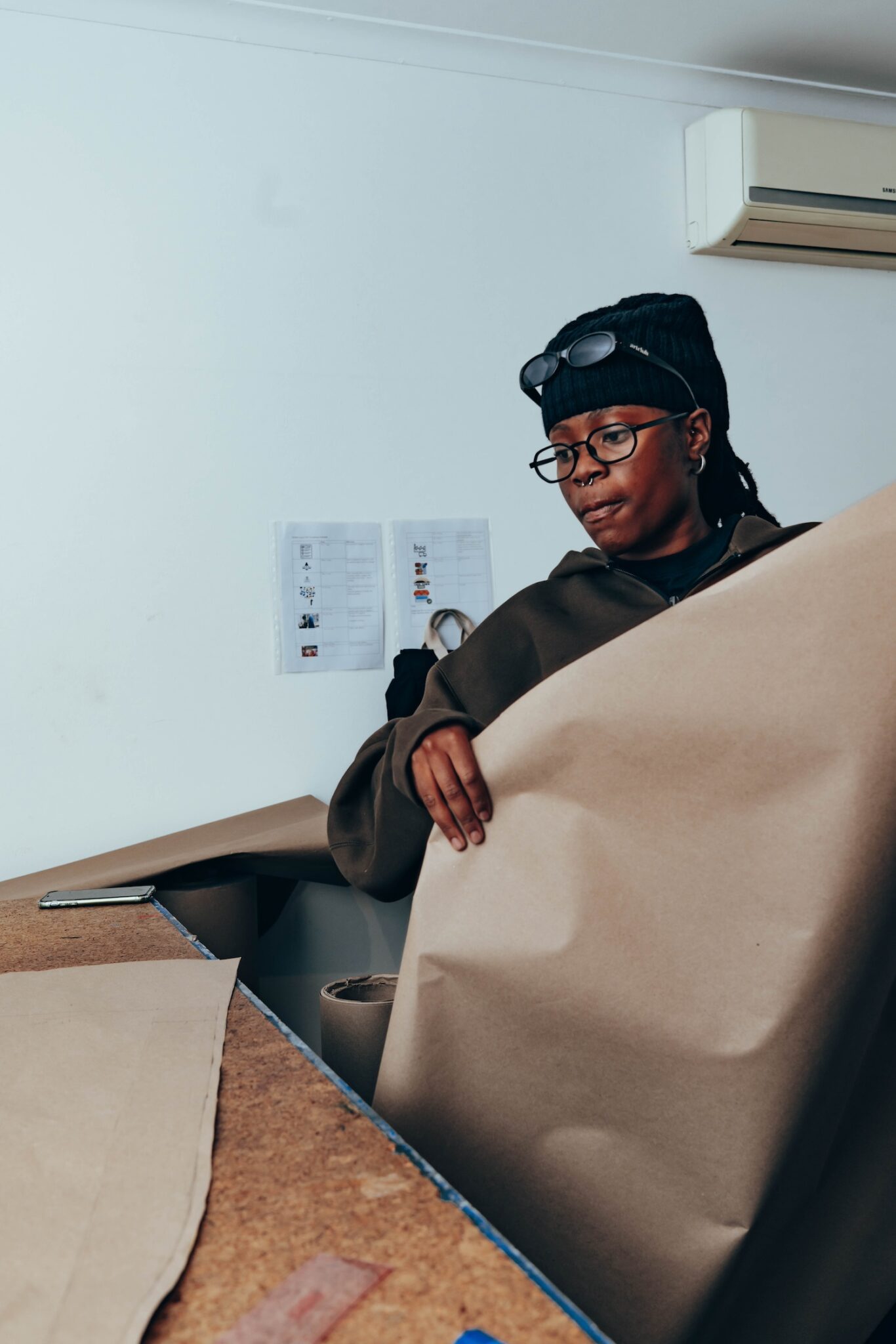
Image: Courtesy Nike South Africa
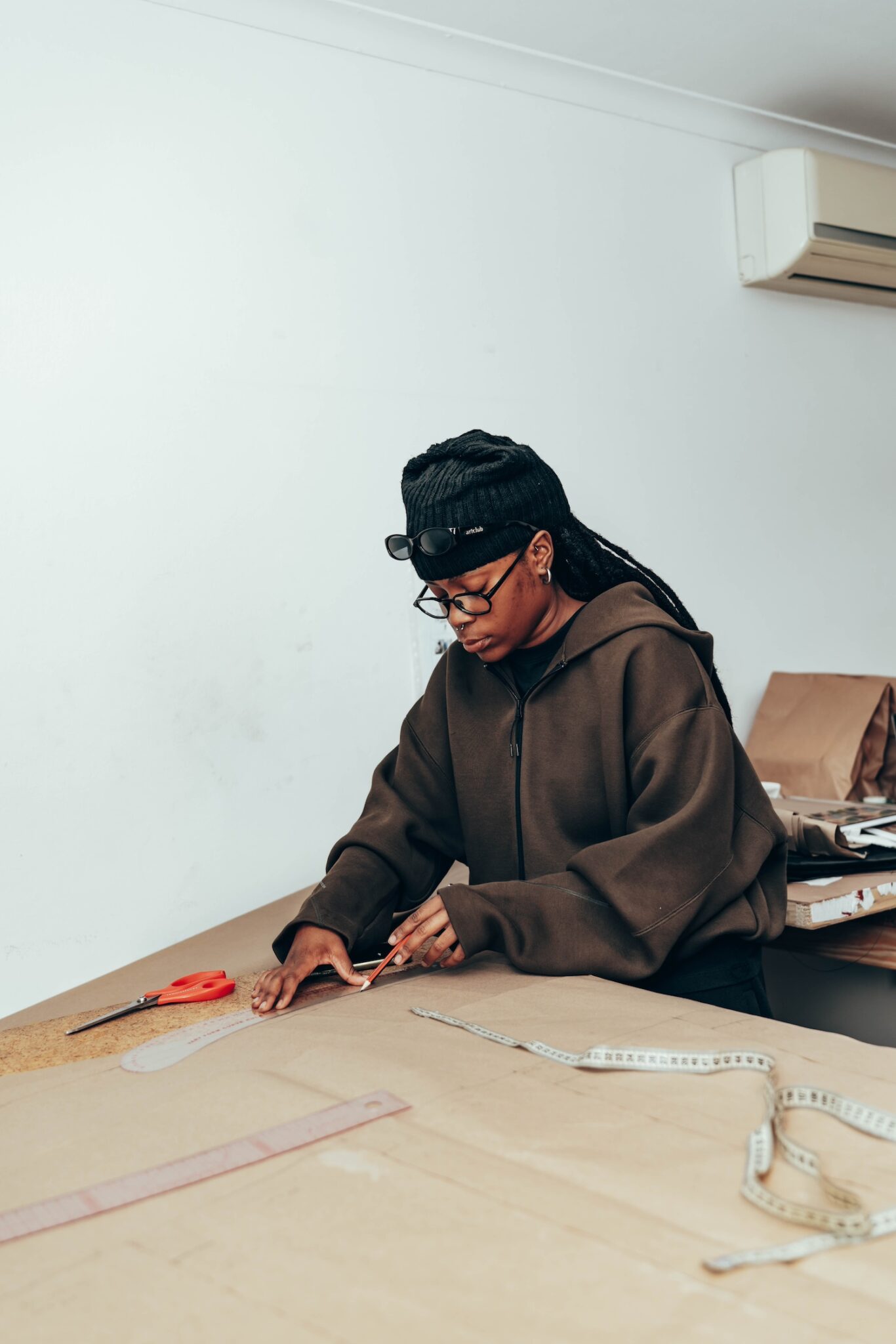
Image: Courtesy Nike South Africa
The Nike Air Max Residency was a dream come true: I felt seen and accomplished a goal. Before the residency I trusted my hands more than my research. During the residency, I learned that couture starts on paper, in archives, in conversations – not just at the machine. I gained the confidence to let my ideas be slow.
I gained a new respect for the process before the product. I learnt that research, prototyping, and failure are all part of the process of creating greatness. Because Nike designs for the body in action, I now think about testing my couture silhouettes for movement. Can the wearer walk, sit, and own the room in one continuous piece? I also learned that being seen isn’t vanity, it’s how the work survives. M.S can’t grow if I keep it hidden. Thebe Magugu helped me understand that my story is the source. Understanding this changed how I see my future.
How did Thebe Magugu guide you?
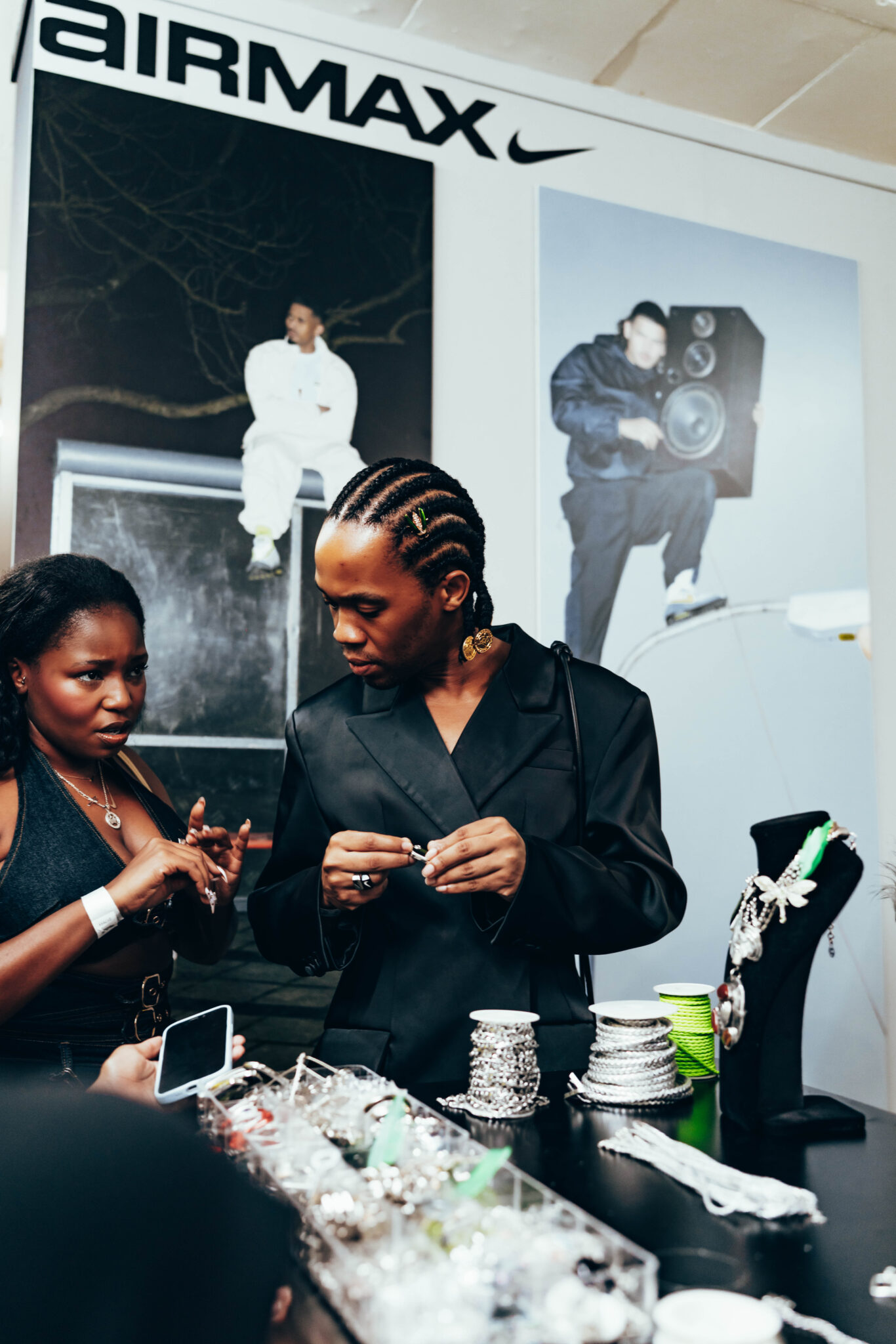
Image of Thebe Magugu: Courtesy of Nike South Africa
Working with Thebe Magugu was such an amazing experience. He taught me things about the fashion industry I didn’t know before. He challenged me to trust that my references from home – from Vaal – are enough. His influence on the Eclipse Cape Dress is in the restraint. He taught me to edit, to let the silhouette and one strong detail do the work. The drama is in the construction itself. He shaped my thinking by showing me that couture can be personal, precise, and global at once.
Describe the garment you made.
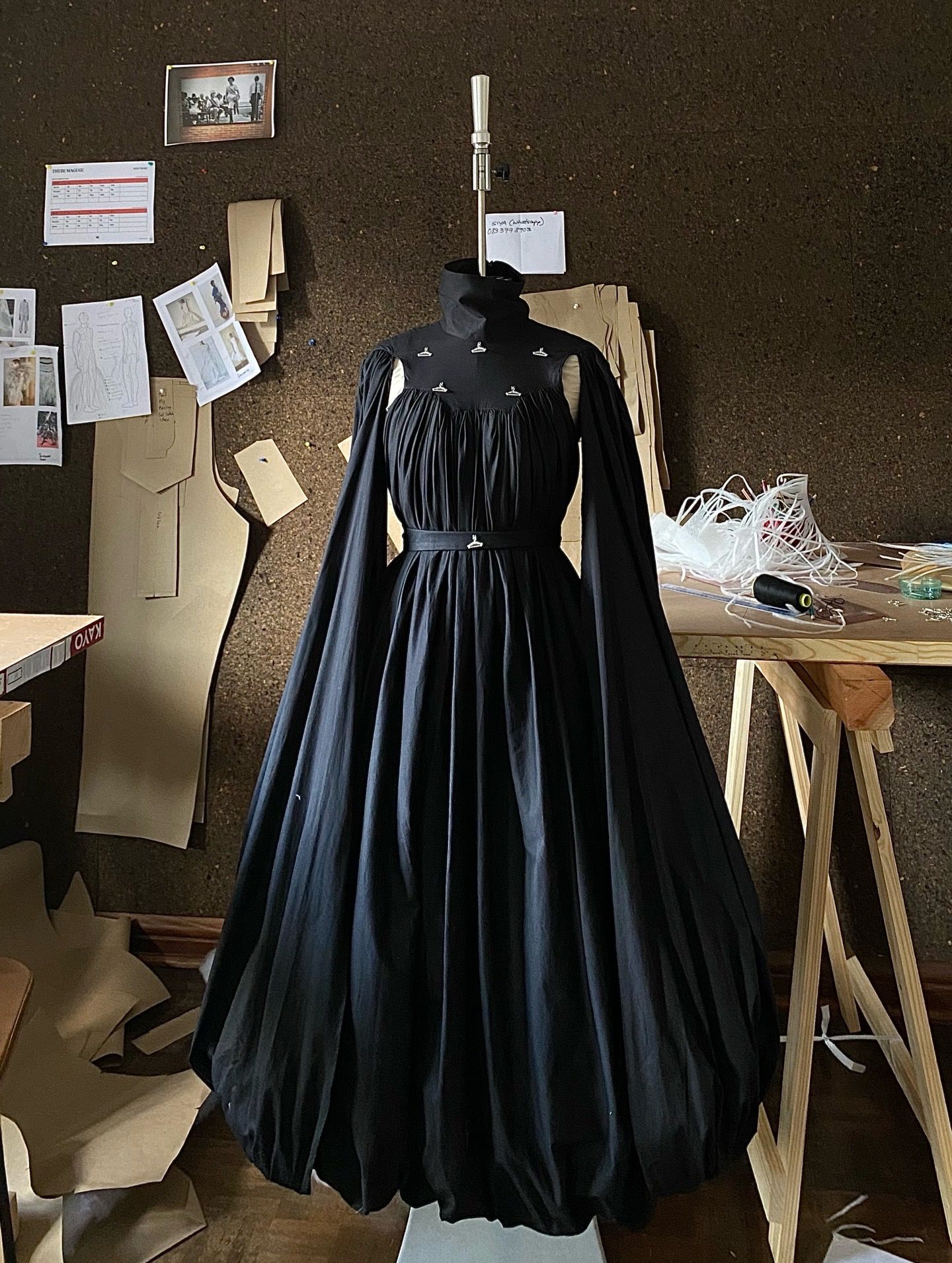
Image: Courtesy Nike South Africa
The Eclipse Cape Dress comes from my past of not being heard. It’s about darkness that covers, and the light you find when you’re finally seen.
The dress is a high-fashion, black, full-skirted gown constructed as one continuous piece. It has a sleek turtleneck bodice, dramatic cape-style sleeves, and a sculpted waist buckle that creates a striking silhouette. I cut the shoulders open. The exposure is intentional: it’s the first place you feel vulnerable when you finally speak. The bodice is heavily gathered from the yoke to the waist, creating controlled volume. From the yoke fall extreme cape sleeves that don’t attach to the arm: they move like shadows. The bottom of the dress and the sleeves run under the whole garment. The bubble hem and cape are not separate; they’re integrated into a single sculptural form. It blends avant-garde structure with runway drama, perfect for bold editorial or couture presentations.
I designed the Eclipse Cape Dress to embody confidence and mystery. The dramatic cape sleeves shield the wearer, like a protective cloak, while the cinched waist asserts strength. It’s about embracing contrasts – light and shadow, power and vulnerability. I wanted to create a piece that makes you feel like you’re stepping into a different realm, where you’re both seen and unseen.
The M.S brand signature is a custom metal hanger cast with the initials M.S integrated into the bar. Every garment is finished with this detail which is a reminder that for M.S – Mkhabela S – couture is considered from construction to presentation. The hanger isn’t packaging. It’s part of the piece. I designed the M.S hanger as my signature because I was tired of not being seen. Before the garment touches a body, it hangs with my name on it. And the clean M.S keeps it modern.
I started from scratch on the stand. The turtleneck and cinched waist frame the body, then the cape sleeves and full skirt flow from the same structure. The fabric had to hold the bubble hem while staying fluid in the sleeves. The fact that it’s one piece is the technical challenge. There are no seams to break the shadow. The small hangers on the yoke in the front and back are my custom-made brand signature.
What needs to change in South African fashion?
We need investment in small-batch, high-skill ateliers that can execute one-piece couture. We need buyers who support sculptural silhouettes, not just commercial basics. And we need payment terms that respect the time it takes to engineer a garment like this.
What is the role of young designers in shaping future fashion systems
Young designers are building the future system as we work. My role with M.S is to prove high-end couture can come from small townships and meet international standards. We’re creating new models: ateliers that train, couture that archives personal history, and brands that don’t wait for permission to lead. We’re making space for the voices that have not being heard.
After this residency, what feels possible now that didn’t before
It feels like everything is possible. Doors are about to open and I’m going to learn a lot about the fashion industry as an amazing young fashion designer. My journey is full of light and greatness. I understood that being seen starts before the runway. That’s why every M.S piece comes on our signature hanger. The greatness I give is there before you even wear it.
- Siphesihle was one of four young fashion designers selected to participate in the Nike Air Max Residency in March. Over two weeks in Johannesburg, the emerging designers worked closely with Thebe Magugu at Magugu House. At the end of the residency, they showcased their final designs. The other designers are Lindokuhle Mdluli, Thato Mengwai and Khanyisile Masina
- You can follow Siphesihle on instagram here
- Images supplied by Nike South Africa
- This is a sponsored post