In the fashion and textile industry, South Africa is synonymous with mohair. This is because the country produces more than four and half million kilograms of mohair annually which is 56% of the total global production of this durable, biodegradable and natural animal fibre. Considered a luxury fibre, mohair is used by top designers across the world, including South African fashion brands Maxhosa, Lukhanyo Mdingi and GugubyGugu.
Mohair South Africa is the organisation that represents the mohair industry. According to its website, it advocates for farmers, connects the farm-to-fashion supply chain, and upholds mohair’s international reputation as a rare and luxurious fibre. Recently, Mohair South Africa hosted an event in Gqeberha to announce its brand reset.
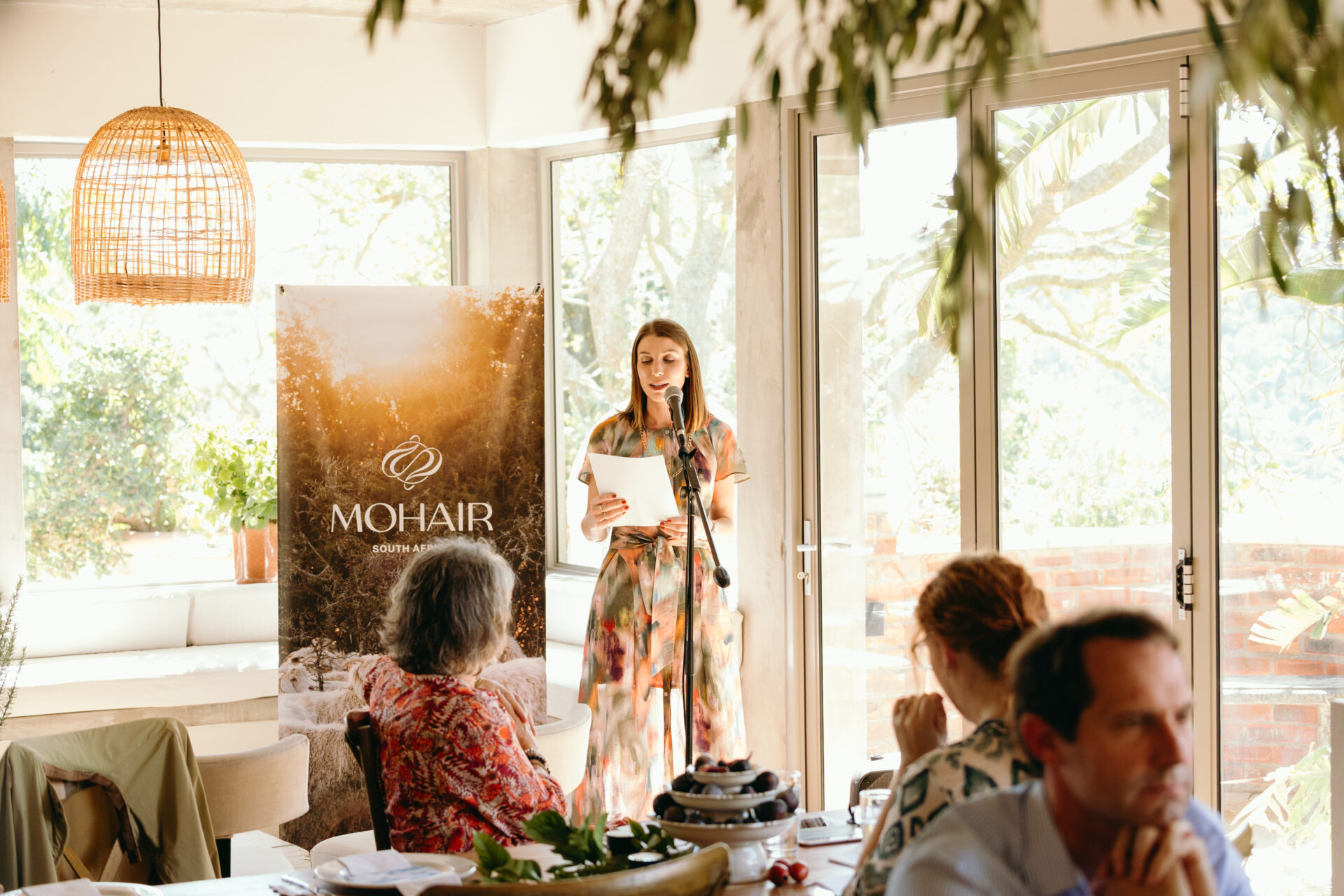
As the custodians of the mohair industry in a rapidly changing world, Lauren Moore explained that the organisation needed to streamline its messaging and operations. Lauren, who is the head of communication and sustainability, said during her speech at the event that the reset is “about creating a brand that is easy to understand, easy to align with and impossible to ignore.” She said that the new branding “reflects our values of community, sustainability, heritage, and progress. One that embraces innovation without erasing legacy. One that speaks confidently to global audiences while still honouring the soul of our farms, our people, and our land.”
Mohair is a silk-like fibre that comes from the coat of Angora goats. These goats are shorn twice a year – in spring and in autumn. Angora goats are farmed in some of the most arid regions of South Africa. These regions are often not suitable for crop production, nor dairy or beef production. Most angora goat farmers are in the Eastern Cape and the Karoo, many farming around the towns Willowmore, Steytlerville, Jansenville, and Graaff-Reinet, while the Eastern Cape city, Gqeberha, is the export hub of the mohair industry.

It is widely believed that the history of mohair in South Africa started when twelve rams and one pregnant ewe were imported from Turkey in 1839. Now there are 1,200 farmers and almost a million (963,000) angora goats in South Africa.
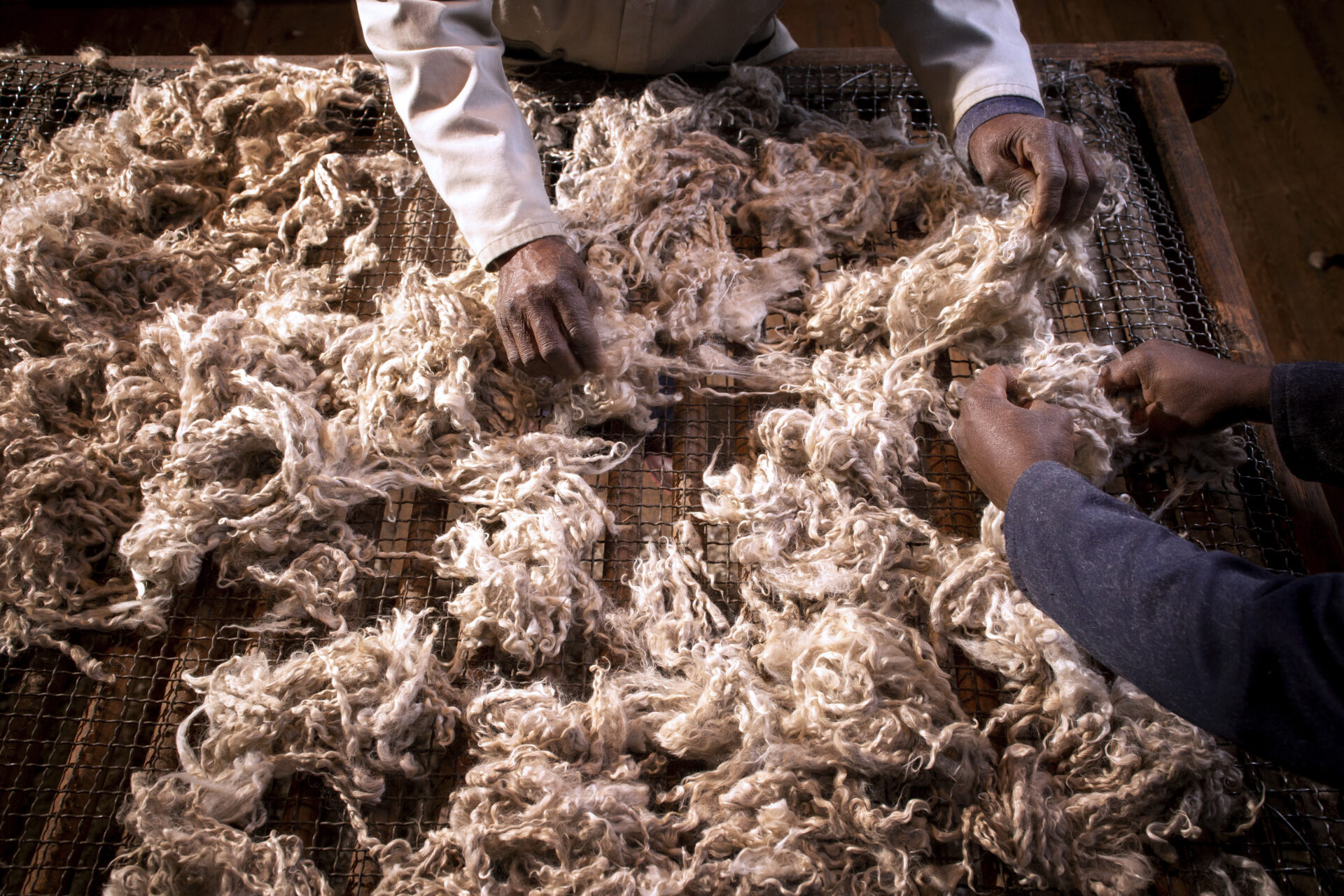
Once the fleece has been shorn, it is sorted and classed according to micron size (fibre diameter), length, strength and texture and packed in bales which are sent to a broker. These bales are transported to two South African brokers, both in Gqeberha – The Fibre House and OVK – that market and sell the mohair at 14 annual auctions. Most of the mohair produced in South Africa is exported to China (41%), Italy (32%), Taiwan (11% ) and the UK (6%), while between 5 and 10% is bought by local processors, including the Stucken Group and SAMIL.
While I was in Gqeberha for the brand reset event, I visited The Fibre House, the larger of the two brokers. The Fibre House facilitates the sale of 60% of the mohair sold from South Africa. General manager Pierre van der Vyver said that “South Africa and Lesotho produce the two biggest clips in the world.”
The Fibre House employs 40 people. “We are not 100% off the grid yet, but half the building is under solar,” said Pierre. They harvest water and have capacity to survive six months without using municipal water.
With a twinkle in his eye, Pierre spoke with passion about the high quality of mohair that South Africa produces. He explained that, amongst other technologies, this is because farmers are improving their breeding techniques. Genetic identification is done to select the best animals to breed. A good ram and good ewes produce great kids. Correct dipping in product that is compliant with industry standards and the correct shearing techniques are also critical.
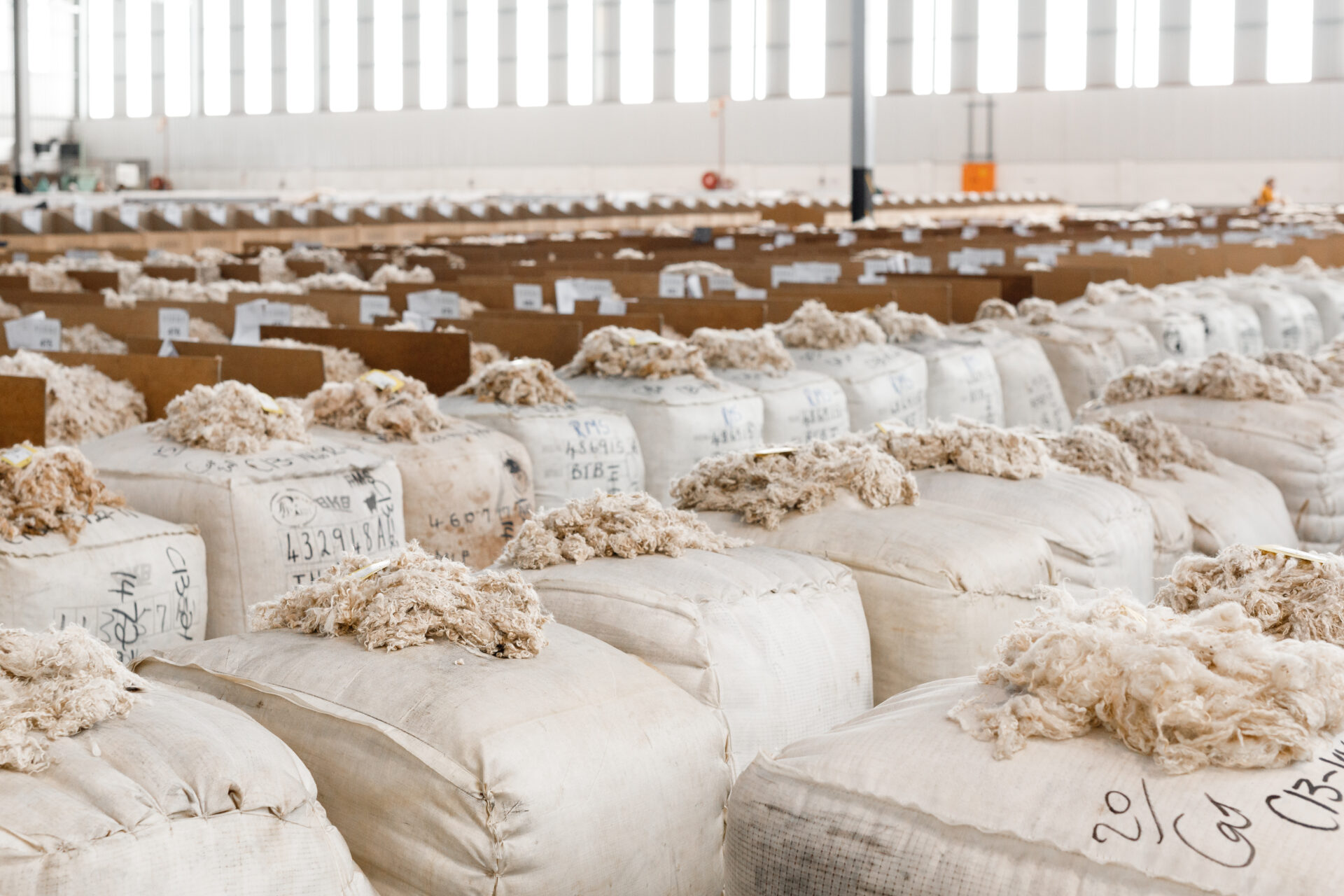
At the brokerage, the bales of mohair are meticulously checked for quality, weighed and each farmers’ data is captured. The mohair is sorted into different lots that are sold at auction. Samples of each lot are presented to buyers. While I was visiting, potential buyers were inspecting the samples ahead of the following week’s auction.


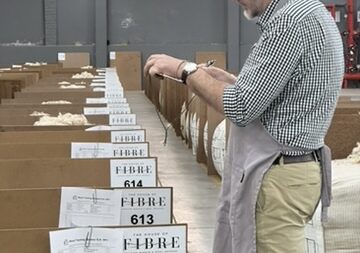
The buyers buy a ‘lot’ of the raw fibre and process it further. Processing of mohair includes sorting, scouring (cleaning) carding, combing, spinning, dyeing, weaving or knitting and finishing into final products.
The current average price for unprocessed mohair per kilogram is R377. In comparison, unprocessed merino wool is about R175 per kilogram. Market reports from the most recent auctions listed R800 per kilogram as the highest price for mohair, and the highest price for wool was R244 per kilogram. At the 13 May wool auction, 12,263 bales (1,888,293 kilograms) of unprocessed wool were sold on auction, according to Cape Wools SA. Whereas, The Fibre House recorded 1311 bales of mohair sold at the 12 May mohair auction.
Mohair is important to South Africa’s agricultural sector. In 2021 Lucius Phaleng wrote that mohair is “the sixth largest agricultural commodity export comprising approximately 4% of total agricultural exports.”
It’s important that South African mohair is compliant with international sustainability standards. Most South African farmers are signed up to the international Responsible Mohair Standard, a voluntary standard that addresses animal welfare in goat farms and the chain of custody of mohair from certified farms to the final product.
To take this further, Lauren announced that Mohair South Africa is collaborating with SPIN360, an international company that helps businesses achieve sustainable growth in a rapidly changing world. Lindsay Humphries who is the global strategy and partnerships lead at SPIN360 said in an email to Twyg that the project focuses across the entire sustainability landscape: regulation, science, data, communication, and market alignment. The SPIN360 project will help ensure that the industry remains competitive and relevant as sustainability and traceability become essential in the international textile industry.
Considering that the fashion industry needs to move fast towards a slower, more considered and sustainable model of production, this luxurious and durable fibre will become an increasingly important fibre for fashion. For this reason, it’s critically important that the South African mohair industry is traceable, transparent and trustworthy. The brand reset is a move in the right direction.
- I was a guest of Mohair South Africa at the brand reset event
- Visit Mohair South Africa