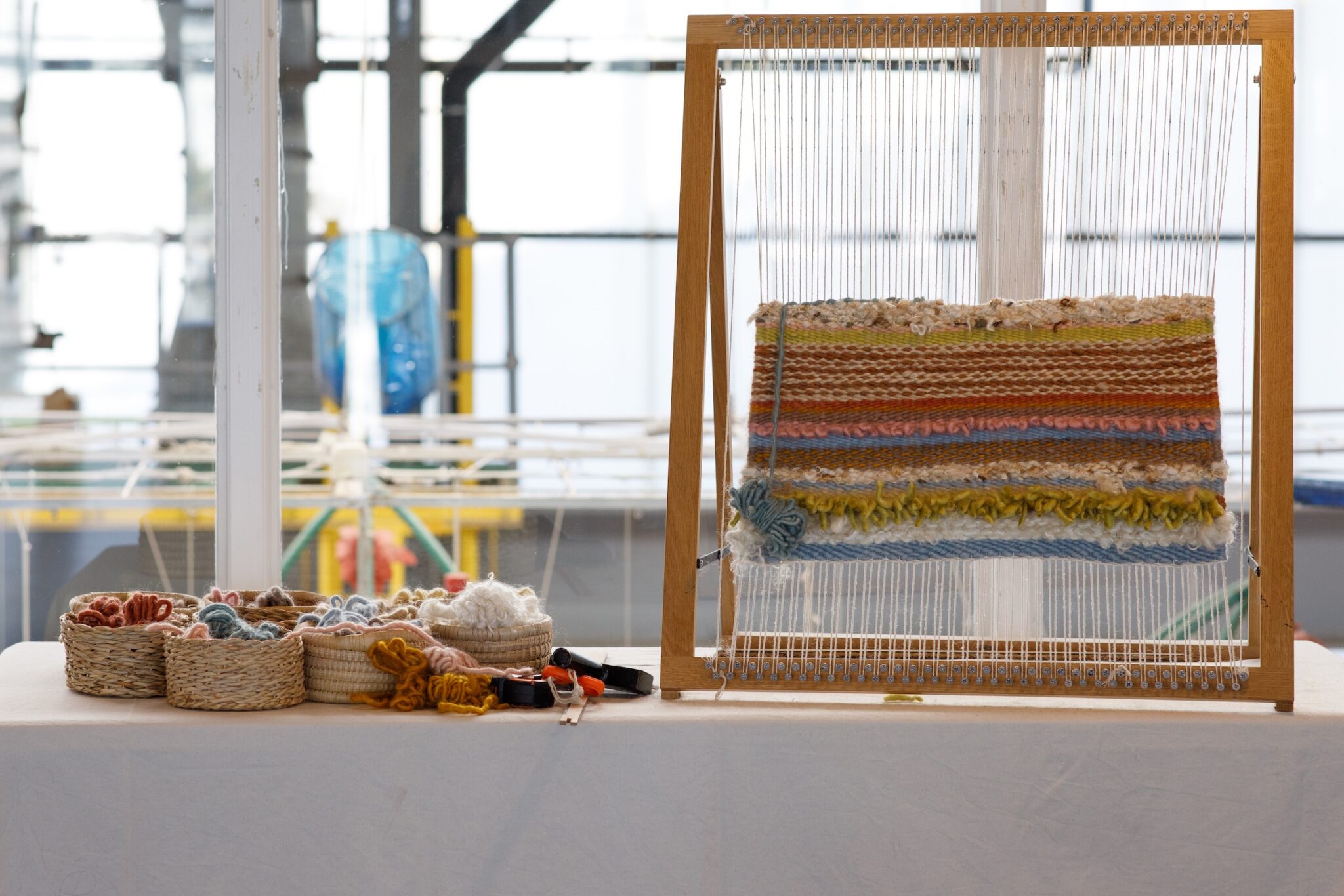
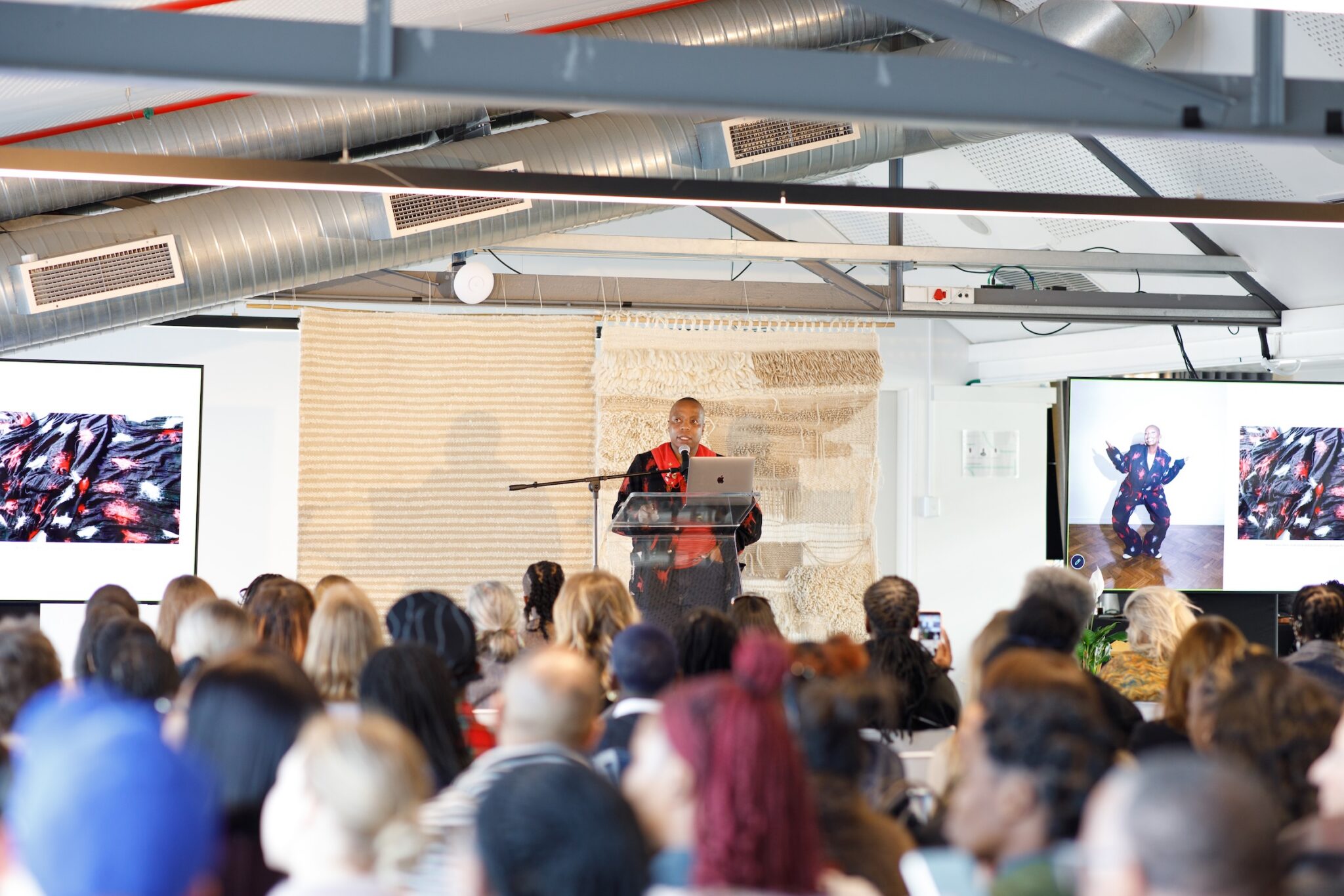
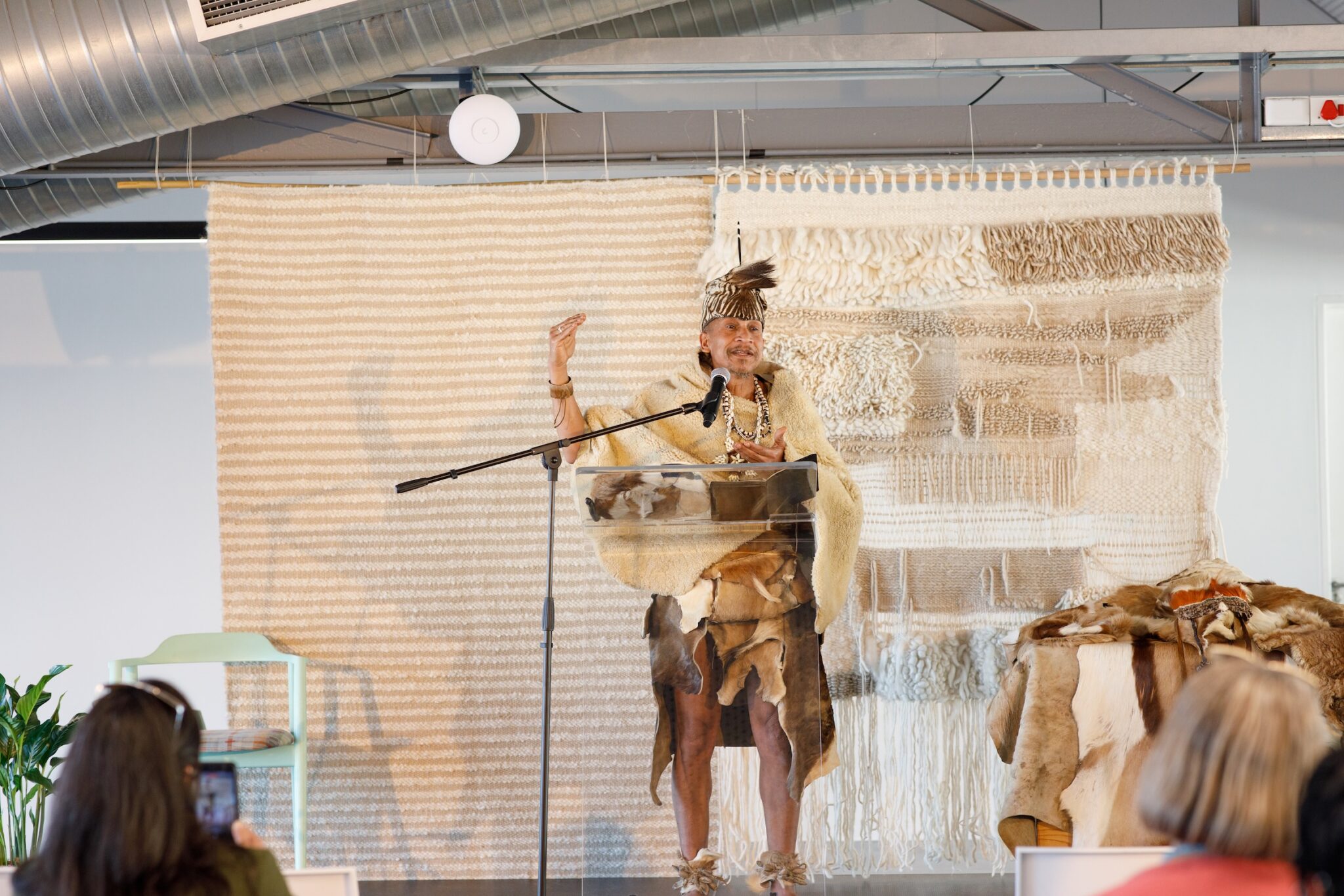
For the annual Karoo Winter Wool Festival, a 110-year shed was transformed into a tactile menagerie of natural fibre design in the heart of the Great Karoo. Curated by fashion designer Lezanne Viviers and architects Nisha van der Hoven and Justus van der Hoven, this year’s Wool World exhibition titled Karoo Kraal mixed fashion, craft and art creating space to deepen the conversation about South African wool – an ancient fibre – and endless possibilities for its use.
Returning to the Dwarsvlei Guest Farm near Middleburg for the festival in July, I was immersed once again in a conversation that is rapidly gaining momentum. That momentum was especially palpable inside the exhibition where visitors encountered four yurts designed by Sean Pritchard of Yurt Life. These large-scale tent-like structures – wrapped in thick wool batting from Gerber & Co – were placed around a central kraal, a gathering place where the curators introduced their rationale, and where panel discussions were hosted with players from across the wool and natural fibre ecosystem.

The kraal features Gerber & Co batting, greasy wool, wallhanging by Weylandts x Studiolandt x The Mill, hat sculptures by Crystal Birch, and tapestries by Leila Walter and Sibabalwe Ndlwane. Image: Karla Muller
Karoo Kraal was a multi-sensory experience of touch, smell, sight and sound. Outside formal gallery walls, the tactile nature of the exhibition allowed visitors to engage with the works through both sight and touch. From the freshly shorn greasy wool, the smell of lanolin permeated throughout the shed. This was layered by another sensory experience: a soundscape by Alessandro Gigli featuring sounds of bleating sheep and the spinning and knitting of yarn. This beautifully distilled the wool value chain into sonic form.
The four yurts – modelled on ancient dwellings – housed a curation of contemporary natural fibre pieces by artists, designers and makers. These spaces came to life in character archetypes, namely: The Naturalist, The Agriculturalist, The Nomadic Weaver and The Afro-Modernist. “Each is shaped around an imagined character showing different ways of working with wool, and expressing their own philosophy, material approach and creative identity,” says co-curator Justus.
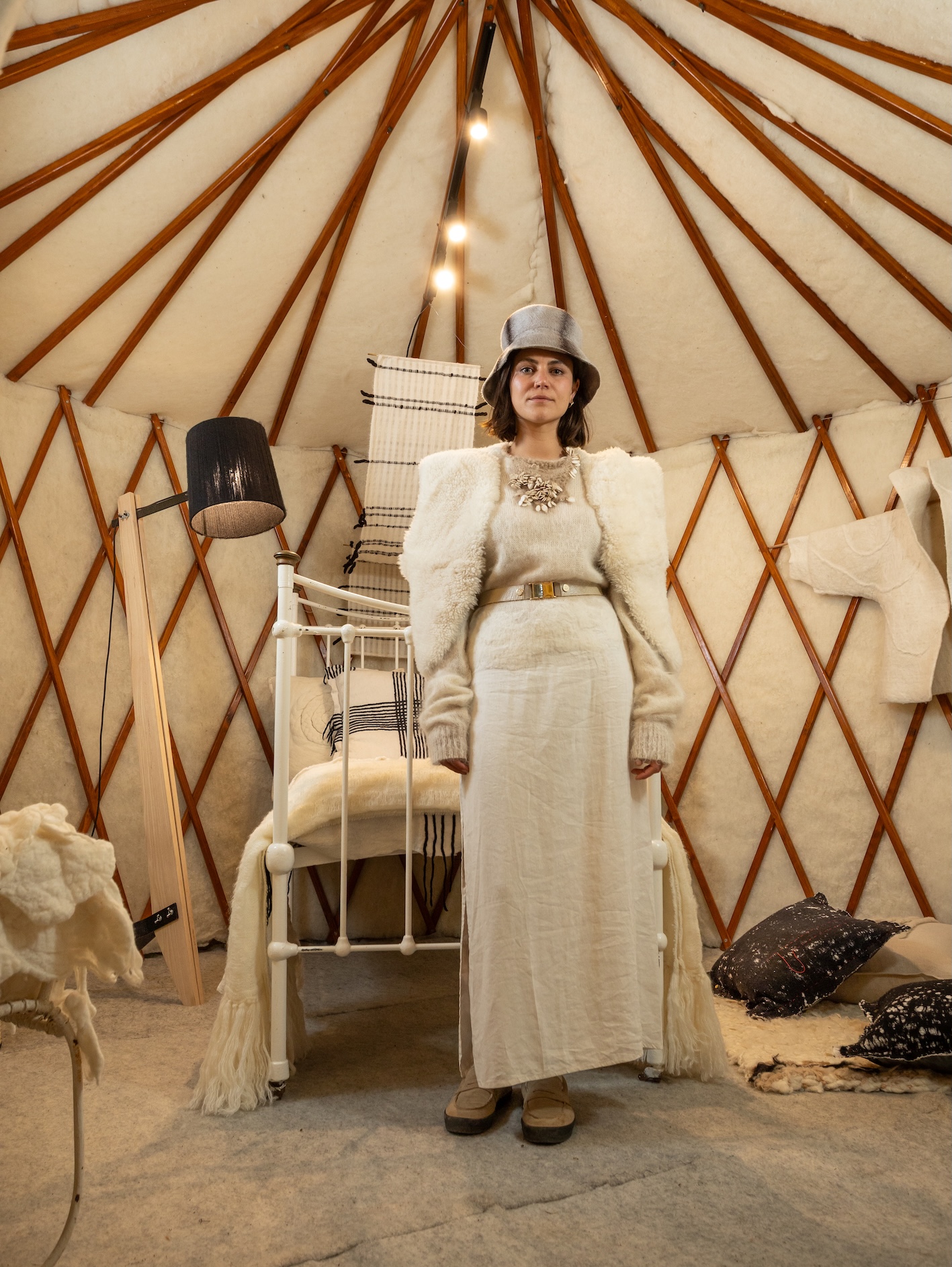
Model wears hat by Viviers x Crystal Birch, necklace by Anika Lötter, belt by Viviers, sheepskin gilet by Karoo Baba, dress by NUUN. Image: Karla Muller
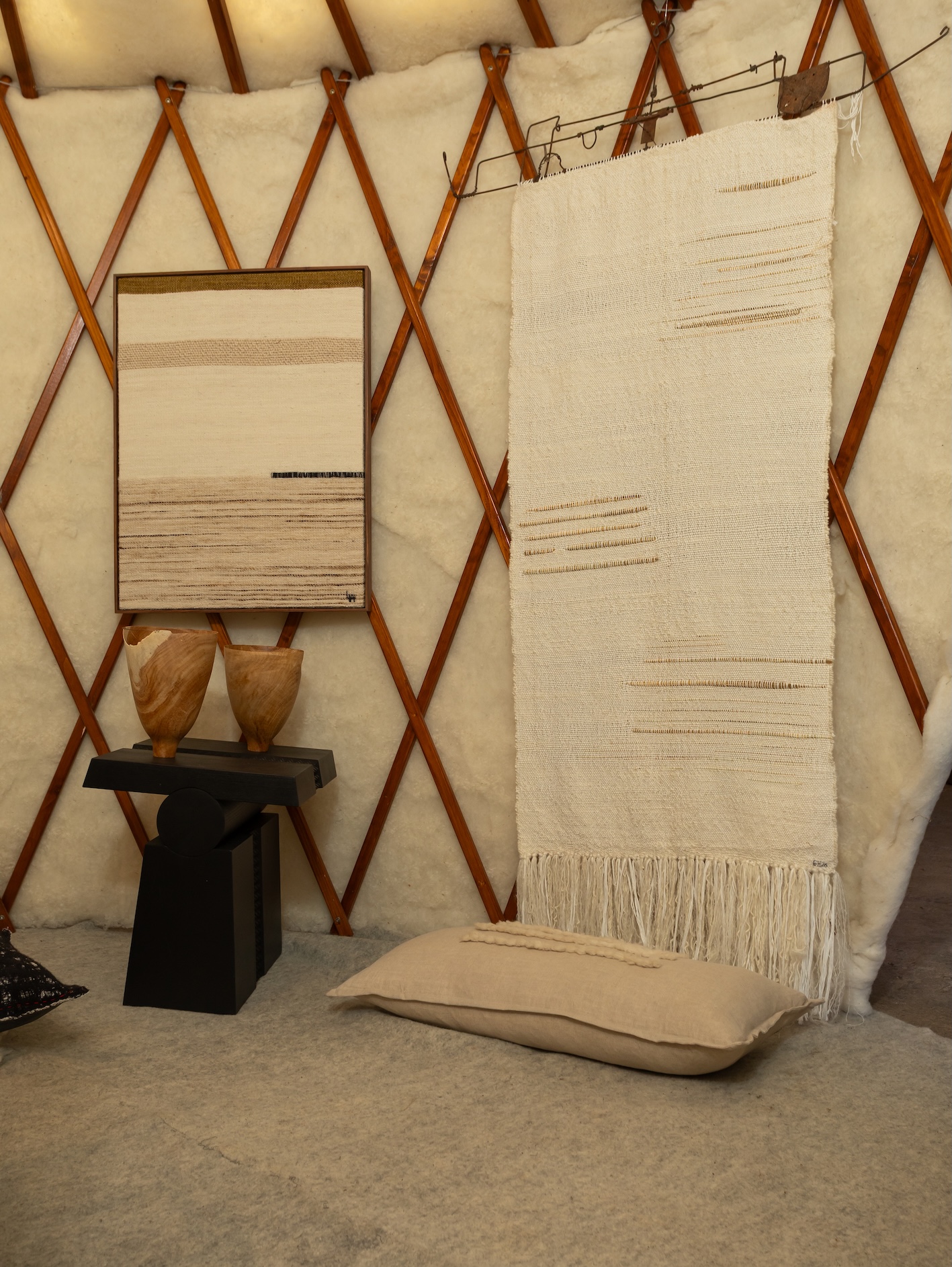
Oak Vases by Paul Kristafor, table by OKHA, wall hanging by Leila Walter (left), and FRANCES v.h. Mohair (right). Image: Karla Muller
Through an open call for natural fibre works, the curatorial team received over 80 entries. This presented them with the opportunity to discover works from creatives they did not know, introducing new voices alongside practitioners who exhibited last year. This expanded their “rewoolution” – a term coined by the curators which plays on the words revolution and wool.
A final selection of 71 makers showed in this expansive exhibition. Their diverse perspectives helped shape how visitors understand working with natural fibres and the preservation of craft practices. Varying approaches helped democratise the craft landscape by introducing fresh voices to craft practices that break away from traditional thinking. The conversation became Pan-African with the inclusion of Weaving Across Borders – a collaborative project by artists Mbali Dhlamini and Bubu Ogisi that explores indigenous art practices through material research. The perspectives included those of well-known makers such as Woodstock-based Leila Walter, Prince Albert native Frances van Hasselt and Cape Town fine artist Julia Swanepoel Pepler.
New to Wool World, Lebogang Tlhako aka Sisterbozza used mohair for the first time. The Katlehong-based printmaker and photographer says, “Seeing one of my photographs printed on mohair made me realise how much the material itself could add to that story.” She says mohair introduced a texture that felt soft and almost protective.
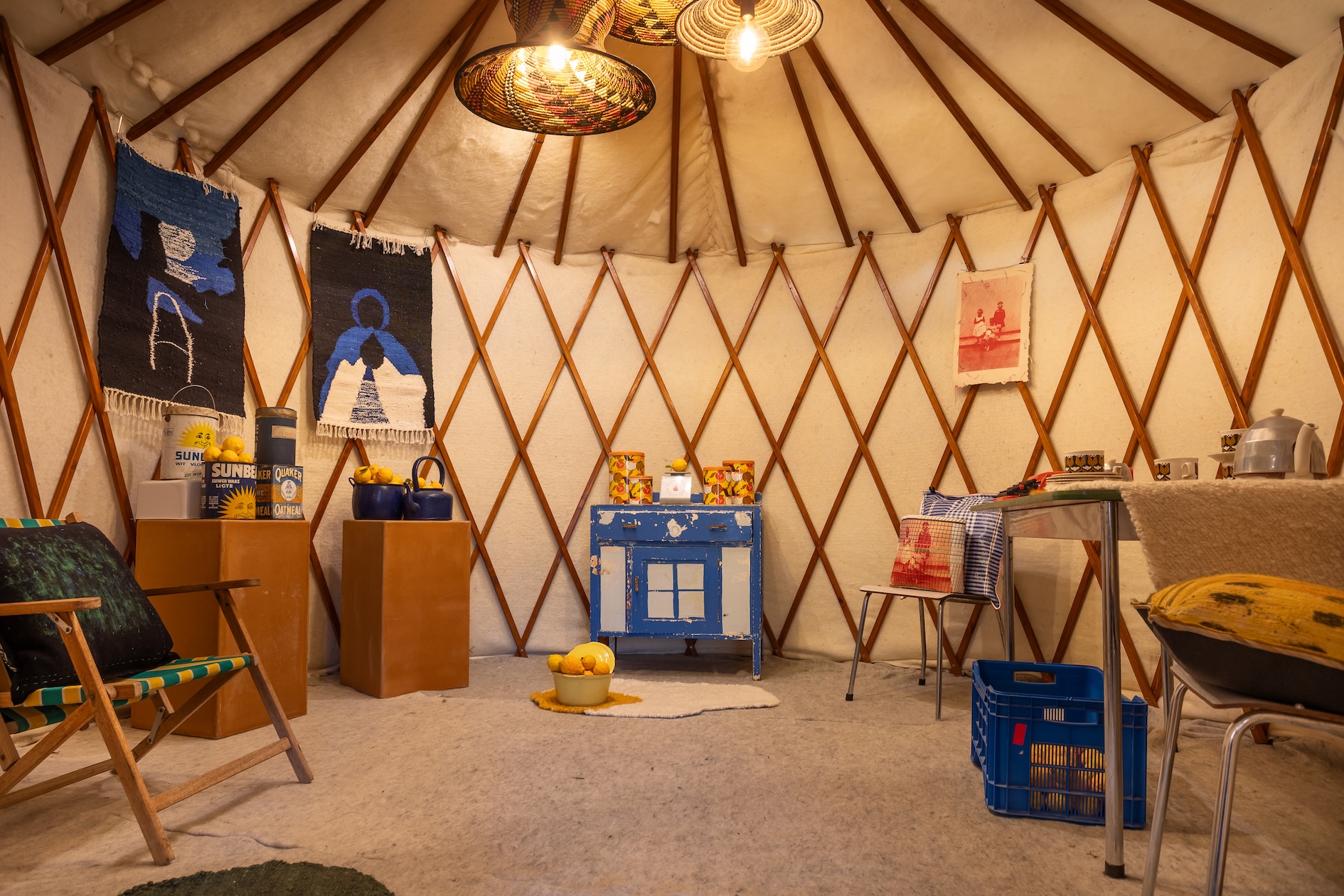
Lights by Mash.T Design Studio, cushions by Viviers x Stephanie Bentum, tapestries by Mbali Dhlamini and Bubu Ogisi, tapestry on the floor by FRANCES v.h. Mohair, Lithography print by Little Girl X The Genie X Sisterbozza. Image: Karla Muller
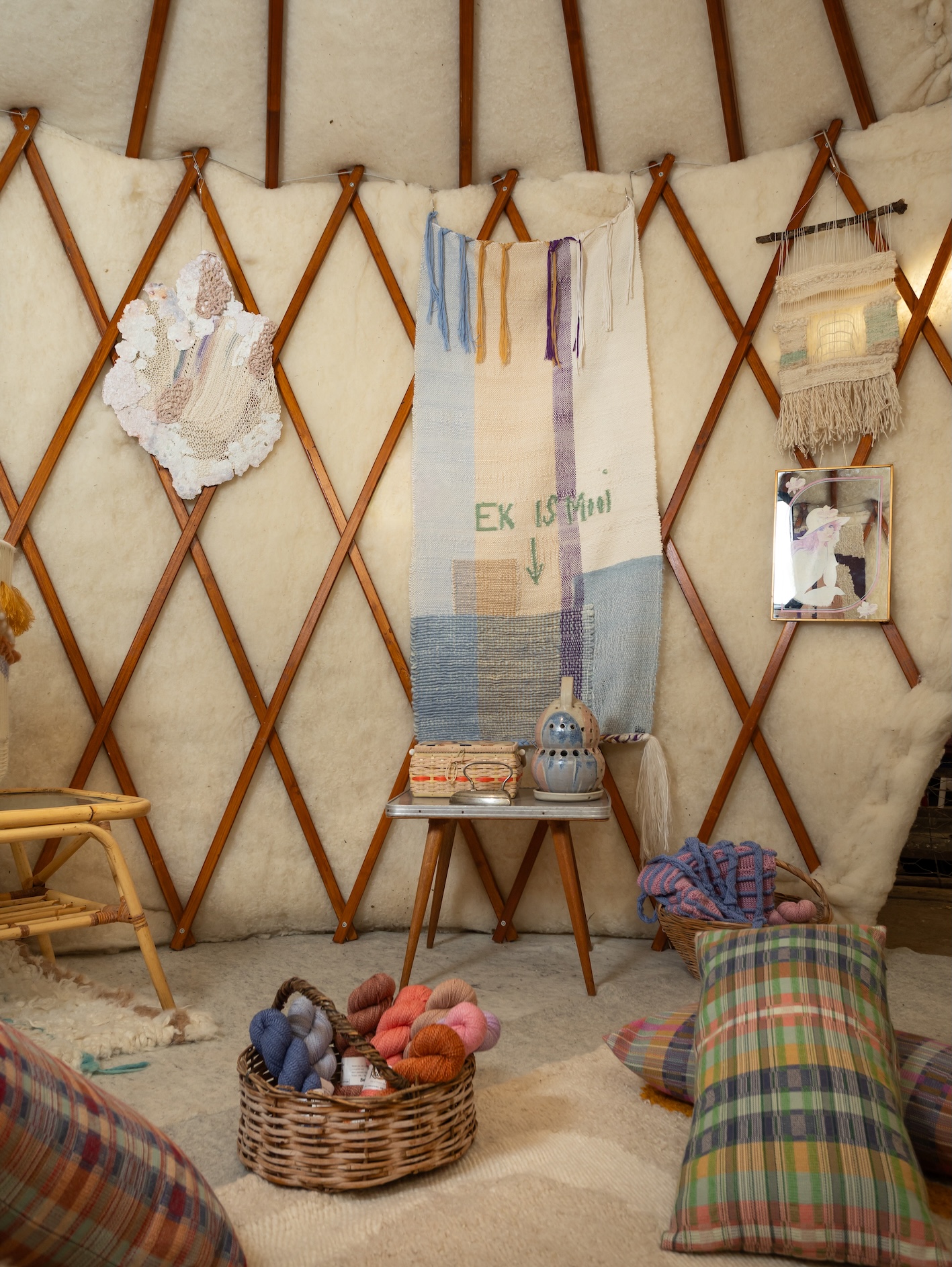
Tapestry by FRANCES v.h. Mohair, wallhangings by Chantel Zalaiskalns and Lily Esterhuizen, and cushions by Mungo. Image: Karla Muller
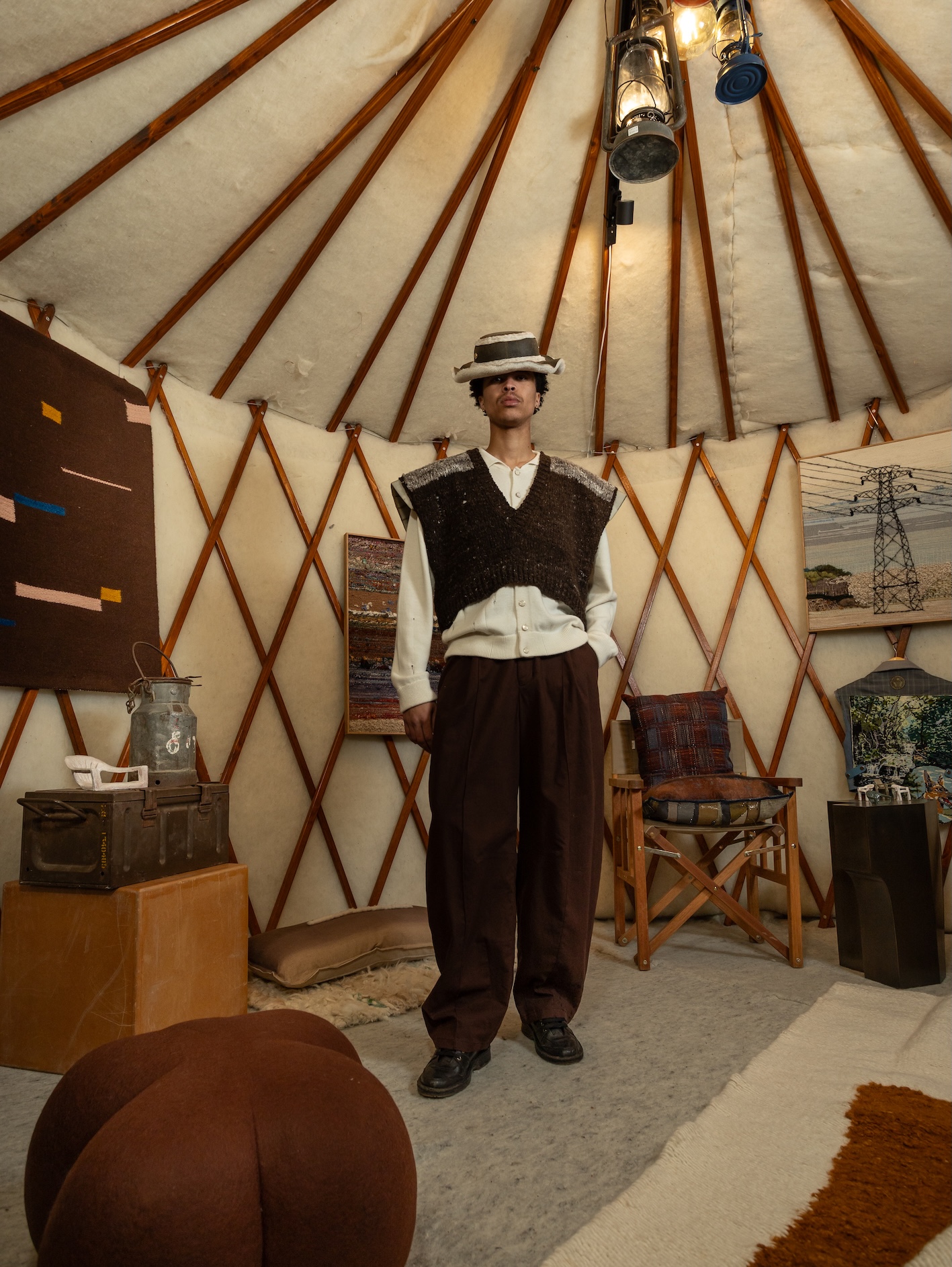
Model wears Viviers. Tapestries by Leila Walter, Chantel Zalaiskalns and Chantel Zalaiskalns. Image: Karla Muller
Co-curator Nisha says, “The kraal is not a place of control. It is a place of gathering, protection and communion, where individual structures form something larger.” This philosophy was evident throughout the exhibition. The yurts each embody their own character, yet together they create a communal space where people and ideas meet.
Lezanne echoes this sentiment, describing the circular motif of the kraal as “a metaphor for unity,” while recognising that the individual dwellings allow for individuality within the collective.
As they did last year, the Viviers x Hoven team created an oasis of tactile possibility in an old sheep shearing shed. It is truly an ambitious and wildly imaginative undertaking that presents a united vision for South African wool – bringing together farmers, artists, designers and festivalgoers into the same conversation for the many voices to help shape what comes next.
Beyond this, there’s something to be said about the significance of exploring the kraal and wool – one of humanity’s earliest forms of dwelling alongside one of the oldest fibres. Now more than ever, this exploration highlights something urgent, the need to return to intentionally cultivating communities that live in harmony with each other and the natural world.