

In the Southern Drakensberg near Matatiele in the Eastern Cape, a group of farmers and herders is part of a decade-long project supported by the H&M Group and World Wide Fund for Nature to create a more sustainable fashion industry.
The textile and fashion industry has a big impact on the environment – in various ways. Textile production requires large quantities of water, emits greenhouse gas and can impact biodiversity negatively, mainly through raw material production and pollution of land and water.
“H&M is part of the problem, and we are committed to becoming part of the solution,” says Jennie Granström, biodiversity and land impact lead of H&M Group in Sweden.
The brand sources most of its wool from South Africa, and acknowledges that it has a big impact on nature in the country. Collaborating with farmers, herders and WWF, the global fashion brand is working to reduce its impact in sheep farming areas, and to protect the planet and keep it healthy.
 Community leaders, smallholder and communal sheep farmers near Matatiele in the Southern Drakensberg, South Africa. Image: A. Burns
Jaco du Toit, biodiversity policy manager at WWF in Sweden says, “South Africa’s Drakensberg grasslands are home to more than 2,500 species of plants and endangered birds such as the wattled crane. By working with both large-scale landowners, smallholder farmers and communal sheep farmers to achieve climate-resilient, regenerative livestock grazing and to restore natural grasslands, we can unlock more sustainable wool.”
The work is practical and detailed. Farmers are supported to develop rotational grazing plans, manage fire more effectively, clear invasive species and restore river systems. With farmers on traditional communal land, there’s a focus on animal health, to reduce grazing pressure while improving income.
The project connects to the proposed Grasslands National Park and supports over 10,000 hectares of land. The focus is on water, climate and biodiversity. These systems, says Jaco, “Work together to protect our planet and keep it healthy. Each one is dependent on the others.” For example, biodiversity needs clean water to survive, but climate change affects water availability. In turn, biodiversity plays a role in mitigating the effects of climate change.
Through its research, H&M identified that the biggest biodiversity impacts in its value chain are related to cotton and wool. Wool sourced from South Africa became a priority. Jennie explains: “Unsustainable production of cotton and wool leads to the biggest negative impacts on biodiversity including soil erosion, pollution, and overgrazing. On the other hand, wool has the potential to be a long-lasting and low-footprint material if produced through regenerative methods.”
Using conservation agreements to achieve its goals, the project is strategic and operates as a learning hub for what bigger scale actions are needed and possible. “Having the right partners is crucial,” Jennie says. “Without them we won’t be able to reach all through the value chain down to farm level.”
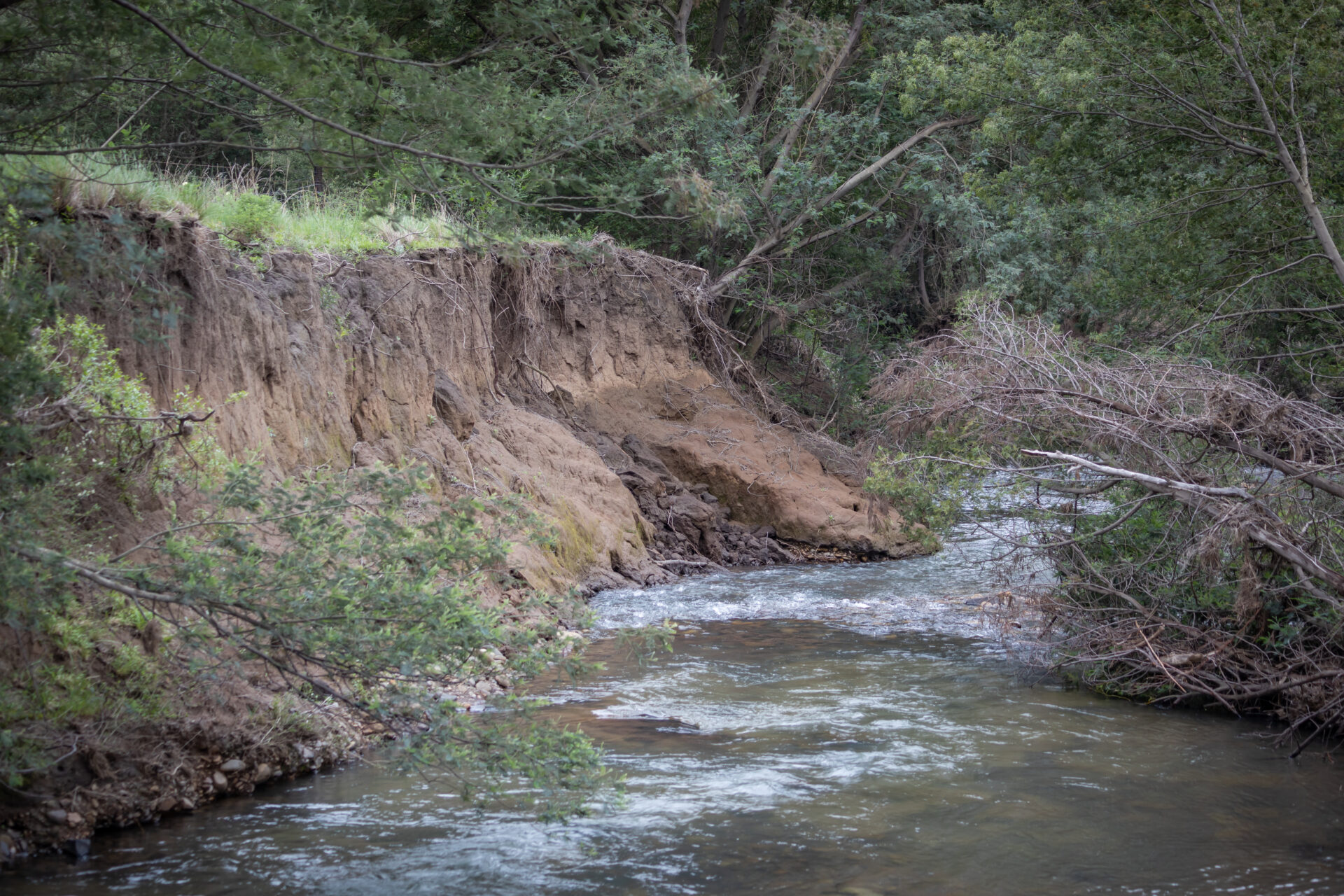 Soil erosion is a major problem in the area. Image: A. Burns
Jaco says that a major issue is erosion. “The project has helped to identify areas where low-cost interventions can reduce erosion, and volunteers have applied what they’ve learnt beyond the core project area.”
There’s also growing awareness about the relationship between biodiversity and productivity. “The more diverse their grasslands, the more wool can be produced, which improves profitability,” Jaco says.
For Jaco, the message is clear: “To address the twin biodiversity and climate crises, we need to scale solutions that bring companies, farmers and communities together in specific locations and throughout supply chains.”
Alongside the land-based work, the partnership is active in policy: analysing proposed legislation, aligning advocacy positions and developing strategies to support nature-positive outcomes.
Jennie adds: “Together, we can contribute to reversing biodiversity loss and securing a nature-positive future.”
- Pavitray Pillay from WWF South Africa and Caroline Nelson from H&M will be in conversation on 30 July at Africa Textile Talks 2025 in Cape Town
- H&M Group is a sponsor of the Africa Textile Talks
- Photos: A.Burns


