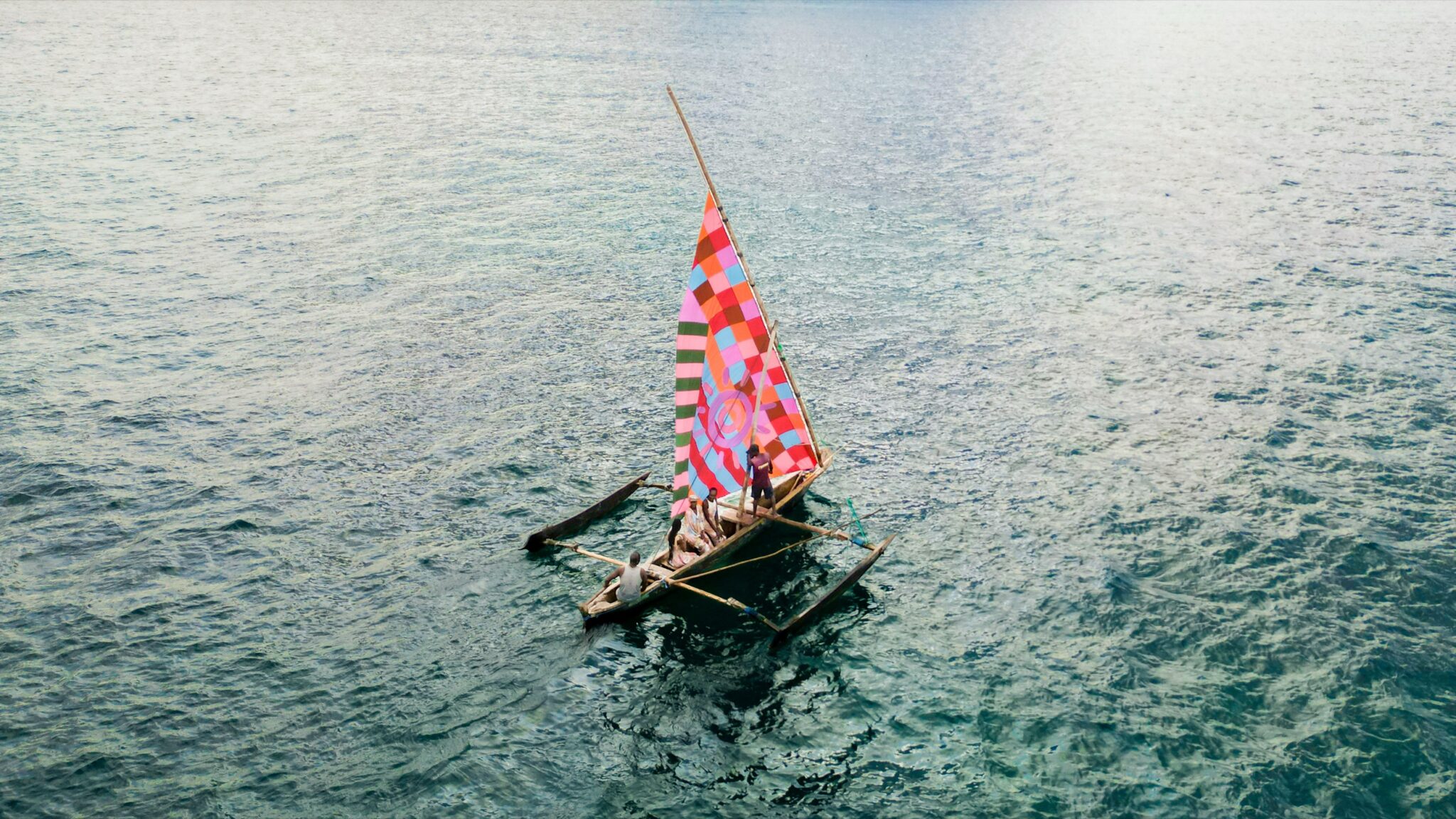
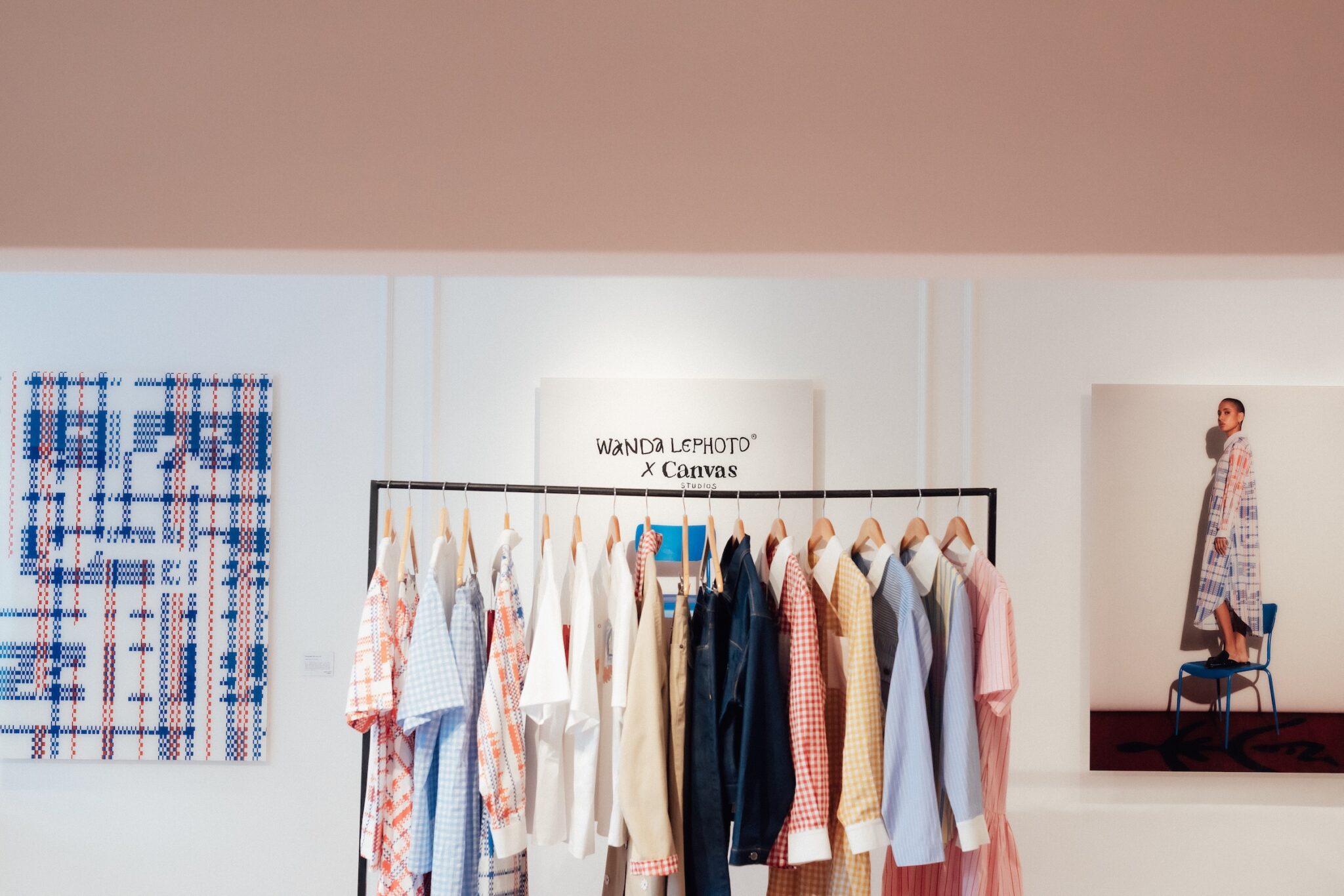
At the centre of the sixth annual fashion festival, Kwetu Kwanza, is the question ‘What can emerge from collapse?’. Founded by the fashion label IGC Fashion, Kwetu Kwanza means “Ours First” in Swahili and embodies the belief that the planet must come first.
The festival’s programme includes an exhibition, live performances, film screenings, a marketplace, talks and discussions.
For the fashion exhibition, fashion designers approach collapse, not as a catastrophe, but as a site of renewal. They turn waste into resources, use neglected traditions and forgotten fabrics to restore balance between people, materials, and the earth. From bark to banana fibre, from hand-dyed cotton to repurposed garments, each work resembles a conversation between past and present, culture and ecology.
Through its fashion label, educational initiatives, events, and campaigns, IGC Fashion champions indigenous knowledge and regenerative design to challenge global fashion’s extractive systems.
For instance, IGC Fashion (as well as The Studio Craft) reinterprets Lubugo into contemporary silhouettes and installations, showing how heritage can evolve without being lost. Lubugo, a UNESCO-recognised textile, is native to the Baganda people of Central Uganda, made out of the bark of the Mutuba tree (Ficus natalensis). It is one of the world’s oldest known fabrics, predating weaving and knitting. The process of making Lubugo is manual and chemical-free – from harvesting and boiling the bark, to beating and stretching it into a soft, leather-like cloth. Unlike most trees, the Mutuba regenerates, allowing it to be harvested repeatedly without harm, making Lubugo a truly circular, regenerative material.
Other Ugandan initiatives, such as Mawejje Creations and TexFad, are solving the same issues with their innovations around banana waste. With over thirty varieties of banana grown year-round, the creation of ‘commune fabric’ (a light, airy fabric made from banana stem waste) – as denoted by Mawejje Creations – offers an abundant potential for sustainable textile development, waste reduction and new income streams for farmers and artisans.
Calcul, based in Ghana, works with nature-based processes through natural dyeing, using ingredients like turmeric, onion skins, and sorghum to create rich, chemical-free colours. Uganda itself is home to more than forty plant species capable of yielding natural dye compounds, suggesting future possibilities for local makers to expand the use of these organic techniques.
Many of the featured designers work with discarded garments and imported waste textiles, confronting the ongoing crisis of waste colonialism. Uganda receives over 80,000 tonnes of second-hand clothing each year, most of which is unfit for reuse.
Designers such as Maisha by Nisria, Orwigi, Motley Minds, Lw Nsimbi, and Kola Kisa intervene in this overflow – reconstructing cast-off materials into new narratives of beauty and protest.
A key highlight of this year’s festival edition is the construction of a Manyatta-style village, created in collaboration with 19 members of the Karamoja community: a semi-nomadic tribe from northern Uganda. Built entirely from natural materials such as sticks, hay, and branches, the village will serve as the exhibition’s home, embodying indigenous knowledge and circular design principles.

The exhibition took place in a Manyatta-style village, created in collaboration with the Karamoja community using natural materials such as sticks, hay, and branches
Chief Operating Officer of Kwetu Kwanza and IGC Fashion Natalie Kaza says the village is “a powerful statement, a convergence of art from across the continent and beyond, all rooted in indigenous knowledge, traditional practices, and new circular techniques, right at the heart of the music festival. We look forward to inviting audiences on a journey to experience sustainable fashion in a way that’s never been seen before.”
Some of the participating designers include:
Tutabaale, Uganda

The Ugandan-founded upcycling fashion brand, Tutabaale, is known for incorporating both real and digitally printed cowrie shells. Founded by Maganda Shakul and Wakabi Arnold, the brand focuses on transforming discarded and secondhand clothing, much of it imported into East Africa, into new garments that reflect Ugandan heritage and craftsmanship. By cutting, reshaping, and reworking waste textiles, Tutabaale extends material lifecycles, reduces textile waste, and promotes circular design within Uganda’s growing sustainable fashion movement.
Tutabaale: Instagram | Website | Maganda Shakul: Instagram | LinkedIn
Saba, Germany

Saba Arat is a weaver, performer, and musician whose practice merges textile craft with interactive technology. Through handwoven conductive kilims, she creates sound-responsive surfaces that integrate light and movement. Her work connects traditional weaving with digital performance, turning rugs into living instruments that explore the intersection of culture, sound, and innovation.
The Studio Craft, Uganda

The Studio Craft is a Ugandan label that uses fashion as a tool for creative expression, climate awareness, and social change. Having studied in Uganda’s most prominent spaces dedicated to circular fashion – IGC Fashion and TexFad – founder Kibirango Ogal Gabriel is venturing into his own craft, with a particular interest in utilising barkcloth, banana-fibres, and other natural materials, such as hides, in his own way. Simultaneously, he is working collaboratively with communities and artists to understand the power of community resilience through skill development and entrepreneurship.
Kibirango Ogal Gabriel: Instagram | The Studio Craft: Instagram
Amylia Clothing, Uganda

Amylia Clothing is a Ugandan fashion brand by Aminata Najjingo, creating detailed and defined ready-to-wear and costume pieces. As part of the Bold Women Fund Creative DNA cohort and through showcases such as the fashion exhibition curated for the Pearl of Africa Tourism Expo by IGC Fashion, Amylia Clothing has pushed creative boundaries over the past year. From statement silhouettes to the opening of a new studio on Ntinda-Kigowa Road and the expansion into Amylia Home (making wooden homeware), the brand continues to grow its creative footprint. Beyond producing garments, the brand and its founder empower deaf artisans and women from marginalised communities through training and employment – using fashion as a platform for craftsmanship and social inclusion.
Aminata: Instagram | LinkedIn | Amylia Clothing: Instagram | Amylia Home: Instagram
Orwigi, Uganda
Orwigi, named after the Runyoro word for “door” (symbolising opportunity and transformation), is a Ugandan fashion brand founded by emerging designer Kwesiga Lilian. Under the 2025 Kwetu Kwanza mentorship programme facilitated by the Fashion Revolution Uganda Team – Ali Musinguzi (Quill Clothing) and Eddie Muyizi (Seamline Atelier) – Lilian has developed a collection for Kwetu Kwanza that tells stories of resilience and representation. The brand originated from projects amplifying misunderstood and marginalised voices and has grown into a platform for creative empowerment and self-expression.
Orwigi: Instagram | Lilian: Instagram
Alpha Tribe, Ghana

Alpha Tribe is the premium line of Alpha Costume, a Ghanaian label founded by Richard Asante. Drawing inspiration from the Adinkra symbol Funtumfunefu Denkyemfunefu (Siamese crocodiles), the brand promotes unity and collective strength through design. As part of the OWO school cohort (Obroni Wawu October, OR Foundation), Alpha Tribe is highly skilled in using discarded textiles sourced from Kantamanto Market (Accra, Ghana) to create contemporary pieces that celebrate identity, resilience, and community.
Alpha Tride: Instagram | Alpha Costume: Instagram
Lw Nsimbi, Uganda
Lw Nsimbi is a Ugandan clothing brand by emerging designer Mwesigwa Abbel. Under the 2025 Kwetu Kwanza mentorship programme, Abbel has committed several months towards a new collection for showcase. By reinterpreting traditional stories, her brand aims to preserve cultural identity while engaging with questions around authenticity in a rapidly changing creative landscape.
Lw Nsimbi: Instagram | Mwesigwa: Instagram
Kolakisa, Kenya

Kolakisa is a sustainable fashion brand based in the Kakuma Refugee Camp, training young people and single mothers in tailoring and design. The brand repurposes plastic and textile waste into wearable pieces while supporting community development. Through education and production, Kolakisa fosters environmental responsibility and creates pathways to economic independence. Maombi Samil, the founder, is also establishing Turkana Fashion Week – set to be the first-ever fashion event in a Kenyan refugee camp – celebrating more than 21 African cultures within Kakuma and the Turkana host community.
Motley Minds, Uganda
Motley Minds is a Kampala-based slow fashion brand inspired by the city’s energy and diversity. It uses multi-toned layers of upcycled denim, leather and other reclaimed fabrics to create handcrafted ready-to-wear and accessories that reflect the balance between order and chaos in urban Kampala life. “The pieces represent the organised chaos of the city, where it might seem chaotic at first sight, but there’s beauty and order to be found behind the chaos if you take your time to truly appreciate and take it in,” says founder Ntare Edwin. Each piece is designed to represent individuality, inclusion, and sustainable creativity. Ntare is also an established multi-disciplinary artist, utilising textiles in much of his artwork. He says, “Motley Minds is a slow fashion brand in the sense that our goal is to not mass produce, but rather to make fewer pieces with higher value that people will appreciate for longer.”
Motley Minds: Instagram | Edwin: Instagram
Calcul Studios, Ghana

Calcul Studios is a Ghanaian sustainable fashion label founded by Titus Doku, supported by the OWO School and the OR Foundation, which works to combat the textile waste crisis in Ghana. The brand upcycles second-hand clothing from Kantamanto Market and experiments with natural dyeing techniques using turmeric, onion skins, and sorghum leaves. Through gender-fluid, handcrafted garments, Calcul Studios promotes slow fashion and environmental awareness while preserving the creative traditions of the Ga Dangbe and other Ghanaian communities.
Maisha by Nisria, Kenya

Maisha by Nisria is a Kenyan sustainable fashion and social impact brand based in Kikopey, Gilgil. The brand upcycles discarded textiles into handcrafted pieces that merge creativity with purpose. Beyond fashion, Maisha provides free training in tailoring and upcycling to young women, underserved youth, and persons with disabilities, turning design into a tool for empowerment and sustainability. Co-founder Cynthia Mwangi says, “At Maisha by Nisria, we believe sustainability begins with intention, in how we create, consume, and connect. Our participation at Kwetu Kwanza 2025 celebrates fashion that not only tells our story, but also honours the planet and the people behind every piece.”
Maisha by Nisria: Website | Instagram | Nisria: Instagram
Ritah Mirembe, Uganda
Ritah is a Ugandan designer and performer whose work bridges traditional and contemporary forms. With a background in both traditional dance and breakdance, she blends heritage with modern street culture in her artistic practice. A student in this year’s Kwetu Kwanza mentorship programme, she is mentored by IGC Fashion and Katende Godfrey. Her design work focuses on reimagining indigenous textiles such as Obuso, Olubugo and Nsimbi, combining them with techniques like crocheting and upcycling. Within the IGC studio, Ritah plays a key role in production, event coordination, and community engagement through creative training programmes in Kamwokya.
IGC Fashion, Uganda

IGC Fashion is a Ugandan creative conglomerate reimagining indigenous materials and ancient African dress – treating each garment as a living sculpture and a medium for cultural expression. The group harnesses fashion, education, and ancestral techniques and materials, such as Olubugo, Nsimbi and Obuso, to drive environmental justice, empower communities, and reimagine more equitable futures. IGC Fashion is the founder of the Fashion Cypher Foundation – a vocational training programme that has reached over 13,000 people across East Africa – and has now established a new artist-in-residence space in Kazo. It also founded the annual sustainable fashion festival Kwetu Kwanza, the podcast Beyond Bark, and several other initiatives advancing creative and environmental innovation.
- Kwetu Kwanza took place at the Nyege Nyege Festival against the breathtaking backdrop of Kalagala Falls in Kayunga District from 20–23 November 2025
- More can be learnt about Lubugo from the new podcast series by IGC Fashion, Beyond Bark: The Legacy of the Lubugo textile, now available on Spotify and YouTube