Sunscreen is one of the most recommended — and most misunderstood — products in everyday health. In South Africa, where skin tones, UV exposure and access vary widely, clear public guidance is still lacking.
This explainer unpacks how sunscreen works, what’s in it, how it affects our oceans, and how to protect your skin more responsibly. Because sun care should protect people and planet.
Why we use sunscreen
The sun releases ultraviolet (UV) rays that:
- Damage skin cells
- Cause sunburn
- Increase skin cancer risk
Sun protection is recommended for all skin colours.
What are ultraviolet rays?
UV is a form of energy produced by the sun. Depending on their wavelength, there are three types of UV rays:
- UVB rays cause damage that can lead to mutations and skin cancer.
- UVA rays generate oxidative stress and inflammation that contribute to wrinkles and uneven skin tone, as well as skin cancer.
- UVC is completely absorbed by the ozone layer and atmosphere.
What is sunscreen?
Sunscreen is designed to either block or absorb harmful UV rays.
It contains UV filters, fragrances, stabilisers, parabens and sometimes PFAS or forever chemicals.
There are different types of sunscreen: mineral sunscreen, chemical sunscreen and traditional clay-based.
What are UV filters?
There are two main types of UV filters.
Mineral filters (zinc oxide and titanium dioxide)
- Deflect and scatter UV rays
- Can leave a white cast
Chemical filters (e.g. avobenzone, oxybenzone and octocrylene)
- Absorb UV rays into the skin
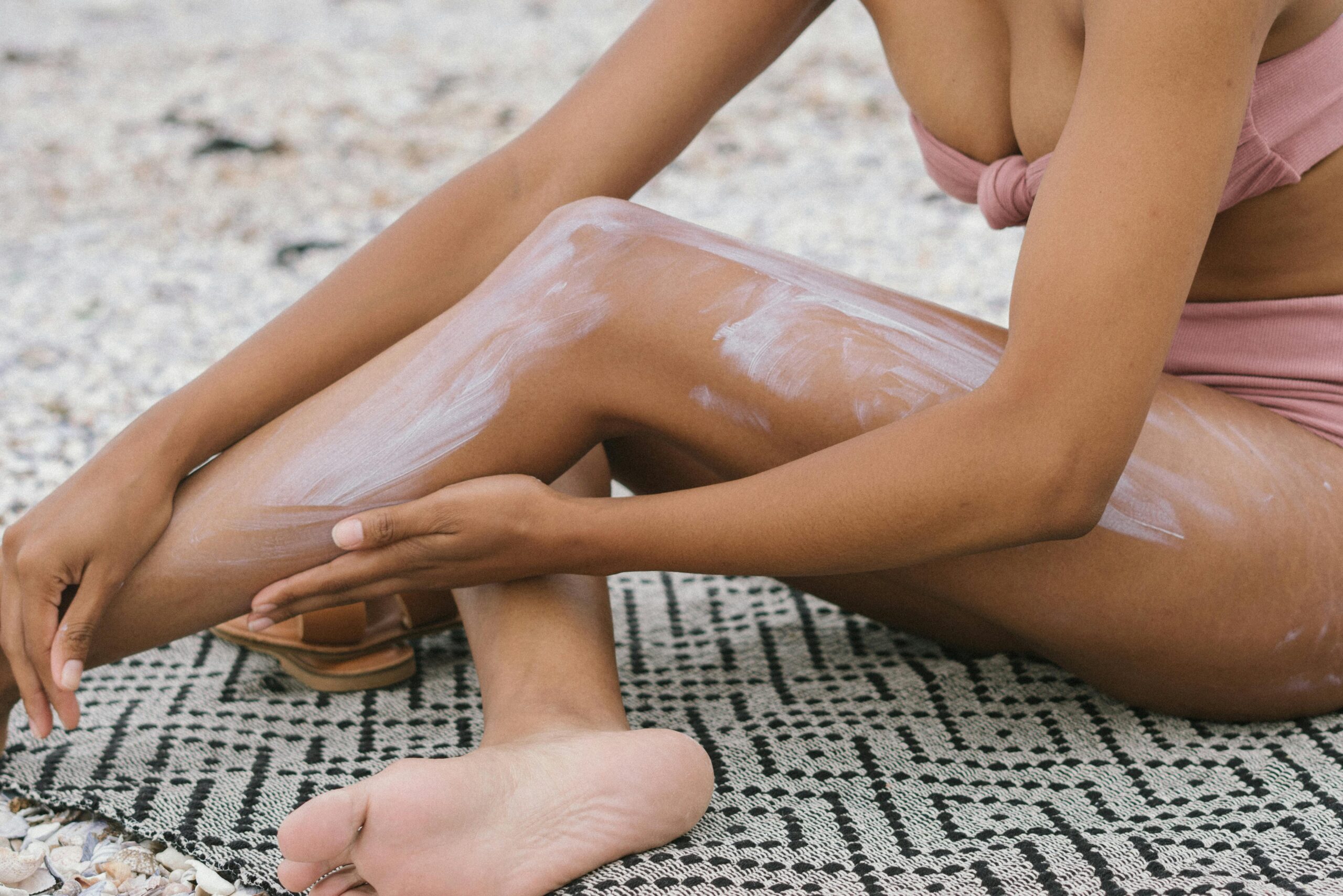
Photo by RF._.studio _ on Pexels
Is sunscreen safe for you to use?
Sunscreen is essential for skin cancer prevention.
- Chemical risks are managed strictly.
- Zinc oxide and titanium dioxide are safe and effective.
- More data and ongoing research are necessary.
- Clay-based sunscreen = safe but low protection only.
Is sunscreen safe for the ocean?
- Whatever you apply ends up in water.
- Oxybenzone causes rapid coral bleaching.
- 8/10 “reef-safe” products are not properly tested.
How to choose better
- Use SPF 30–50
- Reapply every 2 hours
- Choose mineral sunscreen (zinc oxide and titanium dioxide) over chemical
- Avoid fragrance + additives
- Beware greenwashing (“reef-safe” isn’t regulated)
- Avoid PFAS / PAP / PETE
- Choose lotion, not spray
- Check expiry dates
How best to protect yourself
Daily sunscreen for all skin tones plus:
- Shade
- Protective clothing
- Wide-brim hats
- Sunglasses
- Avoid peak sun: 10am–4pm.
Sunscreen recommendations

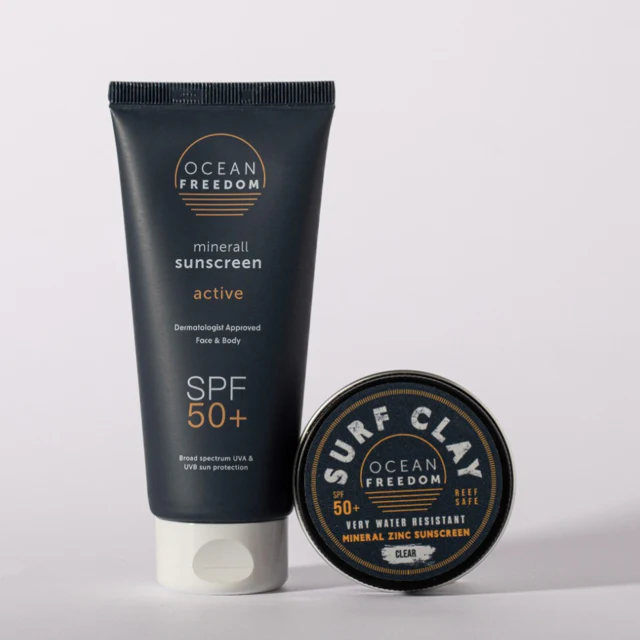
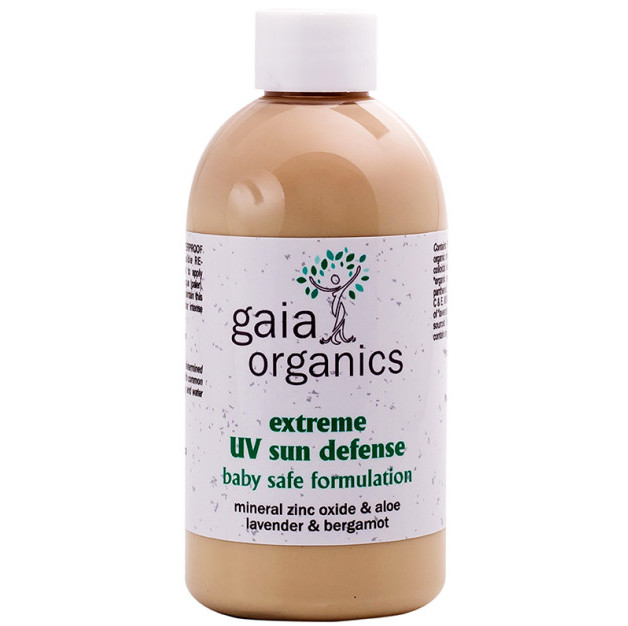
The future of sunscreen?
Innovation is underway to explore
- Biodegradable UV protection
- Reef Protection Factor certification
Policy gaps we must address:
- Affordable sunscreen access
- Dark-skin cosmetic acceptability
- Sun protection for schools & outdoor workers
Sun care should protect people and the planet.
Ask what’s in your sunscreen.
Let’s push for safer protection — for all.
Sources
- International Journal of Dermatology
- Cleveland Clinic
- Environmental Working Group
- New York Times
- The Conversation
Credits
- Feature image provided by Twyg
- Read more of our Explainers here