

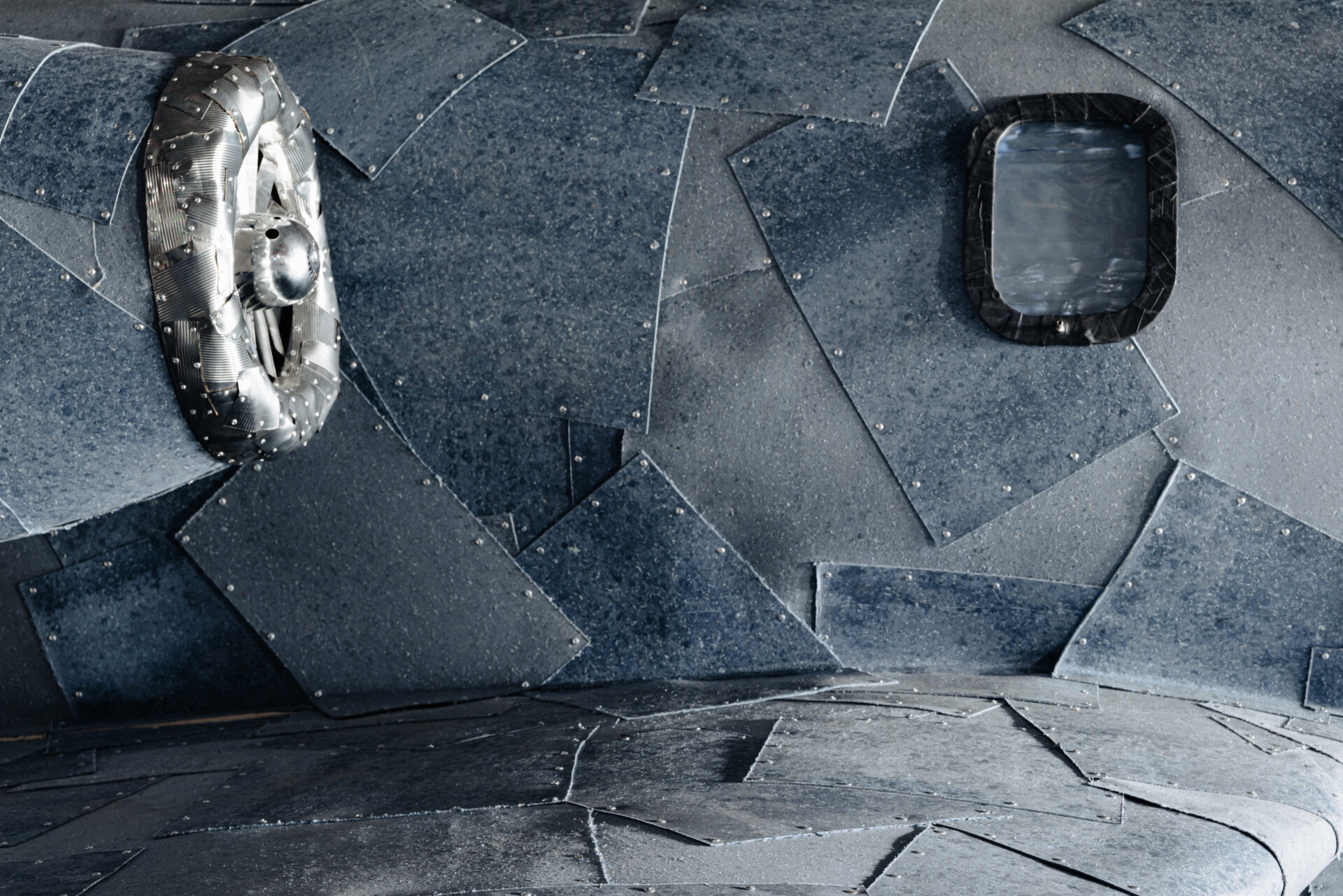
One of the 21st century’s most important designers, Maarten Baas, has clad a private jet in recycled G-Star RAW jeans linking hyper-consumption with the super-wealthy. For the exhibition More or Less at Milan Design Week, the designer created an opportunity to comment on the absurdity of those who hold power and their stances on sustainability.
Maarten says the private jet is the ultimate symbol of the “more or less” dilemma. In an email interview with Twyg, Maarten says that, every year, about 1500 private jets fly to Davos to talk about sustainability, referring to the World Economic Forum’s annual conference held in the Swiss Alps.
Every year, about 1500 private jets fly to Davos to talk about sustainability

While people across the world suffer the impacts of climate change – vulnerable and economically marginalised people more than others – wealthy countries have contributed to climate change far more than less wealthy ones. It’s well documented that globally, over the last 25 years, only 1% of the global population has produced two times as many carbon emissions as the poorest 50%, while the poor are hit hardest by climate change. When the Intergovernmental Panel on Climate Change released its synthesis report earlier this year, one of its 93 authors Aditi Mukherji said, “Climate justice is crucial because those who have contributed least to climate change are being disproportionately affected.”
Climate justice is crucial because those who have contributed least to climate change are being disproportionately affected
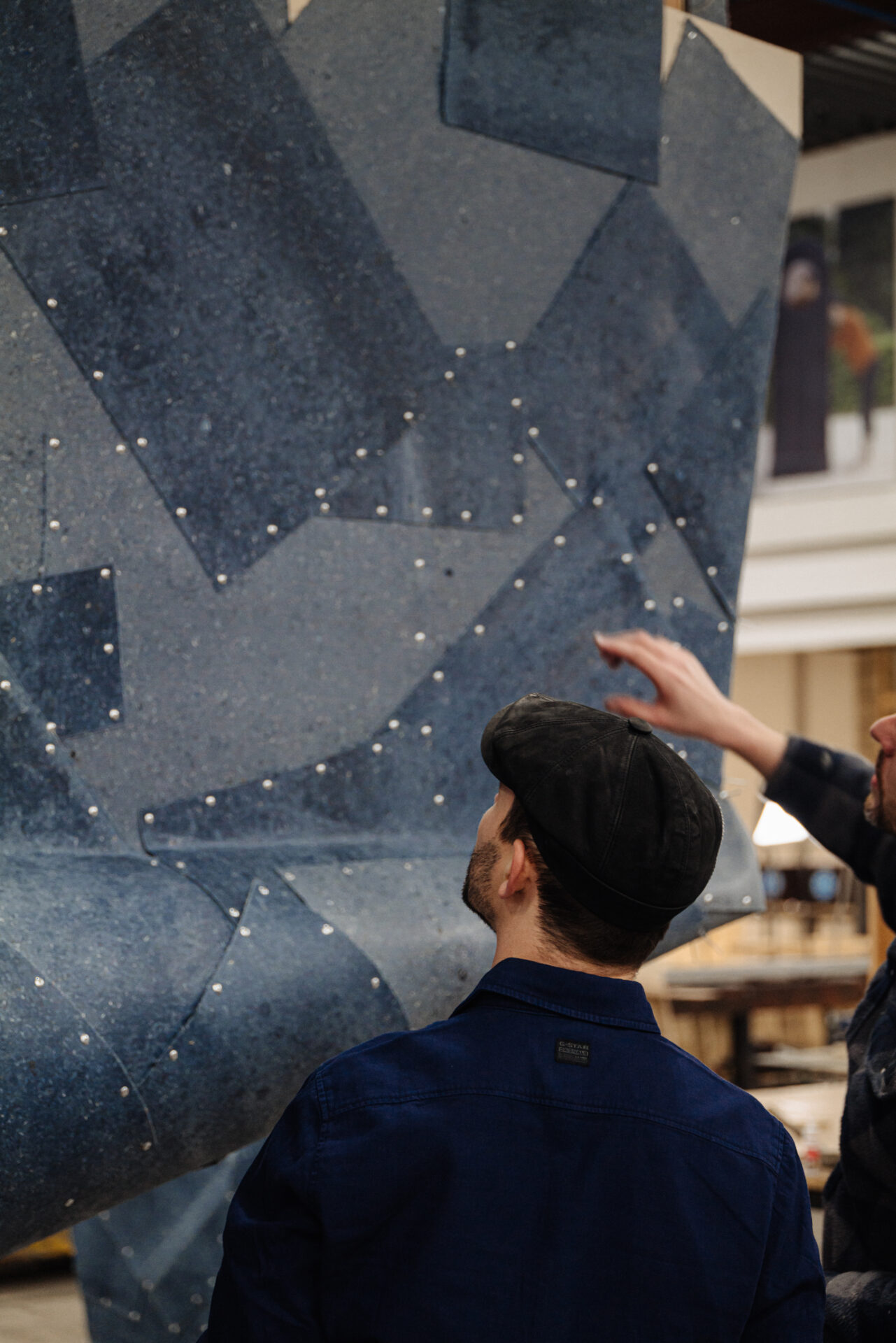
The More or Less exhibition, a collaboration between the jeans brand and the Dutch designer, explores the tension and duality between the desire for more – and the need for less. Maarten showcased a triptych of cabinets in the shape of jeans, and the fifteen-metre-long private jet – all made using recycled G-Star RAW jeans. The jeans were collected from G-Star RAW stores across Europe via the Return Your Denim program which allows customers to return their old jeans for recycling.
Through this denim upcycling collaboration Maarten says he hopes to “help regulate hyper-consumption by showing consumers how to make something out of the denim you no longer want to wear. By creating furniture or objects that aren’t wearable, I ensured that I connected my message to the vision.”
I asked him for a definition of green design. “There’s not one definition. But I do know green design is often used as a marketing term to validate bad industries. As usual, the businesses who speak most about green, are the least green in general,” he adds, “When I go to the Greenpeace [website] I see pictures of black smoke and oil, when I go to the Shell [website] I see pictures of windmills and forests.”
Green design is often used as a marketing term to validate bad industries
Can we recycle our way into a 1.5-degree Celsius lifestyle? Maarten says, “I don’t think so, but we’ll find our way out one way or the other.”
This brings us back to the brand and its stance on sustainability and circularity. Maarten says, “G-Star RAW is aware of the struggle in their field and it’s more and more normal to focus on that. If you compare it with how things were 20 years ago, a lot of progress is being made, and still it moves on.”
In a press release, G-Star RAW’s Gwenda van Vliets says, “We all want more, but our planet needs less. That is the uncomfortable reality we all deal with. Yes, we are constantly aiming to improve our impact on people and the planet, but at the same time, we realise we encourage consumption as well. That symbolises the balancing act of being both a responsible and a successful brand at the same time.” She adds, “We don’t claim to have all the answers. But we collaborate with expert partners who do, so together we can keep improving.”
We all want more, but our planet needs less
In practice, G-Star RAW is introducing circular business models. This season the brand launched its secondhand platform so that when the garment no longer suits your style, it can go to another G-Star RAW lover. In Europe, it has introduced take-back schemes. When a garment is beyond repair, you can hand it in at a G-Star RAW store (in Europe) where it will be sent to be properly recycled. For example, into new G-Star RAW jeans or denim art objects like this airplane. After a successful pilot phase in the Netherlands, G-Star RAW is scaling up the Certified Tailors program. Now, offering free repairs to extend the life of your jeans at more tailors in the Netherlands, as well as in Germany, Belgium, and South Africa.
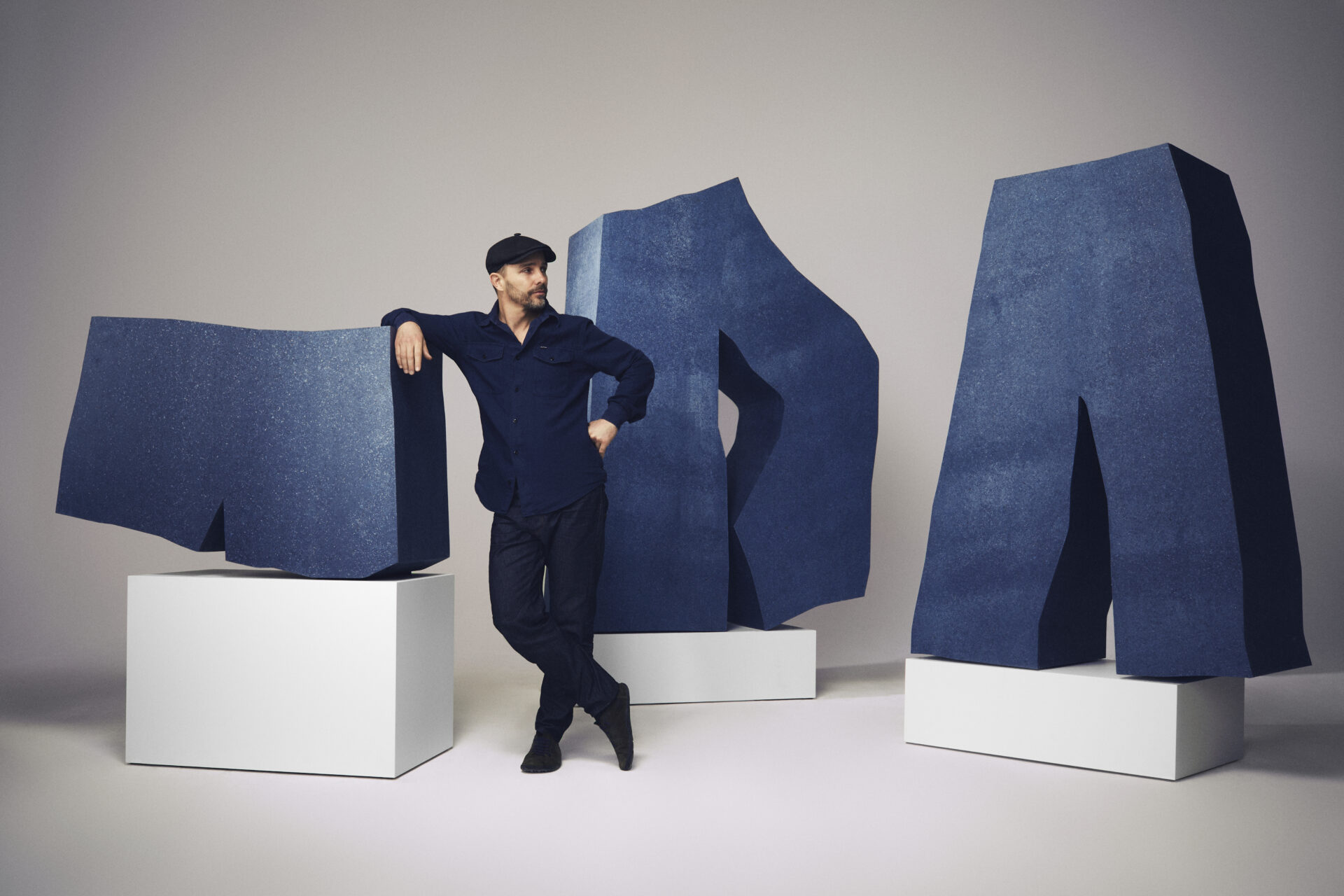
For the exhibition, Maarten also created a trio of cabinets, which were designed to mimic the shape of jeans in a nod to the denim used to construct the furniture pieces. Each of the cabinets was constructed using a textile board made from recycled G-Star RAW jeans which were sourced from G-Star RAW stores as part of a denim recycling programme. The textile board material was developed by Kvadrat Really, the textile innovator arm of Danish textile company Kvadrat.
When asked what bigger strides we should be making, he says, “Let’s say, Milan Design Week should be once every two years, instead of every year.”
The jet plane and cabinets were made for the exhibition More or Less at Milan Design Week and will be popping up at prominent places in the upcoming months. Keep an eye on G-Star RAW social channels for more details.
- This is a G-Star RAW sponsored post.


