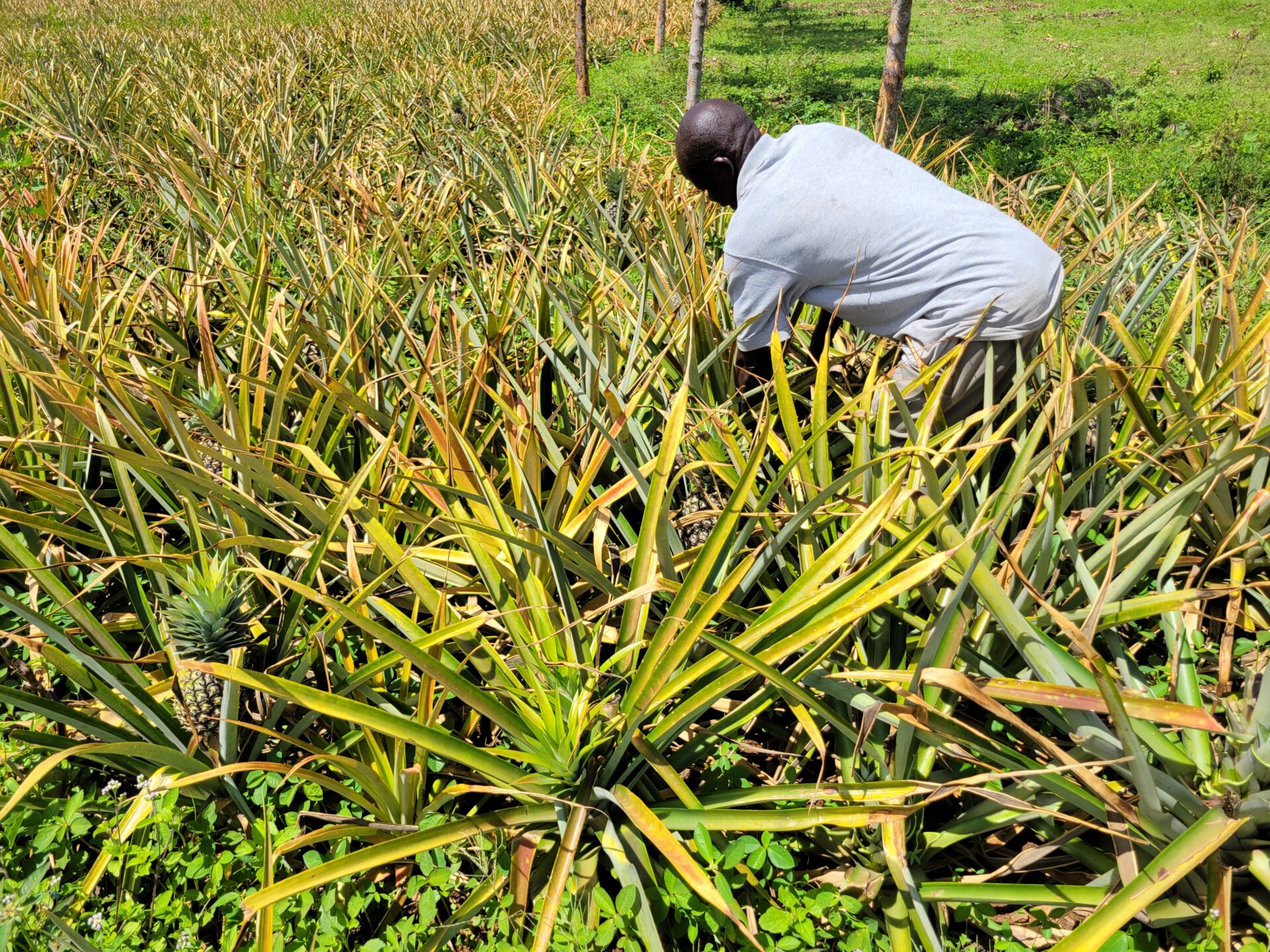
Some deep breaths you take change you forever. For Charles Oyamo it was inhaling the scent of fertile soil from the lands his parents worked in the villages of Migori County in South West Kenya.
“People mostly plant sugar cane and corn in this region and the soil used to be very rich when I was a child. After the rains I would take up that soil in my hands and smell it – it was something so good,” he says.
Charles went on to finish school in the neighbouring county of Homa Bay. He remembers school fees could be paid in crops. The land held immense value, and so did the people who coaxed seed and soil into abundance.
In 2020 Charles enrolled at the University of Nairobi for a bachelor’s degree in development communication. But he says: “I have always seen that agriculture is the backbone. And as the son of farmers, I always knew that whatever I did it would be something to help people like my parents and my grandparents.”
As the son of farmers, I always knew that whatever I did it would be something to help people like my parents and my grandparents
Smallholder farmers are custodians of the land but also among the worst affected by the deepening climate crisis and resulting tougher trade-offs as their profit margins shrink and their struggles to adapt grow more dire.
Charles says he’s witnessed changing rainfall patterns in his lifetime, more extreme weather, and a clear loss of biodiversity. It’s also caught farmers in a vicious cycle of having to rely more on fertilizers that disrupt micro-organism growth and the oxygen content in the soil. When it rains this becomes run-off that has downstream consequences for river and ocean ecosystems.
Charles started university as the Covid-19 pandemic lockdown bore down on Kenya, like the rest of the world. But he says having no in-person classes was a blessing. It meant being able to hone in on specific areas of interest rather than be overwhelmed by the multitude of activities typical of student life.
He was drawn to a cross-disciplinary initiative at the university that pulled together agricultural technology, innovation, and entrepreneurship. Initially, his interest was working to find new solutions to reduce farmers’ post-harvest losses and to find access to new markets.
“It’s a very difficult space to break into because a lot of people are looking at this. But then I met a fellow student, Vincent Momanyi, who was working on analytical chemistry focusing on corn. When he told me that we only use about 15% of the plant and 85% is burnt as waste I knew we had to be working on agricultural waste,” he says. The pair did more research and it became obvious that there was a case to explore the agricultural waste-to-textiles market.
These textiles are already been dubbed the “next generation” of fabric, hailed for being sustainable, and their potential to curb modern society’s addiction to polyester derived from fossil fuels.

Finding a niche came with the first step of heading back to Homa Bay to meet with farmers, build relationships, and to better understand the on-the-ground realities.
“Africa is built on relationships,” Charles says, speaking via an online chat. It meant explaining that their idea and their business model would be inclusive and fair. It would involve buying agricultural waste from farmers and leasing their land for the periods when they do harvesting and extraction. Although, it soon became clear that corn and sugarcane plant waste were not good crop candidates to be turned into textiles. Both are used for feedstock, which means there is an existing market.
Africa is built on relationships
More research hours later and Charles and Vincent landed on pineapple leaves as a possible candidate for their base material for their pilot project. They had a winner in the long, waxy, sword-like leaves that grow at the base of the fruit.
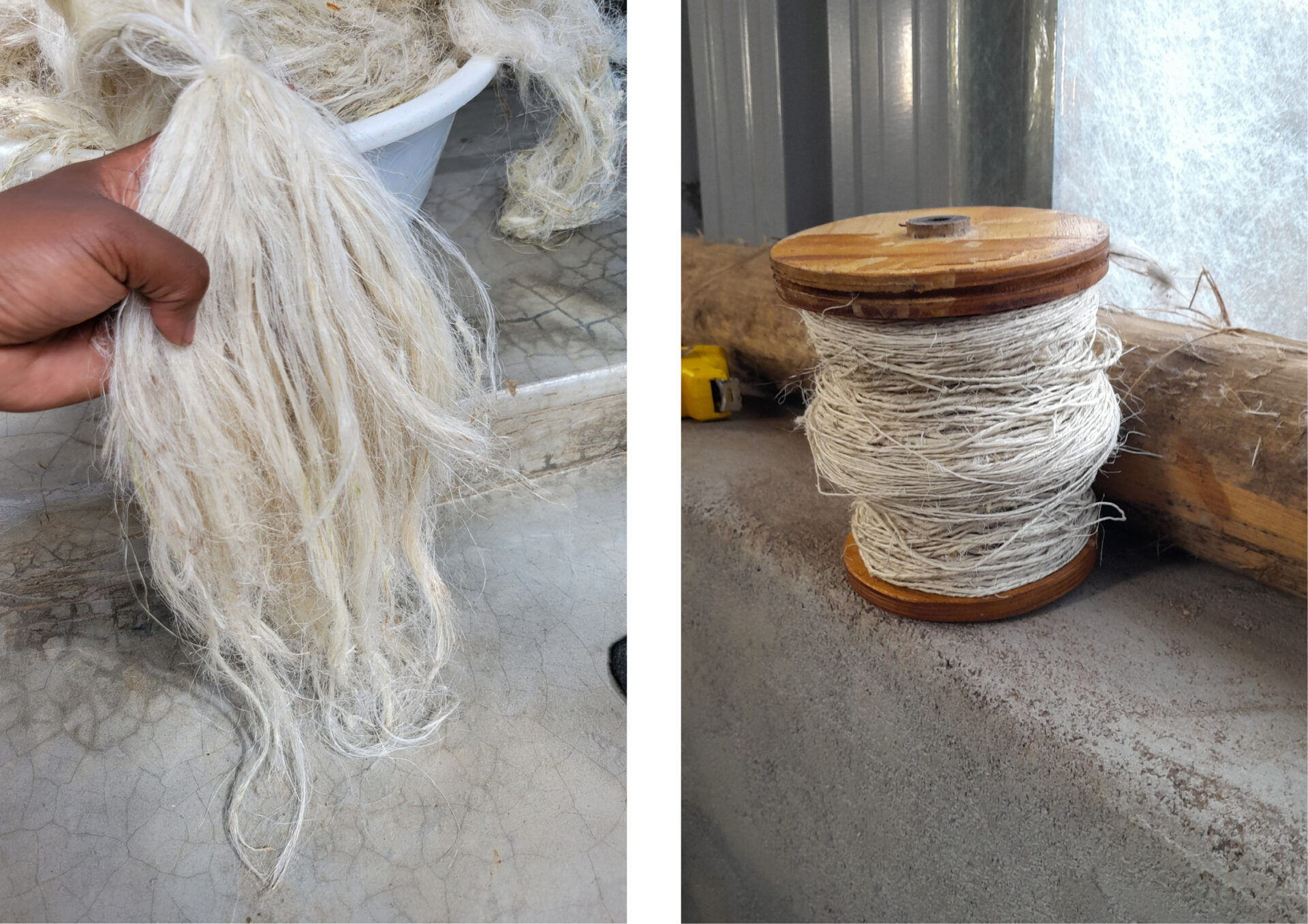
When processed through a simple extraction and separation method, that involves zero chemicals, the succulent leaves give a yield of fibre, water, and pulp. The water is returned to the land for irrigation and the pulp ends up in the compost heap. The fibres are washed and dried before being dyed and spun by independent spinners into yarns which are then sent to weavers to be woven into fabric. The yarns work on machinery that spins and weaves conventional fibres, which means they don’t need to be adapted. The best part is the garments are 100% biodegradable at the end of life, which lessens the horrific burden of pollution from tonnes of discarded garments and textiles mounting each year in landfills.
The best part is the garments are 100% biodegradable at the end of life, which lessens the horrific burden of pollution from tonnes of discarded garments and textiles mounting each year in landfills
Charles describes the pineapple fibre fabric as being a bit coarser than cotton and a little stiffer, but it’s grabbing the interest of fashion designers who are responding to the need to design with sustainability in mind. The garments will be more expensive than polyester-based items but won’t be competing in that market.
Charles says with their start-up, called Rethread Africa, the idea is selling “the narrative” of the brand more than just a garment. It’s a story about the land, the people connected to the land, the value of craft and artisanal skills, and companies looking to models that make more sustainability sense than outsized profits and scale.
It’s a story about the land, the people connected to the land, the value of craft and artisanal skills, and companies looking to models that make more sustainability sense
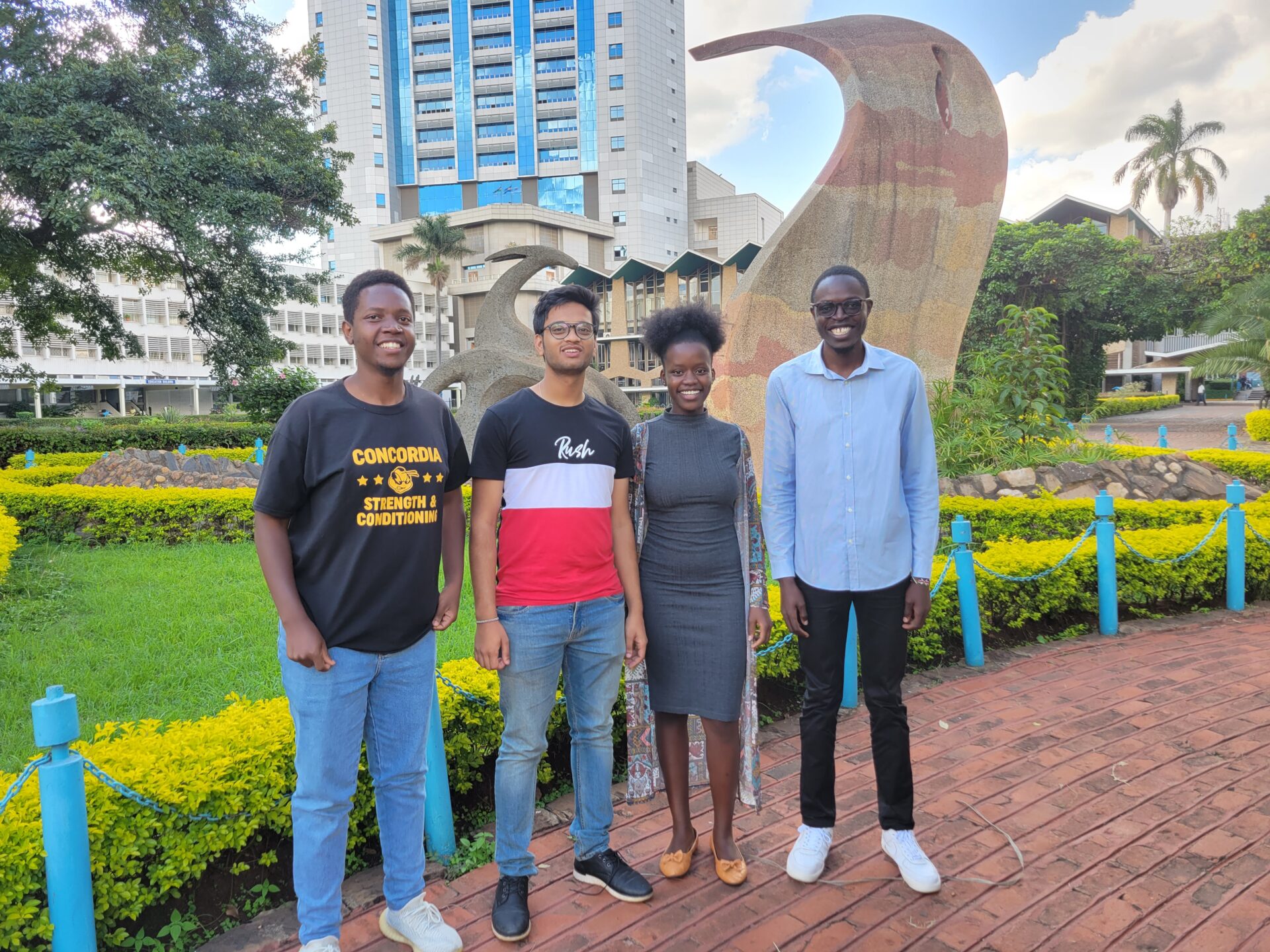
In the space of under a year Charles and Vincent, together with fellow students Mitesh Varsani, who is fourth-year economics and statistics major, and Noreen Mwancha, who is a third-year economics student from Kenyatta University, have set up a sustainable materials start-up that is making waves. They initially partnered with two farmers and are, this July, hoping to expand to reach another 15 pineapple farmers.
Charles says they are still “on a steep learning curve” – testing and refining the bits of their operations, their business model, and their product for a commercial market. They work with the Kenyan Industrial Research and Development Institute (KIRDI) and are applying for grants and funding but have chosen to pay KIRDI for consultancy services rather than to sell over part of their intellectual property.
The four have been deliberate in structuring their business model in this way because Charles says it means they get to have stronger control over carrying out a business ethos rooted in people and excellent products made in harmony with the planet.
“We are building from the ground up and building a pillar for a social business, so it’s not like we have billions of dollars to lose. There are a lot of challenges involved, but this is something that we are ready for and open to,” says Charles.
“We cannot take the land away from growing food – to be replaced by something like cotton. So, the goal is having a business model that makes the land more productive, but maintains biodiversity and works to improve the lives and livelihoods of indigenous people,” he adds.
The goal is having a business model that makes the land more productive, but maintains biodiversity and works to improve the lives and livelihoods of indigenous people
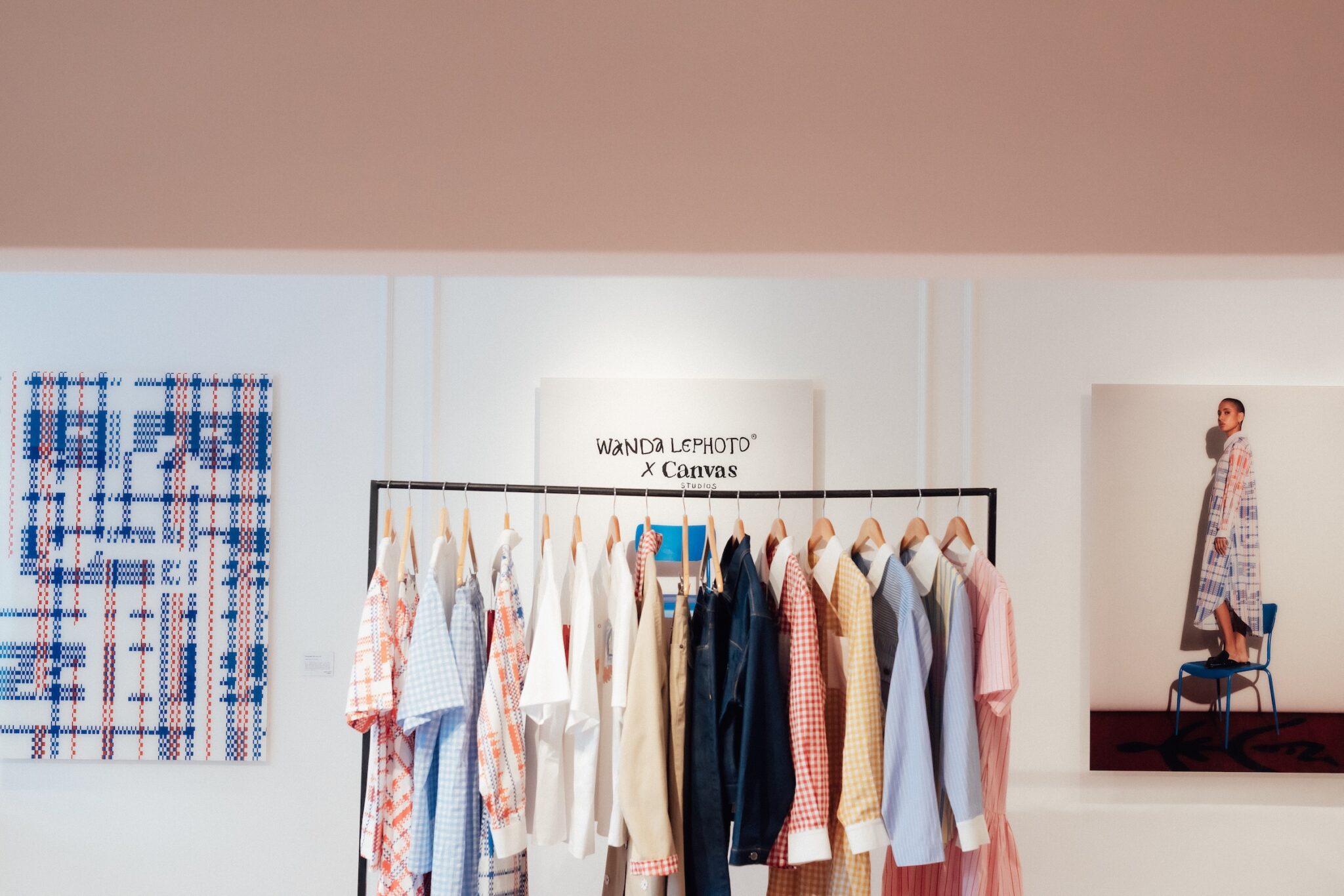
Rethread Africa will be ready with a capsule collection of pineapple fibre textile clothing by early next year. It’s a showcase for the potential of agricultural waste textiles. It’s also a hurrah for home-grown innovation and African solutions. Above all though, for Charles, it’s a nod to his parents, his grandparents, and the people who’ve come before him – and a promise for the people who will follow.
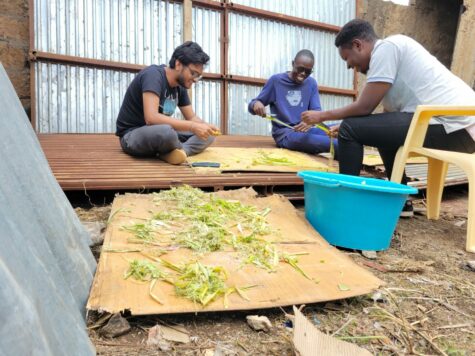


- Rethread Africa was one of 10 winners of the H&M Foundation’s 2023 Global Change Award which is an early-stage innovation challenge seeking bright minds that can transform fashion.
- Rethread Africa will be part of the 2023 Africa Textile Talks taking place in Cape Town, at the V&A Waterfront, on 17 August 2023. For more information and to buy your ticket, click here.
- To learn more about Rethread Africa, check out their website and follow them on Instagram @rethreadafrica
- Images supplied by Rethread Africa
- Find more of Ufrieda Ho’s articles here