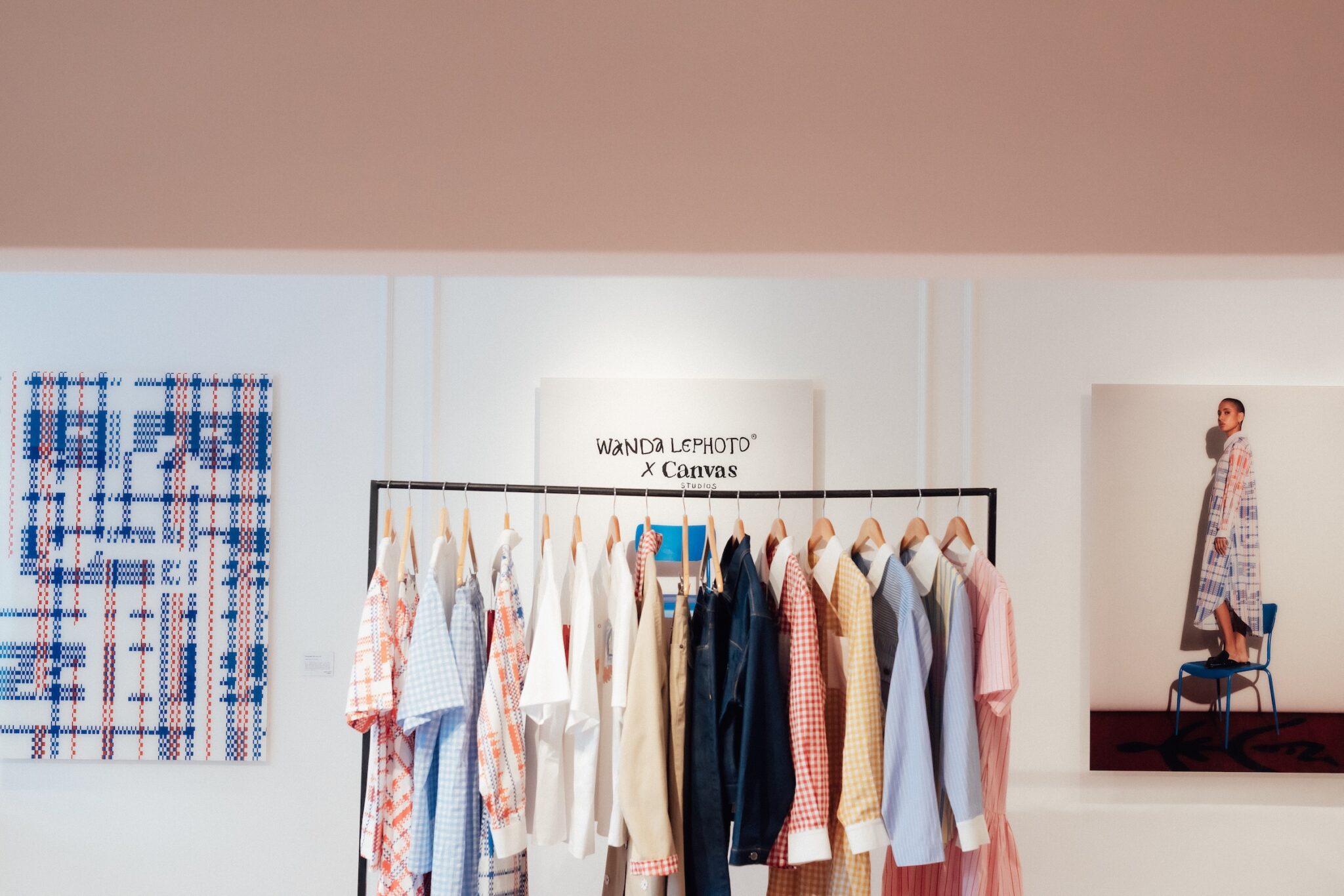
Circularity was the focus of the first day of Africa Textile Talks 2025 on 29 July at the V&A Watershed in Cape Town. A broad range of industry players from small businesses and independent designers to representatives from national retailer Woolworths and non-profit organisation GreenCape shared insights on how to make South Africa’s fashion and textile sector more circular. South Africa – and Cape Town in particular – once had a thriving textile industry. Could circularity be the key to rebuilding it?
 The Cape once dressed a nation. Now it’s being dressed by the rest of the world. – Ilse Menck, above, Menck Clothing. Image: The Dollie House
Dr Pippa Notten, principal consultant at The Green House, set the tone for the day, opening with a talk on life cycle assessments and their role in circular systems. An LCA measures the environmental impact of a product across every stage of its life, from raw materials to disposal. It helps quantify all the hidden costs of our consumption. In her presentation, Pippa compared a polyester and a cotton T-shirt: the polyester garment’s carbon footprint is 10% higher than its cotton counterpart, however the cotton shirt has nearly double the impact on ecosystems and uses more than ten times the water. As Pippa explained, comparing materials often involves trade-offs; LCAs identify the environmental “hotspots” where interventions can have the most impact.
 Dr Pippa Notten presented a keynote about the complexities and importance of life cycle assessments to measure the impact of fashion. Image: The Dollie House
The rest of the day unfolded with discussions on the complexities of circularity, featuring insights from micro businesses, social enterprises, and the high-tech and industrial side of the industry. A robust panel moderated by Safiyya Karim included Natasha Pearce from Vivacious Eco Vixon, Tracey Gilmore from Taking Care of Business, Yayra Agbofah from The Revival in Ghana and Luleka Zepe from the Elamilima Environmental Project. Luleka (feature image) stressed the importance of education about clothing and waste in her community in Khayelitsha.
Designers weighed in during a panel titled “Why design and material choices are critical for circularity” sharing the sentiment that circularity starts with design, whether that looks like choosing PFAS-free fabrics, using botanical dyes or creating modular garments that can be worn year-round. Moderator Carlyn Frittelli Davies led a conversation that reflected on personal experiences and choices. Panellists included professor Asis Patnaik from Cape Peninsula University of Technology, Shaldon Kopman, the creative director and founder of Naked Ape and Kabambi Mbiola, founder of Fuata Moyo.
 Kabambi Mbiola, founder of the family fashion brand Fuata Moyo, stressed the relevance of forming an emotional connection to clothing. Image: The Dollie House
At the other end of the spectrum, we heard from large-scale operations like international textile recycler Circ. and new second-hand retailer FARO. South African-born Luke Henning who is the chief business operator of Circ. made a pointed, perhaps controversial, comment that it’s not realistic to tell people living in poverty to stop buying fast fashion. Alongside citizen education, he said solutions should be based within our current reality, such as diverting unsold garments from Europe, as done by FARO, and tackling textile recycling. Circ. is launching the world’s first polycotton recycling plant, which will work with blended fabrics, one of the hardest and most pertinent challenges in textile recycling.
 Gary Erasmus is the founder and CEO of Connacher, a textile recycling company based in KwaZulu Natal. Image: The Dollie House
 David Torr is a South African entrepreneur who recently co-founded the second-hand retailer Faro. Image: The Dollie House
 Jesse Naidoo is the founder and managing director of the social enterprise Clothes to Good. Image. The Dollie House
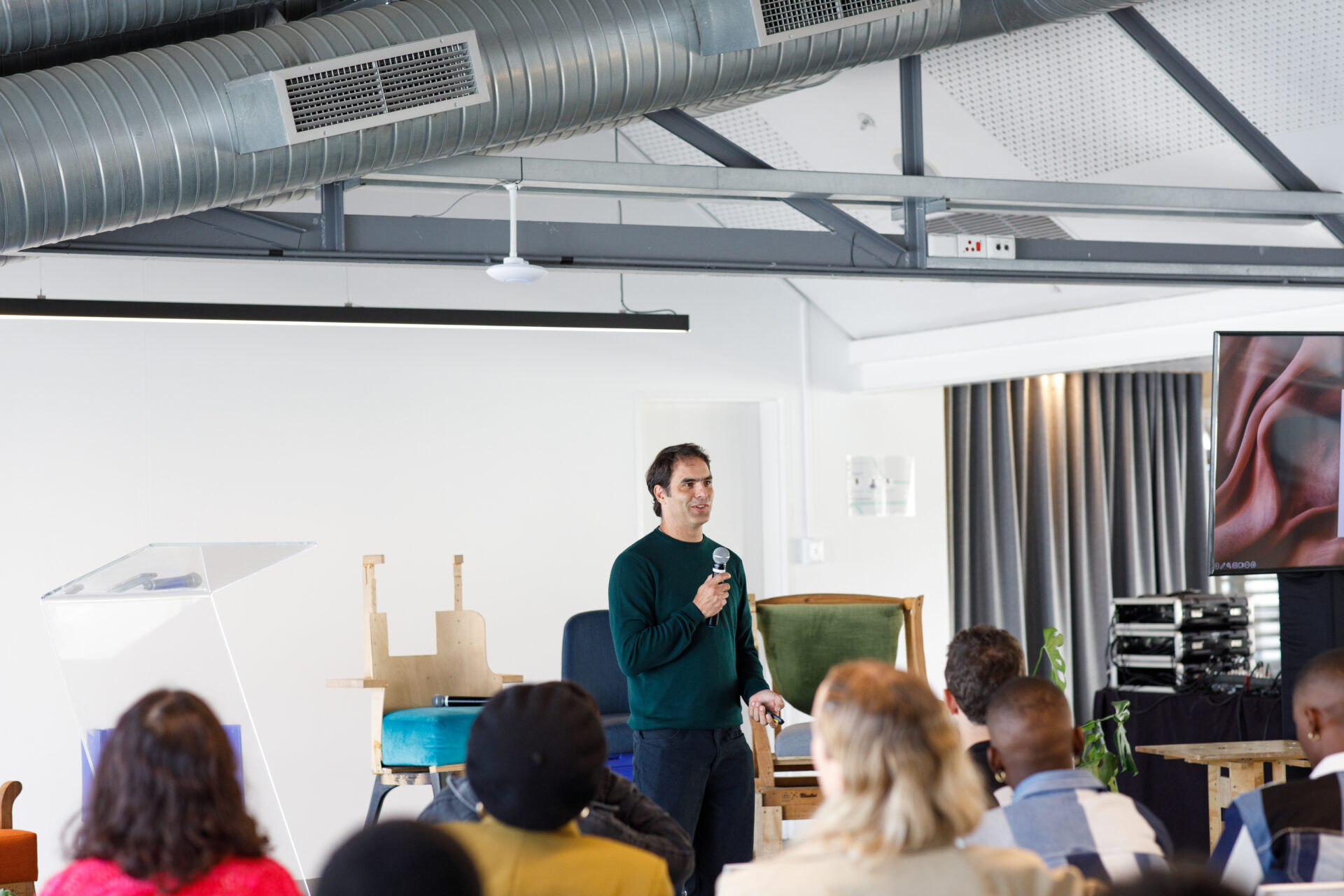 Luke Henning, Circ.’s chief business officer was visiting his home town from the United States during the Africa Textile Talks. Image. The Dollie House
Positive social impact through circularity was another key theme in the panel discussions. Both Jesse Naidoo from Clothes to Good and Gary Erasmus from Connacher shared how textile waste can be used to create meaningful change. Connacher converts factory waste into fibre for use in bedding and the automotive sector, while Clothes to Good runs several initiatives, including Clothes to Wheels, which helps mothers of children with disabilities build resale businesses.
 Independent circularity consultant Kirsten Barnes, far right, moderated a panel about producer responsibility organisations. Image: The Dollie House
Threaded throughout the talks was the issue of waste. Circular economy specialist Kirsten Barnes led a session on policy and extended producer responsibility, joined by Feroz Koor from Woolworths, Junaid Francis from PETCO, Zaheer Patel Pick n Pay, and independent consultant Quinton Williams. While EPR has been established in Europe for decades, it’s still evolving in South Africa. The panellists discussed their experience with EPR legislation for packaging in South Africa.
“Sustainability is not just about the environment, it’s also about people,” says Zaheer Patel, textile and sustainability specialist at Pick n Pay
Concerns were raised about the lack of clarity and accountability in the fashion and textile industry, and that government intervention may be needed if industry fails to regulate itself. They made useful suggestions about how to form producer responsibility organisations for clothing and textiles.
Circular economy analyst Roan Snyman from Green Cape was the final speaker of the day with a presentation about their research into the industry and its willingness and capacity to shift to a circular economy. His colleague Keabetswe Sesoko and our MC for the day closed the day off with final thoughts and thank yous.
It is thanks to our sponsors and partners that Africa Textile Talks is possible. Thank you to Cape Wools South Africa, Polo South Africa, Imiloa Collective, H&M, V&A Watershed, Mohair South Africa, Faro, Guzangs, Swedish Embassy, Fedisa and Spier.
 Roan Snyman summarised GreenCape’s findings from their research into circularity in the clothing and textiles industry in South Africa. Image: The Dollie House
- Feature image: Luleka Zepe shared her experience trading second-hand clothing in Khayelitsha, her role as an environmental activist and at Refashion Lab
- Images all by: The Dollie House
- Note from the editor: We will be publishing a story and podcast for each of the 28 Africa Textile Talks sessions