

What we wear tells us about our consumer behaviour. My first project, when I started working at Twyg in 2020, was to manage and create content for an Instagram account called Glam Danger. It was my passion project. I used it as a reason to talk to my family and friends in the Eastern Cape, Khayelitsha and Mfuleni about their clothes.
It is no secret that the fashion industry is consumer-driven and is always looking for new ways to keep us buying more – even when our wardrobes are filled to the brim. As much as fashion much is glamorous it can be dangerous in driving overconsumption. This is what inspired the name Glam Danger,
The purpose behind the project was to gain insights into consumer behaviour about where people buy clothes, the types of materials the clothes are made of, how long they keep them, and most importantly what they do with the clothes they no longer need or wear.
At first, people were sceptical about participating, especially since they had to provide me with their portraits and disclose where they shop. So, I decided to start with my family members. I even tried to interview my 66-year-old grandmother, but her clothes didn’t have any labels and she couldn’t remember where she bought them from. That’s how old the garments are. In the end, I interviewed 35 people between the ages of 14 and 43.
Most of the respondents whom I interacted with said they keep their clothes for one to three years. A few people said they keep their clothes for four years and more, depending on the type of garment, the trends of the time, and the durability of the material used. People aged between 14 and 30 kept their clothes for the shortest time. There are many reasons for this, including fast fashion’s rapid trend cycles.
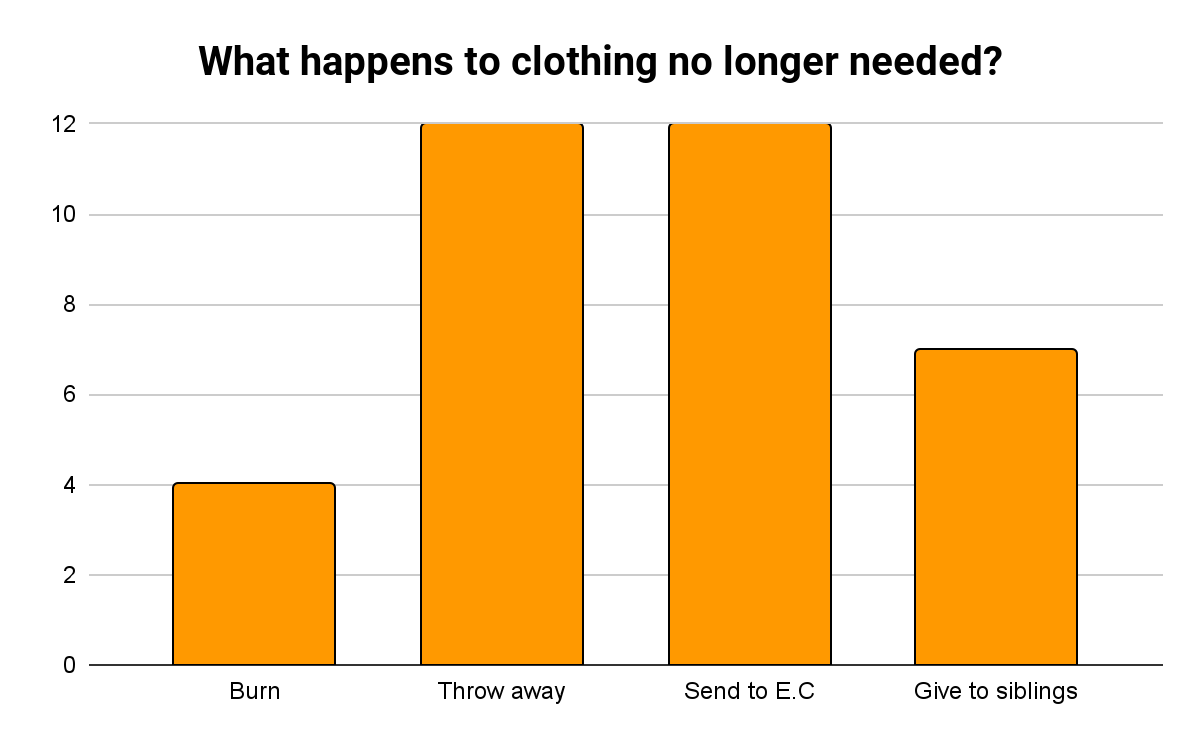
Nineteen of the respondents said they give away the clothes they no longer wear to siblings and send them to the Eastern Cape, where the clothes are distributed and donated by their grannies to those who need them. Twelve people said they threw their old clothes away. Four people, who are based in the Eastern Cape, said they burn their old clothes with garbage waste unknowingly releasing carbon dioxide and other greenhouse gases in the process, which exacerbates global warming.
By 2050, it has been estimated that more than 150 million tonnes of clothing would be dumped into landfills or incinerated. Because of fashion’s waste crisis, the need to pay attention to how we dispose of clothes we no longer wear is vital.
When I asked where they bought their clothes, various retailers were mentioned. Mr Price, Sportscene, Pick ‘n Pay Clothing, and The Foschini Group were mentioned most often. Only two mentioned fast fashion giants H&M and Zara, which was surprising considering that these brands are popular among young people. A women in her 40’s wore an outfit she bought from a secondhand clothing store. Preloved clothing was not as popular among the youth.
While conducting the interviews, I heard incredible stories behind the outfits, from how Esihle Ntshobololo inherited a fur coat from her granny’s wardrobe, to how Asisipho Mabhiyoza tailored and refashioned a pink suit that belonged to her mother. Asisipho says, “The suit belonged to my mom and initially it was a long skirt with a blazer then I decided to take it to a tailor to create shorts out of the skirts.”
While going through the labels for the material composition, it didn’t come as a surprise to me that most of the garments were made from synthetic blends and polyester.

Over two-thirds (69%) of materials used in textiles are synthetic. Synthetic fibres, mainly polyester and nylon, are non-renewable and are derived from fossil fuels – specifically crude oil. Our over-reliance on these non-renewable resources is at the root of many of the environmental issues we face.
Visible changes are being implemented throughout the fashion industry. In South Africa, we’ve heard of retailers such as Mr Price, Ackermans, and The Foschini Group slowly playing their part in making greener fashion choices. As consumers, we are not just buyers, but key role players for a sustainable future. Consumer behaviour and being aware of what and why we buy is an important place to start.
- Cover image: Images sourced from the Glam Danger Instagram account.
- To learn more about the Glam Danger project, take a look at the Instagram account.


