

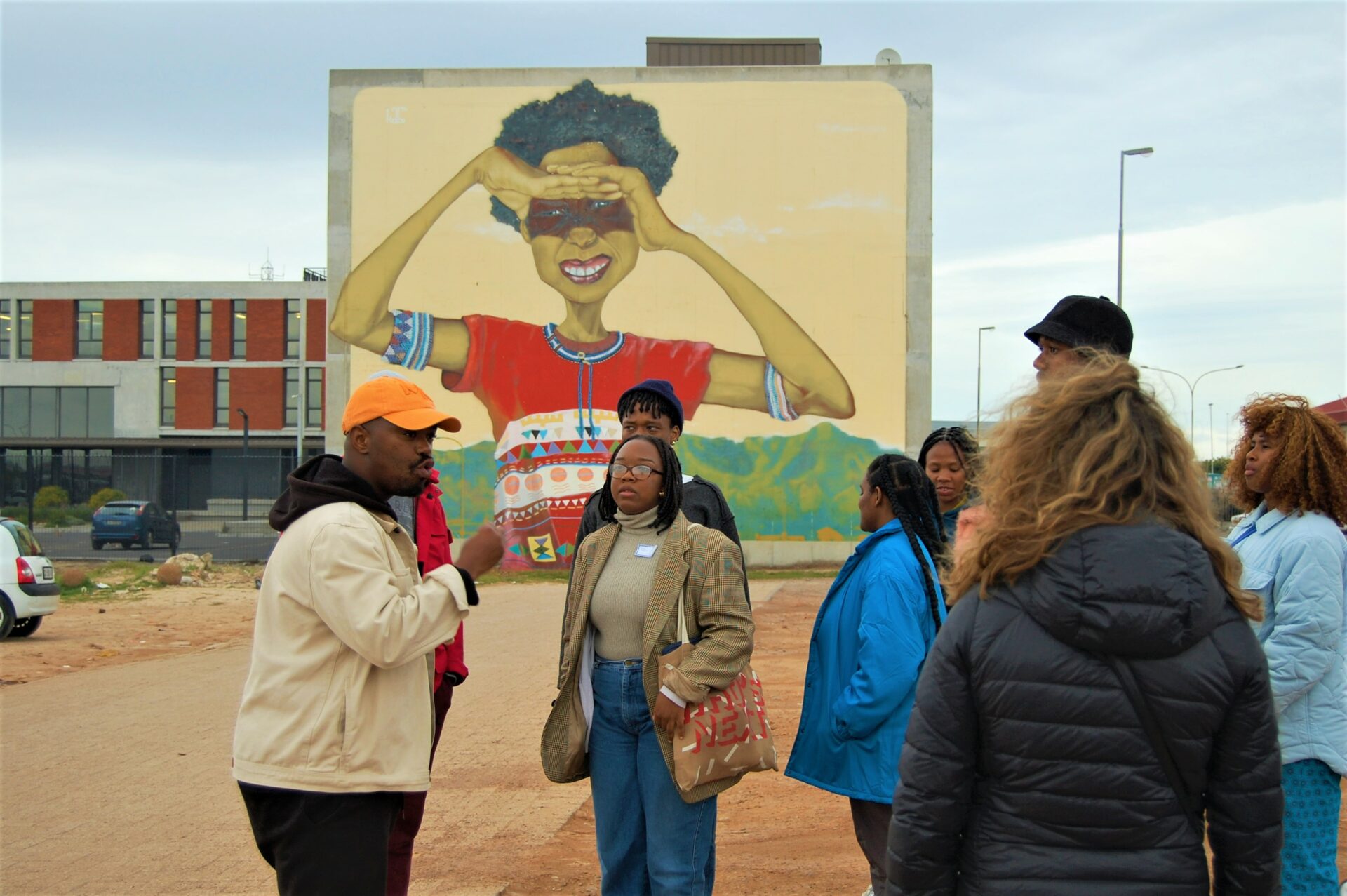
How do we learn ‘fashion’? What happens when we meet elsewhere to find our fashion lessons? Will we discover ways to create more socially-just fashion systems, ones filled with respect for each other and the planet? Seated outside a library in Khayelitsha in the mid-afternoon winter sun, I found Zuko Langeni from the Ekasi Fashion Alliance in a deep conversation with Nadine Gonzalez, founder of Paris-based Casa93.
Nadine’s journey to Khayelitsha began in 2021, when her alternative fashion school Casa93 partnered with the sustainable fashion mentorship programme True Fashion, Try on Green. The innovative programme was supported by the French Institute South Africa (IFAS), the Goethe-Institut South Africa, and the Franco-German Cultural Fund, and aimed to identify and nurture the next generation of sustainable South African designers.
Award-winning designers Lukhanyo Mdingi, Olga Pham and Buki Akomolafe joined Nadine, who together with input from local sustainability creatives and writers, mentored five South African fashion mentees, Nkosazana (Zaza) Hlalethwa, Khumo Morojele, Xola Maxoba, Burton Miles, and Zovuyo Mputa.
Considering the success of the first programme, Nadine and IFAS project coordinator Anne-Sophie Segondat asked:
What happens when we take our lessons elsewhere, when we seek different teachers?
This resulted in True Fashion: Season 2, a collaboration between Casa93 and Khayelitsha’s Ekasi Fashion Alliance with support from the African Fashion Research Institute, funded by IFAS and La Ville de Paris.
Two French Casa93 students, Isis-Christana Mbango and Freddy Lassey, joined two of the True Fashion 2021 South African mentees, Zaza and Khumo in an immersive, collaborative mentorship programme from 7 to 14 August 2022 in South Africa. IFAS director, Sophie Boulé explains that the second season focuses on supporting an exchange, “between mentors and mentees, and between cultures. We wanted them to inspire each other and learn from one another.”

After a brief sojourn in Johannesburg, which included a trip to Constitution Hill, the designers went on a three-day ‘mohair-focused’ road-trip to Graaff-Reinet where the group met with editor and filmmaker Emilie Gambande, visited Adéle Cutten’s wool processing workshop, Adéle’s Mohair, and visited a working mohair farm. In Cape Town, Anne-Sophie, Nadine and the four mentees met with fashion designers Asanda Veco and Ayanda Hans from the Ekasi Fashion Alliance in Khayelitsha.
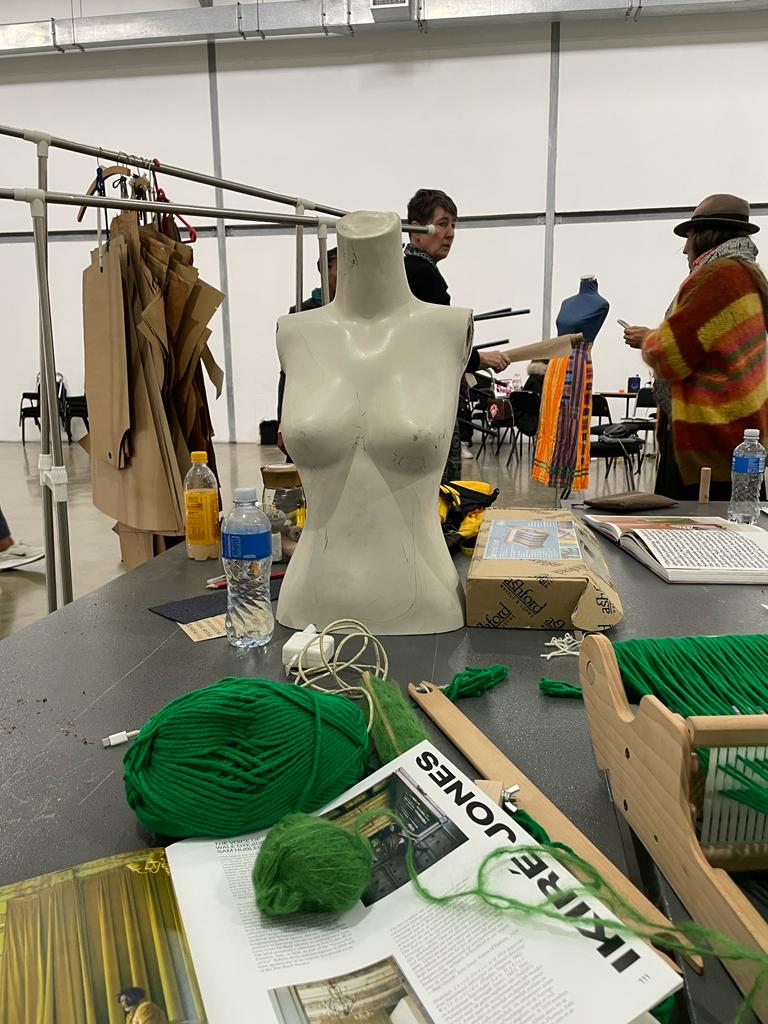
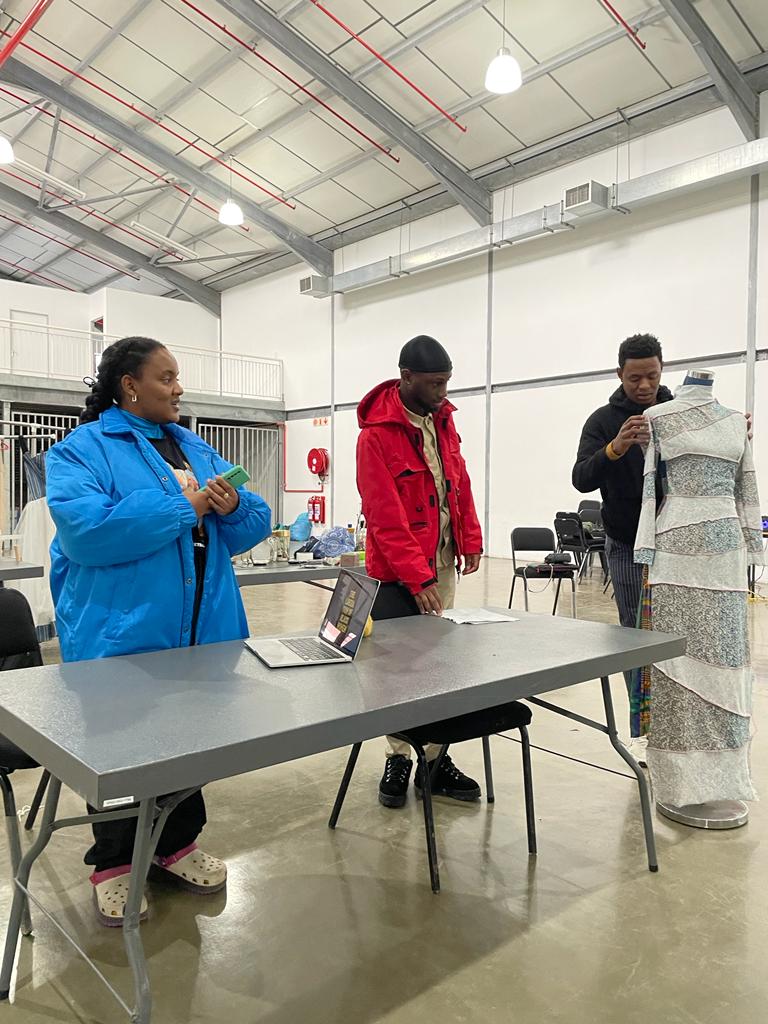
This brings us back to Harare Public Library, part of a set of public-use buildings that makes up Harare Square in Khayelitsha. One of the multi-purpose halls was home for the three-day True Fashion: Season 2 maker-space. While Zuko and Nadine discussed the need for different fashion education possibilities outside, the designers inside the hall were grappling with questions of community, sustainability, cultural resilience and creative repair. In the short time they had together, they collaborated, negotiated, sketched, experimented and manifested their ideas.

Self-taught designer Asanda mentored Zaza and Freddy in creating a sample garment that demonstrated their collaborative concept of celebration and female emancipation – a dress with eleven segments. “The eleven different panels of the dress represent South Africa’s eleven official languages,” says Freddy. Worn over the dress, Zaza elaborates, will be “a cocoon-like jacket that pays homage to the women of the Cape who survived slavery in the 18th century.” The outfit is a fusion of the past and the present that shares the diverse cultural, personal and social sensibilities of the collaborators.
Meanwhile, Khumo set up his hand-held loom and began weaving a long green mohair scarf that would become a key feature in the design that Paris-based Isis and Khayelitsha-born designer Ayanda discussed and developed. Their moodboard was filled with research and historical references, and showcased the merging of everyday utilitarian items with narratives of regeneration, resistance and hope for a greener and more diverse fashion future.
“Upliftment through a creative economy is one of the pillars of the recently founded Ekasi Fashion Alliance,” says Zuko. With a population of around two-and-a-half million, Khayelitsha is home to not only talent, but also a unique fashion ecosystem with a growing and diverse local market. The need for innovative production hubs that serve the creative communities, and help support sustainable township economies, is the driver for collectives and initiatives such as the Ekasi Fashion Alliance and Khayelitsha Fashion Week.
For the African Fashion Research Institute, projects such as these demonstrate new languages, relationships and references coming from diverse communities tackling questions of identity, sustainability and redress through fashion. We are witnessing a shift in looking and listening to “the global south” for fashion. Driven by sensibilities that consider the urgency of reconnecting planet, culture, and community, True Fashion: Season 2 addresses these bigger social questions of redefining fashion for a decolonised future.
Nadine adds that these young creatives are motivated to change tomorrow’s fashion into something for and by everyone. She says:
They belong to a generation of visionary, instinctive, collaborative designers who are conscious of their impact on the future. They have had to rely on their imagination more than those who have greater financial means or access to professional networks, and developed their potential through exchange and the sharing of ideas using creativity, audaciousness and determination.
The focus of the True Fashion: Season 2 project is the creation of two collaborative outfits, which will be completed next month at Casa93 when Zaza and Khumo will join Isis and Freddy in Paris. Their collaborations will result in outfits that will be the focus of a photoshoot and contribute towards the first Casa93 fashion show at Paris Fashion Week at Palais de Tokyo on 04 October 2022.
These fashion lessons from the margins offer hope for future fashion voices to collaborate and explore new creative territories that respect and repair our shared environment, with transparency, sensitivity and solidarity.


- Cover image and photos: Zuko Langeni
- Read more about the first iteration of the ‘True Fashion, Try on Green’ programme here.


