

Amidst our culture of consumerism and fast fashion, the legacy and understanding of how things are made have become obscured by complex, modern and globalised supply chains. This means that we tend not to care about our clothes as much as we would if were were more intimately connected to how they were made.
To encourage an understanding of slow and intentional textile practices, the Cape Guild of Weavers is hosting a series of immersive workshops. “Exploring Ancient Skills” offers a programme on a variety of skills and craft techniques such as felting, weaving, and indigo dyeing. The workshops run from 22 April to 2 May. These ancient textile skills are becoming increasingly relevant and necessary to counter the waste crisis, global warming and biodiversity loss which are exacerbated by a fast fashion system that pollutes the environment.
Guild member Clara Lindberg says, “If you make a sweater by scouring the wool, carding it, spinning it, dyeing it, and knitting it you are very unlikely ever to send it to a landfill.”

Many slow textile practices have ancient origins. “Spinning and weaving go back 7 000 years at least, and incidentally these crafts were the very foundation of several civilisations,” says Clara who is also the guild committee secretary.
If you make a sweater by scouring the wool, carding it, spinning it, dyeing it, and knitting it you are very unlikely ever to send it to a landfill
Fellow member Andrèa Fedder says, “Among the ancient ways of textile production lie many of the solutions to our current global climate crisis. Indigenous communities all over the world wove the way of harmony and reciprocity with nature into being, because they understood the value of time, the seasons, and the cycles of life.”
Although much has changed in the world over the many decades since its founding in 1950, the vision of South Africa’s oldest guild to encourage textile practices has endured. Sharing these textile practices has become a medium for cultural exchange, social cohesion, and the preservation of generational skills.
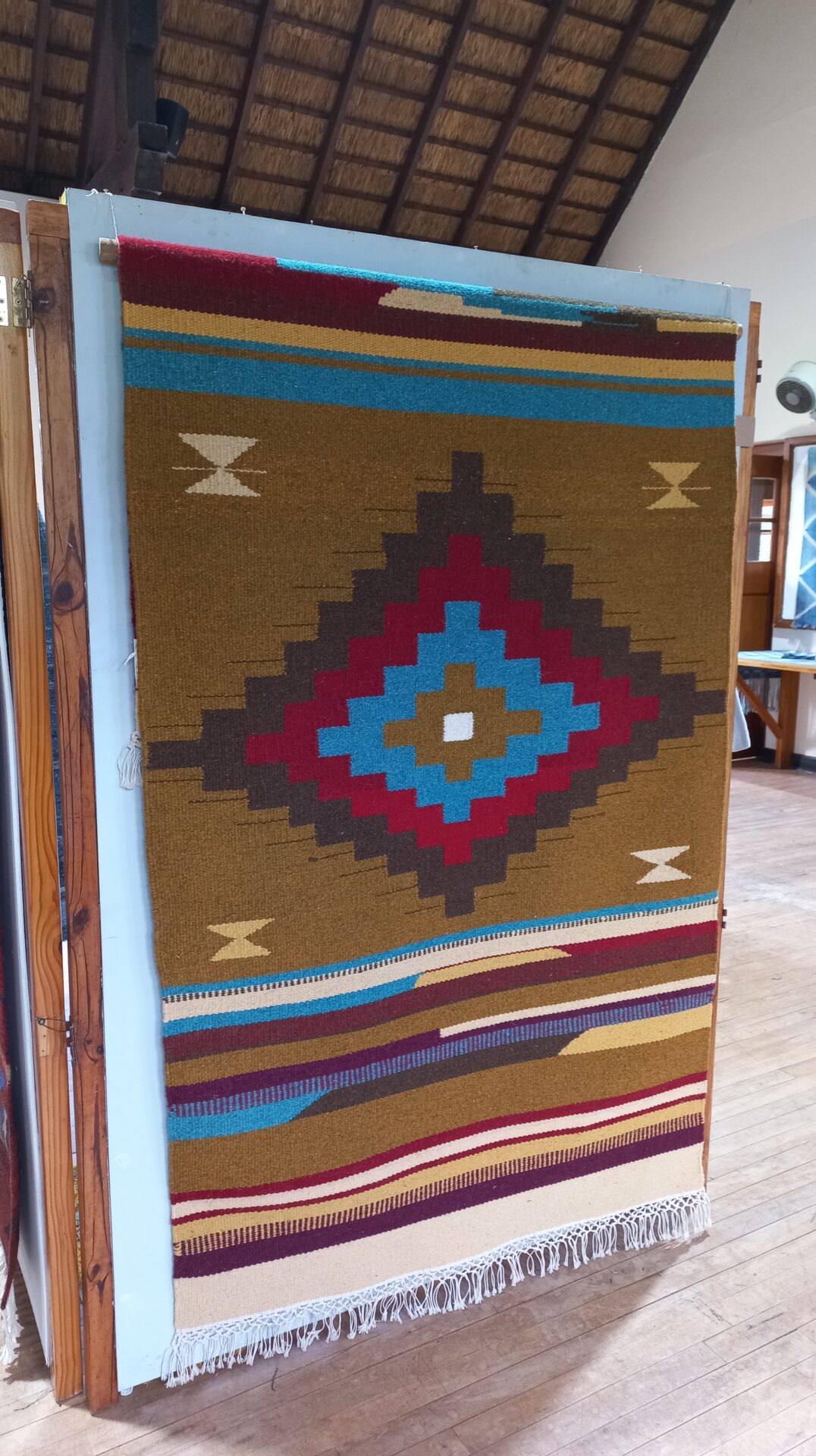
Besides slowing fashion, these slow and intentional tactile practices have other benefits. At a time when everything is fast and digital, people are suffering from a level of overwhelm and burnout. Andrèa says, “Fibre arts offer the much-needed grounding people seek precisely because it is slow. It is one of the best therapies around for unravelling the complexities of life into wearable, usable, and beautiful handmade arts.”
Recently the guild hosted “Spinning in the Garden” by dotting spinning wheels across the Company Gardens in Cape Town. “We love what we do, and sharing our crafts with others makes them even more enjoyable for us,” says Clara on the importance of creating spaces for the public to engage with the work of the guild.
As a non-profit organisation, membership is what keeps the guild going. Creating opportunities to spark the curiosity of like-minded people is a key element of their work. “By creating new communities and learning from existing communities, we can reclaim and reintegrate the restorative qualities and knowledge that lie in practising ancient fibre skills,” says Andrèa.
By creating new communities and learning from existing communities, we can reclaim and reintegrate the restorative qualities and knowledge that lie in practising ancient fibre skills
Elsabé Sauer established the Cape Guild of Weavers in 1950 for women to practice self-expression and to facilitate access to materials, equipment, and training. Since 1950, eight weaving guilds were established in South Africa of which only three remain: the Cape Guild of Weavers, the Pretoria Guild of Weavers, and the Johannesburg Weavers and Spinners Guild.

The Cape Guild of Weavers currently has 106 members. Members gather monthly for lectures, workshops, demonstrations, or just casual sharing of ideas. Members can buy yarn and equipment at reasonable prices from the Guild Shop. There is also a substantial local library of books, magazines, and digital media on fibre arts.
By inviting the public to engage with these ancient practices, the guild hopes that a sense of collective restoration will prevail. “Once you understand the depth of these ancient practices, you won’t want to throw out a sweater when it gets a hole in the elbow in favour of one in the ‘colour of the season’. You’ll want to darn it with a brightly coloured patch made from threads you have saved. You’ll want to do this because you feel the weight of the wool in your hands. You’ll understand the journey of craft passed down through generations and it will be too precious to discard. And this restored mindset is what will save the people and this planet,” says Andrèa.

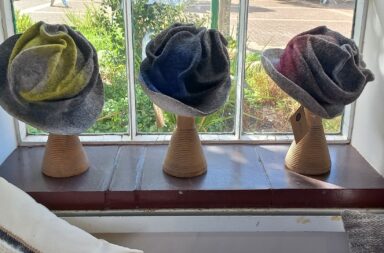
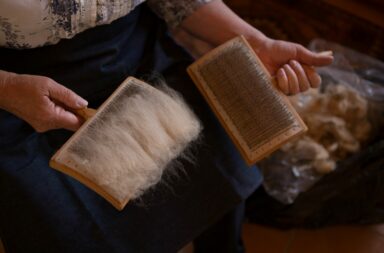
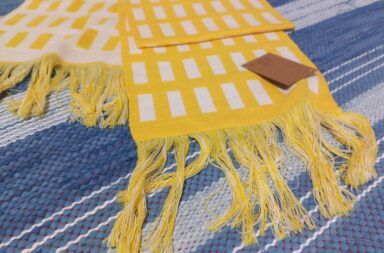
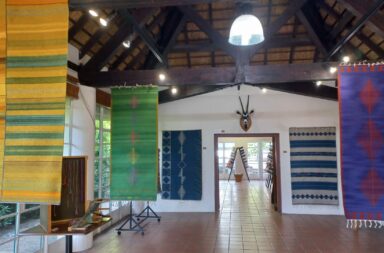
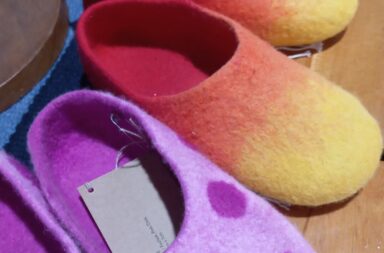
- To learn more about the Cape Guild of Weavers and book tickets for the upcoming workshops, take a look at their website here.
- Images: Photos supplied by the Cape Guild of Weavers


