Oluwadunsin Bolaji is a good citizen. She identified a pollution problem and has created a scalable solution that has cultural depth. In Nigeria, about 50-60 million used water sachets are thrown into the streets daily. This is according to the United Nations Environment Programme which reports that using low price, lightweight and durable water sachets is a daily practice for many low- and middle-income communities across West Africa where water supply is intermittent.
Using plastic sachet waste, Oluwadunsin has developed a fabric, aso òrá, and along with a team of artisans at the business she founded, DunsinCrafts, she combines this fabric with aso oke to create luxury goods. We asked Oluwadunsin a few questions about process, motivation and her business.
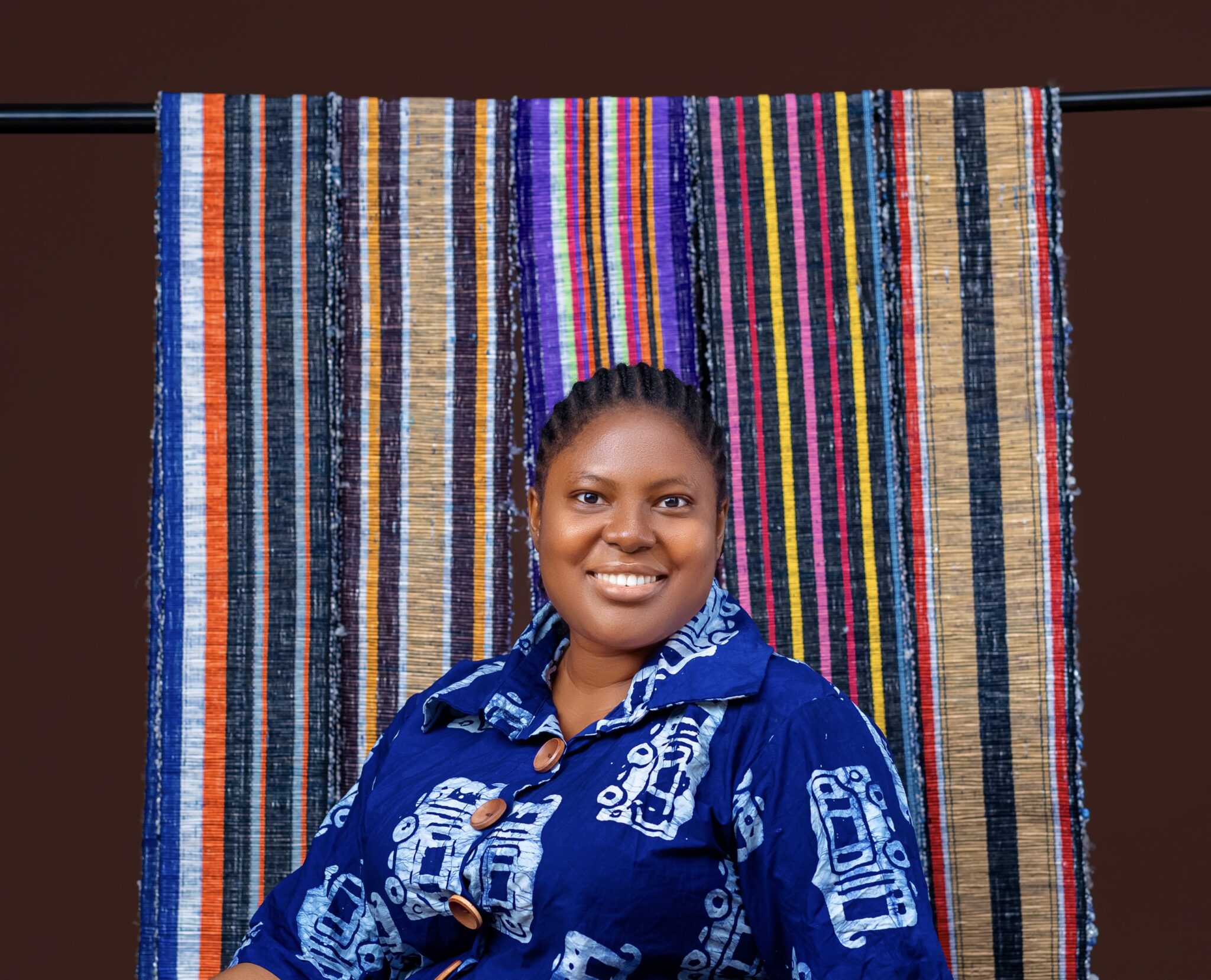
Nigerian creative entrepreneur Oluwadunsin Bolaji identified a solution for plastic waste. Image: Supplied
Why do you use plastic sachet waste as a resource?
I have always been an advocate for sustainability, and I’ve participated in several street cleanup initiatives. Most of the trash we collected was pure water sachets. After collecting them, we would hand them over to the state waste management facility. I knew there must be something that can be made from them.
Then, I participated in a recycling program which was eye-opening exposure to the sheer possibility of upcycling. However, I noticed a major creative problem: the weaved textiles looked exactly like what they were made of. The sachet waste was glaringly obvious, raw and visually unrefined.
My instincts as an Afrocentric accessory designer told me that sustainability shouldn’t compromise on aesthetics. My goal was absolute transformation! I wanted to strip away the ‘cheap’ stigma of waste and create something that can be associated with luxury.

DunsinCrafts makes luxury handbags. Image: Supplied
What products do you make?
I used the weaving technique learnt at the workshop and created patterned textiles that mimic the colourful aesthetics of Aso Oke [traditional hand-woven Nigerian cloth]. At DunsinCrafts, we process plastic sachet waste and weave them with threads to create textile bundles called aso-òrá. Each bundle upcycles 1100 pure water sachets.
Using aso òrá and aso oke, we design avant-garde luxury bags. These are functional art pieces designed for the eco-conscious luxury consumer who cares about the story and impact their fashion choices have.
We also produce souvenirs for conferences and corporate gifting, allowing organisations to contribute to their ESG compliance targets traceably. This product matrix was built over time; it wasn’t a one-time strategic decision. Looking at communities in Nigeria, the environmental necessity demanded a scalable solution and my reverence for African history demanded that whatever we created must have cultural depth.
Tell us about the artisans
I am blessed with a team of skilled artisans who believe in my vision but getting to this point has required a steep operational learning curve.
Skilled artisan acquisition and retention in Nigeria is incredibly difficult. Most skilled artisans aspire to start their own businesses. We train people only for them to exit to start their own ventures. But rather than letting this break my spirit, I adapted.
I built a reliable network of expert artisans whom we onboard during peak production phases. They are paid fairly while they retain the freedom to manage their independent lives afterward. Despite the fluid structure, we have built deep loyalty. My longest-serving team member, Toyin Elegbeleye, has been with us since we first started operations in 2022.
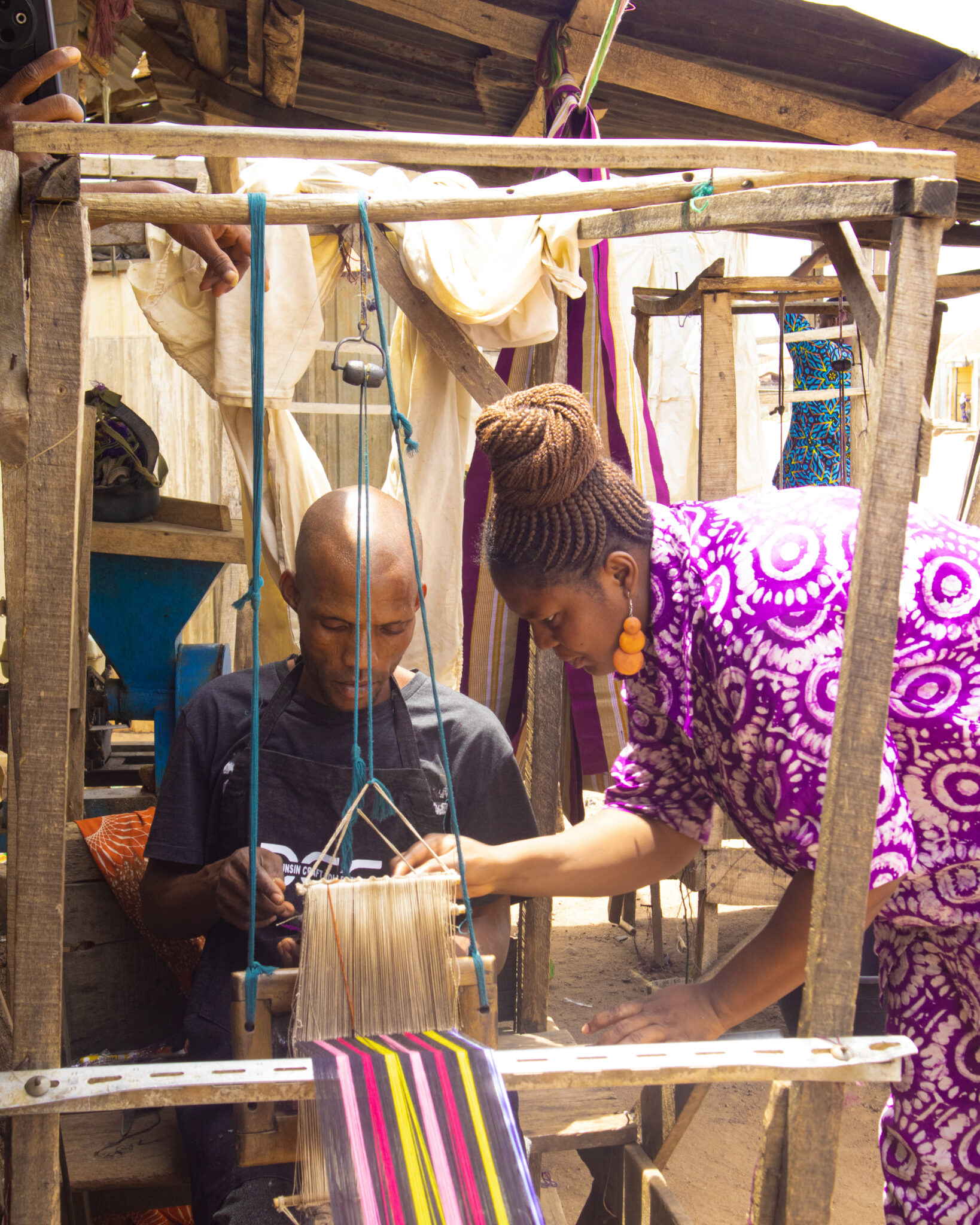
Head weaver Wasiu Olawale Waheed and Oluwadunsin Bolaji in the studio. Image: Supplied
How do you balance slow making with scaling your business?
By drawing a fierce line in the sand: DunsinCrafts is not a fast fashion brand, and we will never compromise the human element to scale. In fact, I take immense pride in my commitment to preserving weaving skills, an invaluable cultural heritage that is gradually going extinct.
Where we innovate to achieve scale is not on the loom, but through Sachet Bank, a social fintech waste collection system we are building. We plan to use WhatsApp API ledger to handle the massive, complex scale of waste collection. This tech helps to systematically intercept waste at the point of consumption, gradually changing Nigeria’s disposal cultures away from outdoor littering and toward disciplined domestic storage and donation through our ‘Waste-to-Food’ rewards system.
By using tech to scale the supply chain, we can comfortably grow our production without industrialising the craft itself. Our vision for expansion is to expand into a larger factory where we can employ over 100 weavers, providing them with stable, dignified and fair wages. Our target audience deeply understands the craftsmanship, the story,and the intensive time it takes to create each individual piece, and they happily pay a premium for it.

Artisans weave the plastic with thread. Image: Supplied
Tell us about the making process
The creation of aso-òrá (which translates to ‘cloth made from plastic’) is a process that merges 18th century Yoruba weaving techniques with 21st century environmental problems.
The journey from discarded sachets to avant-garde accessories begins at the immediate point of consumption. Through our our SachetBank Africa, local citizens and shop-owner aggregators log and verify sachet waste. Donors drop off clean, dry sachets in exchange for food reward points. This ensures our feedstock is traceably accounted for before it ever enters our facility.
Once the massive volume of sachets arrive at our hub, we sort, wash and decontaminate the plastics. After drying, the clean nylons are cut into standardised strips measuring exactly 37 inches [about 94 centimetres] in length and 1 to 1.5 inches [2.54 centimetres to 3.81 centimetres] in width.
Using the loom machine, the longitudinal, colourful cotton threads are laid out and threaded through the heddles, which allow the weaver to mechanically alternate the threads. Using foot pedals, the artisan opens a gap between the warp threads for the plastic strips to pass through the opening.
After every single pass of plastic, the weaver uses a heavy wooden beater to firmly compress the plastic strip against the previous ones. This intense tension creates a dense, stiff, and beautifully textured fabric that perfectly mimics the colourful aesthetics of traditional aso oke. Once these bundles of aso-òrá textile leave the loom, some are packaged to be sold while others transition to our design floor.
I sketch and craft these textiles into bags that double as functional art. And we ensure each item carries cultural significance and has quality finishing that meets luxury standards.
What are the challenges faced with weaving the plastic sachets?
Unlike cotton threads, plastic strips have elastic memory. They bunch up, making the textile feel bulky to the touch. However, applying controlled heat and high pressure relaxes the textile after weaving.
Another challenge is that the moment we cut the textile (with scissors) horizontally, the plastic strips tend to slide out of the weave. So, what we do is to use a hot soldering iron to cut which melts the strips as we slice. The molten plastic cools and fuses directly to the surrounding threads, creating a sealed edge that doesn’t unravel.
What implications does the ban on single-use plastics policy have on your business?
The ban reveals a disconnect between policy announcements and grassroots socioeconomic realities. It has had virtually no effect on the ground. Over 60% of our urban population relies on low-density polyethylene (LDPE) pure water sachets for daily, affordable hydration.
The government announced the ban but did not provide a viable, systemic alternative for clean water. Until another sustainable alternative replaces this basic human necessity, people will continue to rely on sachet water and the waste will continue to accumulate.
However, let’s look at the best-case scenario: What if the ban becomes 100% effective today and sachet waste completely disappears from Nigeria? We would celebrate. It would mean the environmental crisis we are desperately fighting has been permanently solved at the root.
I am not dependent on waste to survive as a designer – I am simply stepping up as a responsible citizen to turn a current urban blight into a domestic asset class while it exists
For DunsinCrafts, this poses absolutely zero threat to our business sustainability. We will simply continue weaving traditional aso oke and making our luxury bags. Our looms, machineries and our skilled artisans will remain fully active, fully employed and continue to generate premium income.
I am not dependent on waste to survive as a designer; I am simply stepping up as a responsible citizen to turn a current urban blight into a domestic asset class while it exists. If the country cleans up its act, our brand adapts seamlessly, because true luxury is about the mastery of the craft, not the source of the fibre.
What quantities of plastics you’ve collected?
Over the past five months, we built an organic WhatsApp community of 265 voluntary waste donors across Nigeria. Through this grassroots network, we collected a verified total of 103 kilograms of post-consumer plastic waste.
Our largest single volume came from Lagos State, yielding 30 kg, closely followed by Ibadan at 21 kg, Abuja at 19 kg, Ondo at 18 kg, and Jos at 15 kg. While a 100kg might sound modest in traditional industrial weight metrics, it is a staggering volume when dealing with ultra-lightweight, flexible low-density polyethylene (LDPE).
To put it into perspective, this pilot alone diverted over 70,000 individual pure water sachets from clogging urban drainage systems and waterways, and every single one of them has been successfully upcycled into our luxury textile pipelines.
What excites me most about these numbers is that they were achieved completely voluntarily, with zero financial incentives, purely through community trust and shared environmental responsibility.
How does DunsinCrafts contribute to Nigeria’s sustainable development and green economy transition?
DunsinCrafts proves that environmental sustainability does not have to look like charity, it can look like a highly profitable, structured luxury industry. Nigeria’s plastic crisis is a systemic infrastructure failure, not a human failure. Through our upcoming social fintech ecosystem, SachetBank Africa, we are actively changing Nigeria’s disposal habits.
By giving economic value to pure water sachets through a ‘Waste-to-Food’ model, we intercept waste at the immediate point of consumption, preventing environmental damage at the source. A green transition must also be a socially just transition.
Indigenous weaving techniques are gradually going extinct as young generations seek white collar jobs and other opportunities. We are breathing new life into this ancient skill. Our expansion model directly creates dignified, fair-wage green jobs for traditional weavers and local women who manage our production pipeline.

DunsinCrafts makes sustainable production look like a highly profitable, structured luxury industry. Image: Supplied
Do you think Africa is investing enough in circular business models?
They are trying, but the short answer is honestly no, we are not doing nearly enough.
Right now, most of the sizable, structured grant opportunities for sustainability initiatives come from USAID, European development funds and Western organisations. Local institutional investment is largely missing from the equation. The core issue is that you cannot build a truly circular economy without a functional manufacturing sector.
Africa remains heavily dependent on importation rather than domestic production. We import the raw materials, we import the finished products, and tragically, we import the waste. The massive influx of secondhand Western clothing into African markets is currently one of the single largest drivers of environmental textile pollution on the continent.
For small, innovative businesses to scale, African governments have to aggressively invest in regional manufacturing facilities, build robust domestic supply chains and fiercely promote ‘Made in Africa’ products to drive demand.
Until we shift our focus from being an importation dependent continent to manufacturing – circularity will remain a luxury concept funded by foreign grants, rather than a self-sustaining ecosystem.
How do you determine the value of your products?
We do not price our products based on generic retail formulas; our pricing reflects the harsh reality of manufacturing in Nigeria. Stable electricity is a rare commodity. To maintain a production schedule, we rely on fuel and generator maintenance.
As a brand dedicated to preserving a dying craft, our artisans are our greatest asset. We refuse to exploit talent. Every piece factors in fair wages that dignify the intensive, slow hours our traditional weavers spend crafting.
Ongoing inflation, rising rent, machine maintenance and corporate taxes heavily impact the baseline cost of other raw materials. After calculating these baseline operational costs, we protect a healthy profit margin.
We do this because profit is what guarantees our business continuity. It is what funds our innovation, powers the tech development behind SachetBank Africa, and ensures that our studio remains a force for environmental and cultural impact.
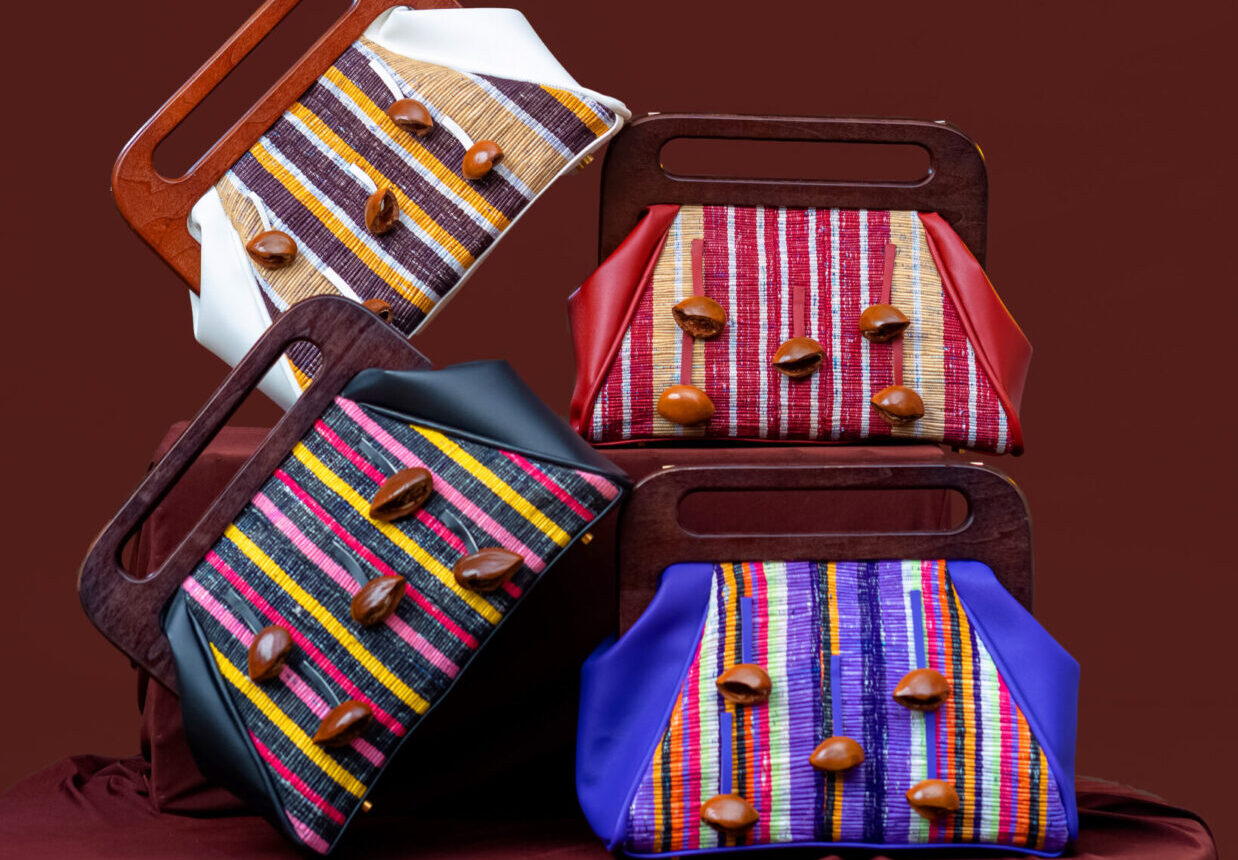
The price of each piece factors in fair wages that dignify the many hours of traditional weaving. Image: Supplied
Do you offer a take-back scheme or repair services?
Absolutely! DunsinCrafts offers a complimentary 60-day repair service warranty on all our avant-garde pieces to ensure that any initial wear or hardware adjustments are seamlessly managed. Past that 60-day window, we continue to offer lifetime repair services to our collectors for an affordable fee.
We don’t believe in disposable fashion. By providing a repair pipeline, our textiles and accessories stay out of the waste stream permanently.