Leandi Mulder is a designer with a deep understanding of natural fibres and textiles. Her MA Fashion graduate collection Notes to nature is an expression of this and acts as a love letter to the ever-changing constant that is nature. The shapes, colours, and materials resemble as closely as possible the organic structures of our natural world.

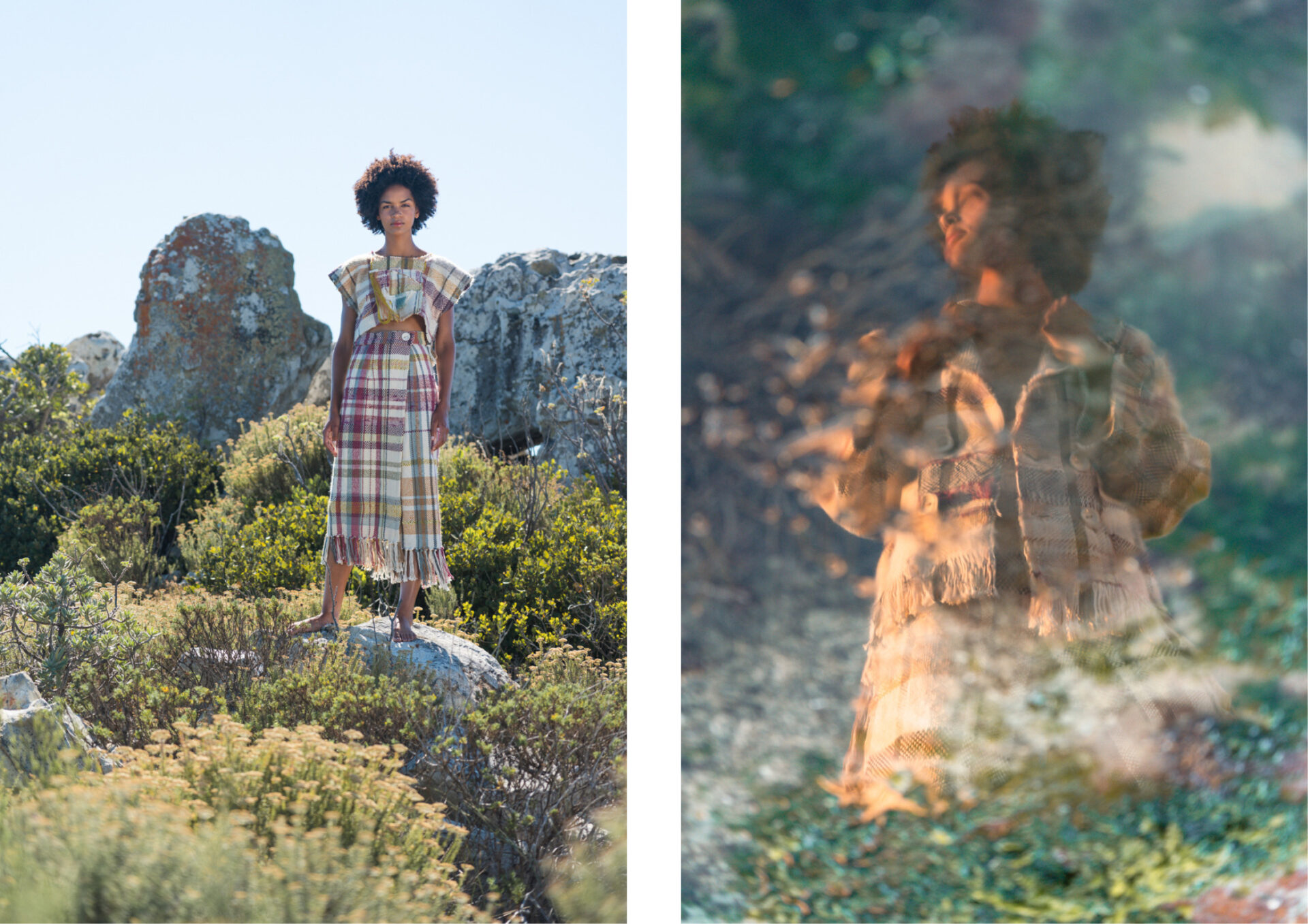

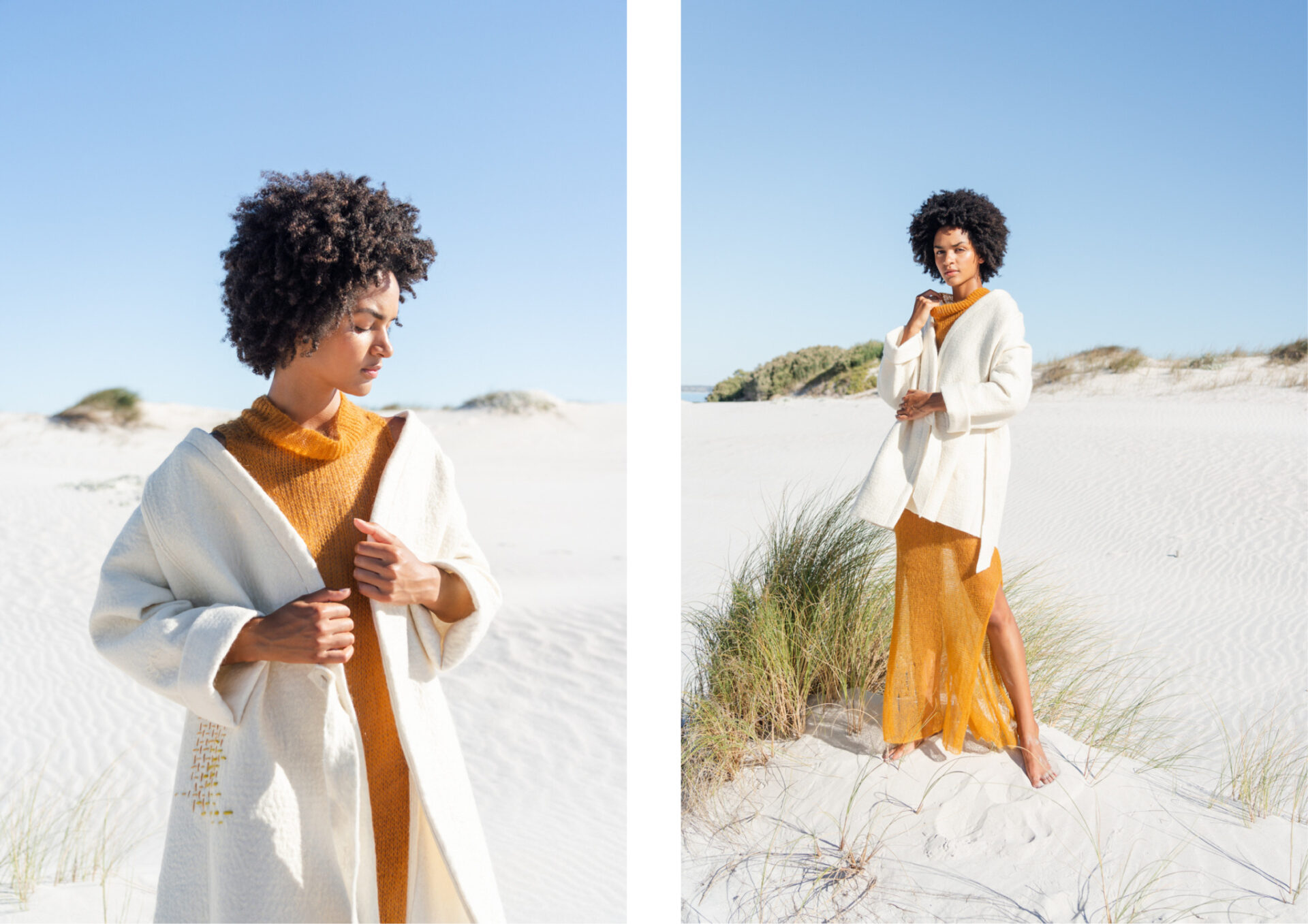
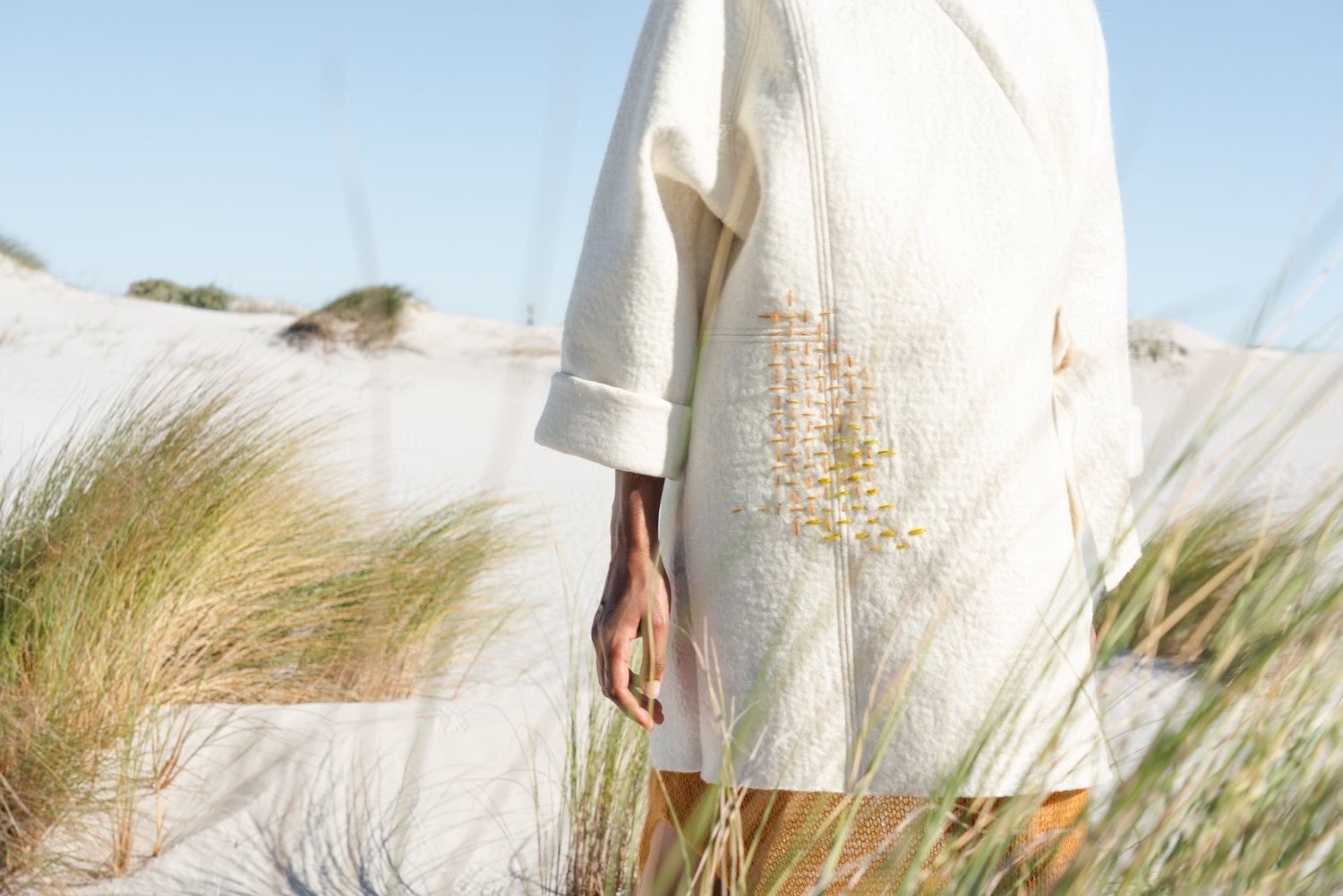

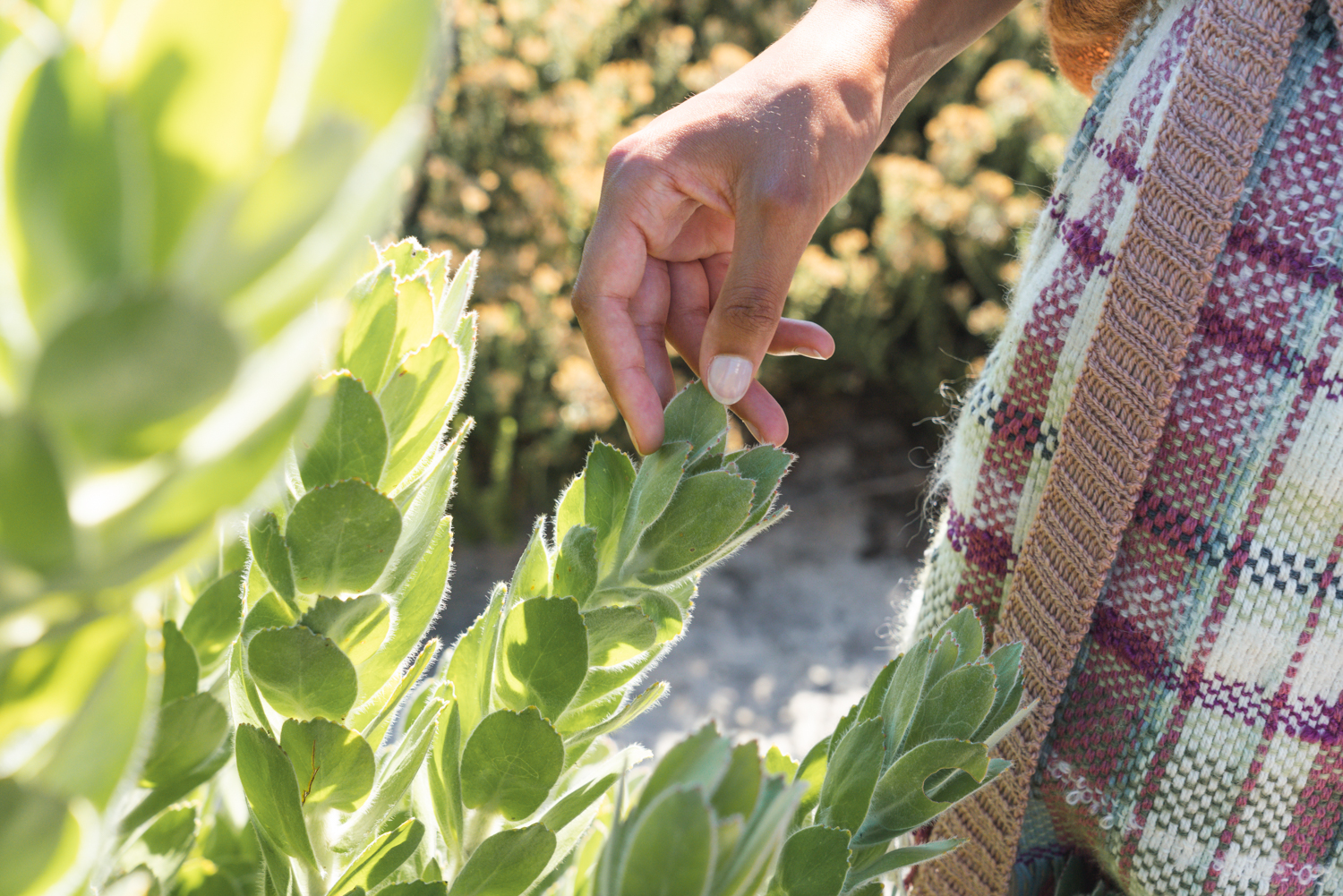
Made with mohair, Leandi’s graduate collection is a farm-to-fashion-to-fibre success story and a nod to the endless possibilities for the local sustainable fashion industry. Leandi says, “From fibre to fashion, the textiles in the collection were fabricated through techniques of weaving, knitting, and felting. By hand, not machine. This slow-fashion approach, created a traceable production process, with close to zero waste.”
We asked Leandi to share more about the thinking behind the collection.
What does an expansive vision of sustainable fashion mean to you?
The practice of sustainability in fashion requires various disciplines and ideologies to work cohesively in producing products that are beneficial to all the environments and living things that interact with and within it. So, fashion needs to consider the complex dynamics involved at all stages of the value chain: growing, harvesting, distributing, design and manufacturing.
What makes mohair a sustainable fibre, in South Africa?
By definition, natural fibres such as mohair are considered highly sustainable due to their natural, biodegradable and renewable properties. Animal fibres and mohair, in particular, is considered one of the most sustainable fibres in the industry, where angora goats play a positive part in the ecosystems in which they thrive.
Classifying mohair as a holistically sustainable fibre in the current fashion climate requires not only for the properties to be natural, but also for the entire production of the fibre to be ethical and cruelty-free. This means that the wellbeing of the animal needs to be taken into consideration in the entire cradle-to-cradle framework.
Within the supply chain, it is 100% local and South African and is of great benefit to the economical sustainability of South African workers involved in every step of the farm to fibre processing. Mohair can also be traceable to sustainable farming practices, as the internationally recognised Responsible Mohair Standard (RMS) holds farmers accountable for ethical and sustainable farming.
The collection is “vertically designed”. What does this mean?
A vertically designed collection implies that the design process does not only start from buying fabric and cutting it up to create a garment. It means that to some degree, the raw fibre is the starting point of design.
For this collection, either through hand felting, hand weaving, or hand knitting, the textile design and manufacturing process was done by me initially, followed by the garment design process. These steps go hand in hand and inform each other creatively and conceptually.
What is needed to work towards a thriving farm-to-fashion industry in South Africa?
There needs to be less distance between each of the important players in the supply chain of mohair and other fibres. As a starting point, the farmers, textile and yarn manufacturers, and designers need to have a more in-depth understanding of what the whole collective does. This can ultimately open up some very important conversations and connections where everyone can learn from and about each other to improve or advance their practices.
Sustainability in fashion and textiles essentially means gaining a clear understanding of the detailed workings of your supply chain, to bring products to market that have been produced responsibly in terms of social welfare, animal welfare, and environmental welfare. This standard is constantly transforming and there will always be continual improvement and flexibility, which is key to succeeding in this space.
Fashion items lastly need tactility, hand craftsmanship, and the luxury of tracing it to origin and heritage. This will foster a collective yearning for feel-good clothing choices that resonates with wellness as a holistic lifestyle philosophy.
Watch Leandi’s fashion film:
CREDITS
Fashion and Creative Director | Leandi Mulder
DOP and Co-Director | Marcus Hebbelmann
Photographer and Co-Director | Matt Bouch
Make-Up Artist | Inga Hewett
Model | Anouk
Production Manager | Melissa Fontini
Lighting | Ian Miller
Colour and Edit | Mark Edward
Music | Tony Munoz
- To learn more about designing with nature, watch this Africa Textile Talks webinar recording, featuring Leandi Mulder.
- With a deep-rooted connection and understanding of natural fibres and textiles, Leandi Mulder focuses on designing thoughtful, hand-crafted, sustainable designs. Every item is made to order and created with care and consideration. To order, visit Leandi’s website.