One of the world’s main textile trade shows, Milano Unica, hosted over 450 exhibitors in July. In his opening remarks president of Milano Unica Alessandro Barberis Canonico said, “Textiles are the starting point of the supply chain: every style creation starts from the choice of a fabric, a detail, a finishing touch and knowing hands that can recognise quality.”
The 35th edition of Milano Unica offered examples of current innovation, design and creativity in textile development at the same time celebrating the heritage of textile manufacturing. There were 445 exhibitors, 324 of which were Italian and 65 from other countries, including special exhibitions presented by Tokyo Observatory and Korea Observatory in Milan. (The next edition is in Milan from 31 January – 2 February 2023)
Understanding how critical fabric choice is, thousands of people gathered in Milan to source inspiration for their new collections and designs. After three days at the exhibition, here are my takeaways:
Food dyes
Along with showcasing a wide range of beautifully processed natural fibres, the Toyoshima & Co stand exhibited the FOOD Textile project, a joint effort between Toyoshima & Co, food companies that provide the ingredients for dyes, and companies, such as Converse Japan. The FOOD Textile thread is coloured with dye made from safe food products which would otherwise be thrown away. The gentle colours are proof that natural dye accounts for over 90% of the dye used. The dyes have passed colourfastness tests – they keep their colours for years.

Recycled Fibres
With the increased recognition of circular design’s role in reducing the chances of impending climate collapse, it’s no surprise that recycled fibres featured strongly at the exhibition. There were many Global Recycled Standard (GRS) labels on yarns. GRS is a voluntary product standard for tracking and verifying the content of recycled materials in a final product.
For instance, Pozzi Electas GRS eco yarns included 100% recycled Cupro fibre (regenerated cellulose fabric made from cotton waste), 100% recycled polyester and 100% recycled silk. The textile company also presented Crabyon, produced with chitin-chitosan deriving from recycled shellfish carapace. The shellfish is sourced from food waste. Sojitz Fashion, a Japanese company, presented its recycled wool from worn-out wool products.

Future of Packaging
Fashion must be safely and securely transported from factory to store, and from store to wardrobe in bags and boxes which add to the resource-intensity of the industry. Innovative solutions abound, many of which were showcased at the expo. One of the most exciting innovations I saw was the Vicenza-based start-up Nazena that targets circular economy in the textile industry. Using industrial waste and used apparel it produces environmentally sustainable products and durable packaging. Another example, Legoplast offers 100% recyclable, compostable and bioplastics containing sugar cane as alternatives from mainstream materials. When purchasing and using these alternative solutions be sure you understand the best and most responsible way of discarding them. Compostable bags require the correct environments as some need industrial conditions.
Certification
For the first time in the event’s history, sustainable certification bodies were present at Milano Unica. Certification helps brands and consumers with the confidence to trust statements about environmental and social claims. Examples includes Forest Stewardship Council (FSC), Global Organic Textile Standard (GOTS) and Eco Cert. FSC is a certification system that allows the consumer to recognise that raw materials supplied from trees and forests are managed in an environmentally and socially responsible way. GOTS (with its tagline Say no to greenwashing. Say yes to GOTS) is the leading standard for organic textile production. Eco Cert assists in the implementation and promotion of sustainable practices through certification, consulting, and training services since 2002. Finally, the Global Recycle Standard is the standard that recognises the importance of recycling.
Natural Fibres
Using natural fibres, which can be biodegradable if responsibly processed, are key to a sustainable fashion system. Wool featured strongly with the presence of The WoolMark Company and at multiple heritage brands (more below). The Woolmark Company exhibit included the presentation of the two winners of the WoolMark Prize 2022 one of which is MMUSOMAXWELL. It also presented its trend forecasting for the next season. Another stand featured the flax and hemp sector. Flax is the only vegetable textile fibre originating from the European continent with 80% of the world production of scutched flax fibre being of European origin with France being the world leader. Linen represents less than 1% of the textile fibres consumed in the world. To read more about flax in Europe visit the The European Flax and Hemp Confederation website.

Heritage brands
For me many of the standout exhibitions were those of heritage brands. These companies have been in business for decades, some for centuries, refining their crafts and creating legacies of excellence. Besides sustaining businesses, they care about what they do for people and planet. Their longevity is proof that implementing sustainable principles works. Here are just a few:
Ratti
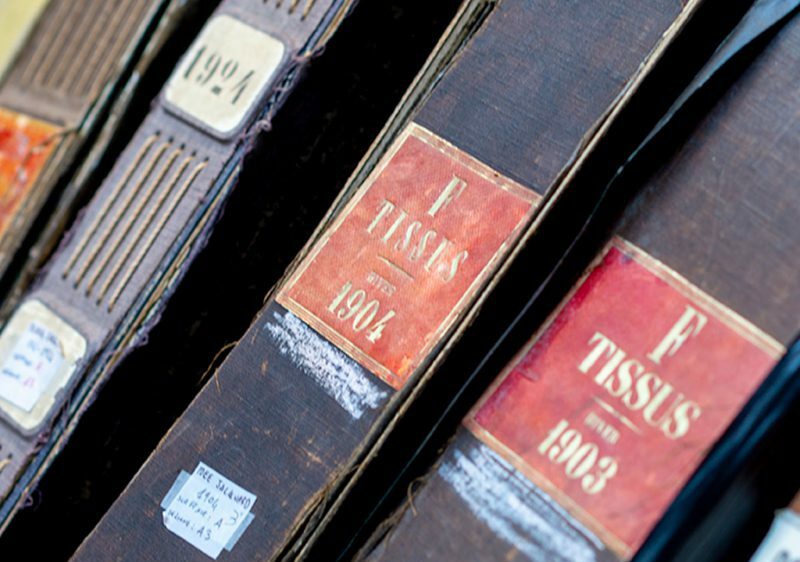
Founded in 1945, Ratti’s ethos is underpinned by the persuasion that “knowing the past is the only way to give life to the future” so they “observe, caress and study the fabrics of the past as a source of inspiration”. The Italian textile company’s heritage is strongly linked to the processing of silk, an ancient and precious fibre. Now, they work with various natural, synthetic and artificial fibres and offer numerous ecologically sustainable fibres. At the recent CNMI Sustainable Fashion Awards 2022 at the Teatro alla Scala in Milan, Ratti received a special mention – Giving Hope – for the programs carried out with the Ethical Fashion Initiative.
Furuhashi Weaving
This family-owned textile manufacturer has been operating since 1928 in Shizuoka, Japan. The website states that rather than quantity and volume, “our focus is on putting outstanding craftsmanship to work, so that people feel attached to it and cherish our products for many years.” The company is committed to preserving rarity values, called “shuttle looms” and traditional production methods that have been passed down for more than half a century. They develop and manufacture unique textiles using natural materials such as cotton. High density fabrics, such as typewriter cloth, parachute cloth and dawn-proof cloth are Furuhashi Weaving’s strength.
Harris Tweed
Harris Tweed has been woven with skill and care by crofters in the own homes on the Outer Hebrides for more than a century. Wool for Harris Tweed is sheared, processed, dyed, blended, carded, spun, warped, woven, finished, examined and stamped only in the Outer Hebrides, an island chain off the west coast of mainland Scotland. The skills are passed on from generation to generation. The Harris Tweed Authority promotes and maintains the authenticity, standard and reputation of the world famous Harris Tweed® cloth and by law Harris Tweed must be produced in the Outer Hebrides and nowhere else.
 Princess Ann visits Harris Tweed
Gen Maeda
Since 1921, Gen Maeda has made natural, earth-friendly products and textiles, applying consummate skill and high standards to maintain high quality. Located 700m above sea level in the foothills north of Mt. Fuji in Japan, Gen Maeda preserves the tradition of Kaiki silk and uses organic cotton, the company has added new sensibilities while respecting nature, continually seeking fabrics for the future.
Fifteen different vegetable dyes are used to colour yarns, including the natural pigment from cherry, mugwort and primrose. At each step of the ancient technique utilising plant pigments, pure spring water from Mt. Fuji is used. “Using no chemical dyes, vegetable dyes never produce precisely the same colour twice, due to changing seasons, temperature, etc.. Thus each product is a unique creation, which is why these goods are known as “one of a kind”.
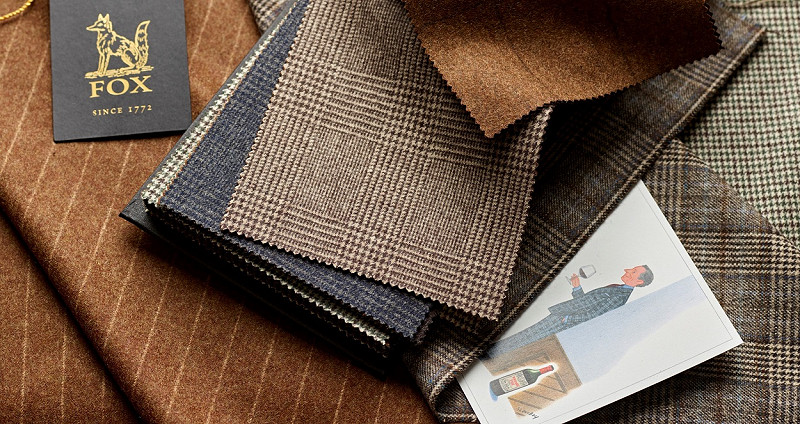
Fox Brothers and Co
Fox Brothers have produced woollen and worsted fabric in Somerset, England, for the past 250 years. From humble beginnings as a traditional woollen mill, they have gained a reputation as a cutting-edge innovator within the textile industry. They are officially credited as the original creators of flannel. Fox Brothers weave cloth for the worlds’ leading luxury brands and create some of the finest wool and cashmere cloth available in the world.
Trends
Opulence, nature and flexibility were the three overarching trends which were presented as displays at the entrance of the expo. Underpinning these was the concept “seasonless”. One of the key principles of circular fashion design is to manufacture and make garments that last (quality) and that are not fleeting fashions. Still, these are the three trends that Milan Unica presented: Opulance, nature and flexibility. Opulence hints at referring to the past to build a better future. Nature explores the powerful creative power that triggers change. In this case, style is tied to shielding the body, with total reverence for nature through the choice of sustainable and biodegradable materials. Finally, flexibility is portrayed as a fluid transition into various parallel worlds, whether real or virtual, foreign or familiar.


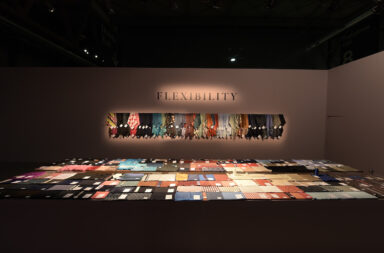
Milano Unica can be summed up by the motto: “There would be no fashion without fabrics, there would be no glamour without details.”
- The next appointment for the 36th edition of the Trade Show in attendance is scheduled for January, 31 – February, 1-2, 2023, at Rho Fiera Milano, Milan, Italy
- Main visual is the film “The Flax Manifesto 2022” directed by Jonathan Steuer which puts flax in motion through dance, in a very contemporary artistic gesture
- Images sourced from various brands’ websites and from Milano Unica