

Knitting is one of those nostalgic tactile practices that we turn to for its soothing effect. In our busy lifestyles, we can’t keep up with our minds and urgently need a return to our hands. This return to our hands is exactly what inspired Bridget Henderson to start Cowgirlblues, a Cape Town-based design studio and dye house creating hand-dyed yarns.
The Cowgirlblues studio is tucked away on a bustling industrial corridor in Maitland, an industrial area a few kilometres from the city’s centre. From the greyscale palette of the outside world, you’d never guess that once you step inside, you’d be welcomed by a rainbow of colours. Colour is Cowgirlblues specialty. And, not just colour, but hand-dyed merino wool and mohair fibres that will bring the knitwear of your dreams to life.
Bridget started Cowgirlblues almost 10 years ago. At the time, she had turned to knitting as a balm for her corporate world burnout. After unsuccessfully looking for her ideal yarn and colours for a knitting project, Bridget began to spin and dye in her kitchen. “My kitchen floors still have stains from those early days,” says Bridget.
It turns out she wasn’t the only one on a search for colour. In 2014, Bridget took her hand-dyed yarns to a Cape Wools event in Johannesburg and requests poured in for hand-dyed yarns. And so, Cowgirlblues began. Years later, Cowgirlblues is a team of 11 women who each play a crucial role in creating Cowgirlblues’ iconic, hand-dyed yarns.
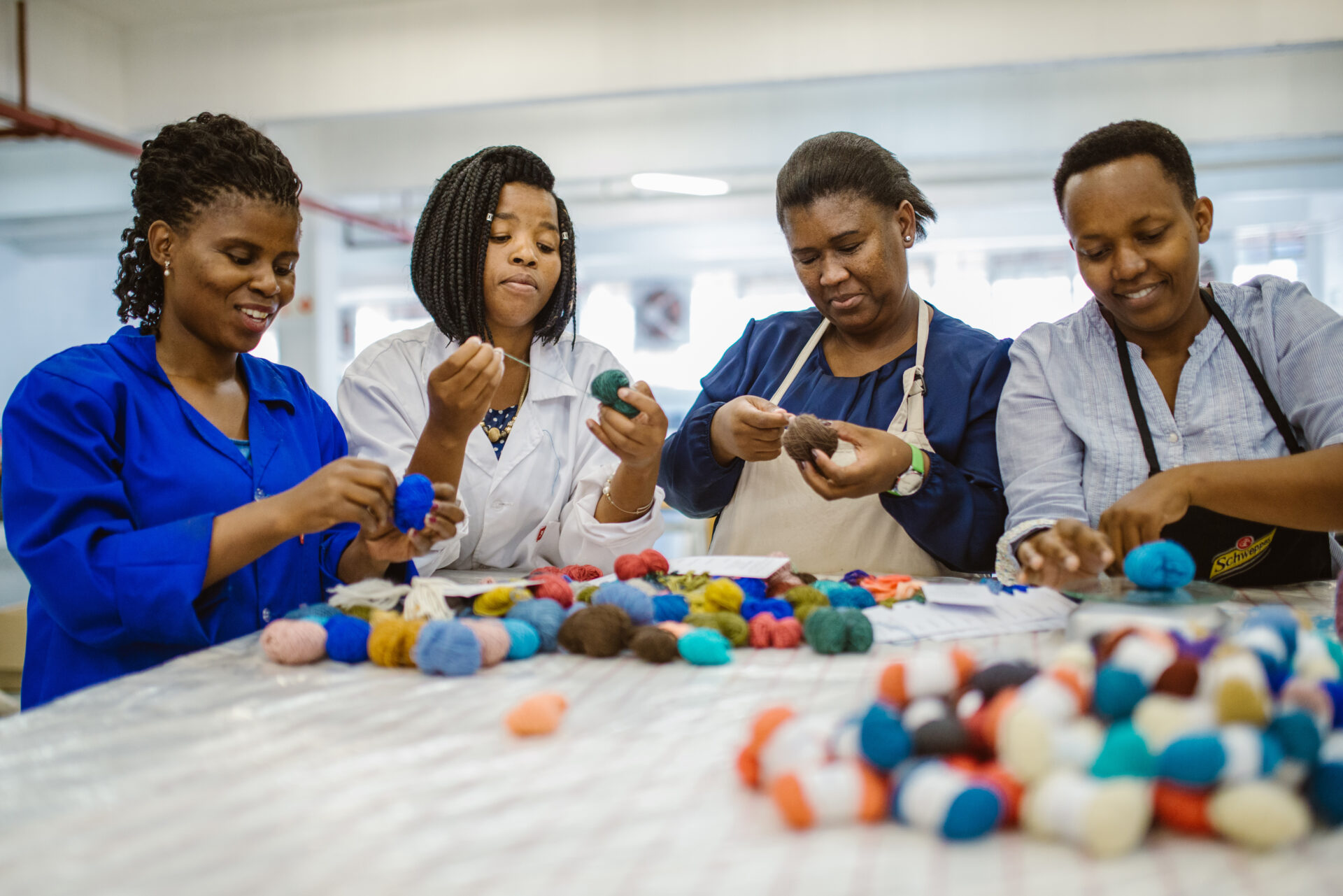
“All our yarns are locally produced and we buy in the yarn already spun from two spinning mills in Port Elizabeth – Samil and Stucken Yarns,” says Bridget. South Africa is the biggest mohair producing country in the world, responsible for more than half the global production annually, and also produces excellent quality merino wool. “Many people are using South African yarns, but it’s not dyed by South Africans. That is what I want to change. I saw an opportunity to add value, locally, before exporting,” says Bridget.
The rest of the process is done entirely in-house. Bridget walked the Twyg team through each step as we made our way around the open-plan studio and wandered between workstations. The yarn is made into skeins, then wet before the hand-dyeing magic happens. “Hand-dyeing gives a depth, richness, and character that can’t be captured by commercial batch dyes,” says Bridget.

Hand-dyeing is done in small batches and is much more fluid, meaning that the colour intensity will vary across one ball and it looks a lot more alive and natural. We had a first-hand experience of this fluid process as Bridget playfully re-dyed a few skeins that had not sold, infusing them with new life.
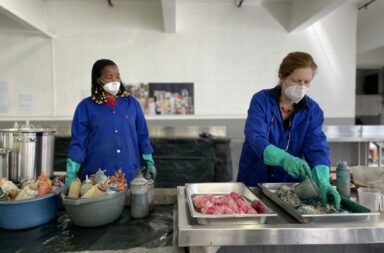
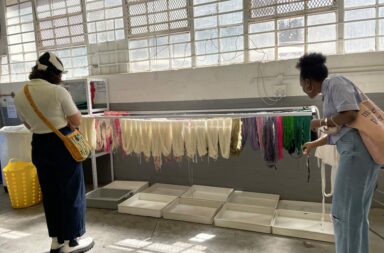
The dye station is essentially an industrial kitchen – filled with pots, pans, microwaves – where each skein is seen as a canvas for colour play. They use commercial acid-wool dyes, which are azo-free and comply with European safety and environmental standards. The dyed skeins are then washed and hung out to air dry before they are wound into smaller balls for sale.

Dyeing is a water-intensive process. But, just as the Cowgirlblues team prioritises a care-filled approach to hand-dyeing, their approach to water waste follows suit. Most of their water comes from their 25 000-litre rainwater tank, which lasts them for most of the year. The water that is used for washing the yarn is reused and recycled for rinsing pots and for the dyeing process.
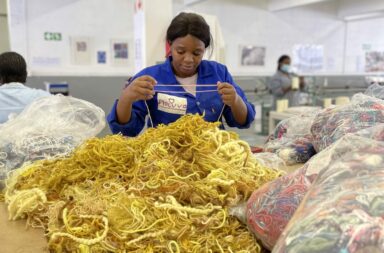
“Almost nothing goes to waste here,” says Bridget as we look over at a table where Noluvo Qinisile is busily sorting out small scraps of yarn into different colours. All the little bits of waste and ties for skeins are kept and sorted into colours, which they make into a felt-like fabric. This felted fabric was most recently used by renowned South African designer, Lukhanyo Mdingi, to create a showstopping jacket for his Autumn/Winter 2022 BODYLAND collection.
One of Bridget’s main priorities is job creation and creating opportunities for continuous improvement for the women that work with her. She sees it as her civic duty in a country riddled with inequality. Almost everyone on the team is skilled in more than one aspect of the production process. Cowgirlblues hopes to continue growing as a business, which will allow them to further prioritise job creation and generate meaningful incomes for all those involved.
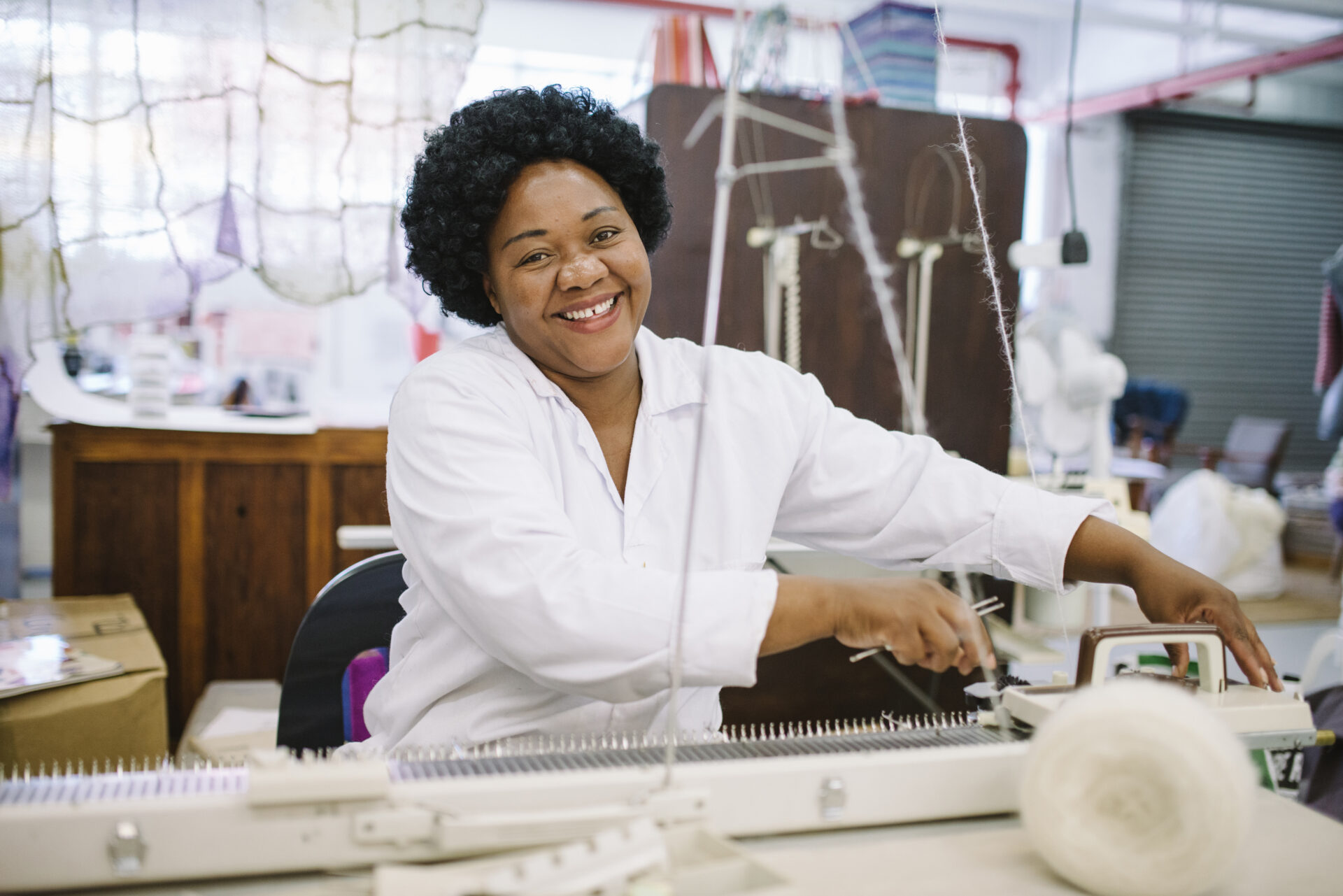
But, this growth will never be at the expense of creating honest, transparent processes and relationships with the people who buy their hand-dyed yarn. “The advantage of buying from a small business is that you are talking to people who are doing the work and you can create transparent relationships and allows people to ask as many questions as they’d like,” says Bridget.
“Our busiest year was 2020 when the national lockdowns hit – everyone was inside and everyone wanted to knit,” says Bridget. We exist in an increasingly digital world, so we are seeing a return to handcrafts, as we look for ways to soothe our heads and return to the present moment. Cowgirlblues is here to help us on this mission as they continue to create a close-knit community of knitters and crafters in South Africa.

- Cover image and images in the article by Kathrin Schafbauer.
- Gallery images by Jackie May from a studio visit to Cowgirlblues.
- To learn more about Cowgirlblues, take a look at their website.
- If you want to try making your own knitted creations, you can check out their knit kits.


