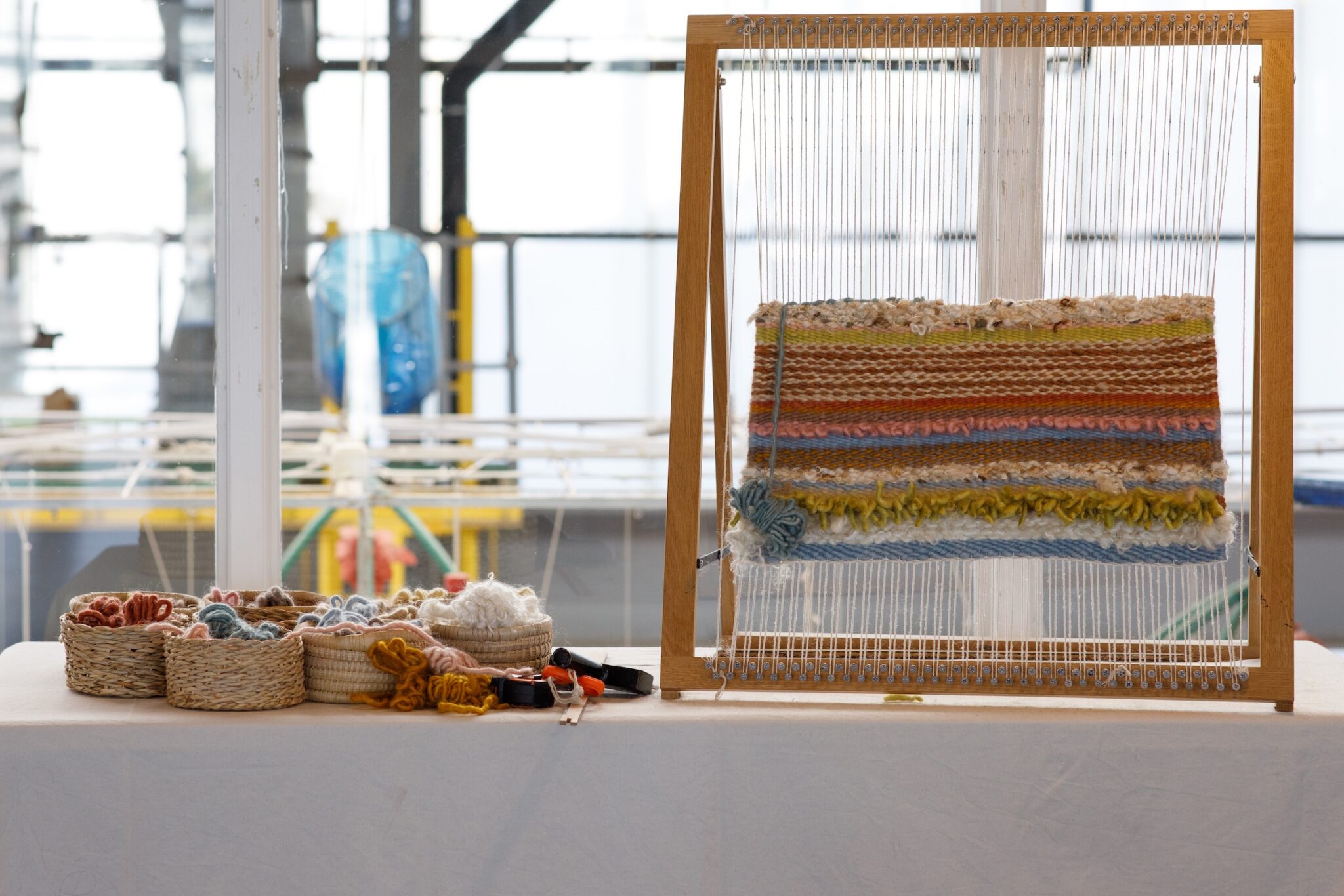
Textiles have been at the centre of trade and civilisation for millennia and the connection between textiles and art goes way back too. Textile art uses different fibres as a medium of expression, from embroidery, weaving, tapestries, and more.
In several cultures, textiles have been a signifier of wealth and power. Whether it is the work of feminists reclaiming “feminine” crafts or African artisans embracing their heritage in light of independence, the twentieth century has been marked as the renaissance of textile art as artists have politicised and embraced this artform.
Here we have made a list of some of the artists on our continent who are working with textiles as their medium. Included in the list are two artists, Nkuli Mlangeni and Thania Peterson, who will be exhibiting at the annual Investec Cape Town Art Fair, taking place 18 – 20 February at the Cape Town International Convention Centre. Beyond the Investec Art Fair, we wanted to share six contemporary African textile artists whose work we have been following and we think you should too. Using textiles as a medium, they engage with deeply complex issues of colonialism, xenophobia, and identity. They are creating work that speaks to the complexities of today, while drawing inspiration from the past.
Thania Petersen
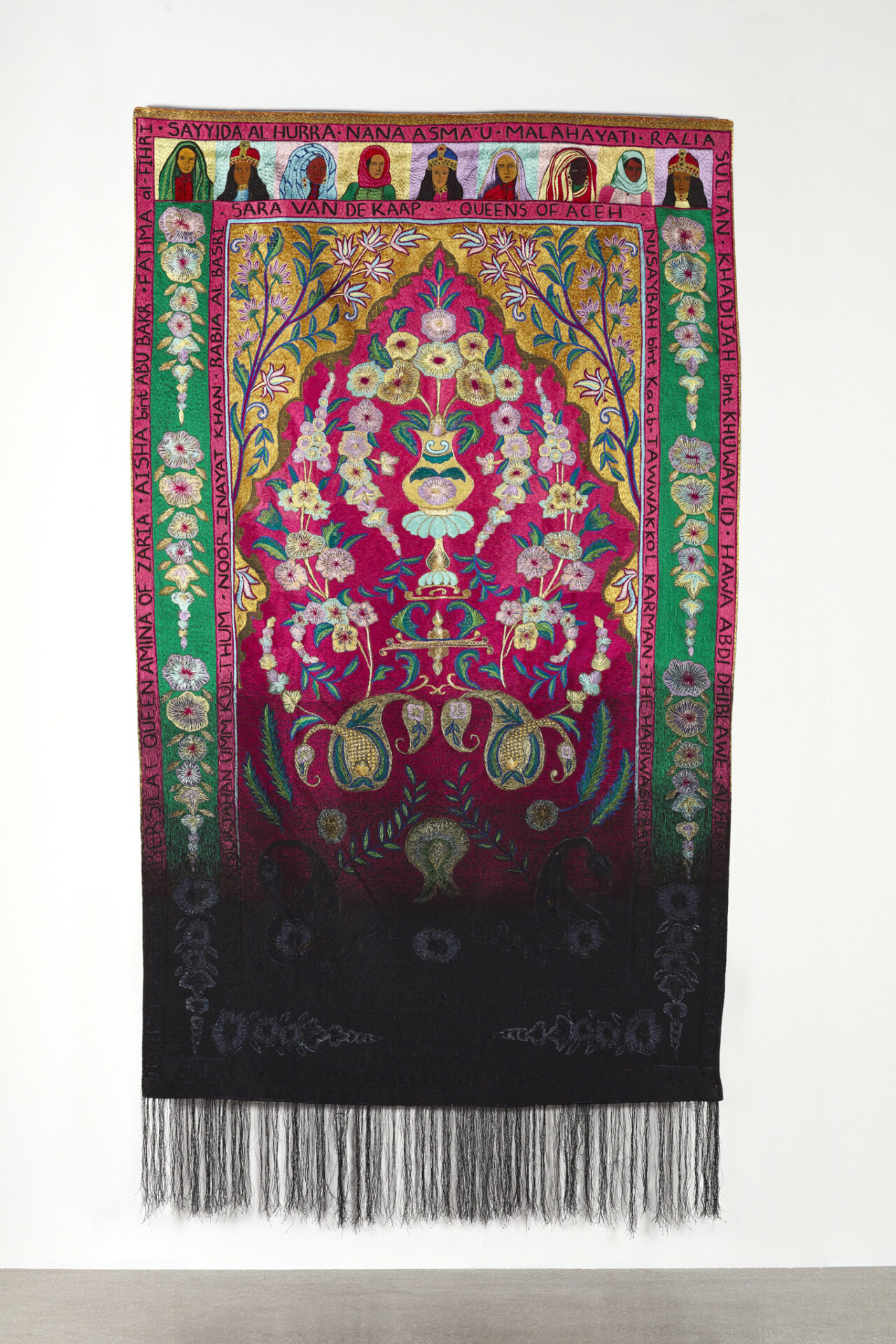
Thania Petersen is a multi-disciplinary artist who weaves themes of Islamophobia, colonialism, and westernised consumer culture in her work. She studied at Central Saint Martin’s College of Art in London and completed a residency with ZEITZ MOCAA, last year. Thania centres her work around her identity as a Muslim woman with Cape Malay heritage. Her work is showcased by several collections around the world.
Nkuli Mlangeni

Nkuli Mlangeni worked as a stylist for several years before venturing into textile art. “I felt like there was not enough representation of the things I wanted to see,” Nkuli told The Insider SA. She founded The Ninevities, a collaborative design studio, in 2012. “I wanted to create a space and a platform where I could use textiles as a form of activism and share the kind of things that were not necessarily being seen in the mainstream,” she adds.
In 2017, Nkuli won the Design Indaba’s Most Beautiful Object award for her iconic Sankara rugs. She collaborates with different artists and brands and produces her work locally using natural fibres.
Liberatha Alibalio
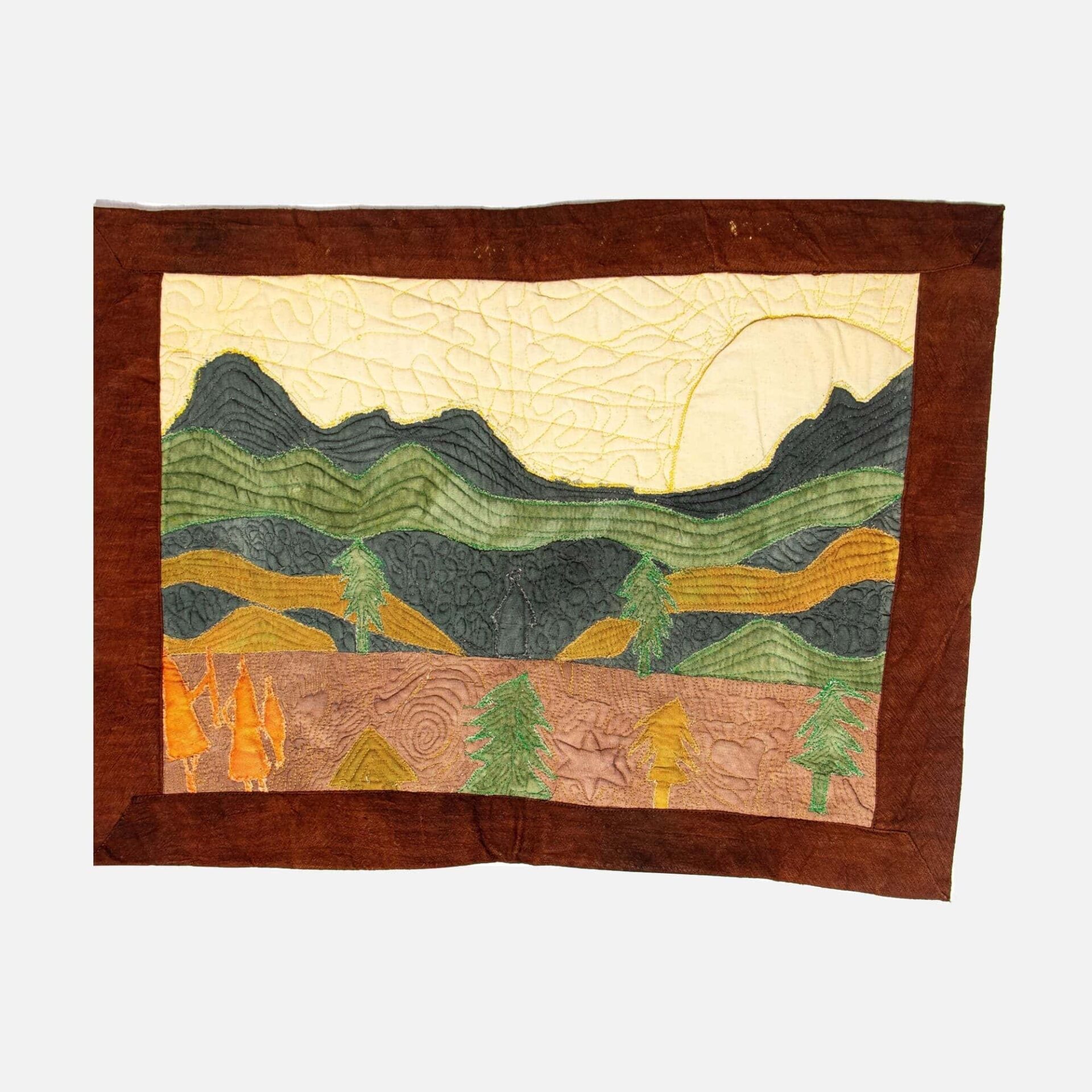
Tanzanian-based artist, Liberatha Alibalio creates artwork that celebrates nature. After studying a BSc in Textile Design and Technology at the University of Dar es Salaam, she went on to work as a visual artist.
Having grown up in the countryside of Tanzania in Kagera, Liberatha draws inspiration from her childhood. She reflects on the past and identity to create new pieces that centre on storytelling as a way of creating narratives for the future.
She sees nature as well as the materials she uses, such as yarn and natural, hand-dyed fabrics, as the source of her inspiration. The process of creating her pieces, the rhythm, and the colours and patterns of materials, bring her great joy. She recently completed a residency in Zambia where her work draws on her ancestry and history.
Kwesi O. Kwarteng

Ghanaian-born, American textile artist, Kwesi O. Kwarteng, celebrates interconnectivity and multiculturalism through his work. He moved to the United States, from Ghana, at 19 to complete a BFA at the School of Visual Arts in New York. He takes inspiration from his own background and culture as well as his perspective living as a migrant in America.
His work showcases the beauty of multiculturalism in light of xenophobia and the refugee crisis in recent years. For Kwesi, fabric is a kind of language – one that holds culture and history – as well as being a form of unspoken communication. “There is a saying in Ghanaian culture that goes, no person is an island,” he says, “everyone belongs to someone or a place.” He brings this idea of community into his work by combining different pieces of fabric from different cultures.
Aboubakar Fofana
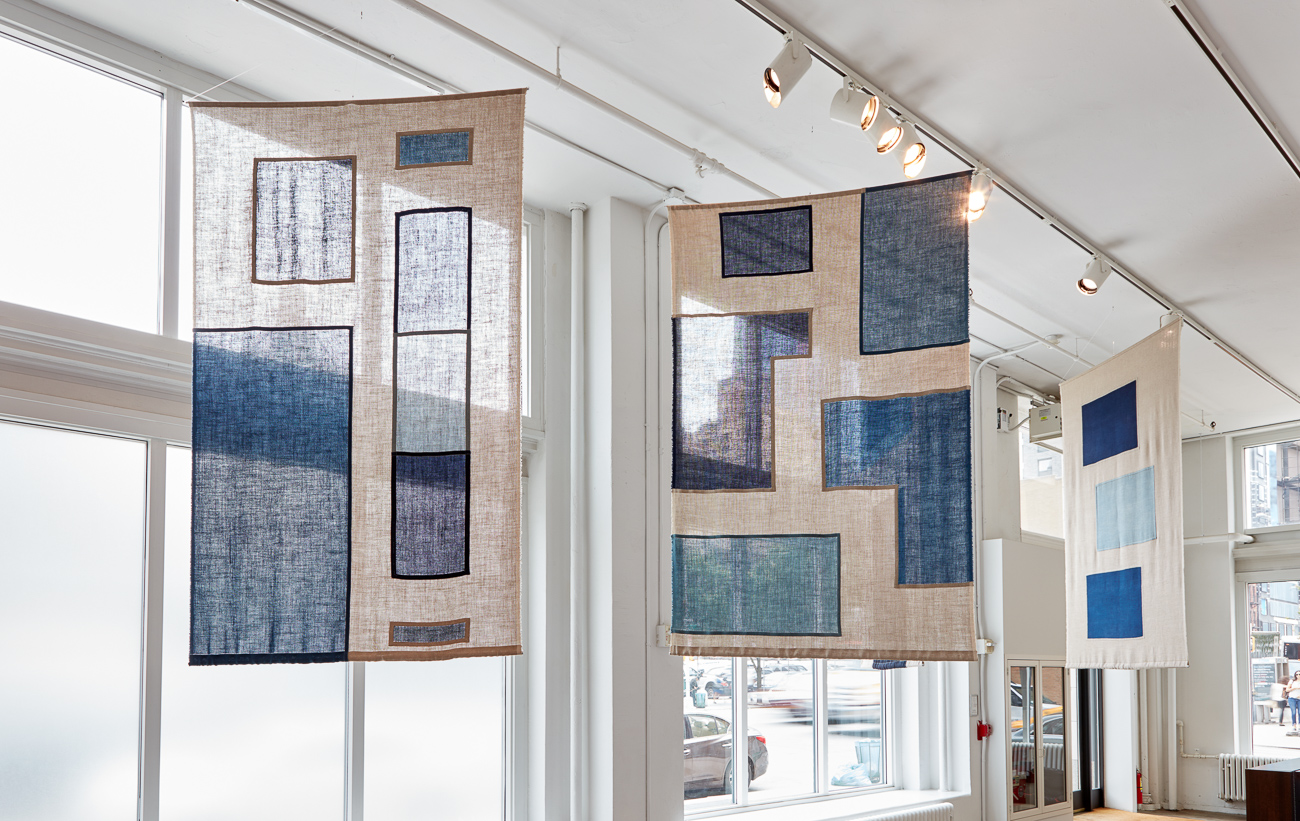
Inspired by the west African practice of indigo dying, Aboubakar Fofana’s work is grounded in nature. Moving to France at a young age, Aboubakar discovered indigo dying as a way to reconnect and keep in touch with his Malian heritage.
Respecting and honouring nature’s divinity, Aboubakar explores themes of birth, decay, and change, following the rhythms of nature. Using Indigo as the centre of his work, Aboubakar critically engages with the history of slavery and exploitation of indigo farming in his collection entitled, ‘Fundi’ (meaning ‘uprising’).
In his effort to preserve and reinvigorate African culture, Aboubakar recently started his own indigo farming cooperative using a permaculture model that centres local food, medicine, and dye plants. Through this farming cooperative, Fofana hopes to work with the local people and revive the art of fermented indigo dyeing.
Siwa Mgoboza
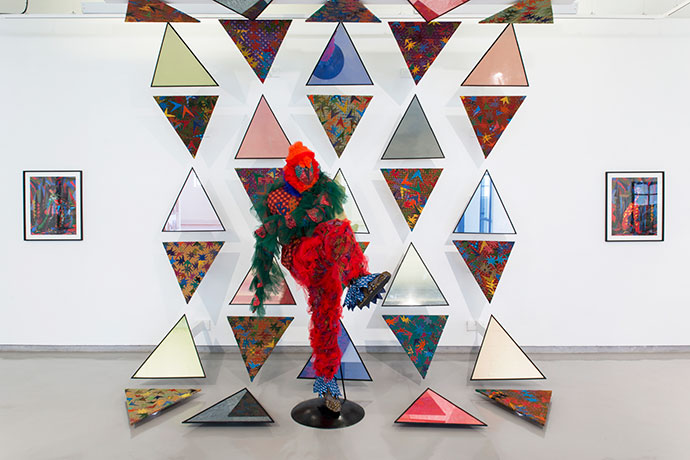
For Siwa Mgoboza, his work is a space of the imaginary, which is colourful and free. Born and raised in Cape Town, Siwa found himself at a crossroads when coming back to South Africa after years of living abroad. “I had no idea what it truly meant to be Black or African, and to add to the complexity, being gay in Africa,” he told Global Voices.
During his studies, he wanted to challenge the western-centred education and started to explore beyond his curriculum. “The reason I started working with textiles was that I wanted to do something that felt authentic, realistic, and personal to me,” Siwa says.
He explores the complicated relationship with his identity in his work, using Shweshewe, a traditional South African fabric, and merging it with different textiles and techniques from around the world.
Lizette Chirrime

Lizette Chirrime fostered a love for sewing and painting at a young age. Born in Mozambique, Lizette completed a three-month residency in Cape Town where her career as a textile artist took off.
Her focus is on large-scale abstract textile pieces using African prints and fabrics. “I literally ‘re-stitched’ myself together,” Lizette says.
Growing up in a politically rife time in Mozambique, Lizette found solace in nature. During this time, she connected with herself and created artwork with whatever materials she could find.
The process of creating and playing with textiles is a therapeutic and spiritual practice for her. “These abstract forms evoke the human body; where I refashion my self-image and transcend a painful upbringing that left me shattered and broken,” she adds.
Nyambo MasaMara

Born and raised in Rwanda, Nyambo MasaMara relocated to South Africa to continue his career as a fashion designer and multi-disciplinary textile artist.
Although he never imagined himself in fashion, Nyambo has been drawn to colourful fabrics and prints from a young age,. “To me, fashion is more about a story than clothing. Fashion is emotion and passion, and with every garment I design, I remember my story,” he says.
In his latest exhibition, ‘Beyond Borders’ at Deepest Darkest gallery, Nyambo explores his relationship with his Rwandan heritage. The pieces are made from barbed wire with torn fabric as a social commentary on the refugee crisis. His work blends the past traditional cultural wear with the present urban style that carries the values of today’s generation. The exhibition runs till 22 March 2022.
- Images from open sources.
- Get tickets for the Art Fair here.