

Leandi Mulder and Frances van Hasselt are long-standing friends who apply the same design practices and philosophies. They share a fascination and respect for the natural world and understand the cyclical nature of producing sustainable fabrics from natural fibres. The design process, they believe, does not start in factories, “it starts with rainfall, the vegetation of the veld, the health of animals, the care of herdsmen and the many actors and elements along the way that finally make up a finished piece”.
For the launch of their new Desert Homage collection, we caught up with the two designers:
Why do you collaborate?
We both want local mohair to be recognised for its incredible material qualities. We want to create a reverence for mohair in South Africa. It is a phenomenal, homegrown fibre that we should be proud of. For this to happen, we need to create exceptional fabrics and products that demonstrate the unique form and functionality of mohair. We are determined to change the idea that mohair is ‘fluffy and scratchy’ – which it most certainly is not when it is worked correctly.
What sets your collaboration apart from your individual brands?
FVHxLM is a design collaboration that brings together our individual experiences and knowledge. Frances has a deep-rooted affinity with mohair. She grew up on a mohair farm in the Karoo [in the Western Cape] in a family passionate about producing top quality sustainable-grown mohair. Her brand focuses on creating hand-made mohair textiles. Leandi is a fashion designer who works with natural textiles and focuses on sustainable design principles.
Our separate brands allow us to build our individual skillsets which contribute to our collaboration where we specifically choose to work with mohair and hand-crafting techniques.

What did you gain from your Italian textile residency in 2019?
Even though South Africa is home to the best quality and is the biggest production of mohair in the world, we export most of it in a raw form. Little beneficiation is done locally. So, with the intention to create bespoke mohair end-products locally, we decided to learn from the best mohair textile artisans in the world, the Italians.
We’ve created a collection informed by our learnings from Italy’s textile masters. We adapted their teachings to the South African mohair industry. Our primary takeaway was discovering the art of yarn making; being exposed for the first time to this skill which is needed to combine fibres to create woven pieces that look, feel and behave completely differently as a result of the composition and technical make-up of the yarn.
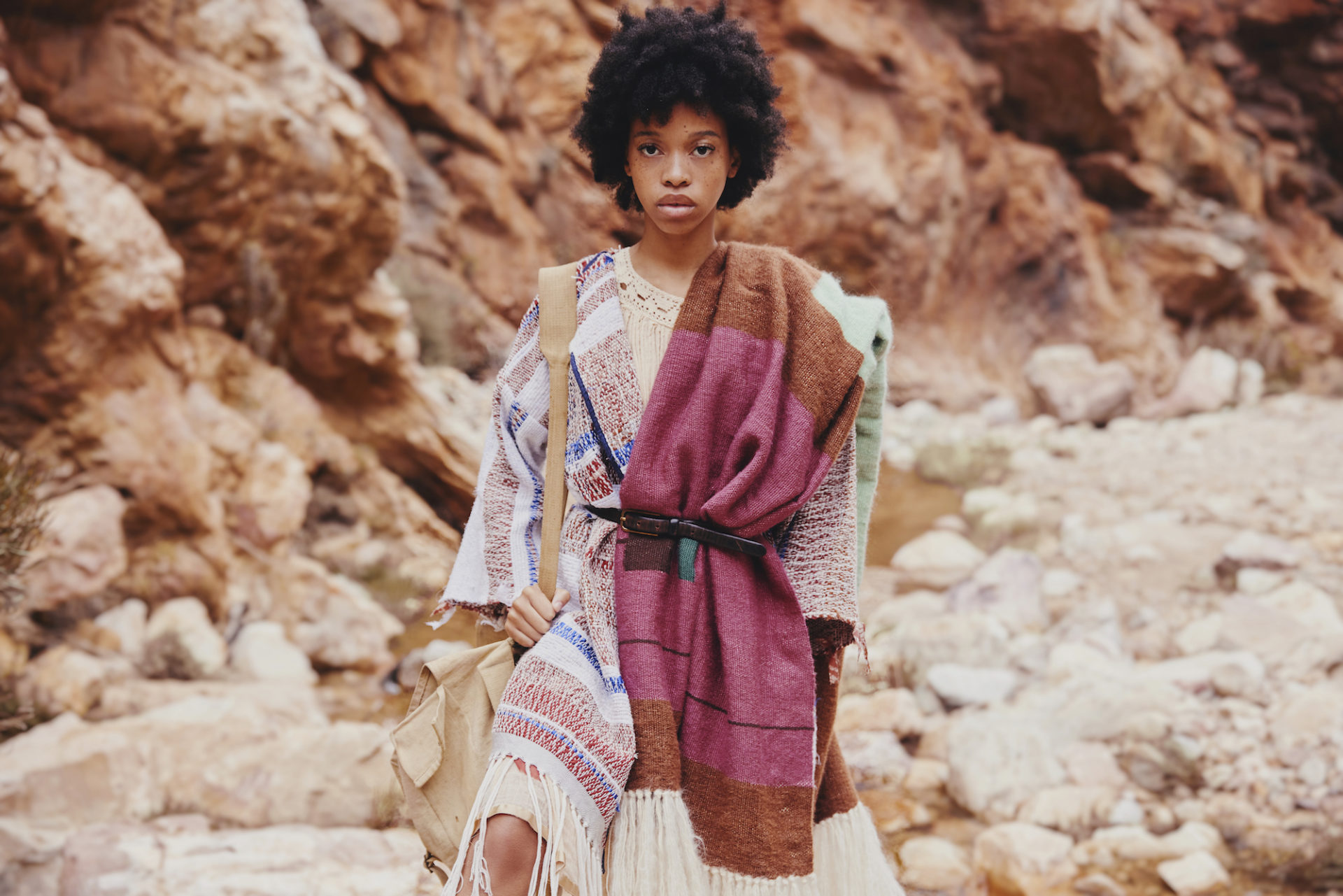
For each piece in our collection we have combined yarns to create moments that draw attention to the threads; these make the finished pieces fall, function and feel a certain way. Our goal is to showcase yarn as an art form and to challenge the local narrative and experience of mohair fabrics. The pieces are simple, versatile, true to the characteristics of the fibre; soft, lustrous, rich in colour, sheen and delicate. Each one is a timeless, trans-seasonal, collector’s piece.
What lies behind this collection’s inspiration?
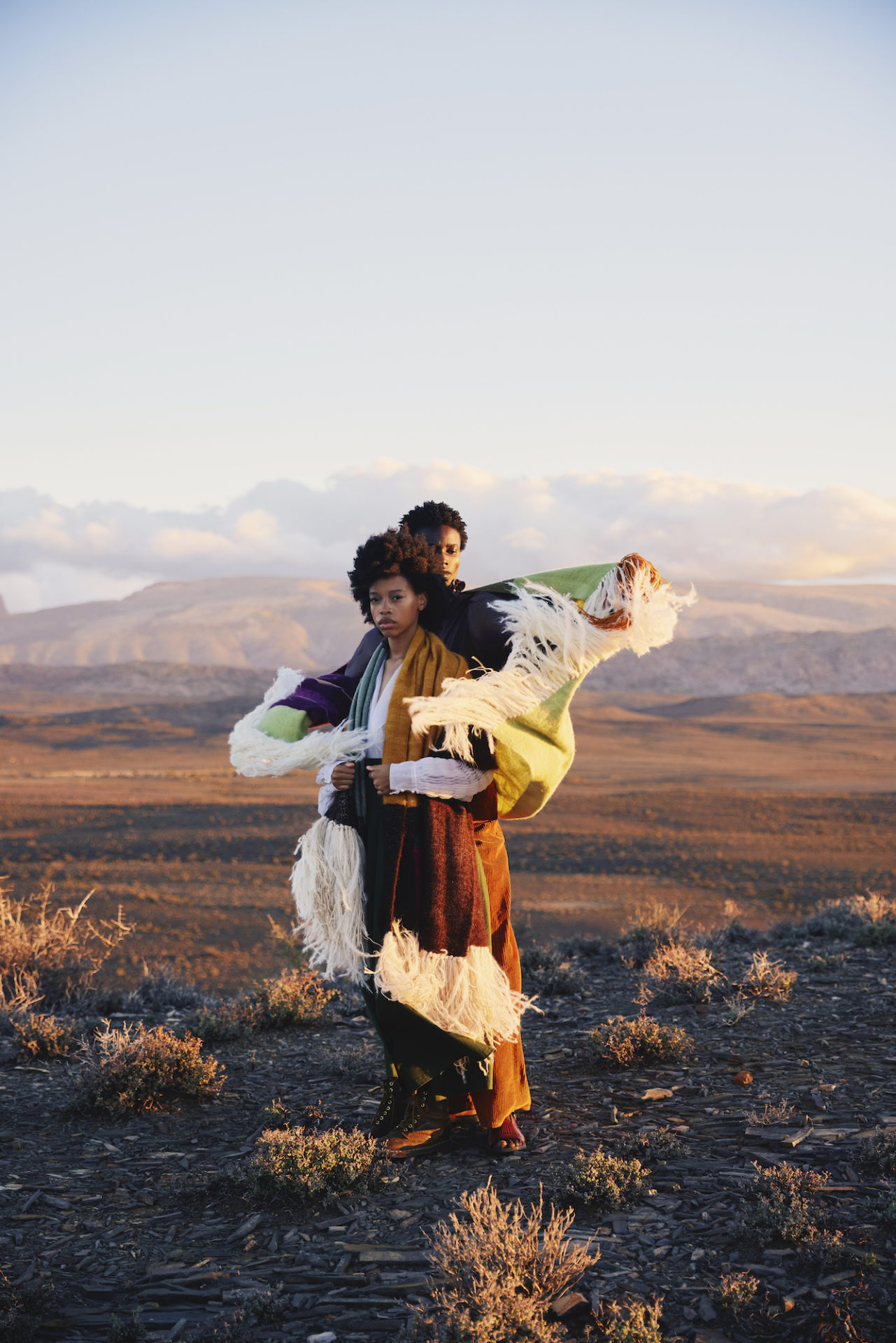
The Karoo is our inspiration. Nature is the defining element here. It informs every aspect of what we try to create. The Karoo is one of Earth’s most ancient landscapes, which were once the bottom of ocean floors. It’s is built on layers of delicate entrapments of time, and survives the harshest of elements. In this collection the irregularity of the yarns and weave convey the subtle shifts and changes of the Karoo’s vast horizons, her twisted knots of ancient rocks and the silence of the stories fossilised into the belly of this ancient seabed.
We have tried to capture the Karoo in textiles. We hope to peel back the fibres that weave this bed of forgotten, thriving, living, dying, fossilised futuristic space together. The Karoo strips us back to our roots, with nothing to distract from the soil, scrunched mountain folds, the shifting light, the low hanging skies, the pastel pallet of the far away shapes and the luminous crunch of burnt soil.
How many pieces are in the collection?
There are five pieces which can be used as an oversized scarf, throw or blanket: Each piece has a different colour and textural make-up.

Is mohair better than cashmere?
No one fibre is better than another; each has a unique set of characteristics that make it sought after and irreplaceable. For mohair has a natural lustre which gives the textiles a luxurious sheen and holds colour beautifully. It is crease resistant, light, warm, exceptionally strong yet delicate; often referred to as the ‘Diamond Fibre’. Mohair is also unique in that almost all the worlds’ supply of mohair is produced in South Africa.
What’s most challenging about using mohair?
Because most of our mohair leaves South Africa in a raw form, little is done locally to beneficiate it. Which means we don’t get to experience its full potential, and to understand how the fibre can be developed into yarns, textiles and knitwear. For too long mohair in SA has been experiences as ‘fluffy and scratchy’. This is mainly because it has been used incorrectly. For this reason, we travelled to Japan and Italy to learn more, and it meant going back to our roots to learn about age-old design techniques such as hand-weaving and hand-knitting in our designs. We feel that by creating exciting new end-products consumers and local designers, will start to experience mohair in new ways, be encouraged to buy mohair and to create their mohair collections.
Do you believe South Africa’s slow fashion industry is growing?
Since 2017, the sustainable fashion movement has been gaining global momentum. With Fashion Revolution’s Who Made My Clothes campaign and designers such as Stella McCartney advocating for sustainability, there has been a greater demand for transparency and ethical, eco fashion. It is only natural that our South African industry would join the movement. There is more information about sustainability, fashion schools are educating their students about it and many young designers want to make a positive contribution through their work.
One of the greatest challenges in South African is finding textiles that can be considered sustainable. Most of our fabrics are imported and we often have no information on the true origin or composition of the fibres. This is why working with mohair is such an exciting prospect for our South African slow fashion industry. It’s traceable, natural, sustainable and completely local.
Three tips on caring for mohair clothing:
Firstly, buy a piece that you love and want forever. Invest in quality over quantity. Immediately you will have the mindset of care and preservation and a feeling of celebration every time you wear it.
We cannot speak for all mohair clothing since other fibres are often added into yarns to achieve a certain look and feel. It is vital to read wash care labels or ask the maker for their specific guidelines.
For us we suggest delicate hand washing in lukewarm water and flat drying in the sun. No steaming, no dry-cleaners, no artificial cleaning products.

What are the plans for FVH X LM?
We are not sure. We never quite know until the next dream, thought, opportunity or inspiration takes hold. But we are excited for when it does and what that journey will look like.
Credits
Designers: Frances van Hasselt and Leandi Mulder www.leandimulder.com
Photographer: Jacobus Snyman
MUA: Inga Hewett
Models Instagram: Avies Newton / Lehlohonolo Mokele
Film Credits
Director: Colwyn Thomas for Scholars Film
DOP: Marcus Hebbelmann
Music: Sean Ross


