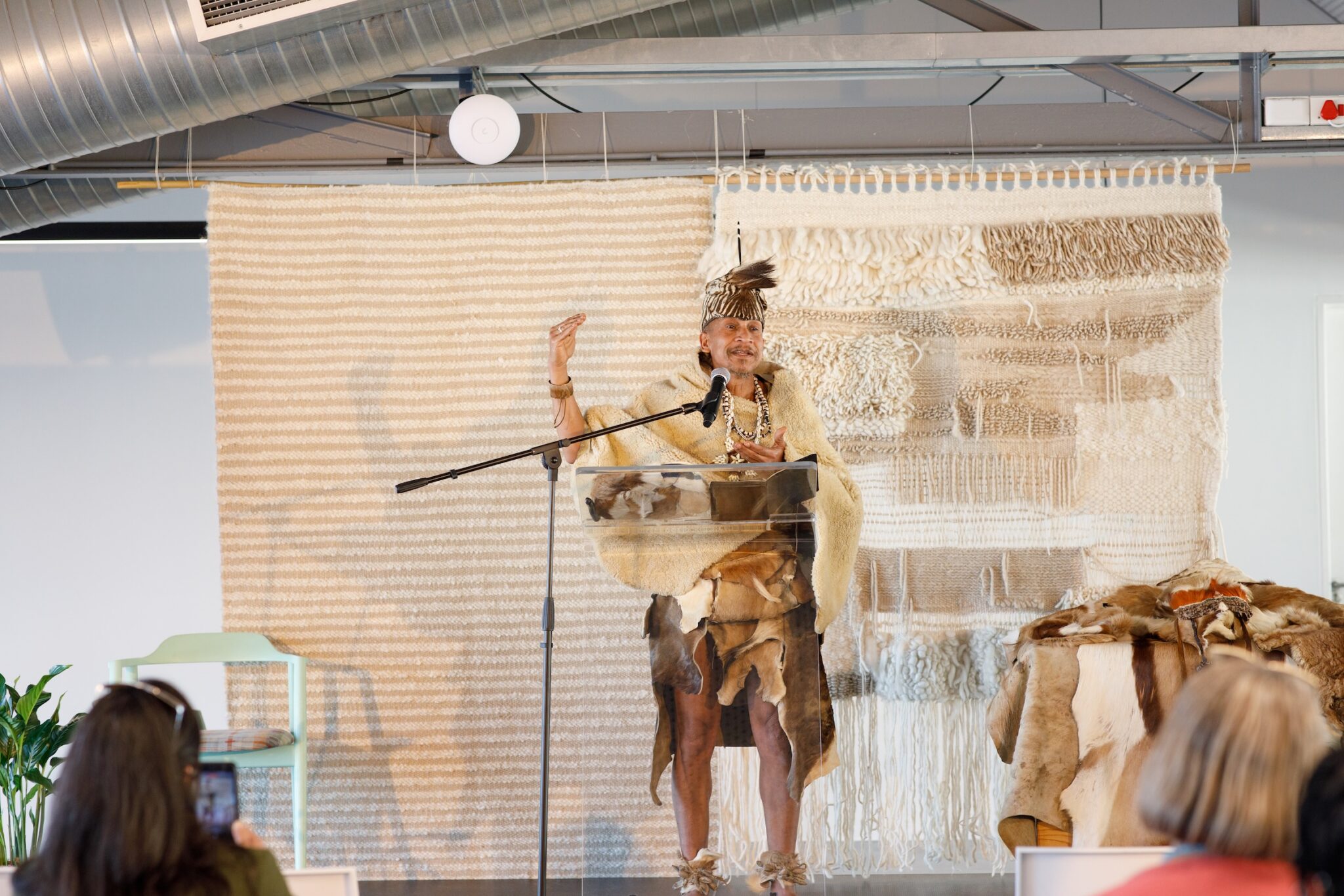
At Woven Threads VII in Lagos, Omoyemi Akerele delivered an opening keynote on 10 April that positions African craftsmanship as a living system shaping a fashion industry built on circularity, craft-driven innovation and community empowerment. Here is her speech:
It’s both an honour and a responsibility to stand here today, in this room with you at Woven Threads VII: CRAFTED in Lagos. This is a platform that’s committed to challenging us to think deeper, to act more intentionally with the conviction that Africa is not just participating in the future of fashion but actively shaping it.
For me, this edition, CRAFTED, feels particularly personal. Because at its core, this is not just a conversation about fashion. It’s a reflection. It’s remembering and acknowledging that long before sustainability became a global imperative, it was already embedded in the way we lived, created and coexisted across this continent.
Our craftsmanship is not simply aesthetic. It is knowledge. It is memory. It is science. It is survival. It is care.
Across Africa, from one community to the next, we share a deep, interconnected legacy of making. Weaving, dyeing, carving, stitching, beading… the list is endless. These are not isolated practices; they are part of a shared cultural language that’s been passed down from generation to generation. Craft is a language rooted in respect for materials, for people and for the earth.
And yet, we find ourselves at a critical moment. A moment where we must ask ourselves: How do we preserve this legacy? How do we protect it? But more importantly how do we replenish it? Because preservation without renewal is not enough.
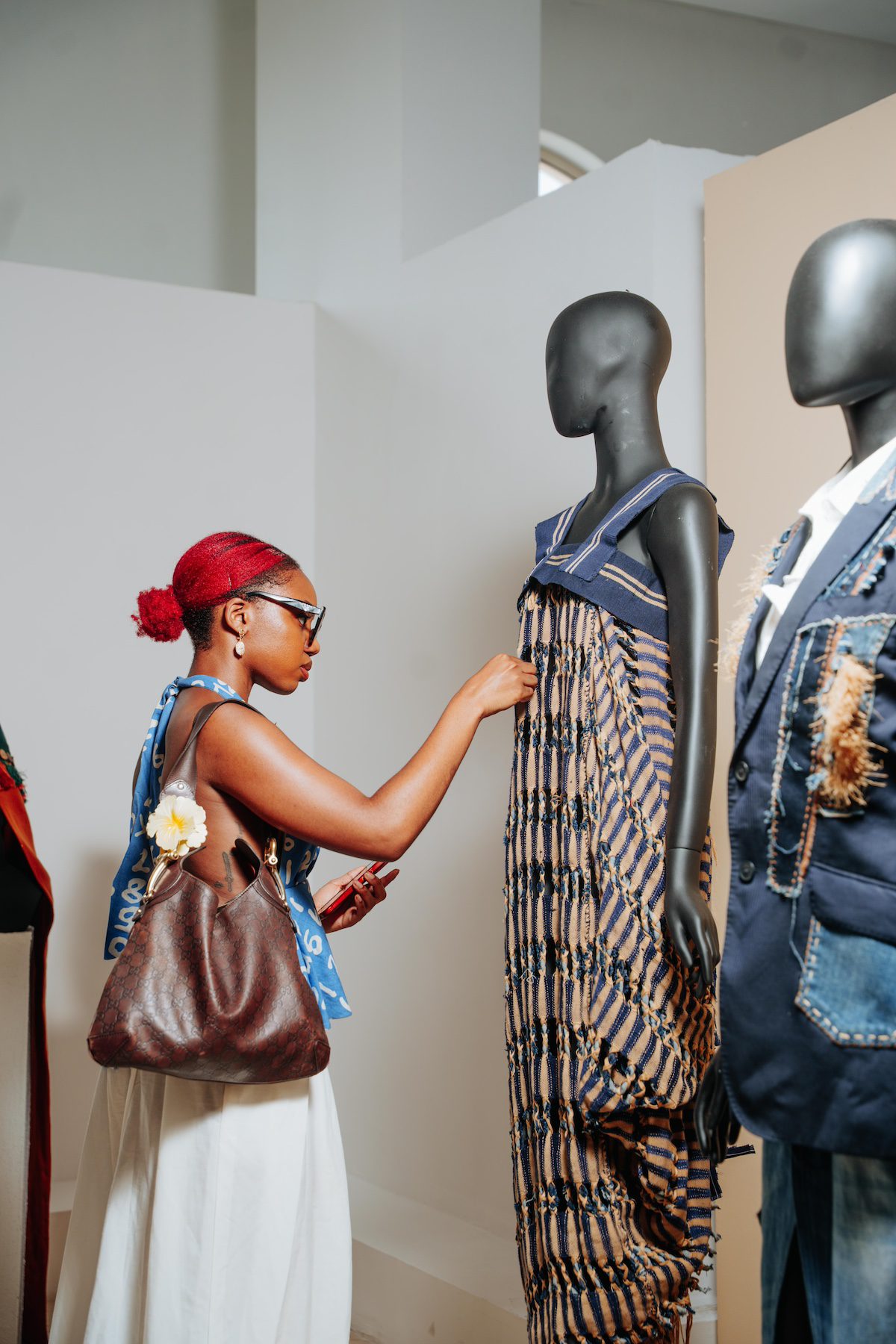
An attendee studies Nkwo Official’s installation at the Rewoven Threads: CRAFTED exhibition curated by Sunny Dolat
For centuries, craftsmanship has been renewed on the altar of culture. But the future we are stepping into requires a lot more. It requires reciprocity. It requires infrastructure. It requires that we move beyond extraction of labour, of culture and of resources, and into systems that give back, systems that sustain and systems that regenerate.
We must ensure that artisans are not left behind. The next generation must not question the value of what they inherit. The resources we depend on must not be depleted in the process.
Read more: Nigerian powerhouse Omoyemi Akerele champions African fashion and industry change
This is where stewardship becomes central. Not stewardship as a concept, but stewardship as a lived responsibility, through intergenerational, intragenerational, and interspecies lenses. Intergenerational because what we do today must honour those who came before us and protect those who will come after us. Intragenerational because equity within our present communities matters. No one should be excluded from the benefits of progress. And interspecies because we do not exist in isolation. The land, the water and the materials we use are not ours to exploit. They are ours to care for.
And therein lies the task ahead: our collective task and our shared responsibility.
And when we look at the pillars guiding this conversation, we begin to see that the answers have always been within reach. Circularity is not new to us, it is ancestral knowledge. Craft is not finite, it is a renewable resource, that must be nurtured. Community has always been the origin of creation. People have always been our most important technology. We see this in the work of designers and practitioners across the continent.
Designers like those who we are presenting at Woven Threads VII: CRAFTED this season, and others including Nigerian designer IAMISIGO and Lukhanyo Mdingi from South Africa, continue to build bridges across communities and to honour craft while reimagining its place in contemporary fashion.
Practitioners, like Kenyan jewellery designer Pat Mbela, are actively preserving techniques, like hand-beading, that have existed for centuries, ensuring that they are not lost, but carried forward. We must acknowledge these efforts. Because they remind us that preservation is already happening. But it needs to be strengthened, supported and scaled.
Read more: Fashion Exhibition: Tradition(al) explores resistance through cloth and craft in Africa
And this is where platforms like Woven Threads, Obroni Wawu October Festival, Collections x Confections and initiatives like Green Access are critical.
They are not just convening conversations they are creating pathways: Pathways for visibility, pathways for collaboration, pathways for market access and pathways for systems change. Because sustainability cannot exist in isolation. It must be embedded across value cycles, from how we source materials to how we produce and how we distribute to how we consume.
We must speak about ethical value chains and local production not as trends, but as necessities. We must invest in education, in skills and in creative enterprise so that the next generation sees craftsmanship not as something of the past, but as something deeply relevant to the future. We must address waste not just as an environmental issue, but as a justice issue. Who produces waste? Who bears the burden of it? And how do we move towards a truly waste-free vision that is equitable and inclusive?
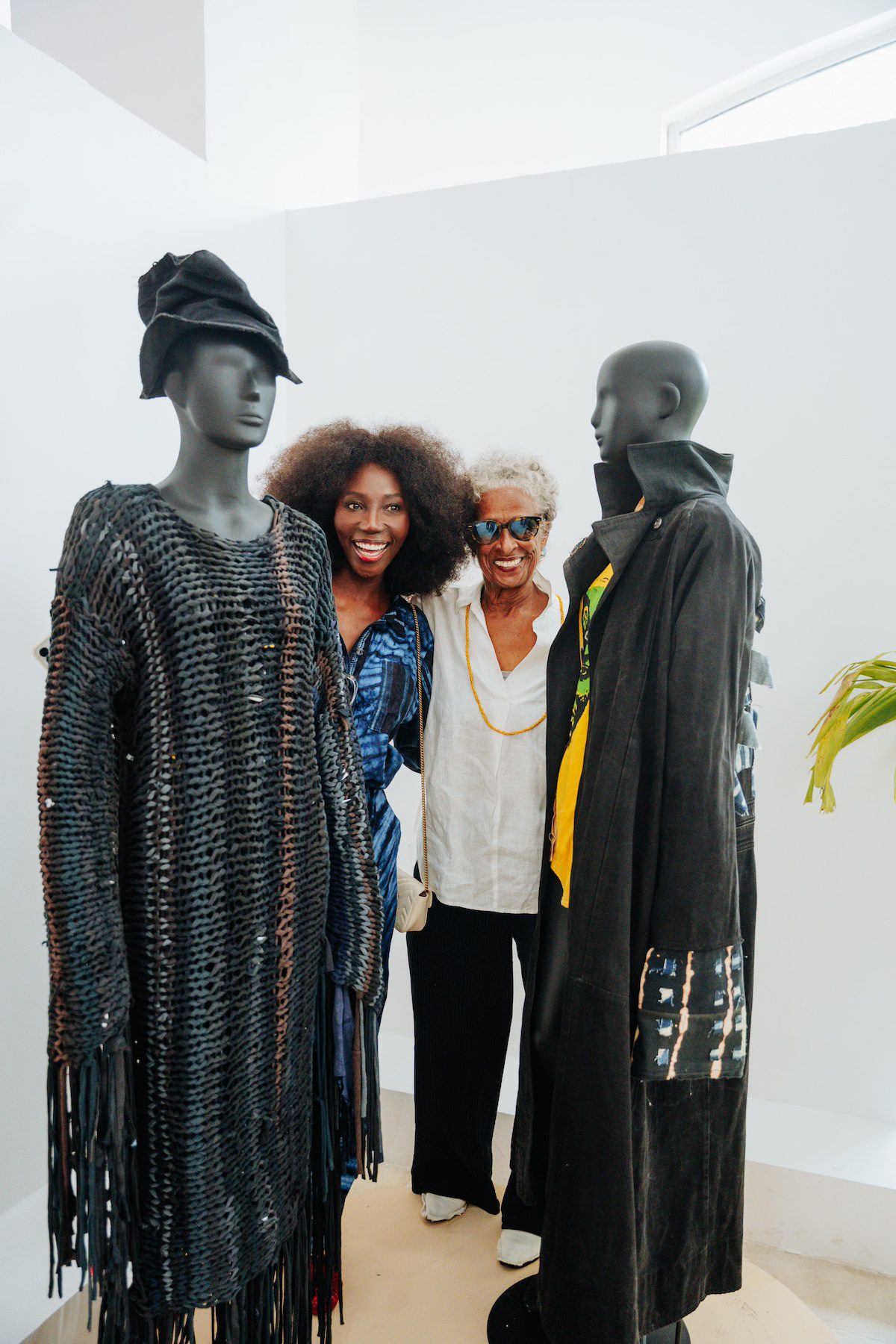
Adama Ndiaye and Renée Neblett stand with the W.O.T.E KI fashion installation
And perhaps most importantly, we must shift our language. Our language must become one of care…. One of renewal…. One of responsibility….
Because the truth is, climate action cannot be separated from people. It must be intersectional. It must be people centred. Yes, technology and science are important. They are necessary. But they must not come at the expense of people. They must work alongside indigenous knowledge, alongside craft traditions and alongside community systems that have sustained us for generations.
We are not choosing between the past and the future. We are choosing how they come together. And at the centre of all of this is a simple but profound truth: We are custodians. Yes, we are all custodians. This place we call home, this continent, this earth. it is not ours to own. It is ours to steward. For those who came before us. For ourselves. And for those who will come long after we are gone.
My great-great-great-great-great grandchildren deserve to inherit a world where culture is intact, where skills are alive, where communities are thriving, and where the earth is not depleted, but restored.
And so the question is not whether we act. The question is how boldly, how intentionally and how collectively we choose to act starting now. Because the future is not something we are waiting for. The future is now, the future is you. It’s not a destination… It’s something we’re crafting… Every day. With every decision. With every system we choose to build or dismantle.
And if craftsmanship has taught us anything, it’s taught us that what’s made with care, what’s made with intention, what’s made with respect can endure. So I’d really like us to be mindful so that we ensure that what we build today does exactly that.
- Omoyemi Akerele is the founder and CEO of Lagos Fashion Week and Style House Files
- Woven Threads VII took place from 10 – 12 April 2026 in Lagos, Nigeria. Woven Threads is an annual event organised by Lagos Fashion Week and Style House Files that focuses on advancing sustainability, circular fashion, and responsible production across Africa’s textile industry
- Lagos Fashion Week won the Earth Shot Prize in 2025
- Images: Kola Oshalusi | Insigna Media