An in-flight magazine first sparked Christopher and Alison Notley’s interest in the “noble and aristocratic” alpaca. It’s an interest which took them farming in the Western Cape in 2004. The couple now run a vertically integrated farm-to-fashion business on their farm, Helderstroom Alpacas.
There are two types of alpaca (the Suri alpaca and the Huacaya alpaca). Helderstroom Alpacas breeds Huacaya alpacas. Alison says that the difference is that the fibre of the Huacaya stands at 90 degrees from the animal’s body and is crimpy (wavy). Whereas, Suri’s fibre hangs long, sometimes with a ringlet appearance and it is more difficult to process than Huacaya.
When they started the farm, Alison and Christopher knew nothing about how to process the raw fibre into yarn. Through trial and error, Alison learned how to hand spin, and subsequently taught Brenda Willemse and Theresa Jansen to do the same. A year later Brenda Willemse, won the top hand spinning prize awarded by the Cape Guild of Spinners and Weavers.
Now, the Helderstroom Alpacas team creates ready-to-wear products from their herd of 25 alpacas.

Sustainable farming in practice
The prosperity of the farm is deeply connected to the well-being of their herd. Farm practices are firmly rooted in animal welfare. Alison is also the president of the South African Alpaca Breeders Society (SAABS) and is currently working closely with the South African National Council of Societies for the Prevention of Cruelty to Animals to produce a Welfare Standard for alpaca owners in South Africa.

Sustainable farming practices are another core value at Helderstroom Alpacas. Alpaca manure is an effective natural fertiliser. What gets collected from the paddocks goes back into the paddocks. This manure is rotted together with soiled straw bedding from the pens, and is returned to the pastures and the garden as compost. They also bag it and sell it to local gardeners.
Since they live in a low rainfall part of South Africa and process the fibre themselves, they are extremely water conscious.
Alpacas can withstand low temperatures and they like heat — and sunbathing. Helderstroom’s alpacas get shorn in October and by the time the sun becomes aggressively hot in January, the alpacas have about 4-5 centimetres of insulating fibre on their backs to protect them against the heat.
From farm to fibre to fashion
Shearing: Alpaca fibre varies in micron (fineness) from 14 to up to 30. “Fibre from the first shearing is nearly always the best and finest,” says Alison. The fibre coarsens as the animal ages. Every year, they send small samples of their animal’s fibre to be tested at the Wool Testing Bureau in Gqeberha (formerly known as Port Elizabeth). At Helderstroom they don’t use fibre over 25 microns in their products.
Skirt and tumble: When the alpacas are shorn at the end of October they also skirt the fibre, separating the coarse guard hair from the valuable secondary fibres. They divide the shorn fibre into prime (main body), leg and neck fibre. Then each fleece is placed in the tumbler which is a slowly rotating cage. This removes any grit and sand from the fleece which drops onto a tray below.

Clean: Next, they place the fleece onto a chicken-wire topped table where they bounce the fleece and pick out bits of vegetable matter. They wash each fleece and then place it in a mesh bag to dry in the sunshine. Although they handle the fibre minimally whilst washing, it tends to felt together.
Card: They pick open the fibre to loosen it before carding. Carding is Alison’s pride and joy – she imported a small motorised carding machine two years ago. Carding, or combing, aligns the fibres in parallel. The fibre passes twice through the carder and is removed the second time round through a dizz which forms a roving (a long-combed sausage of fibre) ready for spinning.
Spin, dye and knit: They spin on traditional spinning wheels and one e-spinner. They use commercial dyes and the dyeing is done by hand. Alison also outsources dyeing and uses the excellent dyeing services of Karen Platte in Stellenbosch. Once spun and dyed and wound into balls the yarn is ready to go out to their knitters.
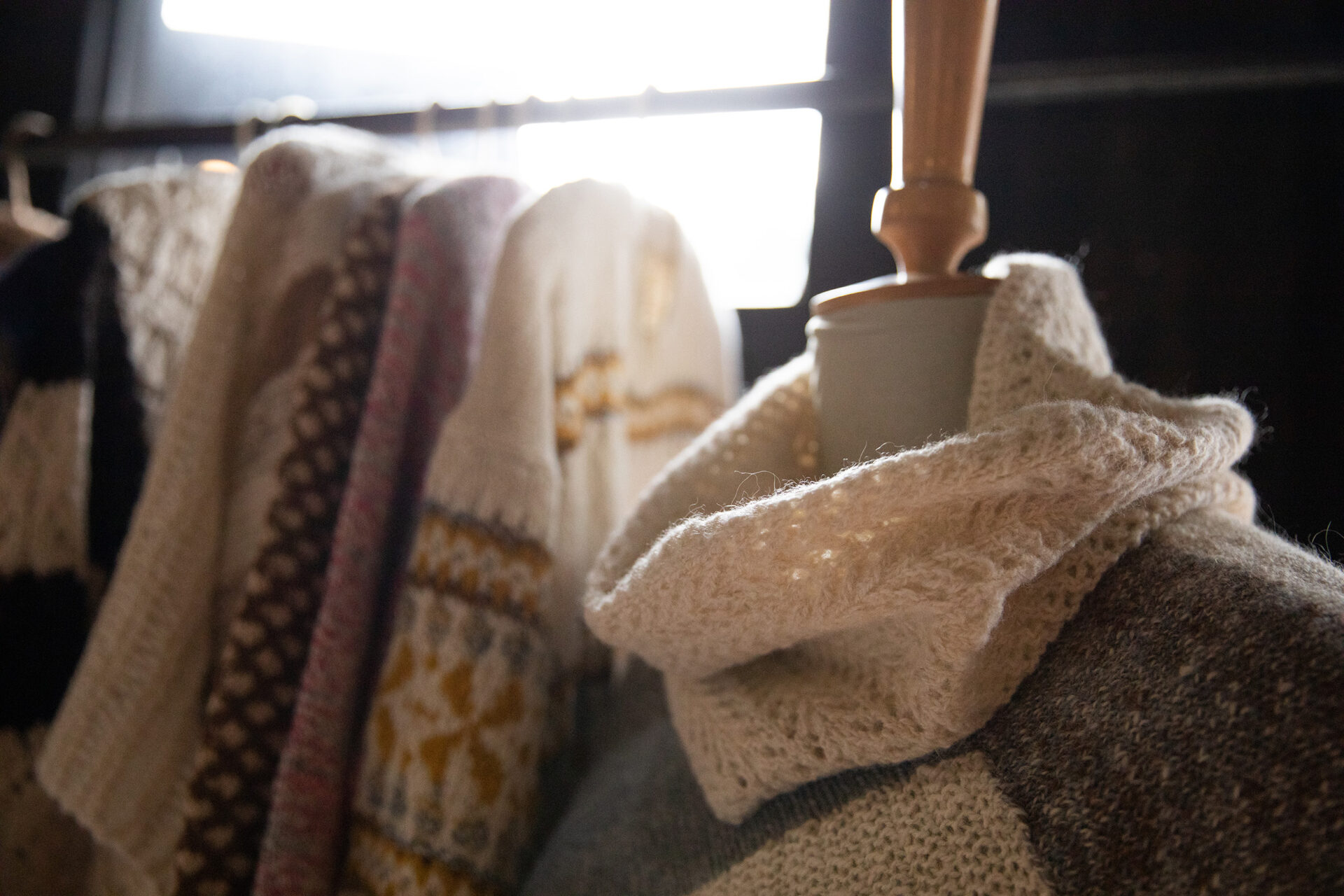
A versatile fibre for trans-seasonal wear
Alpaca fibre is suitable for wearing all year round, especially in winter because of its thermal properties.
The fibre is naturally non-allergenic and can be worn against the skin. Alison says that any fibre over 28 microns, whatever animal it comes from, will prick the sensory nerves of the skin. It is this irritation which gives jerseys that unpleasant itchy factor. Alpaca is water resistant and fire retardant. There are 22 natural colours and shades of alpaca fibre making it the most colour-diversified fleece-bearing animal in the world.
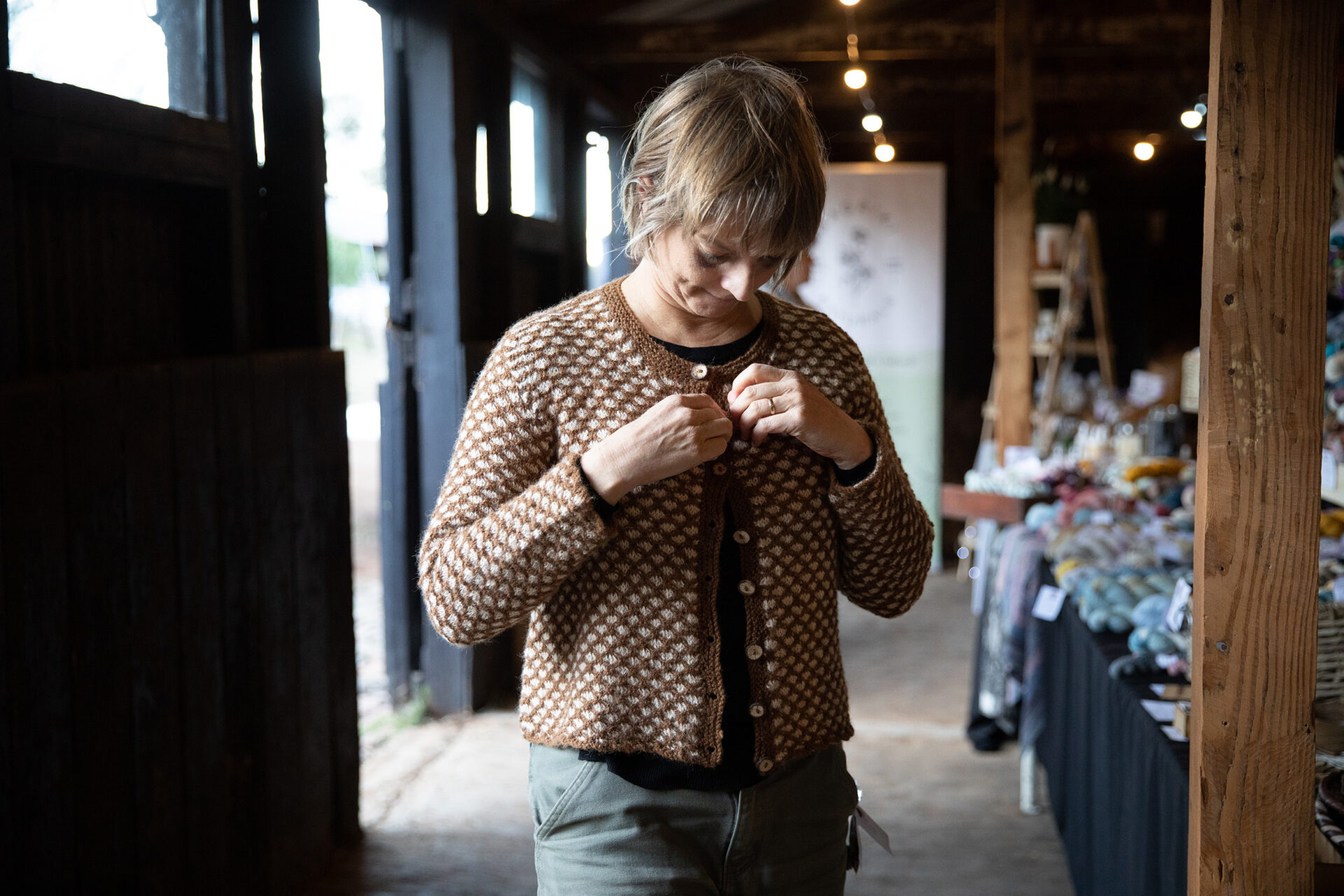
The fibre can also be blended with other fabrics to produce something truly unique. The Helderstroom Alpacas team has blended alpaca fibre with Tussah silk on the carder and produced a most luxurious mix. This has a beautiful drape as a finished item of knitwear, says Alison.
As we learn more about the negative impact of fast fashion industry, the need to localise production and embrace natural fibres becomes more urgent. “There is no doubt that there is a definite lean away from synthetic fibres and toward natural fibres,” says Alison.
- Cover image: Photograph by Samantha Reinders at the Karoo Winter Wool Festival
- Images by Samantha Reinders. Image of alpacas supplied by Helderstroom Alpacas.
- To learn more about Helderstroom Alpacas, visit their website.
- Visit their studio which is located 10 km from Villiersdorp off the R43 in the Western Cape. Email alpacas@helderstroom.co.za to make a booking.